

Welcome to our latest edition of CORGI Die-cast Diaries, your fortnightly blog review bringing collectors all the news, updates and topical stories from the captivating world of CORGI die-cast model collecting.
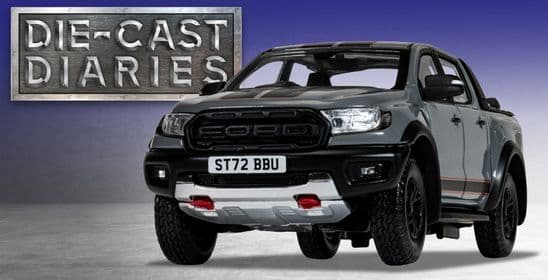
We are pleased to report that new model development activity is in full swing here at CORGI HQ at the moment, and in this latest edition of Die-cast Diaries, we will be attempting to bring you a flavour of some of the projects which have been passing over our desks during the past couple of weeks. This time around, models on four wheels outnumber those featuring a pair of wings, however, we will be asking our Aviation Archive subjects to fly top cover for the gathering of Ford motoring classics which are destined to be finding favour with collectors everywhere in the near future.
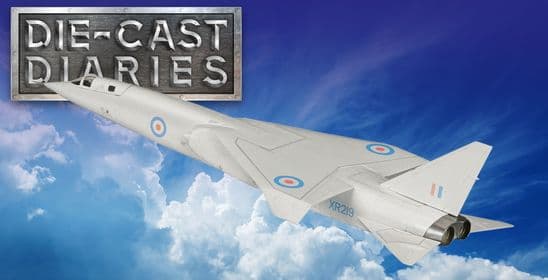
Marking the welcome and long overdue impending return of the Gloster Meteor F.8 tooling to the Aviation Archive range, we will be taking this opportunity to see how early British jet aircraft have been represented within the range over the years, and how they certainly appear to be enjoying something of a die-cast renaissance at the present time.
Our most numerous model updates this time around come from the world of Vanguards, and really do feature some of the most desirable cars to have appeared on Britain’s roads over the past half century or so, just in scale die-cast model guise. For the family motorist, we have a pair of Ford Cortinas which are both presented in particularly striking colours, and for the more adventurous amongst us, two Capri’s which are positively guaranteed to get you noticed.
It’s die-cast wings and wheels all the way, as we head into the wonderful world of Corgi once again this weekend.
The Meteor and Canberra represented the pinnacle of jet technology in the years which followed the end of the Second World War.
When it comes to the subject of early jet aviation and the introduction of this exciting new technology, German aircraft usually tend to be the topic of conversation, as they were slightly in advance of the rest of the world at that time, and were the first to introduce an operational type during the wartime years, the famous Messerschmitt Me262. When the Me262 saw its service introduction during April 1944, Britain was already at the advanced stages of developing its own jet fighter, one which would employ a similar twin engine arrangement and one which would itself be introduced during the months prior to the end of the Second World War, the Gloster Meteor.
With Britain’s jet technology being subject to the highest possible levels of security throughout, it’s fascinating to consider how the test and evaluation teams expected to keep their strange new aircraft secret from the general public once they managed to get it into the air. It would have sounded very different to any aircraft that had gone before it, and significantly, they wouldn’t have been able to see any propellers – an aircraft such as this was certain to attract the attention of the curious.
When the Meteor made its first flight from Cranwell airfield on 5th March 1943, the same day of the year that the Spitfire prototype had made its own first flight just seven years earlier, the local constabulary closed all roads around the airfield some time prior to the new jet being pushed out of its shed, clearing every unauthorised person from within the cordon. Despite this, when the aircraft took to the air, surely a great many people saw the peculiar new aircraft in the sky, particularly as its rather primitive engines meant that the landing run would have been wide and slow. Perhaps the nation was so well drilled from a security perspective back then that even if they did see something interesting, they knew that ‘Mum was definitely the word.’
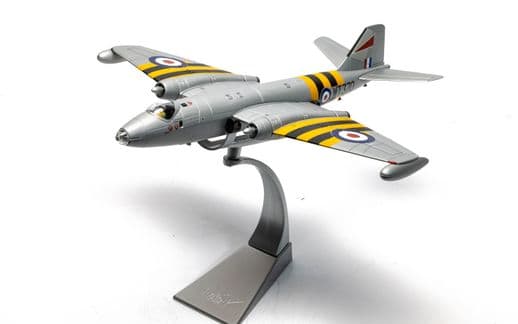
This next selection of images all feature advanced production samples of a model which has been missing from the Aviation Archive for far too many years.
As it was, the end of the war and victory for the Allies dictated that even though the Messerschmitt Me262 took the honour of being the world’s first jet fighter in service, it wouldn’t be developed further, whereas the Meteor was able to benefit from significant future development, making the transition from primitive jet fighter, to mature multi-role aircraft before being superseded by more advanced designs.
Building on the achievements of earlier variants, the Gloster Meteor F.8 featured a lengthened fuselage which gave this variant a sleeker, more cultured appearance over its predecessors, with other identifying features being redesigned horizontal and vertical stabilisers and an impressive new ‘blown’ cockpit canopy. From the perspective of power, the F.8 featured the new Rolls Royce Derwent 8 engines, with each one possessing 3,600Ibf of thrust and endowing the aircraft with more power and greater responsiveness.
Greater structural integrity allowed the F.8 variant to be equipped with ejection seats, something many pilots flying the earlier variants probably wished they’d had access to, as these early aircraft had a poor safety record and claimed the lives of many unfortunate airmen. Offensively, this latest variant was also capable of carrying two 1000Ib bombs or sixteen unguided rocket projectiles, providing the Meteor with a welcome ground attack capability.
Arguably the most effective version of Britain’s first jet fighter, for five years following its service introduction, the Gloster Meteor F.8 would form the backbone of the RAF’s fighter defence force, a jet powered equivalent of the Spitfire’s which patrolled the nation’s skies during the Battle of Britain only ten years earlier. With 1,183 aircraft built, the F.8 was both the final single seat fighter variant of the Meteor, and also the most heavily produced, unquestionably making this one of the most important British aircraft of the post war era.
For all the aircraft’s many positives, it has to be acknowledged that the Meteor’s introduction was not without its challenges, and it would be forced to endure something of a troubled service record. With the adoption of new technologies, and pilots sometimes struggling to make the transition from piston to jet powered flight, the Meteor suffered from a relatively poor safety record, with many pilots paying for basic misjudgements or simple inexperience with their lives. During its RAF service, almost 900 Meteors would be lost to accidents, with pilots and ground crews subsequently christening the aircraft with the unflattering nickname of the ‘Meatbox’ as a result.
Nevertheless, as one of the world’s most successful early jet fighters, the Meteor would also prove appealing to several overseas air arms who were looking for a rugged, capable jet fighter which wouldn’t cost them the earth. Some received former Royal Air Force machines, whilst others placed orders for new built aircraft, although it does have to be said that following the introduction of such aircraft as the North American Sabre and MiG-15, the Meteor was definitely beginning to show its age.
A man destined to achieve great things as a member of the Royal Air Force, Yorkshireman John ‘Dusty’ Miller trained as a military pilot in America under the UK-US ‘Arnold’ Scheme, showing himself to be so proficient that he was later retained as a flight instructor. He eventually did join an operational RAF squadron flying Beaufighters in an anti-shipping strike role, but would advance his career significantly during the early years of jet aviation. Given command of No.41 Squadron at Biggin Hill flying the Meteor jet from the summer of 1951, his personal aircraft was one of the most colourful of that era, defending Britain’s airspace in some style.
Miller would subsequently be one of the first RAF pilots forced to eject from his Meteor, when a turbine blade failure caused an in-flight fire whilst high above Essex in April 1952, but once back flying, continued his rise through the ranks. With his potential for senior rank, Miller was forced to turn his back on ten years flying jet fighters to take command of a Vickers Valiant nuclear bomber squadron, as his seniors wanted to take him away from what he was expert in, to broaden his service experience. During his time with the V-Bomber force, he would be the officer responsible for introducing the Blue Steel air launched nuclear stand-off missile into RAF service. When deciding to leave the RAF in 1969, he did so at the rank of Air Commodore.
It really is good to have the Gloster Meteor F.8 back in the range, and we won’t have to wait too long to get our hands on this beauty now, as she’s expected in our warehouse towards the middle of next month.
When it comes to significant British aircraft of the immediate post war era, there are two which stand head and shoulders above all others, and both were made by the English Electric Company in Lancashire, the Canberra and Lightning. If the Meteor was an exercise in allowing Britain to take its place at the jet technology table, the Canberra literally blew that table over, it really was that good. An aircraft which is sometimes described as a Meteor on steroids, the Canberra was revolutionary in terms of aviation technology and when it entered RAF service in the early summer of 1951, it presented Britain with the most advanced aircraft of its kind anywhere in the world.
Making its first flight in May 1949, the English Electric Company's new medium jet bomber was a thing of aviation beauty, sporting beautifully clean lines and unquestionably designed for speed. The aircraft showed great promise right from the outset and was the cause of plenty of excitement within the Air Ministry, so much so that even as test pilot Roland Beamont was conducting the first flight of prototype VN799, English Electric were already in receipt of an advanced order for 132 aircraft.
The Royal Air Force were so confident the new aircraft would give them a significant technological edge, that they didn't want to delay the service introduction of the new aircraft one day longer than necessary. Soon given the name Canberra, the new bomber would enter RAF service with No.101 Squadron from January 1951, with the Squadron being fully operational just four months later – their aircraft possessed exceptional performance, and the RAF had the ground-breaking new jet bomber they had been hoping for.
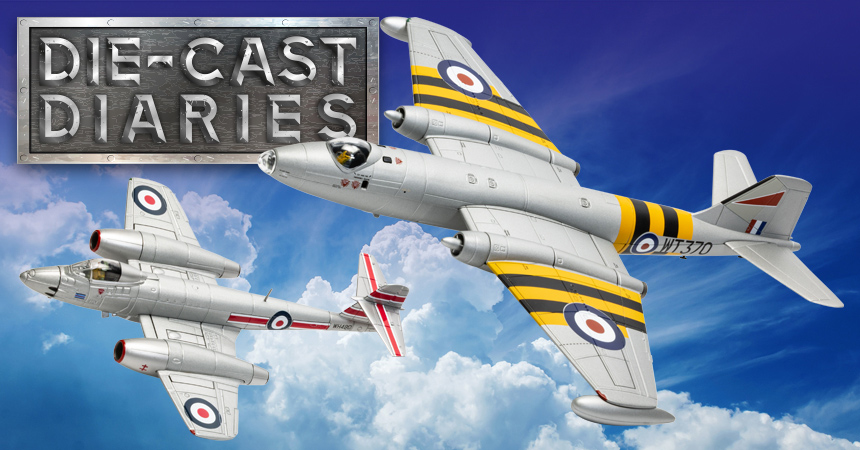
Another series of advanced production sample models, this time featuring the new ‘Operation Musketeer’ Canberra.
The English Electric Canberra quickly proved to be a great source of national pride for the country, particularly as the new aircraft was coveted by almost every air force in the developed world. The Canberra possessed incredible performance and started to break aviation records for speed, distance and altitude almost immediately, underlining its status as one of the most advanced and strategically capable aircraft in the world. It would also be true to say that the ground-breaking Canberra created a few problems for both bomber crews converting to the new aircraft and fighter pilots attempting to intercept them.
The aircraft the Canberra was mainly replacing in RAF service was the mighty Avro Lincoln (along with the ageing Mosquito and Washington bombers) and bomber pilots converting to the new jet were clearly facing quite a challenge. They would be moving from a large, fairly sedate flying four-engined bombers utilising WWII technology, to an aircraft which was the fastest in Royal Air Force inventory, possessing jet fighter-like performance and bristling with all the latest aviation developments.
It was also reported that during military exercises, the Canberra was so fast and could fly at such extreme altitudes that the Meteor fighters equipping RAF front line fighter units at the time simply could not intercept it, which was obviously a cause for some embarrassment within the force. This actually resulted in Canberra pilots being ordered to fly their aircraft under restricted performance parameters, thus allowing the Meteors to get close enough to simulate interception, all a little farcical really.
As the intended replacement for the de Havilland Mosquito, the RAF's first jet powered bomber matched, and in many ways, exceeded its unbelievably challenging design brief, with the Canberra arguably proving to be even more adaptable, going on to be produced in more than 40 different variants during its impressive service career.
Equipping no fewer than 65 Royal Air Force squadrons at one time or another, the Canberra would also prove to be an incredible export success for Britain, purchased by 15 overseas air arms and built under licence in both the US and Australia. Several of the 48 aircraft built in Australia by the Government Aircraft Factory would go on to serve with distinction during the Vietnam War.
The English Electric Canberra was one hell of an aircraft, and certainly must be considered amongst the British Aviation industry’s very best.
When the English Electric Canberra entered Royal Air Force service during the spring of 1951, it was unquestionably the most advanced and most capable jet powered bomber aircraft the world had ever seen. Whilst it wasn’t integrated enough to see service during the Korean War, the conflict did see production of the Canberra accelerate significantly, with the jet designated a ‘Super priority’ type. The Suez Crisis of 1956 saw RAF Canberra units finally able to show what they could do in an offensive capacity, with five Canberra units allocated to operations against Egyptian forces. The jets of RAF No.139 Squadron from Binbrook were deployed to RAF Nicosia, and were assigned to fly target marking missions for other Canberra bombers flying from Malta following behind them, using a combination of Target Indicator incendiaries and 1000lb bombs.
On 3rd November 1956, Wing Commander Paul Mallorie led No.139 Squadron against the Egyptian airfield at Luxor and the Soviet made Il-28 ‘Beagle’ bombers based there, and once the targets had been illuminated, the Canberras were to return to make their own bombing strike against the airfield. With smoke covering the site and with light fading fast, Mallorie led his squadron in an audacious dive bombing attack against the parked Egyptian bombers, to devastating effect. The Operation Musketeer Canberras of RAF No.139 Squadron were arguably the most colourfully presented aircraft to take part in this controversial period in British history.
In the annals of Aviation Archive model heritage, our Canberra tooling really is one of the very best, detailed, accurate and with an extremely high metal content. It could be argued that this magnificent tooling has been underused over the years, but after a long hiatus and coming on the back of an incredibly successful RAAF release in 2023, we’re pleased to say that the Canberra is back, and will be joining the Meteor featured above in our warehouse by the middle of next month.
Vanguards has a proud reputation for producing collectable scale model representations of some of the most significant vehicles to have ever appeared on Britain’s roads.
When it comes to the world of popular motoring, what would your criteria be in considering any particular model of car to be considered something of a classic? Would it be a prestige car a great many people would aspire to owning, even though in reality, few could afford to do so, or would a car capturing sales above all others be a more suitable candidate? Whilst this question is clearly open to interpretation and further debate, surely a car which could boast stylish design, was reliable and economical to operate and was a staple means of mobility for thousands of families up and down the country must surely be up for consideration, even if such a vehicle wasn't the world’s most expensive car, or the one produced in the greatest numbers.
Having refined our criteria, surely Ford's Cortina series must be in with a shout, an impressive range of cars which all shared the same model name, but were a strategic attempt by this famous automotive company to produce a popular car to suit the motoring requirements of the average British family. From the perspective of business strategy, it was also a car intended to challenge the market share of rival companies like BMC and Vauxhall at the time of launch and to become one of the most popular vehicles on Britain's roads.
Using existing production lines, particular emphasis was placed on keen pricing and mechanical reliability, but crucially not at the expense of styling. In that regard, the Cortina was always intended to be a bit of a looker and by adding a little motorsport expertise into the mix, Ford quickly found that they had a popular motoring winner on their hands.
A closer look at the two latest model additions to our Ford Cortina series.
Regularly updating the original Mk.I design to keep the range fresh and relevant to their customers, the Cortina became so popular with British motorists that the Ford marketing department confidently proclaimed that the only car any new Cortina model release had to beat was the old Cortina it was replacing and as it went on to be the best selling family car in the country on several occasions, it seems as if their boast was not without substance.
Arriving on the British motoring scene from September 1962 onwards, five different versions of the car which would go on to become staple motoring fare for families up and down the country over a 20 year period, in addition to the army of travelling salespeople who munched the miles across the nation’s motorway network in Cortinas.
Found on driveways up and down the country during the 60s and 70s, the Cortina was a hard working family vehicle, but whether it was used as dad’s work transport, or the family holiday facilitator during the summer, the Cortina earned a place in our hearts as a faithful companion, but one which had more than a bit of style about it.
VA15008 – Ford Cortina Mk5 2.0 GLS in Signal Yellow
Ford offered the Mk5 Cortina in several trim levels, of which GL was one, and the S Pack (for Sports) was a specification option that could be added to the customer’s desired trim level, L, GL or Ghia. That means that surviving GLS or Ghia S models are rare because fewer were sold and, unlike the Mk4 Cortina, there was no separate S model. The S Pack could only be ordered on cars with engines of 2-litres or above and featured driving lamps, overriders, a tachometer, a sports gear knob, and wider 185/70 HR x 13 tyres, plus revised stiffer suspension with gas filled front dampers. Alloy road wheels were a standalone option.
The GLS modelled was owned for many years by a police officer in Wales but ended up offered for sale while being stored in the open in Peterborough. It intrigued Hertfordshire-based garage owner Dave Lamb, whose first car had been a Cortina, because it was complete and unmolested, albeit rusty. There were also signs it had been cared for, such as five premium brand tyres, an unblemished interior and what looked like a genuine 90,000 recorded miles. Dave viewed it three times before his nostalgic impulse kicked in and he bought it in December 2023. He got it running, and his suspicions were proved correct because the engine was sweet, and it drove well. He has now started restoring it to its original specification.
An example of the final styling iteration of the Ford Cortina, this Signal Yellow stunner is actually in stock and available now.
VA11919 - Ford Cortina Mk4 2.0S in Venetian Red
The Cortina 2.0S modelled was sold new by Kington Motors, a Ford dealership in Birmingham, in May 1977. Little is otherwise known of its early history, although it is believed to have been based in Nottinghamshire for some years. It was offered for sale by classic car specialists Anglia Car Auctions on 6th November 2022, in a condition that made it obvious a restoration had been started but stalled, apparently because the restorer had lost their storage facilities. The auction advertising photographs showed the sills were badly corroded, but that the difficult to source black and grey Cadiz fabric upholstery, which was standard on the Cortina S, was present and in sound condition.
It was bought by Joseph Monaghan, of Monaghans, Galway, Ireland, a family-run car dealership that has been in business for over fifty years. He purchased the Cortina as a Christmas present for his father, Joseph senior because, colour aside, it was the same specification as his first car. Monaghans’ bodyshop team stripped the Cortina and found it to be badly corroded, so had to do a lot of metalwork before repainting it. The mechanics, however, dismantled the engine and are sure the 20,149 miles showing on the odometer is genuine, as the condition of the dirty but unworn interior had indicated. The newly restored Cortina has created a lot of interest in the company’s showroom and gives Joseph senior a great deal of pleasure.
The penultimate styling version of the Cortina, this handsome model isn’t in our warehouse just yet, but should be safely tucked away in there by this time next week.
Is there anyone who isn’t completely captivated by the beautiful Ford Capri?
When it comes to Ford car models of distinction, few could boast the impact and ensuring affection enjoyed by the Capri, a car which started out as the European equivalent of the American Mustang, and one which effectively muscled its way into our hearts. Despite the fact that the Capri first appeared in Ford showrooms back in early 1969, these cars are still regarded as being highly desirable vehicles in their own right, and if you were ever fortunate enough to own one, you can be sure that you and your car will be admired and envied in equal measure.
As already mentioned, the Ford Capri project actually started life as an intended European equivalent of the hugely successful Mustang Mk.I introduced by the American parent company, and was first unveiled at the end of the 1960s. The spectacular success of the Mustang took Ford officials completely by surprise and clearly highlighted an appetite for mass-market cars which offered something more than just functional motoring. At that time here in the UK, Ford could only boast the Lotus Cortina as anything resembling a slightly sportier model, with the rest of the range being produced for the masses, and possible even lacking in a little excitement, dare we suggest.
More ford Capri model goodness.
The new US inspired model was intended to rectify that situation, an exciting looking car with a sporty image, but one which was still within the reach of large sections of the population. Just like the Mustang did in the US, the Capri utilised many existing components from the production of other cars in the Ford range, but cleverly wrapped them all up in a beautifully stylish coupe bodyshell. You could say that by adopting this production ethos, the Capri could hardly fail to become a motoring success.
Marketed as a stylish, yet affordable two-plus-two sports coupe aimed at the working man, the Capri proved to be a real success for Ford and would go on to enjoy a 17-year production run, with almost 2 million cars sold during that time. It’s hardly surprising that this handsome car proved to be such a winner, particularly when considering how Ford’s marketing department positioned the car to the British public at the time. The Capri was described as ‘The car you’ve always promised yourself’ and with motoring temptation like that, how on earth could the nation possibly resist?
Launched at the 1969 Brussels Motor Show, the new Capri was the talk of the motoring world, a landmark model for Ford which changed the face of popular motoring in Britain forever. Unashamedly masculine, but possessing plenty of feminine charm in its eye-catching styling, the Ford Capri appealed to everyone and if you couldn’t quite afford one straight away, you made a promise to yourself that you would own one someday.
VA15407 – Ford Capri Mk2 1.6 XL in Purple Velvet
The Capri modelled was first registered on 1st October 1974, by Taw Garages, Barnstable, Devon, a Ford main dealer. It stayed in this area, with the same family, until March 2009 when it was offered for sale via an online auction, with an MOT and showing a documented 70,000 miles. It was bought, unseen, by Lincolnshire-based Stephen Reedman, a longstanding Capri enthusiast who had always loved the colour, and liked this example’s distinctive registration plate. He was also attracted by the fact it was an early car, a rare XL, which is a trim level that was only produced from the Mk2’s launch in February 1974 until September when it was replaced by GL.
Stephen got a lift to Devon in a friend’s lorry, and was pleased the car was as advertised. Just as he was about to drive off however, it stopped running. The fault was traced to a blown fuse, which was fixed with silver paper, and held all day. He and his two Capri enthusiast sons, Scott and Mark, enjoyed driving the car and taking it to events, consequently in October 2009 they asked Martin Pawson at Capri Gear in Lincolnshire to restore it. He welded various new panels into the bodyshell, rebuilt the engine and fitted poly-bushed 2.8i suspension to improve the handling. In early 2013 the finished car was featured in Classic Ford magazine and always draws admiring crowds at classic car shows.
This sultry looking little number is in stock now and available.
VA13320 – Ford Capri Mk1 1600 GT XLR in Glacier Blue
The Capri modelled was registered in Northwest London on August 1st, 1971, the first day of the K registration suffix. It was ordered by a lady who specified the unusual colour scheme of Glacier Blue with Marquis upholstery, which Ford only offered for one year. She also ordered the GT and XLR option packs, the second of which included the matt black bonnet, spot lamps and Rostyle wheels. The lady obviously loved the car and its characterful 1599cc Kent Crossflow, a power unit shared with contemporary Escort Mexicos, as she kept it until 1993. After the first owner sold it, the car was resprayed Ford Pacific blue, then traded into London-based Curry Motors, in 1998.
The current and fourth owner, Berkshire-based Capri enthusiast Nick Campbell, spotted it advertised in High Wycombe as a restoration project in 2004. He paid £400 for it that day because his first Capri had been in this specification. Family commitments delayed the restoration until 2009, but by then he’d acquired the parts and the space needed. He stripped the bodyshell and was pleased to find it needed comparatively little metalwork. Over the next six years, he totally restored the car to its original colour and specification, making some subtle improvements to the brakes and suspension as he was rebuilding it, and had it painted to a high standard. It was returned to the road in 2016 and featured in Retro Ford magazine in 2017.
Can you imagine being behind the wheel of this beauty – you’d have felt like you were the king of the road! Unfortunately, we’re going to have to wait a little while longer for this model to arrive, as it’s not due in our warehouse until the end of next month. Better get those pre-orders in though.
Yet another bumper model update for you this time around, which we hope included something of interest for you. We’ll be back as usual in two weeks’ time with another selection of the latest CORGI die-cast model updates and exclusive previews for your delectation, but as always, if you would like to drop us a line to comment on anything CORGI model related, or to suggest a future blog topic, we’re always happy to hear from you.
As ever, our diecastdiaries@corgi.co.uk address is always the one to use.
If you can’t wait for the next blog, you will find plenty of CORGI model collecting discussions taking place on our official social media channels, access to which can be obtained by clicking on the respective links at the foot of the CORGI website homepage.
Link access to CORGI social media sites.
Thank you for continuing to support your CORGI Die-cast Diaries blog, as we head into our eleventh year of production. Our next edition is scheduled for publication on Friday 13th March.
Until next time, once again, thank you for your continued support.