
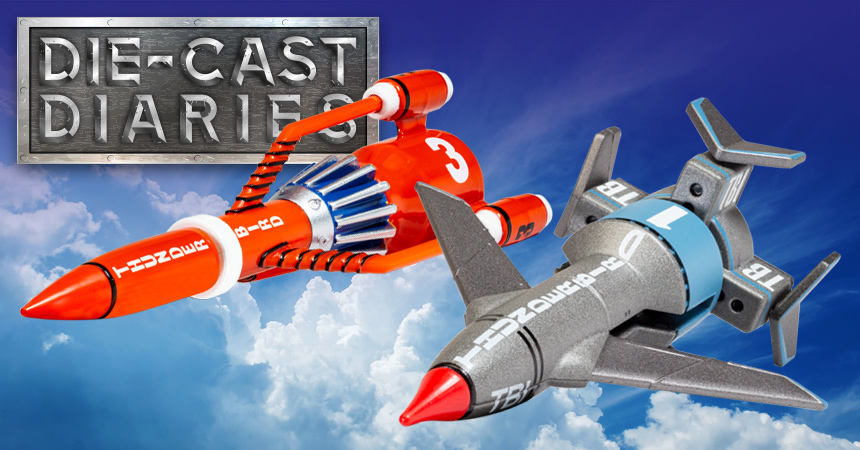
Welcome to the latest edition of Corgi Die-cast Diaries, your regular blog review of all the news, updates and topical stories from the captivating world of Corgi die-cast model collecting.
May we begin this first edition of DCD for 2025 by wishing all our readers a very happy and prosperous new year, as I think we can just about still get away with doing so at this point. We hope we find you all well rested and ready to rip into the new year, with our display cabinets all busting at the seams, following the addition of all those present additions to our collections over the festive period.
At this time of year, with daylight hours being short and the winter weather doing its best to encourage us to smash our energy smart meters into smithereens, we can all be in danger of becoming afflicted with a severe case of the winter blues if we’re not careful, but fear not, the Corgi team have an effective antidote for such occasions, the announcement of our latest model collection. We’re delighted to confirm that as we post this latest blog update, everything required for range launch is in place, and if you’re excited to see what we have planned for our new January to April 2025 range, the only place to be is on the Corgi website this coming Tuesday (14th January) at noon. We have some beautiful new models planned and can’t wait to share details with you!
So, that being the case, what do you do with the latest edition of Die-cast Diaries which falls just prior to the announcement of a new collection of Corgi models? Well, breaking with both common practice and blog tradition, would you believe that we have a selection of 2025 range exclusive previews for you! With next year marking the 60th Anniversary of Thunderbirds, we’ve been working on something very special indeed to support the occasion, and to delight Thunderbirds and Gerry Anderson fans everywhere, and on the eve of range launch, we’ve decided to share some of these details with you now.
Prepare for an edition full of exclusive imagery, and don’t forget to clear your diaries for noon this coming Tuesday, for you have an appointment with Corgi!
Many of us who might describe ourselves as being of a slightly older generation, can sometimes find ourselves passing comment on the youth of today as ‘not knowing how lucky they are’, and whilst there is more than a grain of truth in such sentiments, particularly when linking them to the technology we all have access to today, there are some situations where they actually missed out. Although we might struggle to convince them that receiving a ladybird book and tangerine in your stocking at Christmas, or being allowed to use one of the first Commodore calculators at school instead of a logbook were both causes for celebration, we all know that when it came to watching Thunderbirds when the original series was being aired, they’ve missed out BIG TIME!
A tv adventure phenomenon which hit our screens sixty years ago this year, Thunderbirds was required viewing for young impressionable minds back then, particularly as all the machines the various characters used were just about the most exciting things we had ever seen. The characters themselves will appear a little wooden and unconvincing to audiences today (although having watched a couple of soaps over Christmas, that could certainly be challenged), but the Thunderbirds craft and their exciting adventures more than made up for that, and we simply couldn’t get enough of it.
This futuristic science fiction series featured ‘Supermarionation’ puppetry, as a way of bringing these beloved characters to life, and although they probably wouldn’t stand up in in today’s CGI world, back then, they were a much loved and distinctive feature of this iconic show. Indeed, attempts made in recent years to update the Thunderbirds phenomenon using contemporary animation techniques met with a somewhat indifferent reception, as it fell way short in terms of the appeal of the original – you know what they say, class is permanent!
The first episodes of Thunderbirds to be aired here in the UK did so on ITV back in 1965, however, they proved so popular that they were repeated many times over the years, much to the delight of viewers young and old. With each episode beginning with opening credits which included music to really get the heart pounding and on-screen explosions which only left us wanting more, is it any wonder that the youngsters of the house booked both the tv and the sofa for the duration of this televisual feast. On hearing that spectacular music, it wouldn’t be uncommon for us to find our dad’s stealthily sneaking into the room as well.
Never mind a pink Cadillac, if you’re linked to the International Rescue organisation, only a weapon toting pink six-wheeled Rolle Royce will do.
Interestingly, even though Thunderbirds was such a big part of our youth and many of us will have extremely fond memories of the series, probably thinking that it went on for many years, there were actually only ever 32 episodes produced. Thankfully, each and every one hit the spot, with the original Thunderbirds unquestionably managing to stand the test of time – they still bring back many happy memories for lots of us to this day.
Thunderbirds marked the exploits of an organisation we came to known and love as International Rescue, an impressive and rather secretive group of people who were dedicated to saving human life whenever it was threatened, not only on earth, but also in space. In order to achieve this, they operated a number of technologically advanced craft, which were called into action when conventional rescue services were unable to cope, or had proven ineffective for the task at hand. The most important of these craft were referred to as ‘Thunderbirds’, the real stars of this show, machines which completely captivated millions of youngsters for many years. In truth, as soon as we catch a glimpse of a Thunderbird to this day, we’re immediately transported back to those days of our youth and strains of, ‘Thunderbird 1 to Thunderbird 2, do you read me?’
The Thunderbirds were so iconic and formed such an enjoyable part of many people’s youth that it was obvious they would be of interest to toy and model manufacturers, with Corgi being particularly avid admirers over the years. There’s something about these fantastic machines that almost cry out for them to be played with, so a range of robust, die-cast metal models seemed to fit the bill perfectly, and to say they proved popular would be an understatement of Thunderbird 2 proportions.
Has there ever been a more iconic craft than this created, either for TV, or in real life? Give me a squadron of Thunderbird 2s any day over an F-35 and I’ll show you how to rule the skies!
With Thunderbird 2, Thunderbird 4 (in its pod) and Lady Penelope’s FAB 1 already in the range, the Corgi development team decided to add newly tooled examples of both Thunderbird 1 and Thunderbird 3 around ten years ago, much to the delight of Gerry Anderson fans everywhere. In something of a breaking news exclusive, we can confirm that after a recent visit to Tracy Island, the Corgi team have been at it again and there have been developments!
Although we have some tooling news which at this point will still have to remain as secret as International Rescue themselves, the team have been hard at work to ensure that this year’s Thunderbirds 60th anniversary celebrations can be marked with the release of a spectacular series of new collectable models, with each one being the most accurate to the tv programme originals as we have ever made them. This project includes new toolings, modified toolings, and existing toolings which have been upgraded with the most accurate decoration to ever grace a Corgi Thunderbird, and each one of these model releases will come in specially designed packaging befitting models of this stature, and for an occasion such as this.
Let’s take a look at some of what we have to look forward to in Thunderbirds 60th Anniversary year:
THUNDERBIRD 1
A first look at the stunning packaging we’ve produced to protect these new models and to commemorate the 60th Anniversary of Thunderbirds.
Thunderbird 1, the spearhead craft of International Rescue, is piloted by Scott Tracy, the eldest of the five Tracy brothers. 115 feet long and bearing a wing span of 80 feet, the rocket powered Thunderbird 1 is sleek and fast with a top speed in excess of 15,000 miles per hour.
Though armed and carrying its own rescue equipment aboard, the principal role of Thunderbird 1 is to get to the danger zone as soon as possible, enabling Scott to assess the situation, advise on specialist equipment required and then direct the rescue operation. Scott can then oversee the rescue either from on board Thunderbird 1 or from the Mobile Control Console which forms an essential part of his equipment.
A further selection of Thunderbird model image exclusives. These all show the previously release Thunderbird 1 model on the left, with the forthcoming, updated release on the right.
In addition to his Thunderbird 1 duties, Scott often co-pilots Thunderbird 3 with his brother Alan and whenever his father Jeff is absent, Scott’s seniority places him in command of the island headquarters International Rescue calls home.
THUNDERBIRD 3
The old and the new. Once again, the previously released model is pictured on the left, with it’s modified tooling successor (the taller model) on the right.
Thunderbird 3 is International Rescue’s space rocket piloted by astronaut Alan Tracy. The blond-haired, baby-faced astronaut and champion race driver is utterly dedicated to International Rescue, meeting his tremendous responsibilities with a maturity that belies his years as the youngest brother in the Tracy family.
TB3 is the tallest vehicle in the International Rescue fleet, measuring 200 feet in height. Launched from its concealed hanger beneath the Tracy Island Round House, the rocket is used for all space rescues and also acts as a link to Thunderbird 5. The basic crew requirement is two usually meaning Scott will accompany Alan as co-pilot. Apart from piloting Thunderbird 3, Alan also assists his brother John by taking turns at manning the Thunderbird 5 space station.
Both of the new models standing side-by-side and a further look at the handsome packaging which will add even more appeal to these models.
As you can see from the accompanying images, these models will be produced as a set of two, with their own bespoke packaging and both having benefited from meticulous decoration research. The tooling for Thunderbird 3 has also undergone tooling modification, making it more accurate to the original and preparing it for a forthcoming sortie, which for now must remain secret. The fascinating images above show the models as released previously and how they will be finished for this forthcoming anniversary series.
THUNDERBIRD 2
Thunderbird 2, piloted by Virgil Tracy, is the freighter that carries all of International Rescue’s ingenious heavy engineering equipment. With a maximum flying speed of 2,000 miles per hour, Thunderbird 2 is 250 feet long, has a wing span of 180 feet and stands 60 feet high.
The centre section of the vehicle carries one of a selection of six pods, each housing the many different specialised rescue machines used by the International Rescue team: primarily Thunderbird 4, the Mole and the Firefly.
Virgil is always on hand taking part in virtually every daring situation in which International Rescue is involved. Fearless and with an iron resolve, Virgil is also a complex young man who combines physical strength with his gentler side as a gifted artist and pianist.
These really are an impressive selection of exclusive Thunderbirds development imagery. Again, showing both the model and its new packaging, the previous Thunderbird 2 model releases are pictured on the left, with the new representation to the right. Doesn’t it look fantastic in this matt green finish!
I don’t know about you, but when I used to watch Thunderbirds, I thought Thunderbird 2 was just about the most impressive machine I had ever seen, and to this day, I think you can forget your F-35 Lightnings and Eurofighter Typhoons, give me a squadron of Thunderbird 2s and I’ll show you how to rule from the skies!
Again, the images above show how Thunderbird 2 was previously released and how she will form part of this new collection, with her appealing matt finish and more accurate decoration – she really is a beauty.
THUNDERBIRD 4
Thunderbird 4, piloted by aquanaut Gordon Tracy, is a 30 feet long underwater and sea surface craft. Although much smaller than the other Thunderbirds vehicles and with a limited range, TB4 nonetheless plays a vital role in any underwater rescue operation.
Gordon is good-natured and high-spirited, possessing a strength and tenacity that make him a respected leader and commander. He is also one of the world’s fastest freestyle swimmers and is a past Olympic champion at the butterfly stroke.
FAB 1
A box befitting a model car of this stature – ‘Home, M’Lady?’
FAB 1 is a striking pink Rolls Royce owned by Lady Penelope Creighton-Ward and driven by the inimitable Parker. Outwardly, FAB 1 is simply a powerful, sophisticated six-wheeled vehicle only beneath the highly-polished exterior is a veritable armoury of tricks. From smoke bombs to machine guns, booster jets to hydrofoils, FAB 1 has it all!
Lady Penelope Creighton-Ward is the 26 year old daughter of aristocrat Sir Hugh Creighton - Ward and his wife Amelia. Penelope inherited her father’s spirit and determination and craved danger, action and intrigue. Soon after completing her education, she rejected the aristocracy’s endless round of social engagements and became a secret agent. It was while working as the chief operative of the Federal Agents Bureau that Penelope first met Jeff Tracy, and she immediately accepted his invitation to become International Rescue’s London Agent.
Aloysius Parker is the last of a long line of faithful Cockney retainers who have served the English aristocracy for centuries. However, unable to follow in the family tradition and find employment as a butler, he fell in with various villains in the London underworld who taught him the tricks of the trade. He was caught by Lady Penelope Creighton-Ward while he was helping himself to the contents of an oil tycoon’s safe. Penelope had heard of Parker’s superior talents and offered him a working partnership in her espionage activities, as well as employment as both butler at Creighton- Ward Mansion and chauffeur of her Rolls Royce FAB 1.
What were we saying previously about class being permanent? Instantly recognisable, FAB 1 may have looked like a luxurious mode of transport for a well-heeled lady, but this particular Roller was not to be messed with, and it packed an International Rescue punch. If Lady Penelope instructed Parker to use the grille mounted cannon, there could only be one outcome, ‘Yes, M’Lady’!
Benefitting from the same bespoke, high quality presentation packaging as the previous two releases, these make for a stunning addition to any Thunderbirds collection and a fitting way with which to mark this year’s significant 60th Anniversary celebrations.
We will be bringing you more from the world of Thunderbirds as we work our way through the coming year of blog updates, so please check in with us every couple of weeks.
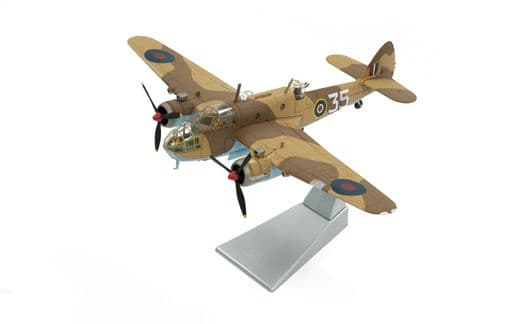
Although the Bristol Beaufort was arguably an aircraft type the Royal Air Force needed above any other as Europe was dragged into conflict in 1939, it would probably be accurate to say that it’s regarded as the least famous of a trio of WWII Bristol twins, aircraft which also included the Blenheim and Beaufighter. Nevertheless, when it comes to Aviation Archive and its knowledgeable collector base, they had been requesting a Beaufort be produced to join the range for many a year, and in 2021, those requests were heeded.
A truly stunning addition to the range, now for the first time, Aviation Archive collectors have the ability to display all three of Bristol’s most famous twin engined aircraft of the Second World War in scale die-cast together, as this range continues to chart the history of aviation in metal. As we embark on a new year of collecting, we’re about to welcome the third release from this highly regarded tooling to the range and using a selection of recently received advanced production sample images, let’s give it the blog welcome it deserves.
During the 1930s, the Bristol Aeroplane Company were without doubt one of the most proficient and respected aircraft manufacturers not only in the UK, but across the world. Responsible for producing the RAF’s most important fighter of the decade, the fast and agile Bulldog, the company would also play a significant role in the modern expansion of the Royal Air Force, as their Blenheim light bomber would point to the direction of future military aircraft design. An aircraft which was initially envisaged as an evolutionary development of the Blenheim, the Bristol Beaufort has the distinction of being the only monoplane type produced for the Royal Air Force which was designed from the outset to fulfil the dual roles of torpedo bomber and reconnaissance aircraft.
Highlighting the pressing need for an aircraft possessing these maritime capabilities, the Beaufort was one of only a handful of aircraft to have been ordered by the British Air Ministry whilst the project was still ‘on the drawing board’, a move which clearly reflected the faith they had in the Bristol Company. The Beaufort may well have started life as a Blenheim development, but it quickly became apparent that the new aircraft would look very different to its predecessor. With a much deeper front fuselage section needed to accommodate its crew of four and the requirement to carry a torpedo in a semi-recessed position under the fuselage, a gross weight increase of around 25 percent over the Blenheim ensured that whilst the two aircraft may have been related in aviation terms, they most certainly could not be described as twins.
Historically, the demanding specifications the Beaufort was required to satisfy, in conjunction with Bristol’s existing Blenheim manufacturing commitments, dictated that an aircraft which had production contracts initially signed in August 1936 would not see its squadron introduction until almost three and a half years later, when Britain was already at war. Once in squadron service, the Beaufort quickly proved to be an extremely rugged and highly manoeuvrable aircraft, one which would be tasked with performing some of the most demanding strike attack missions of the war.
The squadron introduction of the Bristol Beaufort proved not to be without its problems and despite having an unusually long development for an aircraft which was so badly needed, the first units operating the aircraft suffered persistent reliability issues with the new Taurus engines. Intended to replace such aircraft as the huge Vickers Vildebeest torpedo equipped biplane, the early teething problems caused by engine reliability issues saw these totally unsuitable, obsolete aircraft, having to soldier on for a while, until a solution to the problem could be found. Once the Beaufort could be operated effectively, it quickly proved itself to be an exceptionally rugged aircraft, and one ideally suited to the demanding task at hand – it was also a massive upgrade over previous aircraft in this role.
The new RAF airfield at St. Eval on the north Cornish coast was an ideal location from where to launch anti-submarine and anti-shipping aircraft patrols and strike operations covering this vital combat sector, something it would do for the majority of the Second World War. Interestingly, it actually became operational as a Fighter Command station during the early stages of the Battle of Britain, with the Spitfires of No.234 Squadron being early residents, but as the battle progressed, most of the action was taking place further east, resulting in the Spitfires relocating by August 1940.
In its maritime strike and patrol role, the residents around St Eval airfield would soon become familiar with the sound of the Bristol Taurus engines of the Beaufort torpedo bombers which operated from the station, with the U-boats and warships of the Kriegsmarine being regular targets for these aircraft.
As the war progressed, successes for RAF Beaufort units flying from bases in the UK began to diminish dramatically and officials requested the immediate development of a more capable torpedo bomber. Fortunately, that aircraft was already in production and was a sister aircraft of the Beaufort, the mighty Beaufghter – fast and hard hitting, the Beaufighter took on many of the duties previously performed by Beauforts and with notable success.
Many Beaufort squadrons were subsequently sent to operate from bases in the Mediterranean and Middle East and after a significant reorganisation in theatre during late 1941 and early 1942, the aircraft would once again find themselves taking a heavy toll of Axis shipping. With the Western Desert Air Force and 8th Army working in close collaboration, they quickly had German forces in the region on the run, targeting enemy airfields at the same time as strategic ground and maritime targets, meaning Luftwaffe fighter units were constantly forced to change their operating airfields.
As proved to be the case when Beauforts initially entered service, the aircraft were used as high-speed torpedo bombers to savage Axis shipping in the region, but were more regularly engaged in undertaking low to medium altitude bombing sorties. No matter what type of mission was being flown, crews would often be flying into the teeth of withering defensive fire, with their rugged aircraft forced to withstand heavy punishment at the hands of the enemy. Thankfully, the Beaufort was as tough as they come and would often bring their crews home, despite having sustained heavy damage.
Beauforts arrived in Egypt from around August 1941, where they would replace Blenheims and Martin Marylands which had previously been holding the line, with all aircraft in this theatre of operations looking very different to those operating from Britain, by virtue of their attractive, and much needed desert camouflage scheme. It has been reported that as Axis shipping stopped operating by day, the Beauforts operating in this theatre spent more time on training sorties than they did flying offensive strikes and as a consequence, more aircraft were lost in accidents and after suffering mechanical failures than as a result of enemy action.
Nevertheless, Beauforts did prove ruthlessly effective in mauling Axis shipping in the Mediterranean, preventing the resupply of the Afrika Korps by sea, enabling ground forces to continually have the Germans on the retreat, eventually bringing about the surrender of the Afrika Korps. Later in the war, Mediterranean Beauforts were equipped with ASV radar equipment, in an attempt to assist crews in locating the ever more elusive Axis shipping by day and by night, with the war taking a significant turn in favour of the Allies.
RAF Beaufort crews would be tasked with flying some of the most dangerous attack missions of the Second World War, with their aircraft often flying into a hail of enemy defensive fire. The Mk.IA variant was based on its predecessor, but benefitted from increased strengthening and the addition of a Bristol B1 MK.V turret.
Adding a welcome splash of colour to any Aviation Archive collection which accepts this attractive model into service, our latest Bristol Beaufort model release is in our warehouse and available now. One thing is certain – it looks very different from the pair of releases which went before it.
Already out and about, this is a very different Beaufort release to the two models which preceded it.
That’s all we have for you this time, but could we please just end by reminding you that our first range launch of 2025 is scheduled for this coming Tuesday at noon, where you will be able to see our latest collection of models in all their glory. As usual, our Head of Marketing David Mather will be on hand to walk you through the new range via the official Corgi YouTube channel, a production which has become required viewing for any Corgi fan on range launch day.
Until then, we hope you enjoyed this little peek into our plans to mark 60 years of Thunderbirds, die-cast style.
I’m afraid that's all we have for you this time around, however, we’ll be back as usual in two weeks’ time, when we will be looking in a little more detail at some of the highlights from our first range launch of 2025. As ever, you could always drop us a line if you felt moved to do so, to comment on anything blog, collecting or Corgi model related, or perhaps to suggest a topic you might like to see covered in a future edition. As always, our diecastdiaries@corgi.co.uk address is the one to use.
If you can’t wait for the next blog, you will find plenty of Corgi model collecting discussions taking place on our official social media channels, access to which can be obtained by clicking on the respective links at the foot of the Corgi website homepage.
Link access to Corgi social media sites.
Thank you for continuing to support your Corgi Die-cast Diaries blog. Our next edition is scheduled to be published on Friday 24th January, and we look forward to seeing you all back here then.