Welcome to the latest edition of Corgi Die-cast Diaries, your regular blog review of all the news, updates and topical stories from the captivating world of Corgi die-cast model collecting.
With just one week to go before the start of the latest UK Airshow season, we can all now start getting a little excited about the prospect of seeing the nation’s skies filled with historic aeroplanes once again, including one aircraft type which may have its origins in the air engagements of the Second World War, but is very much a post war aviation phenomenon. A great many people are of the opinion that the Supermarine Spitfire is the most famous aircraft to have ever taken to the skies, and is certainly the most recognisable aircraft from WWII, which is probably why so many of them remain in airworthy condition to this day.
The chance to see one of these classic aeroplanes displaying at an Airshow event is an experience which never gets old, but what if your hard drive is full of Spitfire pictures and you still need more – well, the aviation world has something for that! Although not produced to support the thousands of young pilots who were attempting to tame the mighty Spitfire during the wartime years, two-seat Spitfires were developed after the war and have witnessed a real surge in popularity over recent years. For the real Spitfire aficionados, or for those just looking for the ultimate aviation thrill, you can now take a flight in the world’s most famous aeroplane, but only after spending some time on a very long waiting list.
In this latest edition of DCD, we will be majoring on an impending triple Spitfire Tr.9 flight joining the Aviation Archive range, scale examples of aircraft people can currently enjoy the experience of a lifetime by taking a flight in. We will have pictures featuring advanced production sample models of all three Spitfires and details behind each of the aircraft, the reasons why we included them in the Aviation Archive range.
Tally Ho, and chocks away, as we have a triple Tr.9 treat on this latest Corgi DCD weekend.
Spitfires made for two are big business at the moment, and historic aircraft in their own right.
For anyone with even the slightest interest in aircraft and aviation history, the story of the Spitfire is more than just details of a new and exciting aeroplane taking to the skies for the first time, it’s a flying machine that inspired, galvanised and effectively saved an entire nation, maybe even the free world, during the darkest of days. From when the prototype aircraft K5054 landed back at Eastleigh Aerodrome after an eight minute test flight, and test pilot ‘Mutt’ Summers said to his ground crew, “I don’t want anything touched", the nation’s obsession with this incredible aircraft had already begun, and in terms of aviation heritage, things would never be quite the same again.
Moving to the present day, imagine you had a personal invitation to see a Spitfire starting up and taking off at close quarters – how exciting would that be. We would all undoubtedly turn up at the airfield early, hoping to spend a little time admiring the aircraft before the pilot turns up to run through his pre-flight checks, then watch as they meticulously run through a procedure that appears to be as complex as it is essential. As the ground mist clears and the pilot straps himself into the cockpit, the sounds of metal buckles being connected and switches being engaged culminate in the whirring sound prior to engine start up – will we get a flaming wet start?
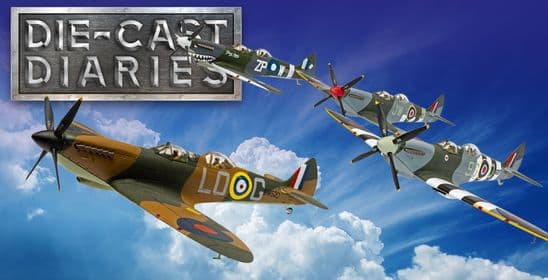
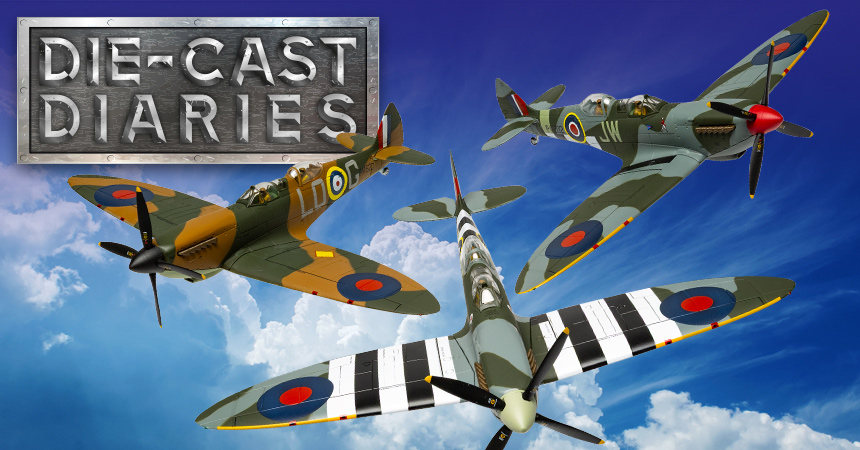
The Aviation Archive range is about to welcome a trio of new Spitfire Tr.9 model releases.
Although this would be exciting enough an experience, there’s something different about this particular Spitfire – it’s got a second cockpit! This Spitfire is made for two and before the Merlin engine roars into life, you’re invited to take your seat in the rear cockpit and are strapped in by one of the ground crew, because on this Spitfire’s next sortie, you will be taking part!
This is the very real opportunity many hundreds of people have already enjoyed, with thousands more desperate to join them, the chance to take a flight in a restored Supermarine Spitfire, one which may well have started its life as a single seat fighter variant of the aircraft, but has been modified to allow an extremely fortunate passenger to experience what it’s like to fly in a Spitfire, dancing amongst the clouds in one of the most beautiful machines ever created by man. From that day forward, they will be able to say that just like Douglas Bader and Johnnie Johnson, ‘I’ve flown in a Spitfire!’
For those who can already claim to have this incredible experience in their personal log books, or for those who are saving up to join them, having a memento of that incredible day, or some die-cast inspiration to keep you motivated on your quest, we have something that can help with that, a beautiful model tooling which pays tribute to this much loved post war Spitfire phenomenon. Significantly, the subject aircraft covered are about to increase threefold, as a trio of new Spitfire Tr.9 models are about to join the range, further expanding the choice of two-seat Spitfire liveries available to collectors and those with Spitfire back-seat experience.
I wonder how many Die-cast Diaries readers have been fortunate enough to enjoy some time spent in one of these magnificent aircraft?
For a modernising Royal Air Force, the Supermarine Spitfire represented the absolute pinnacle of contemporary aviation technology, a fast, agile and deadly adversary for any potential enemy to face. For the young pilots challenged with taming this aviation beast however, it must have been a sobering prospect at the very least, and possibly terrifying for many. They were currently flying the latest breed of biplane fighters, such as Glosters Gauntlet and Gladiator, or perhaps the Hawker Fury, and whilst these were incredibly capable aircraft in their own rights, they were all very different from a Spitfire.
All three were fixed undercarriage biplane fighters, with just the Gladiator having an enclosed cockpit, and all were around 120 mph slower than a Spitfire. The monoplane Spitfire was going to be a very different proposition for them altogether, and with everything happening much more quickly in the new fighter, and nothing more than a ‘pilots notes’ booklet to prepare them for their first flight, this wasn’t going to be an experience for the faint-hearted.
With the Spitfire clearly representing the future of the Royal Air Force, and an aircraft which was such a significant leap forwards in terms of aviation technology, surely the RAF were going to introduce a two-seat training variant for all those thousands of young airmen who would be about to make this dramatic conversion over the next few years.
As the first aircraft began arriving with front-line RAF squadrons, the authorities appeared to have great faith in the abilities of their young pilots, specifically in their ability to make the transition from biplane to world-leading monoplane fighter. Reading the accounts of pilots who were serving during this tumultuous period in world history, many described how they were petrified of the Spitfire, and how some even felt as if the aeroplane was doing its level best to try and kill them during their first experience of it in the air.
They had already negotiated one of the finest and most robust flight training programmes in the world at that time, however, they were going to have to bring all their training and experience to bear, in addition to all their reserves of courage and resolve, if they were going to get over this particular career hurdle and quickly, as the war clouds were gathering ominously across Europe. So, the young men or the RAF were going to have to read their pilot's notes, pay attention during ground study classes and listen to the instructions given by those who already had experience flying Spitfires, if they were going to successfully negotiate the next stage of their flying careers. With Spitfire experienced airmen showing them around the cockpit and the instrumentation layout of the new fighter, they all paid complete attention to this invaluable guidance, because their first flight in a Spitfire was just around the corner, and it would be a completely solo affair.
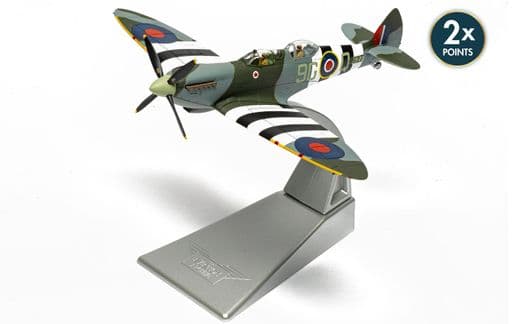
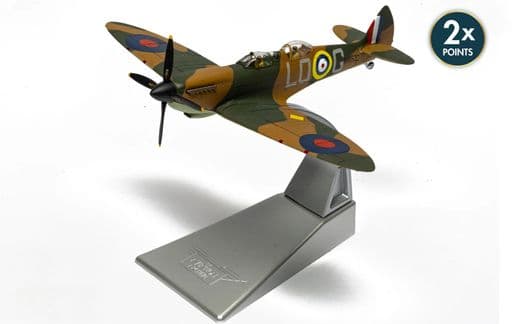
Different viewing angles for all three of the new Spitfire Tr.9 models which are about to join the current Aviation Archive range.
Thankfully, once most pilots had experienced time in a Spitfire and coped with how everything had to be done much more quickly and decisively than on the types they had flown previously, particularly during take-off and landing, they found that the new fighter was an absolute delight to fly. Of course, it did have its vices and potential problem areas just like all aircraft do, but if you had your wits about you and were professional in your preparation, the Spitfire was your friend and not your foe.
The subject of two-seat training variants of the Spitfire didn't officially rear its head until after the end of the Second World War, but with stories circulating about 'unofficial conversions' being carried out on several Spitfires supplied to the Soviet Union under Lend-Lease, and with a rather famous two seat 'hack' having been operated by RAF No.261 Squadron in the Middle East. Pre-war discussions regarding the production a two-seat training Spitfire to help with the huge pilot conversion task ahead did take place, however, the Air Ministry felt such a move would disrupt both the production of much needed fighters, and their existing flight training program, so it didn’t advance beyond tentative discussions.
The Vickers Supermarine Company revived their interest in producing a two-seat dual control variant of the Spitfire as a private project after the war, and in 1946, selected a Spitfire Mk.VIII airframe (MT818) as their donor aircraft for the project. Actually, one of the most interesting facts regarding the two seat Spitfire variant is that there is no such thing as a new build Spitfire T.9 trainer - every single example in existence was originally manufactured as a single seat fighter variant prior to undergoing modification.
In early 1947, two seat Spitfire MT818 was sent to Boscombe Down to undergo handling trials and whilst it performed extremely well, the lack of interest shown by the Ministry of Defence effectively ended any hope of large scale production of the aircraft - at that time, the Royal Air Force only had eyes for jet power.
An aircraft made for two, but still 100% Spitfire. A post war phenomenon, who wouldn’t want the chance to fly in a Spitfire?
The aircraft would be retained by Vickers Armstrong and used for promotional and demonstration purposes, even being allowed to enter several high profile air races around the country. She would eventually be sold to new owners in the US, but in a fascinating turn of aviation fate, now resides as part of the Biggin Hill Heritage Hangar collection, the historic two seat Spitfire which started the flight opportunity phenomenon we all know about today.
Two-seat Spitfires would go on to be operated by the Irish Air Corps for flight training purposes during the 1950s, but have risen to a renewed prominence over recent years, as offering Spitfire experience flights to members of the public has become an extremely lucrative business. To illustrate their popularity, at one point just a few years ago, almost every Spitfire under restoration was being converted to T.9 or two seat Spitfire variant standard.
These aircraft are now much loved in their own right, regularly appearing at Airshows and operating in all but the poorest weather conditions, offering Spitfire flights to their latest lucky recipients. If you are ever fortunate enough to take a flight in one of these magnificent aircraft, you will surely never forget the experience, with you and your loved ones surely going on to have a close affinity with the actual Spitfire you flew in, or the one which was flying next to them in the chase plane.
These Spitfires made for two are maintaining and even enhancing the enduring legacy of this magnificent aeroplane, bringing R.J Mitchell’s classic design to the hearts of a new generation of devoted Spitfire converts.
With our initial Spitfire Tr.9 model release proving to be such a resounding success, with thousands of models already residing in collections all over the world, we’re delighted to confirm that our latest impending addition to the range isn’t just a second Spitfire Tr.9, but a trio of Tr.9s, marking three of the hardworking aircraft which are currently providing experience flights for the many people residing on their respective waiting lists. Each scheme is very different, and each aircraft has its own unique and fascinating story, making these a stunning, and extremely welcome addition to the current Aviation Archive range.
Let’s take a closer look at each of the new models in turn now.
Although the Supermarine Spitfire arguably occupies the position as the world’s most famous aircraft and certainly the most famous fighting aeroplane, a more recent incarnation of this incredible aircraft is helping to preserve its legacy as a none fighting variant of the aircraft, a Spitfire which was made for two. Although there were unofficial modifications made to a handful of Spitfires during WWII which allowed two pilots to fly in the same aircraft, it wasn’t until after the war had ended that Supermarine began marketing their famous fighter as an officially produced two-seat training aircraft.
Every single aircraft produced started life as a single seat fighter variant, mainly the Mk.IX, so it could be said that these rather placid Spitfires all had a darker side, something those fortunate enough to fly in one should remember – they may well be in a Spitfire made for two, but this is the RAF’s famous fighter at heart. This Spitfire was originally constructed as an LF Mk.IXc in 1943, entering RAF service with No.441 (RCAF) Squadron in 1944. She actually has a combat victory to her name, having claimed a Messerschmitt Bf 109 over Arnhem just two days after making her combat debut, but would spend much of her service life performing ground attack missions, or escorting bombers. Currently part of the Biggin Hill Heritage Hangar fleet, how would you like a flight in this incredible Warbird?
Even though the heroes of Fighter Command prevented the Luftwaffe from claiming air superiority over Britain 85 years ago this year, the sound of a Rolls Royce Merlin engine flying in the skies above us still has us all immediately gazing skyward to this day, just to catch a glimpse of the iconic aircraft which might be flying above us. Earning an unrivalled reputation during those dark days of war which endures to this day, the Spitfire continues to inspire our nation and preserve the memory of the brave airmen who fought so valiantly to maintain our freedom against overwhelming odds, the ‘Few’ to who we owe so much.
That being the case, anyone who has a Spitfire story to tell is guaranteed an audience, and if you’ve actually flown in one, you can claim to have done something most of us would give our eye teeth to do. Thankfully, there are companies around the country who have gone to great expense in owning and operating a growing fleet of two-seat Spitfires, magnificent machines which allow members of the public to realise their dream of flying in a Spitfire. Of all the Spitfire T.9s currently flying, surely G-ILDA will be one of the busiest in this Battle of Britain anniversary year, as she is presented in the colours of a Mk.I Spitfire flown by Pilot Officer Nigel Rose during the summer of 1940 – she really is a stunner!
For millions of British people, the Supermarine Spitfire is much more than just an aeroplane. A fighter aircraft which was as deadly as it was beautiful to look at, the Spitfire stands as a symbol of the nation’s defiance in the face of tyranny, one which prevailed against seemingly insurmountable odds during the Battle of Britain, effectively removing the threat of invasion. Even though the prototype Spitfire flew 89 years ago this March, the aircraft could probably claim to be even more famous now than it was back then, with airworthy examples of this magnificent aircraft gathering ever more admirers with each passing year.
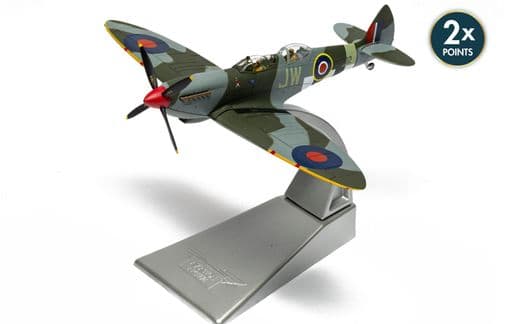
For those wishing to fly in a Spitfire, this dream held by so many people is now an achievable reality for those able to afford it, and for those who can, they have the very real possibility of being able to say, “I’ve flown a Spitfire!’ In order to do so, you need to speak to specialists like Duxford based Aerial Collective, and if you’re going to fly in a Spitfire, why not do so from the airfield which took delivery of the first service Spitfire back in the summer of 1938. This beautiful Spitfire is one of their aircraft and is currently presented in the colours of Spitfire Mk.IX ML365, the personal aircraft of ace pilot Group Captain Peter Russell ‘Johnnie’ Walker CBE, DFC and DSO. Anyone fancy the flight of a lifetime?
This magnificent trio of Spitfire Tr.9 models are now just a few days away from arriving in our warehouse, so for those hoping to see one of them at an Airshow event over the summer, or for anyone who’s been fortunate enough to fly in one of them, these beautiful new models could just be the thing for you. An aviation phenomenon which has risen to prominence over recent years, Britain’s much-loved squadron of airworthy two-seat Spitfires are not only allowing hundreds of people to experience the thrill of flying in one of these historic aircraft, but they’re also doing a fine job in maintaining, and even enhancing the legacy of this magnificent aircraft.
Long may this continue.
We’re often challenged when posting our new Vanguards model reviews, that we don’t feature enough non-Ford subjects - well, have we got something for you this time! The Rover P6 series was a rather distinctive range of saloon cars produced in Britain by the Rover Company during the 1960s and into the 1970s, cars which definitely managed to capture the imagination of the motoring public.
Taking a new approach with the design aesthetics of their new car, Rover were looking to capture a significant section of the market by occupying a position between those offered by a large number of rival manufacturer’s designs. Occupying a position between traditional higher end saloon cars and those which most people would regard as being the preserve of the more affluent in society, they created an appealing range of cars which whilst still possessing style and comfort, were exciting to drive and great to look at.
Boasting sumptuous levels of interior trim, yet weren’t overly expensive to run, they successfully created a range of cars which could be described as some of the first to be considered executive models, those driven by people who were making waves in their careers and were definitely on the up. Always possessing something of a muscular and purposeful appearance to them, the Rover P6 looked classy whichever model you went for and when it came to the all-round driving experience, these cars were hard to beat.
Just as the real Rover P6 was something of a head-turner, our 1/43rd scale Vanguards tribute to it is a little stunner, and our latest impending release simply oozes die-cast style and class.
VA06521 - Rover P6 3500 V8 in Richelieu Red.
The P6 modelled left the production line at Solihull on the 6th of January 1977, making it one of the last twenty 3500S’s built, and featured black leather upholstery, an expensive option at the time. It was despatched the following day to BL dealers Rossleigh Limited, Edinburgh, Scotland but was road registered by nearby BL dealers Appleyard’s on the 24th of March 1977; the gap of over two-months perhaps suggests that the leather was fitted to use up some of the factory’s optional parts stock, rather than for a specific customer’s order. The first owners, Ben Line Steamers Ltd, purchased it two days after it was registered and covered 36,850 miles in 20 months.
It was sold by K Dunn Quality Cars on the 9th of November 1978 to Mr David Smith-Davidson and was still in good condition when he advertised it for sale in July 1993, showing 72,000 miles. It was purchased by its current owner, West Lothian-based George Beattie, a Rover P6 Owners Club Regional Organiser who’d always wanted a 3500S. George has maintained the car well and in 2012 fitted two new rear wings and one new front wing, then had the rust in all the door’s lower areas repaired before it was resprayed. George, a retired train driver, has helped out in Bob and Gill Baird’s model shop, Harburn Hobbies, Edinburgh, since 1975, so is looking forward to displaying the model of his car.
Our warehouse is expecting to take delivery of this beautiful new model during the coming week, but as a highly limited release, we don’t expect this particular scale Rover to be sticking around for long.
As most Die-cast Diaries readers like nothing more than talking about significant Corgi model releases from within our extensive back catalogue, we thought that from time to time, it might be a nice idea to feature some of the models many of us have gracing our collections, but have long since disappeared from the shelves of our favourite model stores.
For this first example, as the person linked to the aircraft modelled would have been celebrating his 133rd birthday on the day this blog was being posted, there could hardly be a more fitting subject. Manfred Albrecht Freiherr von Richthofen may well be one of the most famous humans to have ever lived, but was certainly the world’s most famous aviator, the feared Red Baron many millions of people came to know so well. A Great War air ace who was officially credited with 80 confirmed aerial victories, von Richthofen was the most prolific air ace of WWI, but like so many men who took part in this terrible conflict, would not live to see the armistice and the guns finally falling silent.
Although the life of a Great War aviator was almost as horrendous as the conditions being endured by the men fighting in the trenches below them, flying the latest and most exciting machines produced by man conjured up a perception of chivalrous aerial jousting in the eyes of the general public, who avariciously consumed any information regarding the air war taking place Europe, especially the exploits of the personalities involved. Even enemy pilots managed to capture the imagination of the British public, who became almost infatuated with the fighting prowess of one man in particular, the feared Red Baron, Manfred von Richthofen.
Stories of his rising victory tally, and the distinctive red fighter he flew at the head of his infamous ‘Flying Circus’ were simply captivating, even though they were engaged in combat with British and Commonwealth airmen of the Royal Flying Corps and Royal Naval Air Service. His thrilling exploits did much to raise the profile of young fighter pilots engaged in deadly duels over the trenches of the Western Front and ensured that aviation developed at a pace not restricted by public opinion at home.
His Flying Circus came about as von Richthofen was given command of a new kind of fighting unit, one intended to overcome the ever greater numbers of Allied aircraft appearing at that time, and combining four squadrons of aircraft into a large fighting group. This collection of men and machines would be sent to specific problem areas on the Western Front, intended to clear the skies of Allied aircraft, before moving on to the next combat hotspot – something of a mobile aviation troubleshooting unit.
Von Richthofen was reputed to have painted his aircraft red purely and simply so his own pilots could quickly check his position during the melee of combat, but as the reputation of the group began to grow, so other members of the circus also began to paint their aircraft in a similarly garish manner. The brightly coloured aircraft and the fact that the unit would travel from one Western Front combat hotspot to the next quickly earned the unit the now famous name ‘von Richthofen’s Flying Circus’, however, despite this rather jocular title, these airmen were playing a deadly game where the stakes could not be higher.
Supremely confident in the abilities of their leader, and revelling in their own growing reputation, these brightly coloured aircraft soon became synonymous not only with ease of recognition by fellow pilots of the Jasta, but also by boasting a colourful challenge to enemy pilots who dared to enter the same airspace – if you want this piece of sky, you’ll have to come through us!
Back in 2018, and to mark the centenary of Manfred von Richthofen’s death, the Aviation Archive range released a commemorative Fokker Dr.1 model, our scale representation of the aircraft the Red Baron was flying one that historic day. The model itself was requested by our US team at the time, but we were allowed a small allocation to sell through the main UK Corgi website.
To say it was a success would be something of an understatement, and our initial website allocation sold out within 90 minutes. We did manage to secure a small additional supply the following week, but these models have all long since found collector homes and if they do ever become available, are immediately snapped up by those who initially missed out.
Let’s take a nostalgic look at the details behind this popular release.
The thick fog which greeted the pilots of JG.1 on the morning of Sunday 21st April 1918 meant that there would be no flying for the foreseeable future, or at least until predicted winds promised clearer skies by mid-morning. Sure enough, by 10.45 the Jagdstaffel were in position over the Somme valley region, preparing for combat with British reconnaissance aircraft and their fighter protection, led by their inspirational commander Manfred von Richthofen, the celebrated Red Baron, flying his distinctive red Fokker Triplane.
Having claimed his 79th and 80th victories the previous day, von Richthofen actually had a significant distraction during this latest mission, in the form of his young cousin, Wolfram von Richthofen, who was flying his first combat sortie with the squadron. Although specifically instructed by his illustrious mentor to take up a safe position in the sky and to only observe any fighting that took place and definitely not get involved, Wolfram would later find himself under attack by another novice Allied pilot flying a Sopwith Camel, a development which resulted in the Red Baron to come to his assistance.
Von Richthofen appeared annoyed at this situation, something which made him go against all his strict combat doctrines and proceeded to chase the Allied airmen down to extremely low level, where he was at risk from ground fire. With the prevailing wind blowing both aircraft over British and Commonwealth lines, the situation became worse for the Red Baron when a second Camel spotted the plight of his own inexperienced comrade, and dived in to attack the distinctive red Fokker Triplane, which by now had also attracted the attention of all the Allied ground units positioned along the Morlancourt Ridge, overlooking the Somme River.
Appearing to have issues with its Maxim guns, as he didn’t fire on the hapless Camel pilot despite being on his tail, von Richthofen’s triplane was seen to rear up sharply, before immediately attempting a landing on nearby rough ground. When Allied troops positioned in the area reached the crashed aircraft, its pilot, the feared, respected and incredibly famous Manfred von Richthofen was lying dead in the cockpit, killed by a single .303 bullet apparently fired from the ground.
By the time Manfred von Richthofen had taken delivery of his first Fokker Triplane fighter, he already had 59 victories to his name and had gained notoriety as arguably the most gifted fighter pilots the world had ever seen. With his distinctively presented aircraft and privileged family heritage, he soon earned a nickname which would create an aviation legend - the ‘Bloody Red Baron’ of the German Air Service. Becoming something of a celebrity figure, with the apparent chivalry of aerial combat acted as a welcome distraction from the hideous indiscriminate carnage of trench warfare.
Von Richthofen’s final Fokker DR.1 Triplane 425/17 was produced specifically for the famous ace between the end of 1917 and early 1918. As the mount of one of the world’s most famous airmen and a hero to both the Luftstreitkrafte and the German people, the aircraft’s construction was to a particularly high standard, and was reported to have benefited from superior quality fabric covering and the latest version of interrupter gear which allowed the aircraft’s two Spandau Maxim machine guns to fire through the arc of the propeller and in the sight-line of the pilot.
It was also noted that the engine was of a higher build quality than other similar machines which had fallen into British captivity and were able to be evaluated by Military officials.
Despite the fact that von Richthofen flew several aircraft types during his combat career, and gained most of his victories using different versions of Albatros fighters, the Fokker Triplane unquestionably became the aircraft with which he is most commonly associated. This may simply be due to the fact that this red Fokker Triplane is the aircraft which supports the legend of the Bloody Red Baron most effectively, or simply that it was regarded by the general public as the epitome of German Great War fighter technology. Whatever the reason, Manfred von Richthofen has become inextricably linked with this diminutive fighting aeroplane over the years.
For that reason, Fokker Triplane 425/17 has become without doubt, one of the most famous aircraft in the history of flight and was the mount of the Red Baron when claiming his final two aerial victories against British Sopwith Camels on 20th April 1918, and also the machine in which he met his death the following day. Although fatally injured by a single .303 bullet coming from heavy ground fire, von Richthofen was able to safely land his Triplane behind Allied lines, only to succumb to his injury moments later.
With his body dragged from the cockpit and knowing the significance of what they had just witnessed, Allied troops stripped the Red Baron’s aircraft of anything they could quickly remove, with this avaricious trophy hunting resulting in an officially published British military account that the aircraft had supposedly been damaged by artillery fire.
As a feared, yet respected enemy, Manfred von Richthofen was buried with full military honours at Bertangles cemetery on 22nd April 1918, where he was laid to rest amongst the fallen of his enemies, just eleven days before what would have been his 26th birthday.
We think that the Aviation Archive range does a great job in preserving history and recreating some of the world’s most famous aircraft in die-cast metal, and in this regard, could there possibly be a more fitting release than this one?
If you would like to see us featuring your own personal Corgi favourite in a future edition, or would like to suggest a model you think does a great job in attempting to preserve history, please do drop us a line using the link below, and we’ll see what we can do.
We’re afraid that's all we have for you this time around, however, we’ll be back as usual in two weeks’ time with a further exclusive selection of the latest Corgi model updates. As ever, you could always drop us a line if you felt moved to do so, to comment on anything blog, collecting or Corgi model related, or even perhaps to suggest a topic you might like to see the team cover in a future edition. As always, our diecastdiaries@corgi.co.uk address is the one to use.
If you can’t wait for the next blog, you will find plenty of Corgi model collecting discussions taking place on our official social media channels, access to which can be obtained by clicking on the respective links at the foot of the Corgi website homepage.
Link access to Corgi social media sites.
Thank you for continuing to support your Corgi Die-cast Diaries blog. Our next edition is scheduled to be published on Friday 16th May, and we look forward to seeing you all back here then.
Thank you for your continued support