
Welcome to our latest edition of CORGI Die-cast Diaries, your fortnightly blog review bringing collectors all the news, updates and topical stories from the captivating world of CORGI die-cast model collecting.
As promised in the previous edition of our CORGI blog, we’re going to be using this latest publication as an opportunity to bring you a full project introduction to an exciting new tooling project which was exclusively unveiled during our attendance at the recent Duxford Battle of Britain Airshow. More than just a slight departure from usual Aviation Archive fare, particularly in the larger 1:48th scale, our new Grumman F-14 Tomcat project will bring one of the world’s most recognisable and iconic post WWII aircraft to the range, one which not only enjoys the reputation of being one of the most deadly jet fighters of the Cold War era, but one which proved effective enough to make the transition to silver screen stardom in some style.
In this latest edition, you can look forward to seeing an exclusive selection of CAD development imagery from files created in support of this ambitious project, along with a look at the first officially authorised box artwork produced in support of a rather specific use for the new model. We will also have updates on the current status of the project, as we endeavour to bring you information from every stage of a project which already looks like it might have captured the imagination of large sections of the die-cast aviation collector hobby.
That leaves us with just one question to ask before we get started – ‘Do we all feel the need for speed’?
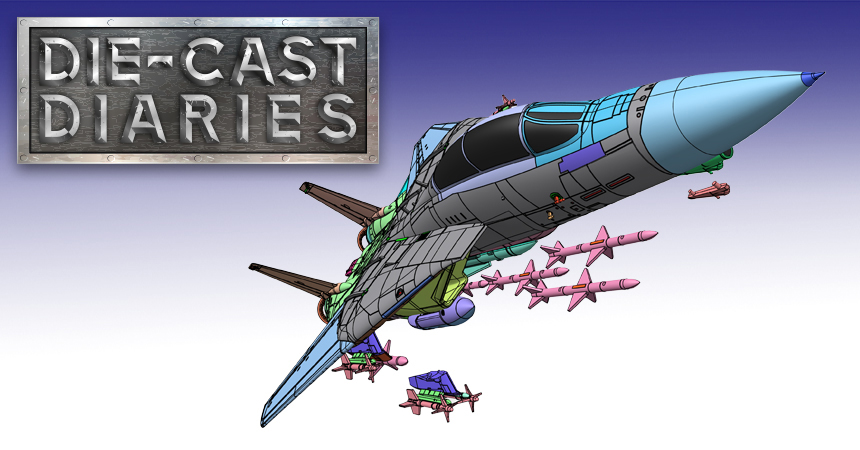
All the images used to illustrate this project introduction feature CAD screenshots from the design files produced in support of this new tooling project.
When thinking of my title for this latest edition, I initially made a slight spelling error which whilst not making it through to the final edit, actually sort of worked – ‘Taming the Tomcat in die-cat’.
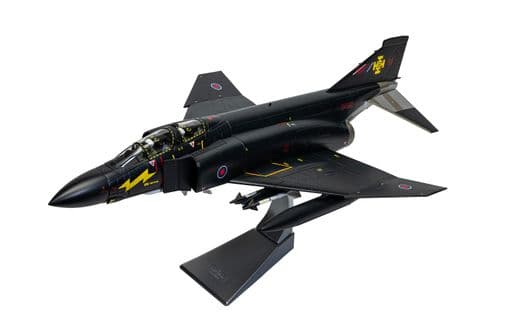
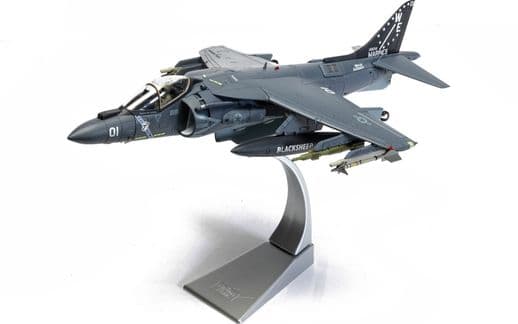
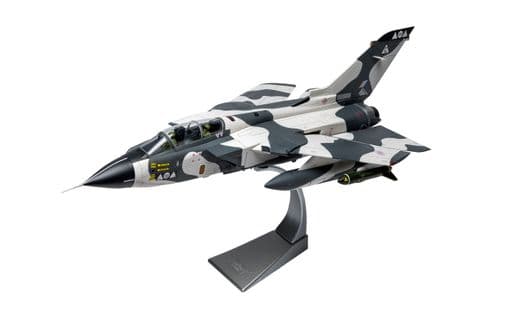
As far as Aviation Archive collectors are concerned, the recent announcement of our intention to produce a large scale version of the Grumman F-14 Tomcat in die-cast will have caught many off them off guard somewhat, as we’re just not known for producing US aircraft subjects in 1:48th scale. With such aircraft as the English Electric Lightning, Harrier and Tornado in our tooling inventory, most people would probably have expected our next new project announcement to be something like a Jaguar, a Buccaneer or even a Hawker Hunter.
That being said, our second jet powered tooling release in this scale was arguably the most famous of all the post WWII fighter types in the shape of the McDonnell Douglas Phantom, even if it was the Anglicised variant of the fighter, so perhaps we shouldn’t be all that surprised really. In addition to this, once people had got their heads around our Tomcat revelation, it all seemed perfectly logical and they were more than happy to welcome the F-14 into the growing Aviation Archive tooling community, whilst at the same time suggesting a selection of other US aviation subjects which should also be up for consideration.
From a project development perspective, we’re still at quite an early stage with regard to the F-14 Tomcat project, and probably wouldn’t usually consider sharing information with DCD readers just yet, however, with our announcement having caused such a stir and with the project clearly being of interest to collectors, we thought it appropriate to be even more open with our readers than we would normally be with a new tooling project during this early development phase, so here we go.
From a wider project perspective, the model we had on show at Duxford was the very first 3D printed resin model produced using parts designed in CAD, something of a proof of concept model. Not even something our development team would consider relying on for accuracy, models such as these are rarely seen outside the CORGI offices, as they really are the first line in the development sand and as a result, are always subject to significant change. That being the case, those who had the chance to inspect the model at Duxford recently really were looking at a little bit of CORGI model history, even though they probably didn’t realise it at the time.
Since then, the team have received another resin sample model produced from modified and updated CAD files, once again produced as a prototype in resin and hand built by one of our experienced in-house modellers. This second sample has already been thoroughly inspected, with further tooling modifications requested by our development team, and with the model itself suffering at the hands of all this close attention. This is the reason why we weren’t allowed to include pictures of this current stage in this fascinating process, because it looks like it’s been mauled by a Sukhoi Su-27 Flanker.
Our new F-14 Tomcat made its public debut at the recent Duxford Battle of Britain Airshow
Once all the requested CAD changes have been actioned following receipt of this second prototype model, our Development Manager will be in a position to release the design for tooling production, something he thinks will probably take place during November, and something which brings us right into Aviation Archive territory. Although the tooling design might still require the odd refinement, committing the design to metal is a significant stage in the life of any new model, and unlocks the prospect of seeing the model produced in die-cast metal for the very first time.
The tooling will be used to manufacture a metal engineering sample model, one which will be coming in for even more close scrutiny than the resin prototype models did, where every aspect of its design from surface detailing and parts fit to shape and scale accuracy will be assessed, with the ultimate aim being to release the tooling for PP sample model production. This will be the first time that actual schemes and liveries will come into play, and where our artwork files will be used to add colour and authenticity to these metal masterpieces.
We can expect to see images of that first metal engineering sample model towards the end of this year, or very early next, but we would like to stress that this isn’t the only new model tooling project that we’re currently working on, so we will have plenty of interesting news to bring you over the coming few weeks and months. As always, DCD will be your first port of call when it comes to exclusive updates to all the most interesting new CORGI model tooling projects.
All the beautiful CAD imagery used to illustrate this latest update were all supplied by our Development Manager this morning, so you can’t really get more current than that. As they are just design files at this stage, this is probably a good time to look at why the CORGI team felt that the time was right for a Tomcat, and why this American classic managed to force its way to the top of our new tooling projects list.
Across the world of design and particularly in the world of aviation, there is an old saying that suggests that ‘If it looks right, it is right’, and if that saying has any merit at all, then it definitely applies to the Grumman F-14 Tomcat. Developed by a company that had earned a proud reputation for the production of rugged and effective naval fighters which had been forged in combat, the F-14 represented a new breed of naval jet fighter, one which was at the cutting edge of technology and was pushing the very boundaries of what was possible with manned, powered flight.
Grumman did have plenty of previous experience in developing effective jet powered aircraft for the US Navy, with their Panther and Cougar fighters having already lined the decks of US aircraft carriers for many years, however, they had been coming under increasing pressure from other manufacturers over recent times, with aircraft from Vought and McDonnell Douglas all having been selected ahead of their own design submissions during the 1960s.
The lessons learned during the Vietnam War would stimulate a period of aircraft development in America that resulted in the introduction of some of the most famous and most capable jet powered aircraft in the history of aviation, as the US looked to match and overtake the latest Soviet designs which were viewed as their main adversaries. Indeed, during the early 1960s, the US navy were looking to introduce a powerful new fleet defender, one featuring the very latest technology and one capable of destroying multiple targets at beyond visual range, in an attempt to provide their navy with an aircraft possessing the capability to meet all current and future potential threats.
The development of this new aircraft initially proceeded under the controversial ‘Commonality Approach’, where economies of scale resulted in a dual program being followed to develop an aircraft capable of satisfying both US Air Force and Navy requirements. The Tactical Fighter Experimental (TFX) program required General Dynamics to build the F-111A for the Air Force, whilst Grumman would build the similarly equipped F-111B for the Navy, however, it didn’t take long for the differing requirements to start pulling the project apart.
The US Air Force were looking for a devastating fighter bomber that would spread fear into the hearts of any potential adversary, whilst the US Navy needed a powerful and extremely capable fleet defender and dogfighter, meaning that the program started to run into some difficulties. Whilst some significant technological advances were made during this time, the Naval variant in particular was showing itself to be unsuitable for the task for which it was intended, as it was far too heavy and seriously underpowered.
With the Naval side of the project now essentially dead in the water, the US Navy threw their full weight behind the search for a new fleet defence fighter, one capable of dealing with the latest breed of agile Soviet fighters, such as the Mikoyan-Gurevich MiG-25, and with years of frustrating delays behind them, there was no time to lose. The brief was a demanding one – they were looking for a twin engined, two man aircraft equipped with multi-missile capability and a target acquisition system that allowed the aircraft to deal with multiple threats at distances well in excess of 100 miles from their home carrier.
Able to cruise for long periods, but also to possess blistering performance when it needed to speed towards a potential threat, the fighter was also required to have a secondary role of close air support aircraft, with the ability to carry bombs and feature a built in gatling gun.
Not all that much for the successful design to achieve then!
Which image version do you prefer - the one with the panel line detail turned on or off?
Submissions were received from companies such as General Dynamics, McDonnell Douglas, Ling-Temco-Vought and North American, however, the Navy would eventually return to Grumman for this vital project and Grumman wouldn’t let them down. Just as they had done when the Navy needed rugged fleet defenders during the Second World War, they produced something of an aviation classic with their new jet fighter, and aircraft which would go on to become an icon of the Cold War era.
Fast, powerful and able to operate in all weathers by day or by night, the F-14 Tomcat proved to be just what the US Navy has been looking for, however, as you might expect, an aircraft which employed the use of such advanced technologies didn’t negotiate its development without suffering one or two setbacks. Thankfully, the aircraft showed so much potential that these setbacks hardly delayed the introduction of the F-14 and just twenty-one months after making its maiden flight, the first production aircraft was delivered to VF-124 ‘Gunfighters’ at Naval Air Station Miramar – the day of the Tomcat had arrived.
The adoption of the F-14’s name is as interesting as the aircraft was capable. It was linked to one of the aircraft’s most ardent supporters, former US Navy Vice-Admiral Thomas F. Connell and his personal callsign during his time as a naval aviator. Known as ‘Tomcat’ whilst in the cockpit, this name seemed perfectly appropriate for the new aircraft, particularly when considering how most, if not all of Grumman’s earlier US Navy fighter types had been named after cats – the F4F Wildcat, the F6F Hellcat, the F7F Tigercat and the F8F Bearcat. The new F-14 Tomcat was in very good company, even if it did have bigger teeth and much sharper claws than any of its fighting predecessors.
Right at the very beginning of this section, we pondered the old adage that ‘If it looks right, then it is right’, and there is absolutely no doubting that the Tomcat has to be described as a bit of a looker. With its sleek, purposeful appearance, and swing-wing capability, an F-14 bristling with missiles was quite a sight to behold, to a point where even though this was clearly a fleet defender, many people regarded it as the ultimate fighting aeroplane for many decades.
This opinion was only enhanced further in wider popular culture during the mid 1980s when a certain movie release also made this aeroplane type the star of the silver screen, at the same time as making everyone of a certain age dream of becoming a fighter pilot. Indeed, so iconic was the Tomcat that when the US Navy eventually decided to retire them in 2006, people thought they had lost their minds and were replacing the Tomcat with a less capable aircraft.
For those of us born during the 1960s and 70s, the Grumman F-14 Tomcat will always have a special place in our hearts, a fleet fighter which was the envy of the aviation world and definitely an aircraft type that everyone wanted a scale model example of.
One word which is always associated with the F-14 Tomcat is tough. The aircraft was tough enough to operate from the deck of an aircraft carrier at sea in all weather conditions by day or by night, and when it got itself into a fight, you knew that its toughness would ensure there was only ever going to be one winner. The basic airframe of the F-14 was also tough enough to accept almost constant upgrade and improvement, meaning that the final variants of Tomcat were so much more effective as fighting aeroplanes that their predecessors were, true rulers of the sky.
The Grumman F-14 Tomcat really was a very special aeroplane.
An exclusive first look at artwork produced in support of our Tomcat release which may or may not be inked to a certain famous aviation related movie from the 1980s.
For all the reasons mentioned above, Aviation Archive collectors might still be questioning why we decided to go down this particular development route for this latest, extremely expensive new tooling project. The Tomcat is such an iconic subject for scale model replication, that quite a number of manufacturers have already covered it in die-cast, although it has to be said, with some differing levels of accuracy. It would even be a valid standpoint to question how many F-14 Tomcat models any self-respecting model collector might actually need, but these are all questions that the CORGI development team had also asked themselves.
Our answer to all those questions, was, ‘But what if we could do something really special with the Tomcat, and what if we made it in 1:48th scale?’ Even more than this, what if we made a model that was the ultimate scale die-cast representation of this magnificent aircraft, one which would serve as a fitting centrepiece to any model collection!
These have been the guiding principles behind this project, and we have to say that as it has progressed through the early development stage, we’ve only managed to get ourselves even more excited. The resin prototype model looked fantastic even though we knew it was flawed, and the reception the model received from our collectors at its Duxford debut proved to be the ultimate reassurance for us – we were now convinced that we were on to a real winner.
From a development perspective, we already know that this is going to be a rather spectacular model with regard to its legacy in the annals of the Aviation Archive range. From an engineering perspective, we also know that this is going to be a very heavy model, with a high metal content and many impressive features, not forgetting the fact that this is a very BIG aeroplane indeed. The design incorporates impressive levels of surface detail and if you’re making an F-14 Tomcat model, you might as well make one that allows you to cover its service career, and do so by replicating all its iconic features, and we intend for this model to do all that and more.
And then there’s the question of that famous film in which this aircraft features. We’re pleased to be able to confirm that as well as welcoming this famous aircraft into the Aviation Archive range, we will also be making our own scale F-14 Tomcat tribute to the Top Gun movie, with those particular releases actually moving away from the Aviation Archive range, and benefitting from some added value fan features, which is all very exciting.
We’re still at a relatively early stage in the development of the new Grumman F-14 Tomcat tooling, however, as this is now a high priority project, things are going to really start to gather pace from here on in, and we’ll endeavour to keep you fully updated at every step of the way. This is going to be a thrilling ride, with a spectacular new model vying for a place in our display cabinets at the end of it.
This is just one in a series of new model projects we’ll be bringing you details of over the coming months, and we don’t think you’re going to be disappointed. For now though we hope this latest edition will serve as an adequate introduction to our new 1:48th scale Grumman F-14 Tomcat project.
That’s all we have this time around, but we will be back as usual in two weeks’ time to bring you a further exclusive selection of updates. As always, if you would like to drop us a line in the meantime to comment on anything CORGI model related, or to suggest a future blog topic you’d like to see covered here in DCD, you’d be more than welcome, and we’re always happy to hear your views.
As ever, our diecastdiaries@corgi.co.uk address is always the one to use.
If you can’t wait for the next blog, you will find plenty of CORGI model collecting discussions taking place on our official social media channels, access to which can be obtained by clicking on the respective links at the foot of the CORGI website homepage.
Link access to CORGI social media sites.
Thank you for continuing to support your CORGI Die-cast Diaries blog, as we head into our eleventh year of production. Our next edition is scheduled for publication on Friday 23rd October.
Until next time, once again, thank you for your continued support.