
Welcome to this latest edition of Corgi Diecast Diaries, your regular blog review of all the news, updates and topical stories from the captivating world of Corgi die-cast model collecting.
It’s Corgi time once more and if you are hoping to see an impressive selection of exclusive development imagery from some of the most eagerly anticipated future Corgi model releases, then you are not going to be disappointed. We begin by looking at the next release to join our Military Legends model range and a scale representation of a machine which most people consider to be the ultimate in tank design, the purposeful and much feared Tiger I. We will see how this next release in the Tiger series features an appealing little hull addition which will make it a historically accurate representation of this feared German tank, but also one which makes it different from any other previous Tiger release. We move on to bring you a significant update from our new 1/48th scale McDonnell Douglas Phantom FG.1 tooling and an exclusive first look at the latest pre-production sample, which includes the tooling modification which will add even greater appeal to this magnificent model.
If that were not already enough to have you excitedly reading on, we look at two model releases from the current Aviation Archive range which might be different aircraft types, but were flown by the same American pilot during the latter stages of the Second World War. One of these models has already been released, with the other now advancing to signed sample stage, but seeing them both pictured together gives us an opportunity to look at the fascinating story behind their range inclusion. We end with our latest warehouse sweep and a look at some of the fantastic limited edition models which are currently still available, but will soon be consigned to the diecast history books. As you can see, another feature packed edition is awaiting your inspection.
Although the German Tiger I roamed the battlefields of the world over 75 years ago, this fearsome machine still holds a fascination for many and is arguably the most famous tank ever produced
When it comes to the subject of famous armoured fighting vehicles, there is one tank which stands hull and turret above all others, the mighty German Tiger I. It is open for discussion as to whether this was actually the best tank of all time, or even the best of WWII, as every tank was designed to fulfil a specific battlefield role, however, there is certainly no denying that the Tiger managed to terrorise and captivate the world in equal measure and from its combat introduction in the Autumn of 1942, it has held a fascination for many. Aesthetically, the angular Tiger just looks like a fearsome fighting vehicle should and as it was the most powerful and capable tank in the world following its service introduction on the Eastern Front and later in North Africa, it must have seemed as if the Tiger I would set the standard for all future tank design, particularly if they were to compete with this monster.
We now know that the much vaunted German Tiger may have been a technological marvel at the time, but it was not without its flaws. Over-engineered and extremely expensive to produce at a time when the Wehrmacht needed large numbers of new tanks on the battlefield to help change the fortunes of war back in their favour, there were simply never enough Tigers to go around and the task of getting them from factory to the front line was a military exercise in itself. To make matters worse, the first Tiger tanks were rushed into service before many of the technical issues associated with new weapons could be ironed out and as a consequence, its introduction was much less effective than it should have been. These difficulties ranged from the operation of
such heavy tanks on the soft ground they encountered in Russia, to the challenging handling of this monster’s Maybach V-12 engine and transmission which had eight forward and four reverse gears. It has to be remembered that crews were overcoming these challenges in a combat situation, with their lives in very real danger whilst doing so.
Perversely, for a weapon which was designed to give Wehrmacht panzer units a fighting edge on the battlefield, the first crews to operate this awesome tank during the siege of Leningrad were so preoccupied with not allowing one of the new Tigers to fall into enemy hands that they were more concerned with being able to effectively destroy their own tank than those of the enemy. As it was, even though large numbers of Soviet tanks began to fall to the powerful 88mm gun of the Tiger, the Russians did manage to secure two virtually combat ready examples of the Tiger I by the early spring of 1943 and the secrets of the Tiger were secrets no more.
Two of the Second World War’s most famous tank types together, the fact that many captured T-34s were pressed into Wehrmacht service speaks volumes for the capabilities of this Soviet machine. It is still dwarfed by the mighty Tiger, but looks stunning wearing these unusual German markings
Although diecast military vehicles have long been a feature of various Dinky/Corgi ranges over the years, the Military Legends models as we now know them now first appeared in the early 2000s, as this was seen as a major expansion of the tooling bank, to incorporate this incredibly popular subject matter. Produced in high quality diecast metal, the range included such military classic as the Allied Sherman and Churchill tanks, along with the Panther and Tiger they faced in combat during the latter stages of WWII, with these new models immediately proving popular with collectors. Unfortunately, the Corgi company soon stumbled upon harder times back then and this range was neglected, with cancelled projects and poor execution blighting these delightful models. Following Corgi’s acquisition by Hornby in 2008, the future for these military vehicle models seemed much brighter, however, it would be a further ten years before this particular section of the tooling bank was accessed once more.
The launch of our 2019 model range marked a significant development in the history of our 1/50th scale Military Legends models, as collectors were presented with the unexpected return of these beautiful models, more than ten years since they had last featured in a Corgi range launch. At that time, we described in the blog how their return marked the end of a lengthy and quite complex period of investigation and tooling assessment and how the current development team were determined to unlock the potential of these military classics and to make them better than they had ever been. That determination continues to this day and whilst the pace of new release additions to this range may not have met with our initial expectations (re-starting the range proved a little more problematic than first anticipated), models are slowly coming through and we are really proud of what we have achieved - we really do think these models are better than ever now.
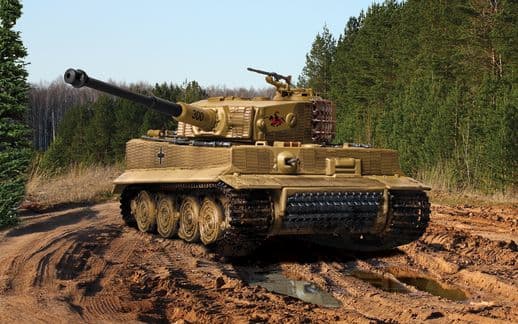
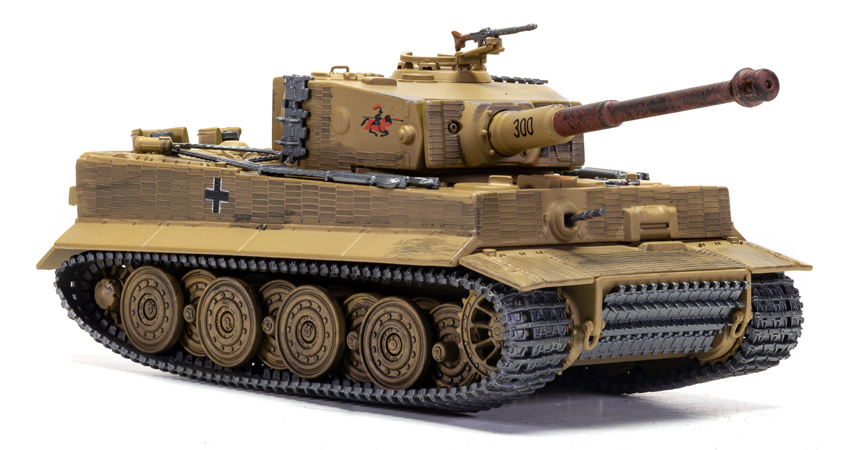
Scheduled for a July/August release, the latest impending addition to our Military Legends range is a real cracker and one which continues our successful Tiger I series, a tank which still holds an enduring fascination for many modellers and collectors. In addition to this, from a range perspective, could this be the best Tiger I model Corgi have ever released? We think it might just be for several reasons, not least of which is the fact that it features a new innovation for the range, a representation of the Zimmerit anti-magnetic mine paste which was applied to many German military vehicles during WWII.
CC60514 - Panzerkampfwagen VI Tiger I Ausf E (Late production), Turret Number ‘Black 300’, sPzAbt. 505, Eastern Front, Summer 1944 - Russia on the offensive
For many with an interest in military history, the German Tiger I is still widely regarded as the epitome of tank design, beautifully conceived and manufactured, whilst at the same time proving deadly on the battlefield. Unrivalled by any opposing tank when it saw its combat introduction on the Eastern Front during September 1942, the Tiger I soon began to show its potential, using its highly effective sighting optics and accurate 88mm KwK 36 tank gun to take a heavy toll of Soviet armour. Capable of destroying enemy tanks at ranges which made it almost impervious to return fire, it was not uncommon to hear reports of small units of German Tigers destroying more than ten times their number in Soviet armour during engagements, as their opposition rushed headlong towards the German tanks in a deadly hail of armour piercing shells, with only the amount of ammunition held limiting the effectiveness of the Tigers killing spree. Indeed, if a Soviet tank did manage to get close enough to fire on its capable adversary, their shells would invariably ricochet off the thick frontal armour of these German beasts and attract the attention of the enemy tank commander in the process. During the spring of 1944, the Tigers of the 505th Heavy Tank Battalion adopted the distinctive ‘charging heavy knight’ as their unit insignia, an emblem which they would retain until the end of the war in Europe and one which drew inspiration from the fact that these armoured behemoths were now performing the historic role of battlefield shock cavalry from years past.
Despite the fact that the mighty German Tiger Tank still retains its position as arguably the world’s most famous armoured fighting vehicle, its undeniable aesthetic appeal helps to mask a number of fatal flaws with a design which never stood a chance against the industrialisation of modern warfare. Not content with producing the most fearsome tank on the battlefield, the German’s adopted something of a ‘no expense spared’ philosophy when producing the Tiger, at a time when their tanks were needed on the battlefield and the Allies were placing ever increasing strains on their ability to wage war. Every example may have been beautifully manufactured to exacting standards, but at production costs which were simply staggering, to a point where every individual Tiger loss would become something of a minor military disaster. Indeed, the simple process of transporting these monstrous 57 ton beasts from the factory to somewhere close to the battle zone would pose significant challenges. Due to the width of the Tiger’s hull and standard railway rolling stock wagons, each new Tiger needed two full sets of tracks, a narrow set for transportation and a wider, operational set for use during combat - these tracks would have to be interchanged every time the Tiger had to be moved other than under its own power. Although the Tiger went on to produce a WWII enigma which endures to this day, its design excellence and uncompromising manufacture would ultimately prove to be its armoured Achilles heel.
The Zimmerit anti-magnetic paste applied to many German tanks and assault guns from 1942 was an attempt to protect the vehicles from magnetic mine attacks during the melee of close combat. Its origins appear to have emanated from the German development of their own magnetic infantry anti-tank mine, something which they assumed the Allies would later copy. Other sources site the threat posed by fearless Soviet anti-tank squads on the Eastern Front, who would lay concealed until a tank passed close to their position, which they could attack using all means, including magnetic mines. The paste itself was a complex compound of substances using a benzene base and when mixed correctly, would result in a soft, putty-like substance, which although has an unpleasant smell, was quite easy to work with.
This next Tiger I release features a representation of the Zimmerit paste application which was such a feature of German tanks during the latter stages of WWII
Brothers in arms - rather than being targeted by this Tiger, this captured T-34 could rely on some high velocity protection from its new big armoured brother
The Zimmerit paste was applied liberally to sections of the tank’s hull and turret, building it up in layers once the previous application had dried, with the final coat having a semi-uniform rectangular pattern, although many different variations appear to have existed. The anti-magnetic properties of the paste, combined with the raised ridges of its application meant that it would have made it difficult for anti-tank squads to attach magnetic mines to the tank, although historically, this kind of weapon was not used in any significant numbers by Allied forces, particularly in the west. The protective paste was however, used widely by the Germans from 1943 onwards and even though this was messy, time consuming work, it was easy enough to apply in the field, even though most new vehicles would be delivered with Zimmerit already applied.
If the Zimmerit paste had been applied in accordance with instructions, which included leaving enough time for the paste to dry between coats and burning off any of the remaining flammable liquid before applying additional layers, the coating proved to be extremely hard waring and vehicles excavated many years after the end of the war would still retain an almost intact Zimmerit coating. Although the paste many not have been required to protect against the perceived threat for which it was initially developed, it did prove to be a really effective additional method of camouflage, which is presumably why it continued to be used late into the war and why so many variations in application pattern appeared to exist. Even though modellers will tell you that any application of a Zimmerit finish can only ever be a representation and is definitely open to interpretation, we are really excited to introduce this finish development to our Military Legends range and will be interested to hear what our collectors think about it once this new model is released. Tiger I (Ausf E) ‘Black 300’ CC60514 with its Zimmerit coating finish is scheduled for a summer release and is available for pre-order now.
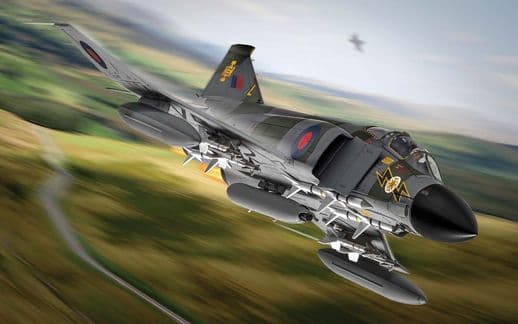
An exclusive first look at the pre-production sample model of the second release from our 1/48th scale F-4 Phantom tooling, one which features the newly designed opening canopy option
Over the course of the past five months, the Corgi Diecast Diaries blog has brought readers details of a significant modification applied to a new model tooling which was actually only announced at the beginning of 2019 and only has one previous release to its name. Viewed as the ideal follow-up release to our hugely popular 1/48th scale English Electric Lightning F.6 tooling, the Anglicised variant of the famous McDonnell Douglas F-4 Phantom is perhaps one of the most impressive aircraft to have seen British service during the Cold War era and one which famously served with both the Fleet Air Arm and the Royal Air Force during a 21 year service career. In this larger scale, the Phantom really is a bit of a beast and a truly impressive model which would make for a stunning centrepiece to any model collection, however, despite the undoubted popularity of the initial release, we received some collector feedback asking if we would consider making a modification to the tooling which would make the model even more desirable.
As we are always keen to receive collector feedback regarding all of our model releases and because the Phantom was such a significant addition to the Aviation Archive range, our Development Manager took the unusual decision to immediately return to the CAD files to investigate if they could be modified in support of these enthusiast requests. The decision to originally proceed with a single piece clear canopy for the Phantom was a perfectly valid one, as this is such a distinctive feature of the aircraft and our model would clearly not have the benefit of hydraulics and locks to keep the canopies in their closed position, as the real aircraft did. By their very nature, opening canopies on models, especially representations of two seat tandem arrangements such as the one employed on the Phantom, can lead to some obvious design challenges for anyone tackling them, with two distinctly different avenues to consider. The adoption of a single piece unit would certainly allow for the accurate representation of the canopy for those collectors wishing to display their model in flight configuration, as it would perfectly capture the beautifully clean lines of this classic aeroplane for the majority of situations. The only times the aircraft would have its canopies open would clearly be for crew access and possibly whilst taxiing prior to take off and just after landing. Even though we thought we had provided the canopy option which would be the most appropriate for this new model, if our customers thought the other option was actually the most appealing, we felt compelled to look at what we could do.
At the beginning of the year, the blog not only brought readers details of the second release from the Phantom tooling, but also confirmed that the design files were already being modified and the requested opening canopy option was underway. Exclusively revealing images which had been taken straight from these design files, we also confirmed that the second release from this still relatively new tooling project, one which would be arriving later in the year, would definitely be featuring the requested canopy design modifications. We are delighted to have another Phantom exclusive for you now, as show not only a different view of the modified CAD files from this impressive model, but also a first look at images featuring a painted pre-production sample model of the second Phantom FG.1 release, a sample which includes the opening canopy modification. It is important to stress that despite already looking extremely impressive, the newly designed opening canopies are still within the development stage and may be subject to further modification before this second model is released. Having accepted that fact, as you can see from the images we are featuring here, it does dramatically alter the look of the model and will not only delight Phantom Phanatics everywhere, but represents a significant commitment by our design and development team. By the very nature of this modification, it means that all subsequent releases from this tooling will feature the revised opening canopy option, therefore making the initial Fleet Air Arm release a fascinatingly collectable release anomaly in this impressive series.
AA27902 – McDonnell Douglas Phantom FG.1 XV592/L, RAF No.111 Squadron, Leuchars, Fife, Scotland, Late 1970s
Previously unseen CAD screenshot showing the canopy design modification now applied to the Phantom tooling
From a similar angle, our first look at the pre-production sample model of the second Phantom release, one which featured the modified canopy design. Please be aware that this is still a sample model under development
For the Phantoms which previously operated in the colours of the Fleet Air Arm, RAF Leuchars in Fife, Scotland would become as much a home to them as either HMS Ark Royal, or RNAS Yeovilton had been. With the aircraft ‘diverted’ to the Royal Air Force from the ever diminishing original Navy order already equipping No.43 Squadron at the airfield, disbandment of the last remaining Royal Navy Phantoms would also see these aircraft heading up to Scotland, as it was decided all the former Navy F-4K (FG.1 in British service) machines should operate out of the same airfield. During 1974, RAF No.111 Squadron was operating the Lightning F.6 our of Wattisham, whilst a designate unit was working up on the new RAF Phantom F-4M (FGR.2 in British service) at Coningsby. Once this process was complete, the squadron number was transferred and this famous old fighter unit became a Phantom squadron, but flying the multi-role variant of the jet.
The following year, ‘The Tremblers’ made the move to Leuchars and embarked on a long association with the airfield which would last for 35 years and encompass two different aircraft types. With the arrival of the last remaining Fleet Air Arm FG.1 Phantoms from 1978, No.111 Squadron began the slow conversion from FGR.2 to FG.1 variant in the air defence role, with their earlier RAF Phantoms being distributed between other FGR.2 units around the country. For the next two decades, RAF Leuchars would be home to the Phantom Training Flight and the FG.1 Phantoms of Nos.43 and 111 Squadrons, until both units replaced their naval heritage Phantoms with the air defence variant of the Panavia Tornado during 1989 and 1990.
This stunning new Phantom model is scheduled for a late year release, which means that we still have a couple of development updates to bring you before it will be gracing our display cabinets. Sight of the images above does highlight the fact that this beauty is on track and will make for a stunning companion release not just for the existing Fleet Air Arm Phantom, but also for the recently released camouflaged Lightning F.6.
So far in this latest blog update, we have looked at the latest developments in both our Military Legends and Aviation Archive ranges, but there is more to come. As our Vanguards 1/43rd scale vehicle series occupies such a significant position in any Corgi model range, we couldn’t leave fans of these models out, especially when we have such a stunning new model to tell you about. Ford’s magnificent Escort model has always had the distinction of being one of Britain’s favourite small family cars, not only because it was seen as being stylish and affordable, but also because it was cleverly marketed as having strong links to motorsport success.
For Ford enthusiasts everywhere, the Mexico range came to epitomise how this manufacturer could take a good looking family car and turn it into a world rallying heavyweight, something which endeared the Escort to millions of people - if you owned an Escort, you were a real driver and your mount possessed real motorsport pedigree. The Mexico range can trace its origins back to the England football team’s success at the 1966 World Cup and the hope that they would retain their title at the next competition. With the Ford Escort first appearing on British roads in 1968, the marketing department at Fords decided to hold a rally from the site of England’s famous victory to the host nation of the 1970 competition, Mexico. Entrants would just have the small matter of 16,000 miles to negotiate just to finish, let alone to win. As it transpired, the new Ford Escort would perform exceptionally well, with one of the cars not only winning the event, but other cars actually securing six out of the top ten placings, a real coup for Fords and their new car. In celebration of this success, they would later release a new model bearing the Mexico name and as you may well imagine, who wouldn’t want to get their hands on one of these beauties.
Featuring the famous Mexico styling, this beautiful model will soon be a popular addition to many a Vanguards collection
The ‘Mexico’ nameplate would survive into the updated Escort Mk2 range, however, the car did lose the 1600cc crossflow OHV engine which had been so crucial in securing victory during the 1970 London to Mexico World Cup Rally, a unit which been such a huge part of the subsequent ‘Mexico’ tribute road car’s undoubted character. Instead, the Mk2 would adopt a 1600cc version of the RS2000’s SOHC engine, which whilst only being two seconds slower from 0 to 60mph than the RS2000, made the car £541 cheaper at £2978. The Mexico may have been the entry level Mk2 RS Escort but is now amongst the rarest to own, as only around 10% of the 2,290 produced at Ford’s Saarlouis plant in West Germany remain.
VA12619 - Ford Escort Mk2 RS Mexico Black is a stunning future edition to the Vanguards range and one many Ford enthusiasts will be desperate to get their hands on. As the pictures used in this update are an exclusive first look at the ‘Signed Sample’ model produced as a final development check prior to release, it won’t be long now before we will be taking delivery of this model, so it’s definitely time to check your pre-order status. Perhaps if we all have one of these new models out on display, England might finally win the World Cup for a second time - we can only hope!
Over the course of the last few Corgi Model ranges, we have introduced an initiative into our Aviation Archive range where we ‘link’ releases in some way or other, be this by a combat engagement or simply by the pilot who flew the aircraft. In pre-Hornby Corgi days, these pairings would probably have been issued as a rather expensive combined release, however, we wanted to try something a little different, linking them by story and not actually having them in the same box. Previous iterations of this idea include scale representations of the aircraft flown by the two novice pilots who’s first attempt at air combat ultimately resulted in the demise of Manfred von Richthofen and models of two other aircraft which were involved in combat over the trenches of the Western Front on 19th January 1918, a German Albatros and a French SPAD, with the young French ace emerging victorious from this engagement.
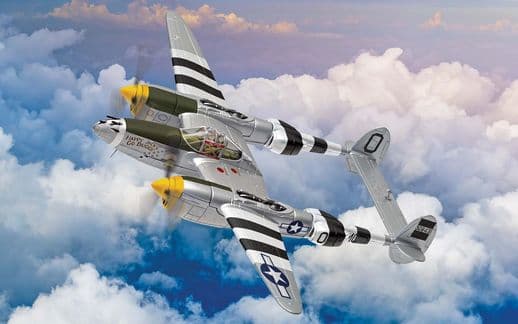
The current Corgi range includes the latest pairing on this same theme, this time featuring two different aircraft types flown by the same US ace pilot, during his operational service with the Eighth Air Force in WWII. The things ordinary men were required to do during the Second World War are quite astonishing and have been a source of fascination for millions of people since the end of the conflict. One such young man was ‘Happy’ Jack Ilfrey, a man who would take the Lockheed P-38 Lightning into combat and on clearing the skies of Luftwaffe opposition, turned his flying skills to attacking ground targets in enemy occupied Europe. This new challenge would see him shot down over German occupied France, evade capture whilst attempting to find Allied lines and return to his home unit to fly combat missions once more. Eventually trading his P-38 for the latest Mustang fighter, when reading about men like this, is it any wonder we continued to be fascinated by their bravery and fortitude? The current Aviation Archive range includes 1/72nd scale representations of two ‘Happy Jack’s Go Buggies’, his P-38 Lightning and his later P-51D Mustang, with both models benefiting from newly created box artwork presentation. Let’s take a closer look at both releases now.
AA36616 – Lockheed P-38J Lightning, 43-28431 / MC-O, ‘Happy Jack’s Go Buggy’, Capt. Jack M Ilfrey, 79th Fighter Squadron, 20th Fighter Group, US Eighth Air Force, Kings Cliffe USAAF Station 367, 12th June 1944
When learning about the exploits of pilots who served during the Second World War, some seem to be so incredible that they appear to have come straight from the pages of a Boy’s Own magazine. One such airman was American Jack M. Ilfrey, a man who was already a P-38 Lightning ‘ace’ when he joined the 79th Fighter Squadron of the 20th Fighter Group at Kings Cliffe in April 1944. At that time, missions were heading deep into Germany and although the Luftwaffe could be elusive, when they did show up, they came in numbers and were extremely aggressive. On his third mission with the 79th, Ilfrey’s Lightning was involved in a mid-air collision with a Messerschmitt Bf 109, ripping almost four feet of his starboard wing off - he made it back to base, but only just. His Lightning carried the name ‘Happy Jack’s Go Buggy’ on its nose, reputedly applied by his crew chief as a joke, because everyone thought Ilfrey always looked a bit miserable. By the 12th June, the Lightnings of the 20th FG had been assigned dive bombing and strafing missions behind enemy lines and the mission that day was to destroy a vital railway bridge near the French village of La Possonniere on the banks of the river Loire. The Lightnings executed their mission with ruthless effectiveness, however, the minutes which would prove particularly memorable for Jack Ilfrey.
With very little Luftwaffe opposition to challenge them, the Lightnings of the 79th Fighter Squadron were released to attack strategic targets in occupied Europe, missions which were incredibly dangerous for the pilots who flew them
‘Happy Jack’s Go Buggy’ was the name USAAF Pilot Jack Ilfrey’s Crew Chief painted on the nose of both his P-38 Lightning and later P-51D Mustang
With the railway bridge destroyed and the 20th Fighter Group fast earning a reputation as the ‘Loco Group’, Ilfrey was presented with a target of opportunity which was just too tempting to pass up. Diving on the locomotive filling his sights with all guns blazing, he saw the train’s boiler explode at the same time as noticing tracer bullets from a concealed anti-aircraft battery hitting his aircraft. At low altitude and with the starboard engine ablaze, Ilfrey jettisoned the canopy, released his harnesses and jumped from the stricken fighter, only to almost immediately bounce off the roof of a farm building, with his parachute only partially inflated. Lying dazed, but uninjured in a field in German occupied France wearing USAAF attire and with a wrecked Lightning fighter burning in the next field, Ilfrey knew he had to get as far away from the area as possible, so he concealed the parachute and ran. Fortunately for him, he was found by a local family with connections to the French resistance movement, who dressed him, gave him false identity papers, a map and bicycle, and sent him in the direction of the Allied invasion forces in Normandy. Thanks to their bravery and by avoiding as many German troops as he could along the way, Jack Ilfrey made it safely back to his home station at Kings Cliffe just five days after being shot down. Unusually in such circumstances, he would also be allowed back flying operationally just a few weeks after this incident - pilots who had evaded capture once were shown little mercy if later captured by the Germans in similar circumstances, whilst at the same time also placing everyone who had helped them on the previous occasion, along with members of the French resistance network, in very real danger.
AA27706 – North American P-51D Mustang (Early) 44-13761 / MC-I, ‘Happy Jack’s Go Buggy’, Capt. Jack M Ilfrey, 79th Fighter Squadron, 20th Fighter Group, US Eighth Air Force, Kings Cliffe USAAF Station 367, August 1944
With ace pilot Jack Ilfrey having been shot down over France just six days after D-Day, but luckily managing to avoid capture thanks to the efforts of the French resistance network, he soon found himself in London being interrogated by Allied intelligence officers. It was highly unusual to allow a downed airman to resume combat operations in the same theatre of operations following a successful repatriation, as they were at risk of both placing his helpers in danger and being shot as a spy if brought down again. Despite this, after a short spell touring USAAF airfields to recount his experiences to fellow pilots, Ilfrey found himself back at Kings Cliffe airfield, the commanding officer of his old squadron. The unit had recently traded their twin engined P-38 Lightnings for North American P-51D Mustangs, with the P-38s transferring to the Nineth Air Force for use in ground support operations. With his Mustang receiving the same ‘Happy Jack’s Go Buggy’ nose artwork as his previous fighter, Ilfrey would not score any further victories flying the Mustang, but he would use it as an unlikely wartime flying taxi. On the way home from completing an escort mission to Berlin, Ilfrey’s wingman was hit by flak and forced to make a hasty landing at an abandoned airstrip in Holland. Unwilling to leave the young airman to an uncertain fate, Ilfrey landed his ‘Go Buggy’ at the same airfield, beckoned his wingman into the cockpit and took off again sat on his lap - he described this as an extremely uncomfortable, but memorable flight back to Kings Cliffe for the pair.
It would be fair to say that the first half of the 1940s was a rather eventful time for Texas native Jack Milton Ilfrey. Having successfully completed his pilot training in the US, he was initially posted to fly home defence missions in the Lockheed P-38 Lightning with the 94th Pursuit Squadron out of San Diego, but would be re-assigned to the European Theatre in the spring of 1942. Flying his fighter to Britain via the perilous North Atlantic ferry route, the squadron were due to meet up with their ground crews and commence training and operational work up at RAF Kirton-in-Lindsey, in Lincolnshire. Later that same year, Ilfrey and the rest of the 1st Fighter Group were sent to North Africa, in support of the Allied invasion codenamed ‘Operation Torch’, but during the ferry flight, his Lightning lost a drop tank and would not have enough fuel to complete the journey. Landing at an airfield in neutral Portugal, Ilfrey was told that his aircraft would be impounded and he faced internment for the rest of the war. He was then introduced to a Portuguese pilot who allowed the Lightning to be refuelled, in exchange for a tour of the aircraft, kneeling on its wing so he could get a better view of the cockpit. Just then, another P-38 low on fuel passed overhead and in the confusion, Ilfrey seized his chance - starting the engines and opening up the throttles, the Portuguese pilot was blown off the wing and Ilfrey took to the air with some haste. Manually navigating across Portugal and Spain to arrive at Gibraltar, he was later reprimanded for potentially causing an international incident and only avoided punishment due to the personal intervention of Major General Jimmy Doolittle, Commander of the Fifteenth Air Force.
Linked by the pilot who flew them in combat, both the latest P-51D Mustang and impending P-38 Lightning model releases are scale representations of fighters flown in combat by Jack M Ilfrey during WWII
Both of these new models are supplied in specially designed boxes, which clearly highlight the fact that both releases are linked to one another
Although these models are inextricably linked by pilot and share the same unique packaging presentation, their releases have been staggered, with the Mustang already available on the Corgi website and with all good retailers. The models featured in the pictures above show a production sample of the ‘Happy Jack’s’ Mustang and a final signed sample of the forthcoming P-38 Lightning AA36616, which is scheduled for release later this summer.
We do need to draw collectors attention to the fact that we are aware of a factory production issue affecting this new Mustang model release, which appears to have been manufactured with just a single 108 gallon drop tank attached under the port wing. We are currently discussing how we intend to address this situation and will communicate our decision as soon as we are in a position to do so - please bear with us for a short while.
We end this latest blog in a similar manner to how we have signed off the previous few editions, by conducting a virtual scouring of the darkest recesses of the Corgi warehouse, on a voyage of discovery to find the last few boxes of models which are about to be added to the ever growing list of ‘previous’ model releases. We tend to colloquially describe them as ‘Oldies, but Goodies’, models may have featured in one or several recent Corgi ranges, but are now just on the verge of being consigned to the annuls of the Corgi model history books. All of the models featured here are now only available in small quantities and once these last few models have gone, they will be removed from the Corgi website and our retailer network will not be able to obtain any further supplies. We start with a real beauty and one which could quite reasonably claim to be the finest scale replica of the English Electric Lightning ever produced in diecast metal.
As one of the most famous squadrons of the Royal Air Force, No.74 ‘Tiger’ Squadron can trace its history back to 1st July 1917 and has been associated with such classic fighting aircraft as the SE5a, Hawker Hurricane and Gloster Meteor since that date. For many enthusiasts though, its most poignant association has been with the mighty English Electric Lightning, an aviation icon of the Cold War Period and one of the most significant achievements of the British aviation industry. As the Squadron selected to welcome the Lightning into frontline service in the summer of 1960, the ‘Tigers’ went on to operate the F.3 variant, T.4 and T.5 trainers, along with the ultimate F.6 fighter version of the Lightning. Indeed, No.74 Squadron was again to be the first unit equipped with the definitive F.6 version of the aircraft, which was capable of being fitted with over-wing tanks to extend the operating range of this potent fighter and resulted in the Squadron being assigned to the RAF Far East Air Force, based at Tengah in Singapore.
In June 1967, the Lightnings of No.74 Squadron began leaving Leuchars for their ferry flight to the Far East, with their arrival at RAF Tengah several days later relying on the support of no fewer than seventeen Victor tankers, which provided the aircraft with an essential air to air refuelling platform during their flight. After enforcing the effective air defence of the region for just over four years, the Lightnings of No.74 Squadron were flown to RAF Akrotiri in Cyprus, where they were handed over to the care of No.56 Squadron, prior to 74 Squadron being disbanded and bringing their proud association with Britain’s only indigenous supersonic fighter to an end.
The French and volunteer American pilots who patrolled the Reims sector of the Western Front during the Great War were only too familiar with the various German fighter squadrons which would enter their airspace, usually in support of the latest land offensive. Often referred to by the markings they carried, their aerial adversaries were simply known as ‘The Reds, the Checkerboards or the Greens’, but one unit which seemed to engage with them for longer than any other were the Albatros fighters of Jasta 19. With their lacquered plywood fuselages giving them an orangey appearance in the air, they were known as ‘Les Tangos’ by Allied airmen, who regularly fought them for control of their sector of the battlefield.
Giving up a position as a flight instructor in Berlin, Martin Mallmann requested transfer to an operational unit and arrived on the Western Front in the Spring of 1917. By 19th January 1918, he stood on the verge of gaining the coveted ‘Ace’ status, with four victories already to his name, however, on that fateful day, he would fall to the guns of a young French airman who was himself looking for his fifth ‘Ace making’ aerial victory. In combat with the Spads of Escadrille Spa 94 ‘The Reapers’, Mallmann’s Albatros D.V 2111/17 was brought down north of Manre-Beine, the victory was jointly credited to Pierre Marinovitch and his squadron mate, American volunteer pilot Austen Ballard Crehore.
OM46513 - Wright Eclipse Gemini 2- Mullany's Buses- Harry Potter Warner Bros. Studio Tour London
This next model is a perennial Corgi favourite and one of those models which genuinely breaks down diecast barriers for us, being a model which appeals not just to our legions of collectors, but also to millions of Harry Potter fans the world over. No collection of Harry Potter memorabilia could ever be considered complete without having one of these beautiful Studio Tour buses in it.
In 2010, after finishing production on the last of the Harry Potter films, “Harry Potter and the Deathly Hallows – Part 2”, Warner Bros. were left with a treasure trove of props, set items and costumes from one of the most iconic franchises in the history of British cinema. In November 2010, Warner Bros. announced plans to invest more than 100m into the site and as part of this redevelopment, created two new soundstages to house a permanent public exhibition; The Warner Bros. Studio Tour London - The Making of Harry Potter, which opened to the public in 2012. Up to 6,000 visitors a day visit the studios and a shuttle bus, operated by Mullany’s Buses, runs from Watford Junction station to the Studio Tour, with a journey time of around 15 minutes. This model, BD12 TFX, with its distinctive Harry Potter Studio Tour graphic wrap, represents one of two Wright Eclipse Gemini 2 buses that were operated on the route by Mullany’s.
VA01207 - VW Beetle, Coral Oval Rear Window Saloon
The Volkswagen Beetle entered the record books as the bestselling single-model car of all time on February 17th 1972 when production reached 15,007,034 units and therefore eclipsing the Ford Model T for that title. When production finally ceased on July 30th 2003, Volkswagen had produced a total 21,529,464 and it's unlikely this record will be eclipsed as cars now rarely remain in production longer than 10 years. It was developed by Ferdinand Porsche in the mid 1930s and was heavily influenced by the then modern design thinking about economy cars espoused by Hans Ledwinka of Tatra and others. The result was a rear-engined air-cooled saloon which was rugged, simple and reliable in any sort of extreme weather conditions.
Although the Volkswagen project was initiated in response to Adolf Hitler's desire to motorise Nazi Germany's citizens, very few were produced before the newly built factory was turned over to producing a military version of the vehicle, the Kübelwagen, which was used widely by the German Army throughout the Second World War. After the war ended, various car makers, British and American, examined the Beetle and declared it to be of no commercial value, however, a British officer, Major Ivan Hirst, was given responsibility for overseeing the bomb shattered factory in Wolfsburg. He was shown a Beetle prototype by one of his staff and set about establishing limited production of the vehicle, in order to supply transport for the occupying Allied armies. From that first step grew the famous Volkswagen name, the literal meaning of which is ‘People's Car’. Now, the brand is recognised as one of the world's largest car manufacturers.
All of these stunning models are now only available in extremely limited quantities, so the clock is very much ticking on their time in our warehouse and consequently on the Corgi website. If you have been thinking about adding any of them to your collection, now might be the time to finally pull the collecting trigger. We will feature a further selection of low stock availability models at the end of our next edition of the blog.
That’s all we have for you in this latest edition of Diecast Diaries, but we hope we managed to include something which was of interest to you. We will be back in four weeks’ time with more diecast delights, but until then, we are always interested to hear your views on all matters Corgi, especially from readers who would like to suggest a subject for future discussion within our blog.
Better still, if you would like to send us pictures of your own model collection, or details of a Corgi model release which has a special significance for you, you may even find your submission featuring in a future edition of Diecast Diaries. We are especially keen to hear from anyone who has a collection of Corgi Hauliers of Renown models they would care to share with fellow readers. If you can help, please send all correspondence to our usual diecastdiaries@corgi.co.uk contact address.
Between new editions of our blog, Corgi model collecting discussions are always continuing apace on our official social media platforms - Corgi Facebook, Corgi Twitter and Corgi Instagram, so please do pay them a visit and get involved. Don’t forget to let us know what you think about the blog and all things Corgi related.
Whenever you do decide to visit, the Corgi website is always the place where you will find out all the latest model availability information, previous editions of our blog, and all the Customer Service details you might need.
Finally, thank you for continuing to support your Corgi Diecast Diaries blog.
Our next blog is scheduled to be published on Friday 18th June.