

Welcome to the latest edition of Corgi Die-cast Diaries, your regular blog review of all the news, updates and topical stories from the captivating world of Corgi die-cast model collecting.
As our header images always tend to give away our headline subject secrets for each new blog posted, we lose the ability to keep you guessing a little longer with these introductions, so there’s absolutely no point whatsoever in trying to keep it from you that our exclusive update this time around will be of huge interest to Thunderbirds fans in this significant 60th Anniversary year. Not only will we be bringing you an exclusive new tooling update relating to our impending tribute to arguably the most elusive of the Thunderbirds craft, but we also have an update on our newly tooled representation of the craft piloted by aquanaut Gordon Tracy, one which was unquestionably a Thunderbirds favourite.
We will be following these updates with yet another exclusive, this time featuring the final impending release of our Battle of Britain model quartet, and a Messerschmitt Bf 109E Jabo which engaged in low level raids against British targets during the summer of 1940, but was more than capable of keeping Fighter Command occupied once it had released its bomb.
We will be opening this latest edition with something of a sad tribute though, as we revisit a model release from 2018 which commemorated the heroic actions of a 24 year old Coastal Command pilot in 1944, a man who sadly finally joined his wartime comrades late last week.
We have plenty of exclusive new Corgi model news to bring you in this latest edition of Die-cast Diaries.
Many DCD readers will be aware of the sad news that the last surviving Victoria Cross winner from the Second World War, John Alexander Cruickshank passed away on Saturday last week, at the age of 105, and we wanted to pay our own respects to this humble man who did extraordinary things. We were so inspired by Flying Officer Cruickshank’s heroic wartime exploits, that we introduced a model of his Consolidated Catalina lVa in our 2018 Aviation Archive range, a model which unsurprisingly went on to become one of the most successful releases of the year.
As part of this project, we attempted to make contact with Mr Cruickshank, with the intention of presenting him with one of the models, and perhaps to have the opportunity of meeting him, taking a few pictures whilst handing the model to him. With that in mind, we were fortunate enough to exchange messages with someone close to him, but who informed us that Mr Cruickshank didn’t really like much attention and would be uncomfortable commemorating his wartime service in such a way. Like so many people who saw wartime service, it was clear that he didn’t really like to talk about it much, as he was only doing his duty back then, as he saw it. To the rest of us, they are heroes, but as people, we have to respect their privacy.
With that being the case, we just sent one of the models to Mr Cruickshank’s home, in the hope that he would be pleased with how we had replicated his wartime aircraft as a scale die-cast model. This week’s sad news brought those contacts to mind once again and as a team, we would like to send our sincere condolences to the family, friends and acquaintances of Mr Cruickshank.
By way of tribute, we are going to include the copy produced back in 2018 in support of this release, which detail the actions for which Flying Officer John Alexander Cruickshank was awarded the Victoria Cross, and why the rest of the nation thinks he was such an extraordinary man.
AA36111 – Consolidated Catalina IVA JV928 ‘Y’, F/Off John Alexander Cruickshank VC, RAF No.210 Squadron, Sullom Voe, Shetland Islands, 17th July 1944 – the sinking of U-361.
As the crew of Consolidated Catalina IVA JV928 took off from their home base at Sullom Voe in the Shetland Islands on 17th July 1944, they knew that many hours flying over open ocean lay ahead of them and as usual, they would be relying on their trusty twin engined flying boat to bring them home safely. Their patrol area would take them to the west of the Norwegian Island of Lofoten, on the approaches to the port of Narvik and its German submarine bases, but their briefing had warned the crew of possible Royal Navy activity in the area, making the positive identification of any vessels detected absolutely essential.
Five hours into the sortie and whilst patrolling in their assigned area, the crew detected surface vessel movement on their radar, and requested that their pilot, Flying Officer John Cruickshank, should fly lower to investigate further. As they approached the detection area, it quickly became clear that they had discovered a surfaced German U-boat and the crew immediately prepared to launch an attack. Interestingly, during their previous 48 missions, the crew had only ever seen one U-boat, which had quickly slipped beneath the waves before they could attack it, so they were determined not to let this one get away.
As they prepared their attack run, the anti-aircraft guns mounted on the U-boat burst into life, sending shells hurtling in the direction of the Catalina. Despite the incoming gunfire, Cruickshank expertly positioned his aircraft to ensure that the depth charges would have the best chance to inflict maximum damage on the enemy submarine. Passing over the U-boat, the weapons release button was pressed, and the crew waited for the sound of explosions, but there was nothing other than the drone of the aircraft’s engines and the crackle of anti-aircraft fire – the depth charges had failed to release.
Instructing his crew to find out what the problem was, Cruickshank immediately prepared the Catalina for another attack run, unaware at that stage if there might be a problem with their aircraft. As they started their second attack run, the U-boat gunners were now better prepared and had corrected the sights on their guns – as the Catalina approached, it did so into a wall of anti-aircraft fire. The aircraft suffered multiple shell hits, resulting in significant damage to the airframe, and peppering the crew with bullets and shrapnel, but undeterred, Cruickshank held the aircraft steady, and the Catalina defiantly pressed home its attack. This time, the depth charges released as intended, straddling U-361, which was destroyed in the ensuing explosions, with the loss of all hands. Unfortunately, the submarine’s gunners had been deadly accurate with their aim and had inflicted significant damage on Catalina JV928 and the men aboard.
Artwork file produced to support this significant Aviation Archive project at the back end of 2017.
In the immediate aftermath of the engagement, the scene aboard the Catalina must have been one of confusion and desperation, as the crew assessed the damage to both aircraft and individuals. Despite being hit multiple times, the aircraft appeared to be operating normally, without showing any signs of immediate danger, however when it came to the crew, that was a very different matter, because they hadn’t faired nearly so well. The navigator/bomb aimer had been killed during the attack and half of the remaining crew had suffered bullet or shrapnel injuries.
Pilot John Cruickshank had suffered serious injury, with his crewmates believing he may succumb to them at any moment. With no fewer than 72 separate wounds, he had sustained injuries to his lungs and lower body and was bleeding profusely, causing him to drift in and out of consciousness, leaving the injured co-pilot to take control of the aircraft. Dragging him from his seat and resting him on a bunk in the area behind the cockpit, able members of the crew tended to his wounds as best they could, and were about to administer morphine in the hope of make Cruickshank a little more comfortable, as he was clearly in severe pain.
Although in great pain, he refused the drugs and even insisted on regaining command of the aircraft, as he needed to satisfy himself that the Catalina was airworthy and that a correct course had been plotted to get them home. Even in such dire personal circumstances, Cruickshank’s primary consideration was for the safety and welfare of his crew. With darkness now descending, and a perilous five hour journey across dark, open water ahead of them, Cruickshank finally accepted that everything was in hand, and once again wrestled with consciousness as he attempted to endure the agony of his wounds, but still refusing to accept any form of pain relief which may impair his judgement later.
To the amazement of everyone aboard, John Cruickshank survived the journey back to Sullom Voe and despite significant loss of blood and having severe difficulty breathing, continued to display exceptional leadership with one final act of heroism and devotion to duty. Once again acting only with the safety of his men in mind, he knew that the co-pilot was not experienced enough to land the aircraft on the water at night and insisted he be dragged back to his pilot’s seat, to help bring the aircraft safely home.
With his injuries making his move back to the cockpit agonising beyond belief, he eventually made it and regained command of the aircraft, immediately identifying that there was insufficient light to affect a safe landing on water. He ordered his co-pilot to fly a holding pattern over the flying boat base, which he did for the next hour, but with Cruickshank really struggling by that point, he had to be propped up in his seat by other members of the crew. Despite this, all the time he continued passing instructions to his co pilot and requesting fuel level checks every few minutes.
Those of us who have this magnificent model in our collections will consider it one of the very best.
Finally, with dawn breaking, he judged that it was light enough for a landing to be attempted, and he helped guide the damaged Catalina gently onto the water at Sullom Voe, even having the presence of mind to instruct how the aircraft should be beached, so it be salvaged and returned to active duty in due course. Almost as soon as the base medical staff boarded the aircraft, Flying Officer Cruickshank collapsed from his injuries, requiring an immediate blood transfusion before he could even be moved from the aircraft.
Miraculously, John Alexander Cruickshank managed to survive his terrible injuries, although they did prove so severe that he would never fly in command of an aircraft again. For his actions in sinking U-361, and for the selfless heroism he displayed in ensuring the safety of his aircraft and crew following their combat engagement, he was awarded the Victoria Cross, Britain’s highest award for gallantry in the presence of the enemy.
Announcement of the honour was published in the London Gazette on 1st September 1944, and he was presented with the medal by King George VI at Holyrood House three weeks later. His co-pilot during the action, Jack Garnett was awarded the Distinguished Flying Medal at the same ceremony.
John Alexander Cruickshank was the only Victoria Cross recipient from RAF Coastal Command to survive the war and on leaving the RAF in 1946, he would return to his pre-war job in banking. This incredible man finally hung up his flying goggles last weekend at the age of 105, a life well lived and a true British hero.
Blue skies, Mr Cruickshank and thank you.
As far as television series opening credits go, there were surely none that came within a country mile of instilling the same levels of excitement in millions of youngsters than the first few seconds of each episode of Thunderbirds did, and unquestionably, once under its spell, it still manages to do so to this day, no matter how old we are now. If only we could rely on the protection of International Rescue in the real world, perhaps we wouldn’t find ourselves in the state we currently do.
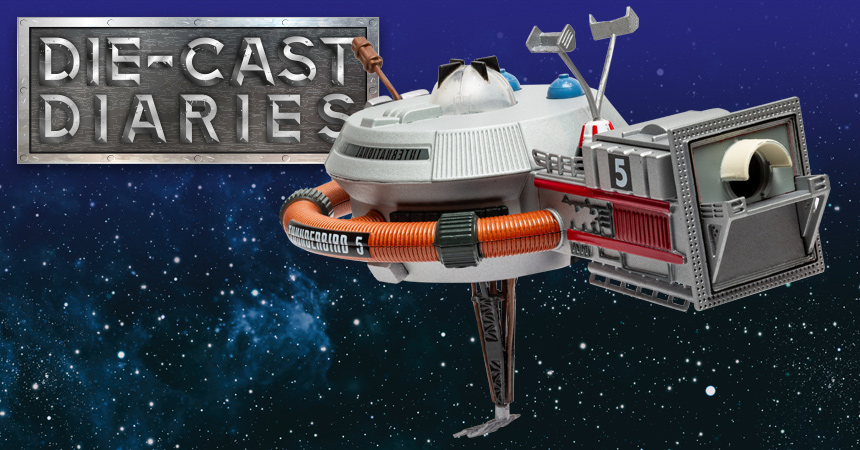
Positioned in orbit high above the earth, being stationed on Thunderbird 5 may have been an assignment requiring someone who was fond of their own company, but as a position of responsibility, it could hardly have come with more pressure. Bristling with technology, this craft may not have been the most dynamic of the Thunderbirds machines, but it was perhaps the most important, a high-tech listening station able to detect distress calls from anywhere on earth, and scramble the Thunderbirds to make sure the day could be saved.
Thunderbird 5 is International Rescue’s space station and the heart of the organisation’s communications network. Maintained in a secret geostationary orbit high above the Earth, John Tracy and his younger brother Alan take turns to man this satellite, with each staying aboard for a month at a time. Between them, they maintain a constant vigil across the globe. Through the use of sophisticated monitoring equipment, they are able to hear every radio transmission being broadcast with special filters attuned to messages of distress in any language.
All the images used here feature a painted pre-production sample model produced from the new Thunderbird 5 tooling and as such, may still be subject to change. It is starting to look pretty magnificent though!
Born on October 8th, 2040, 25 year old John Tracy was educated at Harvard and followed in his father’s footsteps to become an astronaut prior to his involvement with International Rescue. An electronics expert with a degree in laser communication, John is the quietest and most intellectual of the Tracy brothers. Slighter in build than his siblings, he is tremendously lithe and graceful. As space monitor for International Rescue, stationed aboard the massive space satellite Thunderbird 5, John has ample time on his hands to indulge his favourite pastime of astronomy. Four astronomy and outer space textbooks have been published bearing his name and his incessant space searching led to the discovery of the Tracy quasar system.
In what is a significant year for Thunderbirds fans, Corgi could hardly have committed more fully to this year’s 60th Anniversary celebrations, as we have modified the tooling of both our Thunderbird 1 and 3 models, are on the cusp of releasing our stunning new Thunderbird 4 tooling, and surprised the collector world by announcing our project to see the elusive Thunderbird 5 join our International Rescue model range. It’s definitely been a case of 5,4,3,2,1 - Corgi Thunderbirds are GO!
With our project to bring a newly tooled model collectable of Thunderbird 5 to the Corgi range being announced in our first range launch of the year, we were also confirming the production of a die-cast model which would be breaking new ground in our hobby, as it would be the first time that a metal model of this craft was going to be produced.
We’ve been working hard in the background, and are now delighted to be in a position to bring you an exclusive update from this project, and a first look at a decorated pre-production sample of a model which might well turn out to be the release highlight of this 60th Anniversary year. Already looking rather spectacular, you can see how the new model will be displayed once it eventually reaches our display cabinets, along with how it’s been tooled to allow Thunderbird 3 to dock with it.
The new model’s already looking pretty F.A.B and we look forward to bringing you further updates in forthcoming editions of DCD.
A model which is also intended to be one of the highlights of this year’s 60th Anniversary of first UK Thunderbird programme transmission celebrations, but one which is slightly further ahead in development terms than Thunderbird 5, the visually appealing Thunderbird 4 is also muscling its way into this latest project update exclusive, and doing so in fine style. This model is also at the pre-production sample stage, but is an updated sample from the first one received by our development team, and one incorporating a host of suggested decoration improvements. That being the case, these images feature a model which is as close to the production release specification as we have seen so far.
Piloted by Gordon Tracy, who incidentally could also moonlight as Thunderbird 2 co-pilot as and when required, the depths of our oceans always appear to be more mysterious and foreboding than any mission into space, which certainly made Gordon a favourite amongst Thunderbird fans. Gordon was a member of W.A.S.P (World Aquanaut Security Patrol), and that being the case, was no doubt inspired to join the force by Troy Tempest and Stingray, but did the two ever get to meet? Anyway, the two both plied their trade below the ocean waves, and whenever dastardly deeds, or sub-aqua disasters were unfolding, you could be sure that both men and their respective craft would be on the case.
Perhaps one of the main reasons why everybody loved Thunderbird 4 so much, was the fact that its deployment was just more interesting than the other craft. Once selected and with the pod safely secured in the belly of Thunderbird 2, this little yellow belter could either be launched after Thunderbird 2 had landed close to a body of water, or with the pod having been jettisoned from its parent ship onto the water. Interestingly, that wasn’t all, and there was an unusual third method of deployment.
Once again, all the images featured here show a pre-production sample model produced using the new Thunderbird 4 tooling, a model you will soon be able to pre-order.
If Thunderbird 2, Virgil Tracy, or both were indisposed, or if the underwater emergency wasn’t too far away from Tracy Island, Thunderbird 4 could be launched directly from the Island, and once in the water, its performance was truly impressive. Only capable of modest speeds on the surface of the water, once submerged, she really came into her own. Able to travel at speeds in excess of 160 knots, Thunderbird 4 could also dive to depths of around 30,000 feet, and was equipped with an impressive array of tools and armament to deal with any situation in faced.
Her missiles could be used in both an offensive capacity, or simply to blast a hole in rock formations which were preventing her passage – she was truly the most interesting of all the Thunderbirds. 30 feet long, 11 ft wide and weighing in at 16 tons, she was propelled to her impressive performance by a pair of atomic fusion reactors, and if you found yourself in peril at sea, this was the only sight you needed to see.
Now we’ve effectively set the scene for this most appealing of craft, you can be sure that our die-cast homage to Thunderbird 4 will be befitting a subject of such importance, and one in need of further update. The new model comes in at an impressive 15cm in length and features such details as accurate surface detailing, a detailed cabin interior, firing rockets and multi-function arm at the front. Detail throughout is impressive and whilst Thunderbird 4 may have been the smallest of the Thunderbird craft (other than FAB1), we really wanted our model to reflect how this particular Thunderbird always punched well above its weight, well, at least in the affections of the legions of Thunderbirds fans out there.
The model images being shown here are the latest exclusives that Die-cast Diaries devotees get to see before anyone else, and whilst still featuring a pre-production sample model which may still be subject to change before production, is very close to that production standard.
We think she looks magnificent, and can’t wait for this new model to take it’s place within our growing range of Thunderbirds model releases in this 60th Anniversary year. By way of yet another DCD readers exclusive, both Thunderbird 4 and Thunderbird 5 will be included in our final range launch for 2025 and will therefore also be available for pre order, but we’ll have more on that a little later.
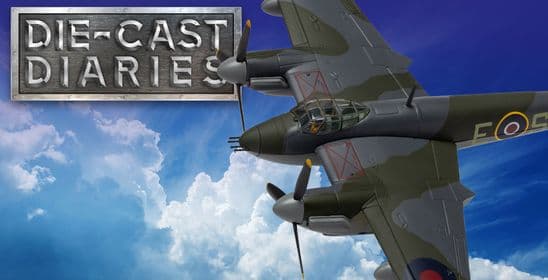
Eagle Day. Over the next few days, we will be able to display all four aircraft models in our 85th Anniversary of the Battle of Britain collection together for the first time.
With the Battle of France over and the Kanalkampf in full swing, the daily engagements between the Luftwaffe and the Royal Air Force were becoming more intense by the day during the early summer of 1940, and with Hitler knowing that the RAF had to be destroyed if he had any plans to launch a seaborne invasion of Britain, a mighty clash of eagles was drawing ever closer.
Both opposing forces had suffered heavy losses during the French campaign, however things would be very different when the fighting moved to the skies above southern England, and it could even be argued that the tables were about to be turned. Luftwaffe fighter units may have been supremely confident in their own abilities, and the capabilities of their main fighter, the Messerschmitt Bf 109E, however, they would now be fighting on the other side of the English Channel where fuel management, limited combat time over England and the very real threat of not making it back to their home airfield would be daily perils.
As for Fighter Command, they were now fighting to defend their homeland, and with new fighters being produced at an impressive rate, they were ready for battle. Crucially, with radar and a cohesive early warning infrastructure in place, they could be sent to meet enemy raiders without having to mount wasteful standing patrols, but whilst fighters could be easily replaced, pilots could not, and replacements would be inexperienced.
The opposing sides were arguably more evenly matched than either would care to admit, meaning the outcome was very much in the balance, and as Eagle Day approached, the stakes could hardly have been any higher – Britain’s defences were all that stood between the Luftwaffe and defeat.
For many people with just a passing interest in the events of the summer of 1940, they probably think that the outcome of the Battle of Britain rested on the duel between the two greatest fighting aeroplanes of the day, the feared Messerschmitt Bf 109 and its regular adversary, the incomparable Spitfire, and whilst enthusiasts all know that this wouldn’t tell the full story of the Battle, it’s still fascinating nonetheless.
Indeed, not all the Messerschmitt Bf 109E fighters deployed during the Battle of Britain were exclusively used in the fighter role, as bomb laden Jabos were used to attack strategic targets across southern England, and to keep Fighter Command very much on the back foot.
From an operational perspective, the Messerschmitt Bf 109 was an impressive aeroplane indeed, with the ‘Emil’ being the first fully mass-produced variant of the fighter. The design of the fighter intentionally made ease of access to its systems a priority, so ground crews could easily work on the aircraft when they were deployed at forward operating airfields. Guns, cooling and electrical systems could all be accessed easily, and the engine cowling featured large removable panels, which were secured using robust toggle latches, which were incredibly simple to operate. Should an engine need to be changed completely, the design of the aircraft allowed the entire process to be completed by an experienced team in just a matter of minutes.
Despite many people believing that the Battle of France was an easy victory for the Germans, from an aviation perspective at least, the Luftwaffe didn’t have it all their own way. Although a great many Allied aircraft would be lost, the Luftwaffe would also lose a significant number of aircraft, including large numbers of Messerschmitt Bf 109 fighters. Indeed, those Allied airmen who fought so valiantly during the Battle of France believed that their efforts in weakening the Luftwaffe proved to be a major factor in their subsequent inability to overcome Fighter Command during the Battle of Britain.
Ultimately, around 53 Luftwaffe pilots would attain ‘Ace’ status during the Battle of France, with Wilhelm Balthasar of JG.1 being the most successful, with 23 victories to his name. As the Luftwaffe’s Jagdgeschwaders moved to new bases in Northern France in advance of operations against Britain, their pilots may have been supremely confident in their abilities, however, things would be very different when fighting over the English Channel.
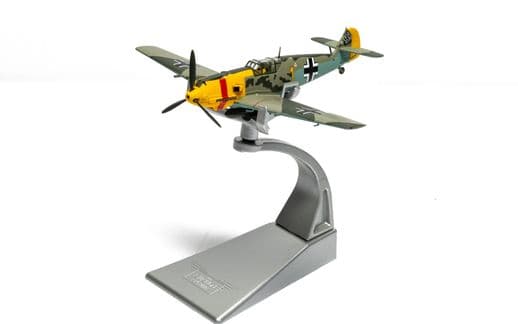
This latest Messerschmitt Bf 109E release will make for an unusual addition to the Aviation Archive range.
As one of the finest fighting aeroplanes to have ever taken to the skies, the Luftwaffe’s Messerschmitt Bf 109 would become the backbone of Germany’s Air Force throughout the Second World War, and despite its diminutive stature, also proved capable of becoming arguably the world’s first operational fighter-bomber, Jagdbomber or Jabo. Carrying a single 250kg bomb under its fuselage, these aircraft delivered their weapon using the fighter’s Revi gunsight, usually from a shallow dive and often with surprisingly accurate results. During the Battle of Britain, with the Stuka being rendered effectively unable to defend itself against the Spitfires and Hurricanes of Fighter Command, Messerschmitt Bf 109 Jabos were used much more extensively than most would think, starting with attacks against shipping in the English Channel, and then on more strategic ground targets, such as RAF airfields.
Indeed, from September 1940, Luftwaffe Commander in Chief Hermann Göring ordered that approximately one-third of the Luftwaffe fighter force operating against Britain should convert to fighter-bomber, or Jabo operations. Clearly, this decision would have had a major impact on the outcome of the battle, and certainly did for the particular aircraft we’re presenting in model form here.
Taking off from Le Touquet airfield on 17th October 1940 in the hands of Oberleutnant Walter Rupp, this Jabo joined around 40 other Messerschmitt Bf 109s for a patrol over the English Channel, and would later become embroiled in combat with RAF Spitfires over Gravesend at high altitude. This Messerschmitt Jabo took a bullet strike to the radiator, and with the engine temperature rising rapidly, the pilot knew he wouldn’t be able to make it back to France, so looked for a suitable field to bring his aircraft down. This was one of the major fears of Luftwaffe aircrew operating over England – if they were shot down or suffered a mechanical issue whilst on the wrong side of the Channel, that was them out of the war at best, and completely out of luck at worst!
The field Rupp selected just happened to be on the outskirts of RAF Manston airfield, however, he did manage to affect a textbook emergency landing, with his aircraft only sustaining superficial damage. Unfortunately for him, Rupp was immediately taken prisoner by RAF personnel, and his aircraft subsequently recovered and taken to the RAE Farnborough for evaluation. It would later be placed on public display as a war prize in several locations around Britain, serving to steel the population to the task at hand.
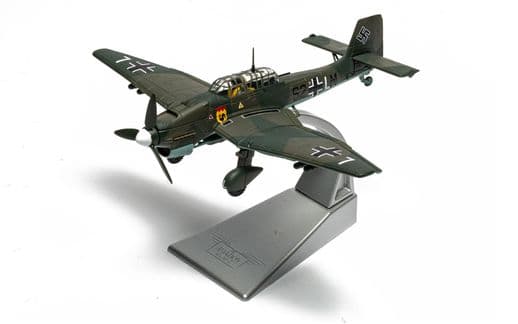
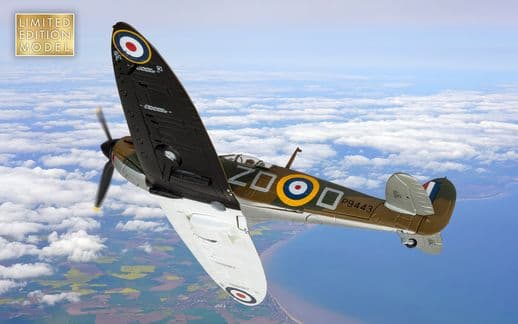
A really unusual addition to the Aviation Archive range, this bomb laden Messerschmitt Bf 109E Jabo is the final release in our quartet of Battle of Britain 85th Anniversary commemorative series, and one which should be in stock and available around this time next week, barring some unforeseen delays. Our header image for this section shows all four models pictured together, with the Messerschmitt taking the accolade as the most colourful aircraft of the four.
For those readers living in and around Kent, this model would actually make for a rather fitting historic representation of an aircraft possessing some unusual local history, and an aircraft some of their older relatives may even have seen when it was placed on display.
We bring this latest edition of DCD to a close with some exciting news for Corgi fans – our final range launch for 2025 is now just around the corner. The publication of our next edition of the blog in two weeks’ time will be delayed until the Friday morning to coincide with the announcement of our new September to December range, and our final collection of models for 2025.
As you can see from the catalogue cover image featured above, our new collection is out of this world, and will include the two new Thunderbirds models featured in this update, meaning that both individuals and trade partners will finally be able to pre-order their models. So, it’s time to mark those diaries, synchronise watches and clear our schedules for Friday 5th September at 10am, when a completely F.A.B. collection of new models will be unveiled.
We look forward to sharing all the new model news with you then.
We’re afraid that’s all we have for you this time around, however, we’ll be back as usual in two weeks’ time with a further exclusive selection of the latest Corgi model updates. As ever, you could always drop us a line if you felt moved to do so, to comment on anything blog, collecting or Corgi model related, or even perhaps to suggest a topic you might like to see the team cover in a future edition. As always, our diecastdiaries@corgi.co.uk address is the one to use.
If you can’t wait for the next blog, you will find plenty of Corgi model collecting discussions taking place on our official social media channels, access to which can be obtained by clicking on the respective links at the foot of the Corgi website homepage.
Link access to Corgi social media sites.
Thank you for continuing to support your Corgi Die-cast Diaries blog. Our next edition is scheduled to be published on Friday 5th September, and we look forward to seeing you all back here then.
Thank you for your continued support