
Welcome to the latest edition of Corgi Die-cast Diaries, your regular blog review of all the news, updates and topical stories from the captivating world of Corgi die-cast model collecting.
We have a bumper selection of new Corgi model project updates for your delectation in this latest edition of DCD, with more model image exclusives to share with you than any self-respecting die-cast collector should be expected to sift their way through. As it’s been quite some time since the project announcement was made, we though it was high time that Aviation Archive collectors should be given an update on the progress being made with our new 1/72nd scale Messerschmitt Me 410 Hornisse tooling, which is already looking like being a stunning addition to the range. Not only do we have CAD screenshot imagery for your enjoyment, but we also have image exclusives showing the prototype sample model produced from the Me 410 design files, allowing us to confidently clear this project for take-off!
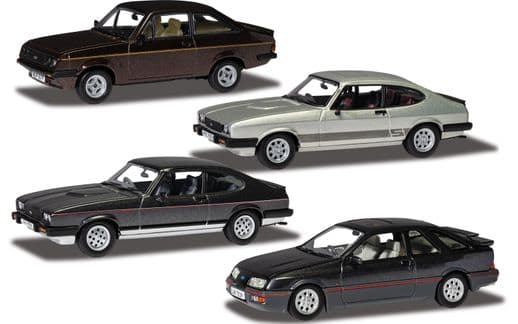
In addition to this, our Vanguards range has just benefitted from the release of a very special four model collectors set, one which has immortalised an iconic collection of cars produced exclusively for the use of Henry Ford II whilst he was resident here in the UK, in scale form of course. We will have all the details behind this release, along with a selection of supporting imagery to welcome this stunning set into the current range.
Wriggle as we might, there’s just no breaking free of the new Corgi model exclusives in this latest edition, and with that being the case, you’d better prepare yourselves for a sneaky peek at a new model tooling which will be attempting to boldly go where no die-cast collectable model has gone before – we’ll explain everything a little later.
Finally, and by way of a little festive fun, we will be checking in on the progress of our recently launched search to find out which of this year’s model releases DCD readers consider their favourite of 2024. We will be looking at two very different suggestions sent in over the past couple of weeks, and the reasons behind those suggestions.
We’re on Corgi time again this weekend, so why not take a few moments away from scouring Amazon for present inspiration, and allow us to transport you to a world of die-cast delights for just a few happy moments.
Even in CAD screen grab form, the Messerschmitt Me 410 is an impressive looking beast.
With 26 years of model production heritage to its name, the Aviation Archive range can now boast some classic aircraft types within its scale ranks, with others many collectors would probably feel are firmly in Corgi’s crosshair sights for future inclusion. Although we will all have our own particular favourites to suggest, the Messerschmitt Me 410 would probably appear high on many a collector ‘wants’ list when it comes to taking its place in a future Corgi range, which is why confirmation that we had already started a project to do just that was met with no little excitement when it was first announced this year. Unfortunately, the world of die-cast model production can sometimes be a little frustrating and despite our very best efforts, we haven’t been in a position to bring readers any updates on the Messerschmitt Me 410 project, that is until now.
Without doubt, one of the most interesting and distinctive fighting aeroplanes of the Second World War, the Messerschmitt Me 410 was the final wartime incarnation of a series of German twin-engined heavy fighters which were first muted back in the early 1930s, aircraft which were intended to dominate the skies over Europe, and ones which had some rather high-profile champions.
The thinking behind the development of these aircraft appeared to be rational enough, and called for the introduction of aircraft which were faster, capable of covering greater distances and possessing greater firepower than their single engined contemporaries, particularly as air combat doctrines of the period felt that bombers with strong defensive armament would easily be able to deal with single engined fighters, particularly if the bombers were in large defensive formations.
In Essence, what the Germans were looking for was a twin engined Messerschmitt Bf 109 fighter, a large and powerful aircraft so devastating that nothing could stand against it in the air battles to come – significantly, as it had the backing of the Commander-in-Chief of the Luftwaffe Hermann Göring, there were few people who were going to argue against such thinking.
Göring was not a lone voice in his championing of the Zerstörer concept, as Great War fighter ace and national hero Ernst Udet was another great proponent of the strategic potential of the heavy fighter concept, and took every opportunity to impress his beliefs on anyone in a position of influence willing to listen to him. He also worked tirelessly to convince the RLM that they must establish a Kampfzerstörer force as a matter of some urgency, in order to support the aspirations of the German leaders, which by that time had become all too apparent. Between them, Göring and Udet ensured the new heavy fighter being developed at that time by Bayerische Flugzeugwerke (soon to become Messerschmitt AG) became a priority aviation project for the nation.
Already looking great in CAD, but how will the SLA prototype model look?
An exclusive first look at the prototype model produced from the new 1/72nd scale Messerschmitt Me 410 design files.
Once the development team are happy with how the design components are being replicated, the files will be sent to the toolmaker for production of the all-important manufacturing tools.
As we all now know, that much vaunted aircraft would be the Messerschmitt Me 110 and despite it having extremely high-profile supporters, the early development and subsequent combat introduction of the Me 110 didn’t pass without some challenges, and it became obvious even from those early combat operations that the ‘Destroyer’ concept may be somewhat flawed for modern aerial combat. Nevertheless, the aircraft would have its successes during operations over Poland and northwest Europe, and even though the Battle of Britain effectively exploded the myth of the Luftwaffe’s Zerstörers, they would go on to become extremely effective aircraft in specialist roles and stimulate the development of more capable variants.
Even before the Messerschmitt Bf 110 had been forced to endure its mauling at the hands of Fighter Command during the Battle of Britain, work on developing its successor in the Zerstörer role was already well underway, with officials remaining convinced about the potential of the heavy fighter concept. What they needed was a more capable aircraft which just offered more of everything and in the Messerschmitt Me 210, they thought that was exactly what they would be getting.
The Me 410 Hornisse was a true multi-role aircraft, with some even describing it as the German aircraft which most closely matched the British Mosquito.
The Me 210 was a very different looking aircraft to its predecessor, featuring the very latest technological innovations and utilising the most powerful variant of famous Daimler Benz aero engine. Although the new aircraft was designed to utilise as many of the same components used in Bf 110 production as it could, its appearance could hardly have been more different from its predecessor, with its short, purposeful nose helping to accentuate the size of the aircraft's mighty engines and the fact that this aircraft definitely meant business. Featuring a ventral weapons bay under the nose of the aircraft to minimise the effects of drag, it also incorporated a pair of remotely operated MG 131 machine guns, which were housed in teardrop shaped barbettes on either side of the rear fuselage, operated from the rear cockpit by a gunner using a clever electronically controlled system utilising a hand pistol grip and compensated gunsight. The gunner’s targeting view was further enhanced by a blown rear canopy which extended past the line of the fuselage, meaning no attacking aircraft could escape his gaze.
Ultimately, despite the fact that the Messerschmitt Me 210 was unquestionably a spectacular looking aircraft in every respect, it was a seriously flawed aeroplane and despite protracted delays and a significant initial order for 1000 fighters being placed, this intended replacement for the Bf 110 proved to be a very poor aeroplane indeed and not at all the heavy fighter the Germans were hoping for. In fact, the problems, delays and general unsuitability of the aircraft resulted in effective cancellation of the project and Messerschmitt having to almost go back to the drawing board.
Although they did manage to produce an excellent aeroplane the next time around, time waits for no man, and the air war was a very different place for the Luftwaffe in 1943. The Messerschmitt Me 410 Hornisse may have emerged from the embers of the Me 210 debacle like a phoenix from the Augsburg flames, however, this excellent fighting aeroplane was introduced far too late to have any meaningful impact on the deteriorating situation Germany now found herself in. Had the Messerschmitt Me 410 been introduced when the Me 210 was initially intended to be at the end of 1940/early 1941, the Luftwaffe would have been equipped with a devastatingly effective multi-role aircraft, one which had the potential to claim a great many Allied aircraft in combat operations, and one which could turn its hand to a variety of different roles.
Unfortunately for the Germans and their Messerschmitt Me 410, the aircraft didn’t start arriving with front-line units until the early summer of 1943, by which time, it had little chance of having a major impact on the air war – the Bf 110 replacement was over two years late in joining the fight.
When Hermann Göring initially imagined what his Luftwaffe Zerstörer force might look like as the concept was first muted back in the mid 1930s, it must surely have been close to what a sky full of Messerschmitt Me 410 heavy fighters would have looked like. Although this was a development of the earlier and ultimately disappointing Me 210 and indeed, shared a great many visual similarities to its unimpressive predecessor, the Me 410 was a very different aeroplane indeed. In fact, Hitler would go so far as to proclaim it as his 'Backbone of Germany's Home Defence', after he had seen a cannon armed example flown during a demonstration of his latest Wonder Weapons.
If you know where to look though, despite the similarities shared by the two aircraft, it isn't that difficult to differentiate between a Messerschmitt Me 410 and its predecessor and with it, identifying an effective combat aircraft from an extremely flawed one. Looking at a side profile of the aircraft, the Me 410 has a slightly taller and noticeably longer fuselage, with lengthened, more refined engine nacelles housing the new and more powerful Daimler Benz DB 603 engines.
These modifications alone gave the aircraft a visibly more elegant appearance, whilst at the same time also highlighting its potential as an effective combat aircraft. The instability issues which blighted its predecessor were rectified by redesigning the wing shape and incorporating automatic leading edge slat technology, endowing the aircraft much better low speed handling performance. The wing of the Me 210 featured two different leading edge sweep angles, with a 6 degree sweep inboard of the engines and 12.6 degree sweep outboard, however, the Me 410 wing design did away with this, maintaining a constant 5.5 degree sweep across the length of the leading edge. When combined with the automatic leading-edge slats, these modifications virtually eliminated the instability issues suffered by its predecessor, allowing the Me 410 to concentrate on becoming an effective combat aircraft, rather than simply trying to stay in the air.
Two more images which feature the SLA prototype model, one which is used to assess this critical phase in the development process, but an asset which is incredibly fragile.
The prototype Messerschmitt Me 410 made its first flight during the Spring of 1942, and immediately showed itself to be a much more capable aircraft than its predecessor, essentially the Zerstörer the Luftwaffe had been hoping to have introduced a full two years previously. Now given the name Hornisse (Hornet), they were hoping the new heavy fighter would stir up a storm in the air, and like its predecessor, was ordered in large numbers shortly after the flight of the prototype, even attracting the same priority production status.
From the outset, even though the first aircraft were produced as Schellbombers (fast bombers) and intruders, it could easily be argued that the Messerschmitt Me 410 was a true multi-role aircraft, one capable of performing a variety of different tasks effectively, with flexibility intentionally built into its overall design. Could we even go so far as to suggest that this was the closest the Germans ever came to producing their own version of the British de Havilland Mosquito they hated and admired so much?
With its ventral weapons bay in the nose of the aircraft, the Me 410 could be configured to perform a multitude of operational tasks, with fast bomber and heavy fighter being its primary roles, but with others such as night fighter, reconnaissance, bomber killer, torpedo bomber, dive bomber, long range/maritime strike and training roles all eventually being undertaken. In fact, something of a design industry was to grow around the developing of proposed future variants of the Me 410 throughout its service life, even though it entered service two years later than initially anticipated.
Although developed as a Schnellbomber, many of the first Me 410s entering service were used in nightfighter/intruder or reconnaissance roles, however, it didn't take crews long to discover that this was a much better aeroplane that its predecessor, as it was welcomed into widespread service.
Production of the Messerschmitt Me 410 ended during August 1944, when the manufacturing lines were switched to producing more single engined Messerschmitt Bf 109G fighters for home defence duties, however by that stage in the war, things were already looking futile for the beleaguered Luftwaffe. Remaining Me 410 units continued fighting until the final days of WWII, although very few aircraft would be left intact by the end of hostilities.
Just to keep us on track until the next project update, the new Messerschmitt Me 410 is already looking like being a hugely impressive model.
Today, just a single complete example of a Messerschmitt Me 410 is to be found on display anywhere in the world, one of the prized aviation possessions maintained by the Royal Air Force Museum at their Midlands RAF Cosford site, the very aircraft Corgi were allowed to scan at the outset of this exciting new model tooling project.
Despite its protracted development and relatively limited operational success, the Messerschmitt Me 410 is undoubtedly one of the most impressive looking aircraft types of the Second World War, interesting as the ultimate incarnation of Germany's fascination with the Zerstörer heavy fighter concept.
A true multi-role aircraft, the Messerschmitt Me 410 Hornisse will be a fabulous addition to the Aviation Archive range, bringing even greater levels of detail and accuracy to the world of 1/72nd scale die-cast aircraft modelling. The images being exclusively published for DCD readers here feature CAD files produced during the design phase of this project, in addition to the public debut of the SLA prototype model built by a specialist company from the design files produced.
Already looking impressive, we look forward to bringing you more exclusive details over the coming weeks, as our latest Luftwaffe subject advances to initial release.
Our new Henry Ford II Collection is something that little bit special for the Corgi range.
Any Vanguards collector will happily tell you that the only thing better than a new model addition to this popular range, is four new model additions to the range, particularly when all four come in the same high-quality presentation packaging and are linked to the same, extremely famous motoring legend, Henry Ford II.
For a man befitting his status, and one who has the reputation of turning round the fortunes of this motoring giant, the faithful employees working under his name wanted to do something a little bit special for their leader when he was over in the UK and Europe for one of his many visits, and decided to produce a unique version of one of the European Ford cars for Mr Ford, finished to his requirements and bespoke as far as the rest of the range was concerned. In fact, there were several of these truly historic cars produced for Mr Ford, however, we’d better let our Vanguards researcher regale you with that particular motoring tale.
Henry Ford II, the eldest grandson of the founder, became President of Ford Motor Company in 1945 and CEO two years later. He retired as Chairman in 1980 and passed away in 1987. Affectionately known throughout the Ford empire as HFII or Hank the Deuce, he is widely credited with reviving the company’s post war fortunes. Henry Ford II was born in 1917, the eldest son of Edsel Ford and Eleanor Clay Ford.
The family business was very much a part of his childhood and as a young man he learned the practical side of automotive development and production. When the United States entered World War II, he resigned from the company to join the Naval Reserve. His father Edsel’s health was poor, however, and when he passed away in May 1943, aged just 49, Henry II returned to the company to aid the war effort as Ford’s factories were among the USA’s biggest producers of military vehicles.
A visual tour around a new model release which is already finding favour with Vanguards collectors, a truly fascinating story immortalised as scale die-cast models.
Under HFII’s watch, Ford Motor Company became the second largest producer of motor vehicles in the world, and in 1956 was transformed from a family business into a successful, publicly owned corporation. He presided over an era that was spectacularly successful for the company during which it produced many profitable products such as the F-Series pickup, Mustang and Cortina.
The advertising campaign, Ford Total Performance, gave rise to the Cosworth DFV engine which dominated F1 in the same way that Escorts went on to rule rallying. After being rebuffed in his attempts to buy Ferrari, he initiated the GT40 programme which gave Ford four successive Le Mans victories from 1966 to 1969. HFII enjoyed visiting the UK and in 1978 Ford’s global PR chief and fellow board member, Walter Hayes, who was a close friend and confidant, made a promise to provide him with something special to drive while he was in Britain.
This resulted in the RS2000 modelled here, the first of four cars built specially for the man whose name was above the door. Although he retained a flat in London’s Eaton Square, Belgravia, these cars were based at Turville Grange, his 18th century mansion in Berkshire.
While in service, each car was fastidiously maintained by Ford’s renowned UK Press Garage in Brentford, Middlesex.
VA14908 - 1976 Ford Escort RS2000 Mk2 Automatic HUF 671P in Roman Bronze.
HFII’s RS2000 Mk2 is the only Roman Bronze example to emerge from Ford’s Saarlouis factory in Germany, although the colour was available on other Fords. To give the vehicle a more luxurious and less overtly sporting feel, it had no RS2000 logos or black side stripes, featuring instead two subtle gold pinstripes. While HFII could drive a manual car he preferred automatic, so the car was then transferred from Saarlouis to Ford’s Cologne plant. There, Dieter Hahne, then a graduate engineer on placement with Transmission Engineering, but later to become manager of Ford’s Special Vehicle Engineering (SVE) team, oversaw the RS2000’s conversion to automatic transmission, an option not available to normal RS2000 customers.
The car was then sent to Ford’s Dunton Technical Centre, Essex, where Ford’s interior trim and materials specialist team installed a unique Ghia-based tan interior, featuring RS2000 Scheel bucket seats, trimmed in exquisite light cream leather, with a matching rear seat and complementary cream headlining. An upgraded audio system completed the transformation. It was the perfect miniature luxury car; powerful, stylish and understated. The RS2000 was enjoyed by HFII for three years under the watchful eye of Ford’s UK PR supremo Harry Calton. It was eventually sold on, ending up with John Redding, MD of Webster and Lancaster, Northolt, who undertook all body repairs on Ford’s UK press cars. It survives in its original specification in the hands of an enthusiast.
VA10826 - 1980 Ford Capri 3.0S Automatic PNO 156V in Strato Silver.
HFII’s next special UK car was less customized than the RS2000, but featured every conceivable extra, and was assembled with extra care. The more overtly sporting 3.0S, which had become top of the Mk3 Capri range, had a black rear spoiler and dramatic side stripes. The 3.0S could only be ordered with automatic transmission as a special order, although an automatic gearbox was standard on the more luxurious Ghia model. HFII liked the firmer suspension of the S, but mostly used the car in an urban setting, taking trips into nearby High Wycombe and Maidenhead, so preferred the automatic gearbox. It was fitted with optional Recaro seats, trimmed in red ‘Carla’ tartan cloth.
The order for this car was again handled by Ford’s UK PR boss Harry Calton. It went down the production line at the Cologne, Niehl factory, Germany, carrying a hand-typed order form flagging that it was for Henry Ford II, meaning it was given extra attention, especially when it came to the panel gaps and paint. HFII used the car on several UK visits before its time at Turville was cut short when a member of his household skidded on one of the local lanes and damaged the rear. After being repaired, it was sent to the Frog Island compound in Dagenham to be sold off to a dealer through Ford’s used company vehicle system. It disappeared from the DVLA database in 1994.
VA10825 - 1981 Ford Capri 2.8 Injection Automatic AVW 109X in Graphite Grey over Strato Silver.
HFII’s second Capri was an early example of the model’s final hurrah, the extensively re-engineered 2.8 Injection. It was again commissioned by Harry Calton, Ford UK PR supremo, after the premature demise of the silver 3.0S, and featured the most expensive two-tone paint scheme then available. Again, carefully built at the Cologne factory in Germany by a workforce who knew it was for Henry Ford II, it was a standard 4-speed manual transmission example with grey ‘Carla’ trim. On arrival at Ford’s Frog Island, compound in Dagenham, it was registered and collected by Ford PR officer Paul Harrison, who drove it straight to Ford’s SVE team at Dunton Technical Centre, Essex.
Harrison remembers that, although it was a standard car, it was obviously beautifully put together and drove accordingly. Rod Mansfield’s team at SVE, who’d developed the modifications that so transformed the Essex V6-powered Mk3 into the far better handling, Cologne V6-powered, 2.8 Injection, then carried out the automatic transmission conversion and fitted a unique grey leather interior. HFII apparently enjoyed this special version of the ultimate factory Capri a great deal. In 1983 it was sold to Ron Mellor, Ford of Europe’s Vice President, Car Engineering, who’d seen the car undergoing its conversion and told Calton he’d like to purchase it when it was due to be sold. It survives in original HFII specification in the hands of an enthusiast.
VA12206 - 1983 Ford Sierra XR4i Automatic GJN 733Y in Graphite Grey.
HFII’s last special-order UK car was again built with special care and attention at Ford’s Genk plant in Belgium, in February 1983, and is one of the first Sierra XR4is off the line. It is unique as, although Graphite Grey was listed as available at the XR4i’s launch, it was withdrawn before the XR4i was available in the UK. The car was also specified with rear seat headrests, which were optional on the German market XR4i, but not available in the UK. It was built as a 5-speed manual, then converted to automatic by SVE, who used a 3-speed Ford C3 unit. The seats were re-trimmed at Dunton in light grey leather.
The XR4i was never meant to be a pure sports car replacement for the ageing, but still popular, Capri 2.8 Injection which continued in production alongside it, but more of a luxury GT, and as such these modifications suited its character. HFII used it for less than two years, but he was by this time in failing health and had retired as CEO in 1979. It’s believed, but not proven, that it was gifted to a Ford chauffeur, who sold it to another Essex-based chauffeur with no Ford connections. It sat for many years in an underground car park in London’s financial district and changed hands in 2008, then dropped off the radar. It’s generally thought to be extant, but its current whereabouts are unknown.
A collection of car models befitting the motoring behemoth for whom they were made, we’re delighted to confirm that our new Henry Ford II Collection is available now.
This picture is an exclusive of an exclusive, but you’ll have to wait a while longer for the details behind this one!
One thing respective Corgi model ranges have always been able to boast over our long history, is how they have managed to produce die-cast models covering quite varied subject matter over the years, appealing to many different tastes, but always serving up desirable, quality model representations of classic craft. For those of us who used to report for front room couch duty in time to experience each new thrilling episode of Star Trek during the years of our youth, this show was required viewing for active young minds and whilst the adventures of James T. Kirk and his crew seemed to be ‘of another world’ back then, however, a renewed impetus in a desire for manned space exploration appears to be bringing them much closer to reality these days.
No matter how engrossing the story and how much we came to love the individual characters involved, for many youngsters, the true star of the show was the USS Enterprise itself, a starship which was not only the catalyst for all those exciting space adventures, but was also a craft which captured everyone’s imagination – as futuristic as it was powerful, even our parent were impressed with Enterprise. In episodes when the crew managed to find themselves in a scrape with an alien life-form or two, Enterprise was always there to bail them out, because as we all know only too well, nothing could withstand being on the receiving end of a phaser strike, or photon torpedo barrage!
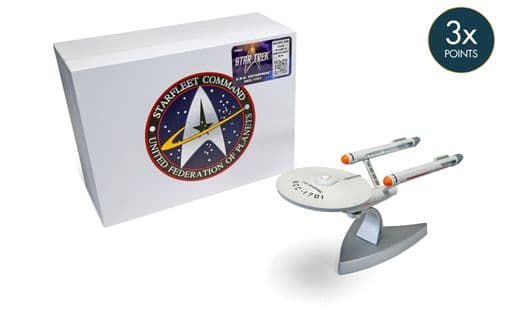
An exclusive look at the ‘First Shots’ model produced from our U.S.S. Enterprise NCC-1701 (Refit) model tooling – this one is almost ready to boldly go!
With the original Star Trek series becoming something of a science fiction phenomenon over time, it was also responsible for spawning a space franchise which encompassed other TV programmes and films which went on to captivate future generations of Trekkies, with the sight of anything Star Trek related immediately transporting us back to the task of seeking out new life and civilizations, or more probably just admiring some nice models.
Earlier this year, we decided to revisit our Star Trek die-cast model production heritage once again, by introducing a pair of models which we intended to be the best representations of two different generations of the USS Enterprise we had ever produced. Featuring many production upgrades and presented in beautifully created packaging, these models proved to be a real triumph for us and a hit with collectors, however, there were rumblings on the bridge and there was more to come.
Proudly going where no blog has gone before (okay, we might have got a little carried away there) we’re delighted to be bringing you this latest blog exclusive, and a first look at the ‘first shot metal sample model’ produced from our new U.S.S. Enterprise NCC-1701 (Refit) model tooling, which is scheduled for release next year. As always when allowing these images to get out into the die-cast world, we do have to stress that these are still working samples and are subject to alteration, but that being said, isn’t it exciting!
Although we don’t expect this new model to be going out to find new life and civilizations, we do expect it to cause quite a stir within the collector community.
Following her five-year mission of exploration under the command of Captain James T. Kirk, the U.S.S. Enterprise NCC-1701 subsequently returned to Earth. Kirk was promoted to Admiral and handed command to Captain William Decker, who oversaw a dramatic modernisation refit. Essentially a complete rebuild over the skeleton of the ship, the vessel that emerged after eighteen months of work was larger, sleeker and more powerful, and Starfleet retroactively deemed the refit an entirely new class of ship – the Constitution II-Class.
A beautiful addition to this growing range, this is a BEAST of a model and with a high metal content, weighs in at an impressive 278g. We look forward bringing you much more from this exciting project as we head into the new year, but for now, please accept these exclusive images as a little pre-Christmas treat from Corgi – you’re welcome!
There are times when you lot really know how to get to us. Just when we’re asking ourselves how many people even read our fortnightly model collecting musings and have an interest in matters Corgi related, you absolutely knock us for six with the enthusiastic way you respond to a little bit of late-season fun.
In our previous edition, we asked if readers would care to nominate their favourite model from the past twelve months and if they felt like doing so, also giving us a little explanation as to why, and we’re delighted to say that you did so in your droves – thank you so much to everyone. That being the case, we thought we’d end this latest update by including a couple of the early contributors, one because he sent in pictures and a nice resume and the other because he’s on the other side of the world, and that’s just nice in itself.
Sending in this fabulous picture of his Spitfire collection, reader George Witte nominated Supermarine Spitfire MkIXe, ML407, Sqn Ldr John 'Johnnie' Houlton (AA29103) as his suggestion, along with some supporting information – over to George:
‘It has to be ML407 for me. This release is a perfect example of what Corgi does best! The first Corgi model purchased for me was a Spitfire, specifically the Air-Sea rescue RAF No. 276 Squadron Spitfire Mk.II. I was 6 years old at the time and haven’t forgotten how exciting it was! It’s been incredible seeing the development of new toolings over the years. The release of ML407 is a perfect example of this. It is my favourite Spitfire in my collection, and I was thrilled to see how successful it was!
I’ve attached a photo of the No. 276 Squadron Spitfire and ML407 to show the development of the releases’.
Thanks for the nomination George and the great story behind it – suggestion noted!
Just beating George to the draw in terms of suggestion submission timings, Wayne Soper sent his suggestion all the way from New Zealand, and whilst this probably isn’t particularly impressive in communications terms these days, it is interesting to think that Corgi models can have appeal for people right across the world.
Wayne didn’t send any pictures in with his suggestion, but got straight down to brass tacks by writing, ‘Hi Team, my choice has got to be this set - the Wallace and Gromit - The Wrong Trousers - Train Set Chase. Fantastic models and iconic characters.’
Great choice Wayne and thank you for taking the time to send your suggestion through to us.
If you would like to join George and Wayne in suggesting your favourite model of the year and be in with a chance of scooping a Corgi prize into the bargain, please send your suggestion by e-mail to diecastdiaries@corgi.co.uk and maybe you’ll be featuring in a forthcoming edition of Corgi Die-cast Diaries.
As already mentioned, one lucky respondent will be selected at random, and will be presented with a handsome £200.00 web spend to be used on the Corgi website, however, in line with competitions of this nature, please be aware that there’s no cash alternative available under any circumstances. We will also have a couple of new Batmobile models available as runners up prizes and all winners will be notified by email, with their good fortune confirmed by publication in a forthcoming edition of DCD. We will accept submissions up to and including New Year’s Day, after which time this community initiative will end.
All you have to do to be involved and be in with a chance of featuring in a forthcoming edition and scooping one of the prizes on offer is to send your nominated model suggestion to us at diecastdiaries@corgi.co.uk
It’s nearly Christmas, so please help us spread the Corgi good cheer!
I’m afraid that's all we have for you this time, however, please join us again in two weeks’ time for another exclusive insight into the wonderful world of Corgi model collecting. Between editions, we are always interested to hear your views on all things Corgi, so if you feel like dropping us a line to comment on anything blog, collecting or Corgi model related, or perhaps to suggest a topic you might like to see us cover in a future edition, please do get in touch at diecastdiaries@corgi.co.uk.
If you can’t wait for the next blog, you will find plenty of Corgi model collecting discussions taking place on our official social media channels, access to which can be obtained by clicking on the respective links at the foot of the Corgi website homepage.
Link access to Corgi social media sites.
Thank you for continuing to support your Die-cast Diaries blog. Our next edition is scheduled to be published on Friday 13th December, and we look forward to seeing you back here then.