
Welcome to this latest edition of Corgi Diecast Diaries, your regular blog review of all the news, updates and topical stories from the captivating world of Corgi die-cast model collecting.
As usual, we have much to tell you about in this latest edition of Die-cast Diaries, as we once again scour the Corgi development office for the very latest information from model projects which span the many model collections which make up the current range. We will be bringing you updates featuring aircraft, military vehicles, modern aircraft carriers, trams, and popular motor vehicles in this latest edition, as we try to include something for every collecting taste, but with the specific intention of letting our readers know about all these developments first. With our usual selection of exclusive product imagery, prepare to be transported into the wonderful world of Corgi die-cast model collecting for a few enjoyable moments.
We will begin and end by looking at two forthcoming additions to the Aviation Archive range, one which will only be the second release from this particular tooling, with the other being a long time favourite with a great many WWII aircraft collectors. We will be bringing you the very latest pictures from a project which will immortalise the pride of the current Royal Navy in die-cast model form, before moving on to look at a pair of vehicles which combine their instantly recognisable profiles with arguably the most famous brand logo in the world. We have the latest pictures from a modified Military Legends tooling, which is a scale representation of an unusual wartime acquisition for the Wehrmacht in North Africa, before ending with pictures of the latest advanced production sample of a classic addition to the ever popular Vanguards range.
Before we get started, with the holiday season fast approaching, we know that activity on the Corgi website is going to be much increased over the coming weeks, with many thousands of models finding new homes over that period. To avoid disappointment and a sell-through of the models you are interested in, please do secure your items early, keeping a regular eye on the website for the latest availability information. Right, let’s get this Corgi show on the road.
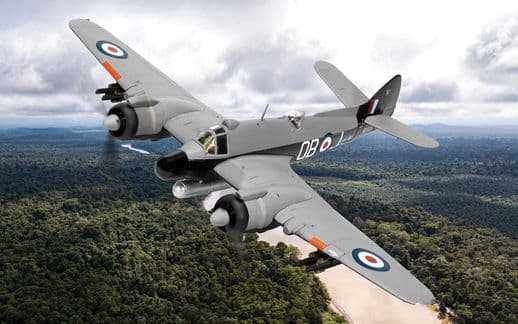
Only the second release from our Bristol Beaufighter tooling, this ‘Operation Firedog’ model is an absolute beauty.
Since the arrival of the first 1/72nd scale Aviation Archive models over twenty years ago, collectors have not been backwards in coming forwards when it has come to letting their feelings be known regarding the aircraft subjects they would like to see added to this range. Right from those very early days, the twin engined Bristol Beaufighter always appeared high on any new tooling ‘wants’ list, but it would actually turn out to be another nineteen years before this much requested model was confirmed as joining the range. Thankfully, the Beaufighter is now here and collectors will be looking forward to adding what will be only the second release from this newly tooled model in just a few short weeks’ time and it is an absolute beauty.
The powerful Bristol Beaufighter was an incredibly important aircraft for the Royal Air Force, entering service just as the Battle of Britain was starting, with the type remaining in service for the next twenty years. Unfortunately for the Beaufighter, it was somewhat overshadowed by its more famous twin engined partner in crime, the de Havilland Mosquito, in a similar manner to how the Hurricane was always overshadowed by the Spitfire. Despite this, almost 6000 Beaufighters were eventually produced and it always had a reputation for being a rugged and capable fighting aeroplane.
As its service career spanned an impressive twenty years, the Beaufighter was obviously in RAF use long after the end of the Second World War, which included operations in support of the RAF contribution to tackling the Malayan Emergency between 1948 and 1960. Although a conflict mainly fought by ground forces, the unforgiving jungle terrain in which the terrorist forces based their camps required the use of air power, both to destroy strongholds from the air and to re-supply troops engaged in the fighting. The RAF would play a significant role during this conflict and their contribution to Operation Firedog would be an interesting one, with aircraft such as the Bristol Beaufighter, which is more readily associated with WWII, fighting alongside the very latest jet powered aircraft and helicopters.
This series of images all feature the advanced production sample of this impending release and a model which helps to tell the story of the long service career of this magnificent aircraft.
The second release from our new Bristol Beaufighter tooling marks an aircraft which took part in the air operations of the Malayan Emergency and whilst it is an extremely handsome looking model, it could hardly be more different from the appearance of the previous release and helps to illustrate the long service career of this magnificent aircraft. The images we are showing here feature an advanced production sample of this stunning model and serve to put us on alert that this model will be available in time to make the Christmas holidays.
With the Royal Air Force not initially seeing the need for a heavily armed fighter with much longer range than that possessed by the Spitfires and Hurricanes of Fighter Command, the Bristol Beaufighter was originally progressed as a private venture, a heavy fighter variant of the Beaufort torpedo bomber already in production of the RAF. In actual fact, the prototype Beaufighter started life as a partially built Beaufort fuselage taken from the production line, with the intention being that the new aircraft would utilise many of the components produced for this existing design. As it was, it soon became clear that the fuselage would have to be completely re-designed for the new fighter, which would lead to delays, but also a change in British military thinking.
With war in Europe now looking increasingly certain, the Air Ministry placed an order for the new Beaufighter even before the prototype aircraft had flown, a decision which was fully vindicated in the years which followed. The Mark 10 variant (Roman numerals were replaced after 1948) of the Beaufighter is certainly one of the most familiar to enthusiasts and was the final major production variant of this magnificent aeroplane. Armed with a combination of rockets, cannon and in some cases a torpedo, Beaufighters of Coastal Command took a heavy toll of Axis shipping from the summer of 1943, operating in large formations and developing aggressive tactics which proved so effective, that enemy shipping movements were restricted to night sailings only, as they hoped to avoid the attentions of the RAF’s Beaufighters.
By the end of the Second World War, the Royal Air Force saw little need to retain the large number of Bristol Beaufighter squadrons it currently had in service, so most units were simply disbanded, a couple were retained for home duties, with the remainder prepared for deployment to the Far East. One notable exception to this rule were RAF No.45 Squadron, who replaced their wartime Mosquitoes with the Beaufighter TF.X fighter bomber, before moving out to operate from a new base in Ceylon. In August 1948, the squadron moved to Kuala Lumpur in response to the Malayan Emergency, where it would take part in the combined Commonwealth actions to quell the guerrilla activities of the Communist backed Malayan National Liberation Army.
Using the legendary range and hard hitting capabilities of this heavy strike fighter, the unit’s Beaufighters would loiter over the jungle, waiting to unleash a withering barrage of rocket and cannon fire on enemy positions, once given targeting instructions from Commonwealth troops patrolling in the vicinity. These ageing WWII warhorses were replaced by the new Bristol Brigand ground attack aircraft by the end of 1949, leaving the situation in Malaya to rumble on for a further ten years and with RAF support very much moving into the jet age during that time.
The new Beaufighter will be presented in our Cold War era packaging, marking its continued use after the end of the Second World War.
A further development of the Beaufighter TF.10 variant and one which appeared on later aircraft in the 2,231 unit production run, these particular aircraft featured a distinctly different vertical stabiliser arrangement and can be easily distinguished from their predecessors. In an effort to address worrying instability issues if the aircraft suffered an engine failure during take-off, a new tailplane and elevator arrangement was designed, with a larger surface area and an increased dihedral of 12 degrees. Making quite a striking visual difference to the aircraft’s appearance, Bristol made this modification available as a field pack, allowing existing aircraft to be converted when they were next in the hangar to undergo maintenance.
This stunning new model is expected to arrive in our warehouse by the second week in December.
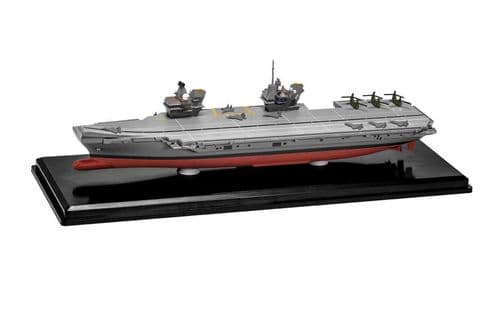
Befitting a subject of this stature, the new HMS Queen Elizabeth model will include this artwork as part of its packaging presentation.
Okay, the above title is a little disingenuous and should probably say something like scale diecast model representation of a massive aircraft carrier ahoy!, but that just doesn’t have the same ring to it. We are incredibly excited to be in a position to share the very latest development images of our new HMS Queen Elizabeth aircraft carrier project with you now, a newly tooled model which has already been attracting plenty of attention and one we know will be a hugely popular model with both committed collectors and casual buyers alike. An extremely welcome addition to the Corgi range, this model was originally announced at the beginning of last year and has proved to be quite a challenge for our design and development teams to produce, however, their perseverance and determination has definitely borne fruit and we will soon be able to add one of these beautiful models to our collections.
Britain’s decision to build the two new aircraft carriers HMS Queen Elizabeth (R08) and HMS Prince of Wales (R09) has not been without its critics, however, the huge media interest which has always followed the construction, launch and introduction of these massive vessels has ensured that they are amongst the most famous and certainly the most impressive ships to have ever represented Britain’s Royal Navy.
As a renowned seafaring nation, it seems incredible that Britain has been without a purpose built aircraft carrier since the rather hasty retirement and decommissioning of HMS Ark Royal back in 2011, a move which not only diminished the influence of the Royal Navy, but also Britain’s international standing as a global military and humanitarian power. Thankfully, all that now seems to be just a distant memory, as the awesome sight of our two impressive new Queen Elizabeth class aircraft carriers fills us all with feelings of awe and pride and has definitely resulted in the nation re-engaging with the Senior Service once more.
This next series of images feature the latest sample model produced from our new Queen Elizabeth Class aircraft carrier tooling and we are giving our readers an exclusive walkaround of a new model which is certain to be a popular addition to the range.
The largest ships ever to enter Royal Navy service, the new aircraft carriers will significantly enhance Britain’s naval standing and provide them with one of the most powerful autonomous international offensive capabilities in the world, not to mention their ability to respond quickly in a humanitarian capacity. Able to operate the latest fifth generation Lockheed Martin F-35B Lightning II multi-role combat jets, these mighty ships would make tempting targets for any adversary in times of conflict and despite the fact that they are bristling with electronic wizardry and defensive weaponry, they will also be protected by a dedicated force of high-tech Destroyers, each one equipped with sophisticated detection technology and missiles designed to protect the carrier from air and missile attack. Destined to remain in service for possibly the next half century, Britain’s new super carriers are a highly visible representation of Britain’s military might and determination to have a say in international affairs.
The exclusive development images we are showing here feature a fully decorated advanced sample of this impressive new model and feature HMS Queen Elizabeth R08 in all her scale glory. Featuring representations of F-35 Lightning II jets and Chinook heavy lift helicopters, the model will be supplied on this attractive display plinth, complete with name plaque, with a clear plastic protective cover to shield the model itself - we have actually included a picture of the packaging design for your inspection. A deceptively large model, we had to do something pretty impressive for these new ships, which are the undisputed pride of our modern Royal Navy.
It is interesting to note that both of Britain’s Queen Elizabeth Class carriers have been in the news recently, as they have both been operating the impressive F-35 Lightning II jets, but separately and whilst sailing 7,000 miles apart. HMS Prince of Wales has been operating in the North Sea, whilst her sister ship has been on deployment in the Far East, working with jets from RAF No. 617 Squadron and VMFA-211 of the US Marine Corps. This is just the start of things for these two floating behemoths and from this point forwards, will rarely be out of the news, as they proudly represent our nation on a global stage.
A look at how the new model will be packaged when released, giving collectors several options on how they wish to display their new model
The MOD’s description of how they see the role of these carriers is - HMS Queen Elizabeth is an investment in Britain’s security, prosperity and place in the world. She will provide a conspicuous presence on the global stage, sending a clear message of reassurance to our allies, and of defiance to those who would do us harm.
As well as being a powerful deterrent and symbol of British influence, HMS Queen Elizabeth will replace HMS Ocean as the Royal Navy’s Fleet Flagship. As the Fleet’s principal ship, she will carry senior naval staff, receive foreign dignitaries, and act as a command and control centre for the entire Royal Navy.
A magnificent new diecast addition to the Corgi model range, HMS Queen Elizabeth is also scheduled to be in our warehouse by the second week in December and ready for the hectic Christmas run-up. Sure to be a popular gift choice this festive season, make sure you don’t miss out one of these first models.
When it comes to the world of diecast model collecting what could be more appealing than the combination of an iconic mode of transport and the colours of arguably the world’s most recognisable brand? That is exactly what we are presented with when considering our 2021 Coca-Cola range of models, twelve different model aircraft and vehicles which combine their instantly recognisable profiles with the red and white branding of the world’s most famous soft drink. The latest impending releases in this series feature a pair of vehicle types which are synonymous with one of Britain’s most popular holiday destinations and really do lend themselves to a presentation association with the Coca-Cola branding, a pair of electric trams.
The history of Britain’s ‘Street Railways’ begins back in the 1800, when the first vehicles to use this network of public transport were pulled by horses. These were soon replaced by steam powered machines and eventually the first electric powered trams, which entered service during the late 1880s. Britain’s use of tramways peaked in 1928, when an incredible 4 billion passenger journeys were made, but this was very much its heyday and began a steady decline throughout the 1930s, which only slowed due to the Second World War.
After WWII, the nationalisation of the electricity supply and the cost of upgrading the tramway network brought the widespread use of these vehicles to an end and by 1962, only Blackpool Corporation still operated a public tramway service. Still in operation to this day, no trip to Blackpool is ever complete without a ride on one of the town’s beautiful trams, a glorious seaside indulgence which allows us to return to a previous era of Britain’s transport past. Interestingly, just a couple of years ago, Blackpool Transport announced that they carried more than 4.8 million passengers in a financial year, which is really quite impressive in this era of the motor vehicle.
As well as a new fleet of modern trams, Blackpool Transport also operate a fleet of heritage trams, vehicles which have been lovingly restored and can still be seen carrying passengers on their limited network. Usually on Bank Holidays and during summer weekends, these magnificent trams in their historic liveries trundle up and down the Blackpool seafront and it is usually a case of standing room only, as passengers flock to ride this little piece of transport history.
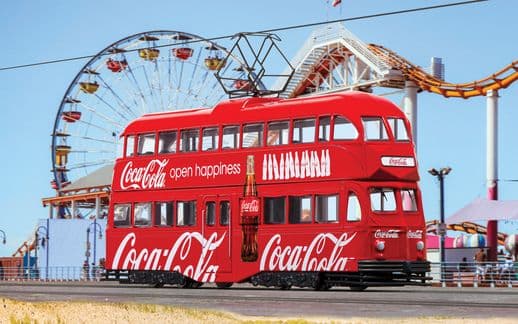
The two tram models we are showing here represent final sample models of these beautifully presented collectables and the latest impending releases in our popular Coca-Cola model range.
CC43515 - Coca-Cola Double Decker Tram ‘Open Happiness’ 1:76th scale.
Introduced in 1934, the English Electric Balloon tram was a series of 27 cars built between 1934 and 1935, with the first thirteen being of open-top design and the final fourteen all enclosed. During the war, the threat of German air raid on the Lancashire coast meant that only the enclosed trams could be used and work to enclose the first thirteen undertaken. During this period, the trams would also be operated with reduced power headlights and blacked out windows, in line with the national air raid precaution measures in place at that time.
The usual colours adopted by trams working on the Blackpool network were cream and green and a number of these vehicles have now been restored to their former glory and operate on the network at certain times during the year. For this new 1/76th scale model release, the iconic Balloon Tram has been decorated in the eye-catching and instantly recognisable colours and marketing slogans of the Coca-Cola brand and will make a striking addition to any model collection.
CC44013 - Coca-Cola Single Decker Tram ‘The Coke side of life’ 1:76th scale.
The Brush Railcoach cars were a series of twenty trams produced by the Brush company of Loughborough for Blackpool Corporation Transport, with their procurement being quite an interesting story. Blackpool would use trams borrowed from neighbouring Lytham St Annes during busy visitor periods, however, when their neighbours decided to close their tramway and move to a bus service, this option would no longer be available to them. The answer was to procure a new fleet of trams similar to the ones produced by English Electric just a couple of years earlier, but there was a problem. The designer who produced the Balloon Trams had moved to a new position at Brush Electrical Engineering Company, so as they wanted vehicles of a similar standard, the council decided to place the order with the designer’s new company.
These new single decker trams were a step up again in quality from the English Electric manufactured vehicles and were viewed as being the height of luxury. Fitted with sunshine roofs, which incorporated a canvas centre section which could be folded back in good weather, these trams also featured curved roof windows, power operated doors and floor level heating and as you may well imagine, were extremely well received by fare paying passengers.
During the wartime years, the traditional Blackpool cream and green livery was replaced by one which was predominantly green and much more military in appearance. The Brush Railcoach cars also had their roof windows painted out and had headlight bulbs replaced with less powerful alternatives and had metal hoods fitted over the top of the headlights, to better direct the weaker beam and to make the light less visible from above.
This spectacularly presented model could hardly look more different from the toned down Brush cars of the wartime years and just as with the double decker vehicle featured above, really does lend itself to wearing the colours and iconic branding of Coca-Cola.
With Christmas fast approaching and both of these models falling into the ‘perfect present’ category, the latest scheduling information we have shows that the Double Decker Coca-Cola tram will be here in time for the big day, but its Single Decker stablemate may slip into the first week in the New Year.
The return of Corgi’s Military Legends after a ten year absence was a welcome development for die-cast collectors.
When it comes to the subject of iconic military vehicles of the Second World War, it could be argued that scale die-cast representations of these battlefield behemoths are the most appropriate way in which to build up a model collection, simply by virtue of the fact that they are made of metal and have a really appealing weight to them. When you consider that a British Churchill Tank weighed 39 tons and the famous German Tiger I came in at a mighty 50 tons, maybe this is the reason why our Military Legends range has always proved popular with collectors - accurate and beautifully finished, their weight really is one of the most appealing features of these 1/50th scale models.
After a gap of almost ten years, during which time the Corgi brand came under the protective umbrella of the Hornby Hobbies group, our Military Legends models made a triumphant return in 2019, something which may well have been welcomed by Corgi collectors, but was not without its challenges for our development team. These challenges are very much illustrated by what we faced with the latest addition to our M4 Sherman range, the Military Legends tooling which has been used more than any other. When we announced our intention to release an interesting ‘captured Sherman’ model into the range, we had already checked that we had everything we needed to produce this model, however, when it came to production of the sample models, we found a problem. The tooling slide for this variant of the Sherman had suffered damage and despite repeated efforts to repair that damage, none of these remedial actions worked. We were left with a difficult decision - cancel the model, or go to the significant expense of having a new tooling block designed and produced.
Thankfully, the company chose the latter option and we are delighted to report that this much anticipated, relatively early version of the M4 Sherman Tank is now fast approaching release and we thought you might like to see the latest pictures of the model, ones which have been taken to enable the packaging presentation to be produced.
This latest sample model not only features the newly tooled M4 Sherman hull, but was also the photo subject for this model’s packaging artwork.
Having the opportunity to capture a fully working example of your enemy’s latest battle tank is a situation which was highly prized by all the combatant nations during the Second World War, allowing their capabilities to be assessed and to ascertain the most effective ways to destroy them. This detailed evaluation would usually be carried out by a specialist Military High Command unit well behind the front lines, but getting your war prize back there during the heat of battle could be a challenging exercise. This particular early Sherman tank was captured by 1st Company, 501st Heavy Tank Battalion in Tunisia, during operations to counter the Anglo-American invasion of French North Africa in late 1942 and must have looked rather conspicuous parked amongst the German Tiger 1 and Panzer III tanks which were heading towards the fighting.
The fascinating hand painted warning on the side of the Sherman is basically telling German troops not to remove any items from the enemy tank, as it has been commandeered by German Military High Command and is destined to be sent back to Germany for test and evaluation. In addition to the rather crudely applied Balkenkreuz markings on the turret of the Sherman, the unit responsible for securing such a significant trophy also ensured their details were included in the hand painted warning on the hull sides of the tank, presumably knowing that the message would be seen by thousands of military personnel during its journey back to Germany and wanting their achievement recognised.
A first look at the box presentation for our new Beutepanzer Sherman.
The German Army had first encountered the American built Sherman Tank whilst fighting the British at the Second Battle of El Alamein in October 1942, but at that time, could hardly have envisaged how significant its combat arrival would prove to be. With the first examples falling into their hands and sent for evaluation following the Allied landings in French North Africa just a few weeks later, the Germans could not fail to have been impressed by the quality of a tank which represented the very embodiment of American mass production techniques and ultimately illustrated how the might of US industrial capacity would influence the outcome of the Second World War.
Comparing it against the prowess of their own mighty Tiger Tank, they would have been more than confident that they held the technological advantage, however, the Americans were clever in understanding that their new tank would have to be transported to combat zones all around the world, often to ports and staging depots which had rather basic facilities. Larger tanks would have created an even greater logistical challenge than the significant one they already faced and as their Sherman would be used by all the armies of the Allied nations, the greater availability of M4 tanks would prove crucial in the outcome of the ground war. Eventually, over 50,000 Sherman Tanks of all types would be produced, making this the second most produced tank of the Second World War and an essential war winner.
A really welcome addition to the Military Legends range and one which has such a fascinating story behind it, our Sherman ‘Trophy Tank’ is now on track for a first quarter 2022 release and will definitely be the most unusual M4 Sherman model we have ever produced. It’s time to brush up on our German, so we can answer all the questions which will surely come when people look at this stunning model.
The Vanguards range has a reputation for producing stunning scale die-cast representations of some of the most popular cars to have appeared on Britain’s roads.
The Ford Motor Company enjoys a long and successful relationship with the British motoring public, one which stems back to 1903 and the import of the first ‘Model A’ cars. In 1911, a new assembly plant was opened in Trafford Park, Manchester, employing around 60 people and assembling the new ‘Model T’ from imported component parts. Since those humble beginnings, the Ford name has been associated with the mass-production of quality motor vehicles for the masses, with many iconic car types going on to wear the famous Ford badge over the years.
One thing which has always been associated with the Ford brand over the years is how their design and marketing departments have cleverly produced stylish and affordable cars which appeal to the masses not only because of their looks, but also their links to success in the motorsport arena. The latest Vanguards Signed Sample model release to arrive in the Corgi office is a 1/43rd scale representation of a Ford classic, a fourth generation styling example of their incredibly popular Cortina range. A vehicle which was as popular with British families as it was with fleet and rental operators, the Cortina range encompassed everything from the basic model, which just got people on the road, to the top of the range Ghia, which was the expensive option for the style conscious motorist, but all which continued the motoring success story which was Ford. This new model presents collectors with the highly desirable 2.0L Ghia model of the Cortina Mk.4 and includes all the trim features which this range topping car benefited from.
VA11915 - Ford Cortina Mk4 2.0 Ghia Signal Orange.
The Mk4 Cortina was based on the existing Mk3 platform but sported a totally new body, which was crisper and less American influenced than the Mk3 had been. It was styled under the leadership of Uwe Bahnsen at Ford in Germany and was now almost fully integrated with the European Taunus range. A 2.3-litre V6 model was made in relatively small numbers but the 2-litre 4-cylinder Ghia was the defacto top model for economy minded company car users and was luxuriously equipped for its era, featuring a wood-veneer dashboard and door cappings, extra sound deadening, a vinyl roof, cut-pile carpet and luxury cloth seats.
Cortina Ghias were rarely made in Signal Orange, a colour more popular on fast Fords, but this car is the exception. It was bought new in February 1979 by Essex-based Mr and Mrs Robinson who retained it until 2011, covering only 30,000 miles. Towards the end of their ownership it was, briefly, stored outside covered with blankets under waterproof sheeting. When this was removed it appeared mouldy but once cleaned up by second owner Roger Chinery, of well-known Ford specialist Affordable Classics, the original paintwork was perfect. He kept the car until March 2013 during which time it was featured in Classic Ford magazine. This immaculate and supremely original Cortina has covered less than 35,000 miles and is now proudly owned by County Cork-based Declan Ryan who enjoys using it for classic car events.
This beautiful new model is scheduled for release in early December and will surely be high on the present list of many a Vanguards collector.
Always and Aviation Archive favourite, the next release from our 1/72nd scale Vickers Wellington tooling is an absolute Bomber Command classic.
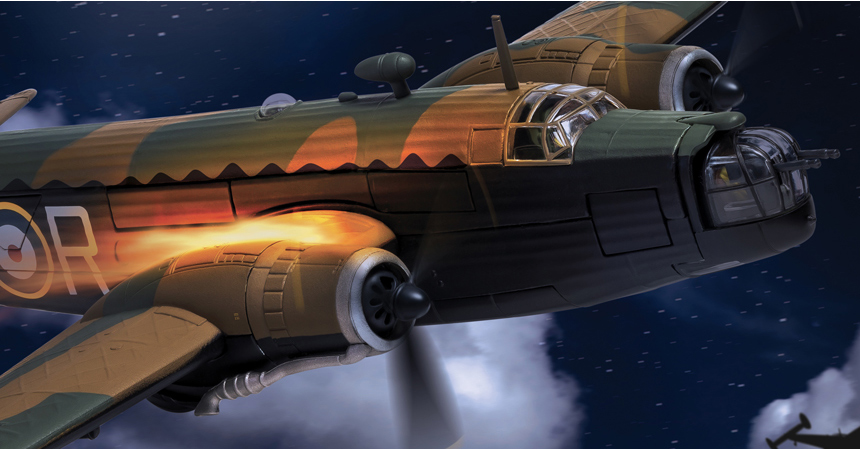
We end this latest edition of our blog by returning to our Aviation Archive range so we can feature the latest development sample images of a model which is surely destined for iconic status amongst collectors. One of the real shining lights in our 1/72nd scale aviation model tooling collection, the first Vickers Wellington model release in a Corgi range appeared back in 2004 and immediately found favour with Aviation Archive collectors. A deceptively large aeroplane, the Wellington model is beautifully detailed and has a high metal content, something which always appeals to model collectors. It also replicates an aircraft which was so important to the British war effort during WWII, one which conducted the first RAF bombing raid into German territory following the declaration of war and whilst the more famous Avro Lancaster was still on the drawing boards.
The latest impending release from the Wellington tooling is an absolute classic and one which has already found favour with Aviation Archive collectors everywhere - this one is going to disappear faster than a real Wellington can fly! Marking not only the heroic contribution of Bomber Command aircrews to eventual victory during the Second World War, it is also a representation of an aircraft which was saved from destruction by the incredible actions of an extremely brave man, a man who would receive Britain’s highest award for gallantry as he put his own life in danger to save those of his crewmates.
Having successfully released their bombs over the German city of Munster on the night of 7th/8th July 1941, the crew of Vickers Wellington L7818 set course for their home station at Feltwell and hoped for an uneventful return flight. Those hopes were dashed when co-pilot James Allen Ward noticed a sinister shape stalking their aircraft in the night sky, a Luftwaffe Bf 110 nighfighter. Before he could warn his pilot, the enemy fighter positioned itself under the Wellington and unleashed a hail of bullets and cannon shells into its fuselage, leaving it severely damaged and on fire. On seeing the severity of the fire, the pilot instructed Ward to prepare the crew to abandon the aircraft and as a parting, ironic comment in this desperate situation, also said, ‘see what you can do about that damned fire!’ Ward took him at his word, cutting a hole in the fuselage of the bomber and attempting to extinguish the flames using fire extinguishers, however the savage slipstream made these efforts futile.
What he did next was quite extraordinary - he crawled through the astrodome hatch on the spine of the bomber and onto the wing of the aircraft. Clinging to the exposed geodetic framework of the Wellington, Ward slowly made his way to the wing fire and stuffed a canvas sheet into the gaping hole, putting out the fire in the process. Completely exhausted due the slipstream, he was pulled back into the aircraft by his crewmates, who could hardly believe what they had just witnessed. Though still badly damaged, the bomber made it back to an RAF emergency landing ground and the crew all survived this incredible ordeal, thanks to the selfless act of bravery performed by Sgt James Allen Ward.
Commemorating one of the most astonishing feats of selfless bravery to have taken place during the night air war during WWII, this stunning impending release must qualify as an Aviation Archive classic.
Aware that they were scheduled to take part in the coming nights operation, a Wellington bomber crew made up of young men from Canada, New Zealand, Wales and England waited patiently at RAF Feltwell for their new Vickers Wellington to arrive, knowing they would have little time to familiarise themselves with the aircraft before taking it to war. When they eventually took off from their home base, along with nine other No.75 Squadron Wellingtons just after 11pm on 7th July 1941, they had only managed a fifteen minute test flight in L7818 during the afternoon, before taking their aircraft on its first operational mission - it would prove to be an eventful flight.
Having been attacked by a Luftwaffe nightfighter not long after they had dropped their bombs, the Wellington would have been lost on this first mission but for the heroic actions of her co-pilot, James Allen Ward, who crawled onto the wing of the aircraft, in an attempt to extinguish the fire which threatened to engulf it. For this act of unimaginable courage and selfless bravery, Sergeant James Allen Ward was awarded the Victoria Cross, becoming the first New Zealander to be so decorated and the only airman to be awarded the VC whilst flying a Vickers Wellington during WWII. This incident also highlighted both the unique construction of the Wellington bomber and the international contribution made by Bomber Command crews during the Second World War.
Featuring our Night Air War packaging, the presentation of this new model befits a release of this stature.
The exclusive selection of images we are showing here feature the advanced production sample of this magnificent model, highlighting the fact that it will not be long now before it can take its place in the display cabinets of collectors all over the world. We are also showing the box artwork produced to support the Wellington’s release, which we have to say we are extremely pleased with - it looks magnificent. This model is now scheduled to arrive in our warehouse during the first week in January 2022 and whilst it won’t now make it in time for Christmas, could there possibly be a finer die-cast aviation way with which to start any new year?
Now that is what you call a blog update. That’s all we have for you this time, but we will be back in four weeks’ time with more Corgi update exclusives and hopefully news of an exciting change to our future Die-cast Diaries blog format. If you have any comments or suggestions about our blog, please do drop us a quick line and if you would like to send us pictures of your own Corgi collection, you may well find them appearing in a future edition. For all contact, could we please as if you would use our diecastdiaries@corgi.co.uk contact address.
Between editions of the blog, all the latest Corgi model collecting discussions are taking place on our official social media channels, access to which can be obtained by clicking on the respective links at the foot of the Corgi website homepage.
Whenever you do decide to visit, the Corgi website is always the place where you will find out all the latest model availability information, previous editions of our blog, and all the Customer Service details you might need.
Thank you for continuing to support our Corgi Diecast Diaries blog.
Our next blog is scheduled for publication on Friday 3rd December.