
Welcome to the latest edition of Corgi Die-cast Diaries, your regular blog review of all the news, updates and topical stories from the captivating world of Corgi die-cast model collecting.
As this edition is going to be our final blog posting of the year, we wanted to go out in style, and that’s exactly what we’re going to be doing. In an edition which has more trimmings than we can expect on our Christmas dinner, we have so much new Corgi content to bring you that it may take the entire festive period to work your way through it all.
Our headline feature marks the first blog appearance of a Vanguards new tooling project which doesn’t even feature on the Corgi website at present, but as our previously hinted at Ford Fiesta Mk.2 project is advancing nicely, we thought an update would make for a nice little Christmas blog treat. We will be following this with a detailed look at a pair of First World War fighter model releases which have only just arrived in our warehouse, but as both are little crackers, we thought them perfect to bring to the blog table.
Over the previous few weeks, our Head of Marketing David Mather has been working on a project with the passionate and knowledgeable enthusiasts behind the Gerry Anderson.com podcast, where they put together a two-part edition of their show featuring Corgi. During his appearance, David let a couple of 2025 Corgi model secrets out of the bag, secrets we thought you may want to hear about. Each podcast episode was also video recorded, so we will be including links to both features in this blog, so you can find out all the latest release rumours (and a model confirmation or two) over the holiday period.
Finally, we will be ending with another submission received from our Corgi model of 2024 voting request, where we will be bringing you a rather poetic suggestion – you definitely won’t want to miss this!
So, as we all prepare for the coming festivities, let us get you started with a sparkling collection of the latest Corgi model news and updates – Merry Christmas to you all!
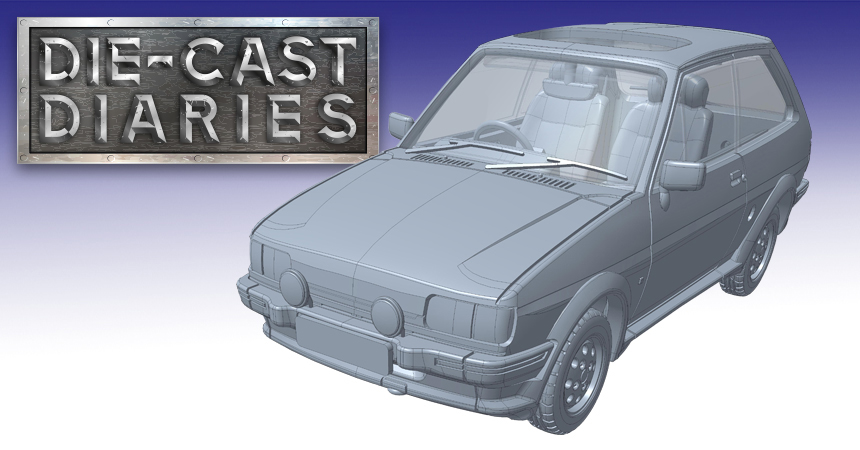
A Vanguards new tooling exclusive. This image shows what we can look forward to with the new Ford Fiesta Mk.2 tooling in computer rendered image form.
For those eagle-eyed readers who like to scour every line of text included in each new Corgi range announcement/catalogue release, our first release of the year included confirmation that our development team were working on an exciting new addition to the Vanguards range, one collectors probably feel is long overdue. When it comes to our nations motoring obsession with smaller cars and in particular, a classification we refer to as ‘Superminis’, by virtue of the fact that these are some of the most affordable and economical cars on our roads, they tend touch the lives of so many people, probably more than any other type of vehicle.
As these are the cars which basically allow us all to go about our daily lives, although they are much loved members of the family, they rarely get the care and attention the mobility support they provide deserves and as a consequence, they are well used and rarely survive more than a decade or two, with just a handful preserved in pristine condition. That’s definitely where the Vanguards range comes in, with the production of beautiful scale model representations of the cars we used to know so well, and even if our beloved runaround has long since gone to that MOT station in the sky, we can still remember it in die-cast model form. You never know, we may even produce a model of a car you actually used to own yourself.
Our existing Ford Fiesta Mk.1 tooling has been one of the most popular models in the Vanguards range since it was released back in 2011, and is a perfect illustration of Ford’s dominance within British popular motoring and the production of stylish, affordable cars. A functional design produced specifically to sell in volume, there’s actually something quite aesthetically pleasing about the angular lines of this first incarnation of the Fiesta, one which I have my own fond memories of, as the first car I bought myself once my income had stabilised as a young man was a silver Fiesta Mk.1 XR2.
All the images being shown here are Ford Fiesta Mk.2 project tooling exclusives and as such, are still subject to change. They clearly show that this much anticipated new model is advancing towards initial release nicely.
When the first generation Ford Fiesta was released in the UK at the beginning of 1977, it was the smallest car Ford had in their lineup at that time and indeed, was the smallest modern car they had ever produced – it also had the title of being Ford’s most costly car to develop to date. Cleverly leaked at several high-profile events by Ford’s marketing team, the car proved to be an instant success and was available in several different versions, each one offering different levels of trim and performance.
With Ford already having quite the reputation in motorsport success, the 1.3 Supersport and stylish XR2 were unquestionably the most desirable models in the range, however, despite its popularity, the Fiesta was ready for a facelift by 1982. The second generation Ford Fiesta started appearing in showrooms the following year, building on the success of its predecessor, but introducing a more refined styling to the car, including a more rounded frontal profile. The new model also brought with it a host of interior and mechanical improvements which made this a worthy successor, however, there were those who held on to the previous model, feeling that the Fiesta Mk.2 lacked the charm of its predecessor.
Nevertheless, the Fiesta continued to be a success for Ford and the later arrival of the sporty XR2 with its distinctive new body styling kit soon started to win over those who were struggling to make the transition. In its best UK sales year in 1987, the Fiesta sold more than 150,000 cars in the UK alone, a figure which brought it in just behind the Ford Escort in overall sales numbers. Throughout its life, the Fiesta has continued to evolve, whilst keeping Britain motoring at the same time, with the final iteration being the seventh generation of this incredible series of cars.
Many Vanguards model collectors would probably describe the Ford Fiesta Mk.2 as being quite a large omission from the range and would therefore have been interested to learn that we were already working on a new tooling project to address that situation. As we mentioned earlier, we made the announcement as a work in progress confirmation at the launch of our January to April range at the beginning of this year, including an image printed in the catalogue which shows a Fiesta at the Ford Heritage Centre taken during our scan visit day.
Since then, the project has been advancing nicely, with our Development Manager working hard to keep everything on track for range inclusion at the earliest possible opportunity. We are indebted to him for providing us with this selection of computer rendered images which were all produced using the new Ford Fiesta Mk.2 CAD files, allowing us a tantalising glimpse into what we have to look forward to in the near future, and some the release permutations this new tooling will allow.
We know many Vanguards collectors will be desperate to add the Fiesta Mk.2 to their collections, so we promise to bring you a further update from the project early in the new year, which will hopefully include an exclusive first look at the SLA prototype model produced from the design files. Until then, we hope you enjoy this exclusive look behind the scenes of the new Ford Fiesta Mk.2 project.
Since our first 1/48th scale First World War aircraft model was announced back in 2007, this series has proved incredibly popular with collectors, with these beautiful models going on to find homes all over the world. Marking the birth of aerial combat, the fascination with this era of aviation may well stem from the fact that the aeroplane was still very much in its infancy back then, as it was only 14 years or so since the Wright Brothers had made their historic first flight. Indeed, as aircraft began to show their potential in a military capacity, both the people who designed them and the brave pilots who flew them were pioneers, paving the way for others to follow, but often paying the price for their intrepid spirit.
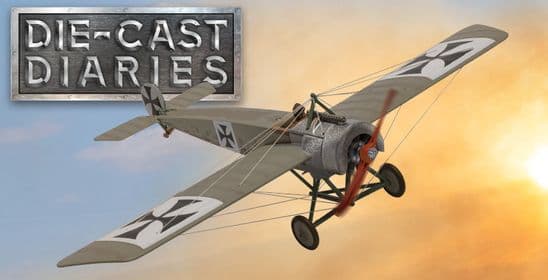
Indeed, when we consider such models as our Fokker Eindecker, these aircraft were causing mayhem over the Western Front less than 15 years since the historic flight of the Wright Flyer and indeed, these first German ‘Hunting aeroplanes’ were still controlled by the wing warping technique perfected by the Wright Brothers.
Another engaging aspect of collecting these magnificent models, the stories which accompany each release are equally appealing, be that the story behind the flamboyant colour scheme the aircraft wears, or the almost unbelievable exploits of the heroic pilots who flew them in combat. In our own small way, we like to think this range is both helping to mark the dawn of military aviation in scale form, but also to preserve the stories of the men and machines which were quite literally making history with every flight.
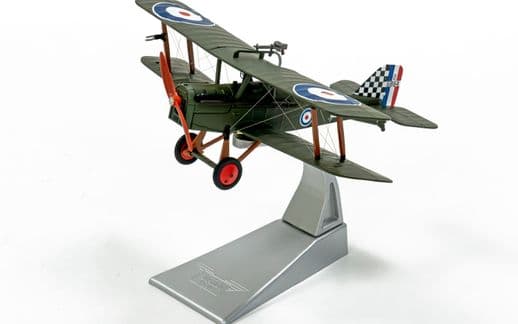
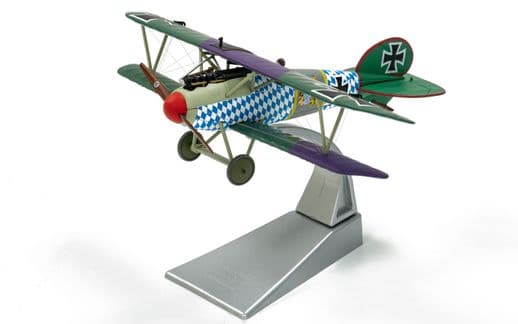
As we head into the Christmas holidays, we’re about to welcome two more classic releases to this range, one the mount of a Great War Allied air ace of some repute, with the other being a classic Luftstreitkräfte fighter which is perhaps as flamboyantly decorated as they come. In fact, this model is perhaps the most challenging model we have ever asked our manufacturing facility to attempt, from a decoration perspective.
Here are the details behind both of the new releases.
As has often been the case throughout the history of aviation, the development and introduction of some of the most important fighting aeroplanes the world has known went hand in glove with the latest developments in aero engine technology. That proved to be the case when Hugh Trenchard, commander of the Royal Flying Corps in France, was looking to Britain’s aviation industry to produce a new breed of fighting aeroplanes, aircraft which could take the war forward over the next few years. He encouraged manufacturers to submit proposals for a capable fighter, either single or dual seat, with which to wrestle back air superiority from the Luftstreitkräfte, with aircraft to make use of the powerful new V8 Hispano-Suiza engine.
The Royal Aircraft Factory at Farnborough submitted their SE5 fighter, an aircraft the design of which drew on the experiences of combat pilots serving on the Western Front, with the intention of making this a deadly and highly capable fighting aeroplane. Aspects of the aircraft’s design were intended to provide the pilot with better combat visibility, like staggered wings and an elevated fighting position, but the aircraft proved so effective than many pilots later elected to lower the seat, as it made them feel less vulnerable during combat. One of the most important features was having two forward firing guns, one mounted in the forward fuselage, with another fitted to a Foster Mount on top of the wing, but firing in the line of sight of the pilot. Many pilots liked the opportunity to angle the gun upwards and attack an unsuspecting enemy pilot from below, pouring bullets into the enemy aircraft even before they knew they were there.
Once in service, the new SE5a (uprated variant after just 77 originally configured aircraft had been produced) proved to be a revelation, stable, structurally robust, highly manoeuvrable and heavily armed. Importantly, the aircraft was designed to be flown well by pilots of varying ability, allowing novice pilots to gain experience in this latest fighter, whilst more experienced airmen could quickly begin to increase their victory tally. There were problems during the introduction of the fighter, as the lack of a two-seat training variant meant that pilots had to quickly work out any operational vices during their first flight. Once the RFC had initiated a modified, more robust approach to flight training, accident rates reduced dramatically, and larger numbers of fighters joined squadrons based in France.
The aircraft made its first flight in November 1916, but would not begin arriving with front line squadrons until the spring of the following year. Indeed, the aircraft would not be committed in large numbers until well into 1917, but once engaged in combat, would make a significant contribution to Allied air operations over the Western Front. Indeed, as aviation historians looked back at the performance of the SE5a in the years which followed its introduction, it went on to be described as something of Britain’s ‘Spitfire of the Great War’.
Although this impressive fighter represented the very latest in aviation technology when it entered service in 1917, the Royal Aircraft Factory SE5a could still be a challenging aircraft to fly in combat. The cockpit area was rather cramped for the pilot and included the breach for the fixed forward firing Vickers machine gun, as well as spare ammunition drums for the Lewis machine gun which was mounted on a rail fixed to the upper wing, above the pilot’s head. When the ammunition in the Lewis gun was exhausted, the pilot would have to release the gun, pull it back towards him on the rail, remove and discard the empty ammunition drum, before taking a new one from the drum holder in the front of the cockpit and engaging it on the gun.
He would then have to cock the weapon, before returning it to its firing position, all whilst potentially under enemy fire and certainly not wanting to give up any advantageous shooting position they may have secured. This would also have to be achieved whilst wearing the cumbersome, yet essential high altitude flying clothing which must have made the entire process quite a challenge. The SE5a would take off for a patrol sortie with a full drum of up to 97 rounds on the wing mounted Lewis gun, with a further three full drums stored in the cockpit ammunition stowage areas. Thankfully, the aircraft was powerful, manoeuvrable and relatively stable in flight, leaving the pilot to concentrate on increasing their victory score. It’s been estimated that the SE5a created 215 ‘Ace’ pilots, marking this as one of the great fighting aeroplanes.
Of all the many ace pilots who flew the SE5a in combat, relatively few people will probably be aware of the name Keith Caldwell, despite the fact that he was New Zealand’s greatest ace of WWI and arguably one of the bravest airmen to have ever flown in combat. Raising enough money to pay for his own flying lessons in his native New Zealand, Caldwell travelled to England to join the Royal Flying Corps in January 1916 and after just 27 hours flying experience with the RFC, was posted to France and a front-line squadron.
His initial posting was to No.8 Squadron flying two seat observer aircraft and he would claim his first combat victory with this unit. A brave and tenacious pilot, Caldwell would never shirk from a fight, and if fortune favoured the bold, you could always rely on Caldwell to make the first aggressive move in any engagement situation. Later moving to No.60 Squadron, it was with this unit that Caldwell’s admirable fighting qualities really came to the fore. During a combat sortie in early 1917, Caldwell was returning to his home airfield with his guns jammed when he noticed an Allied pilot in trouble. With seven enemy fighters all circling to finish the unfortunate pilot off, Caldwell went to his aid, flying several miles into enemy territory and setting about the enemy as if he intended to shoot down each and every one, even though he had not the slightest chance of firing off even a single shot. The enemy aircraft broke off the engagement in the face of this aggressive flying and the two Allied pilots eventually made it safely back to their airfield – the pilot Caldwell came to the assistance of was Canadian ace ‘Billy’ Bishop.
Perhaps the action which best illustrated Caldwell’s prowess as a pilot and courageous leader of men occurred in September 1918. By this time, Caldwell had been promoted to the rank of Major and was given command of No.74 ‘Tiger’ Squadron. During combat at around 16,000 ft, Caldwell’s aircraft was struck by another SE5a from his squadron, causing serious structural damage to one of his fighter’s wing struts. Entering an uncontrollable flat spin, Caldwell fought to regain control of the aircraft and whilst he did manage to improve the situation slightly, the aircraft was still falling. What Caldwell did next was quite astonishing, almost like something from a Hollywood movie, but to those who knew him, typical Caldwell.
With his fighter plummeting to certain destruction, he climbed out to stand on the wing root of the aircraft, where he attempted to pull the wing and strut closer together. At the same time, he kept his other foot on the rudder peddle of the fighter and attempted to bring the aircraft under some modicum of control. Miraculously, the aircraft started to respond, but was still falling at an alarming rate, however, it was now something of a controlled fall. Knowing he wouldn’t be able to execute a controlled crash landing, Caldwell brought the stricken fighter in low over Allied lines, jumping clear of the aircraft just seconds before it struck the ground and its destruction.
Allied troops in the vicinity could hardly believe what they had just witnessed, and it was reported that just as the SE5a fighter slammed into the ground, Caldwell picked himself up, dusted himself down and calmly strolled towards Allied positions. For most men, having had such a miraculous escape, they would have taken this opportunity to use their rank and take a desk job to see out the rest of the war, but that simply wasn’t Keith Caldwell’s style. He was straight back to his squadron and back flying operational patrols, once he’d been checked out by station doctors.
Keith ‘Grid’ Caldwell would end the war with 25 confirmed aerial victories to his name and the position as New Zealand’s highest scoring ace of the Great War. The only negative thing anyone had to say about him was that he wasn’t actually all that good a shot and if his shooting ability had matched his bravery and airmanship, he would have surely been one of the leading aces of the entire war. As it was, Caldwell had the unwavering respect of his fellow pilots, who would have all followed him into combat in any situation, surely a much more impressive human accolade.
The German Jastas or Jagdstaffelin (Fighter Squadrons) were aerial fighting units which were organised into squadrons and establish specifically to clear the skies of enemy aircraft, effectively charged with dominating the skies for Germany. Following the era of the Fokker Eindecker and the birth of the fighter aircraft, the German aviation industry went on to develop a series of new aircraft aimed at wrestling back air superiority from the latest Allied scouts which were now proving so ruthlessly affective. Interestingly, all of these fighters reverted to a biplane design, utilising all the lessons learned by the early Eindecker pilots, men who became the first air aces in the history of warfare, whilst also incorporating all the latest technologies and manufacturing techniques into their designs. At the head of this pack of new fighters, the Albatros D series were undoubtedly the most significant and would go on to become some of the most famous fighting aeroplanes in the history of aerial warfare.
The ”D’ in the aircraft’s designation refers to the fact that it featured two wings (Doppledecker) and their use of inline as opposed to rotary engines gave these aircraft a sleek and purposeful appearance. The original Albatros D series fighters featured a much squarer, slab sided fuselage design, however, the arrival of the later D.V variant during the summer of 1917 brought about the introduction of an even more capable fighter. Adopting more mature technology, the D.V series fighters had a noticeably more rounded fuselage and large, rounded tails and horizontal stabiliser, with the fighter’s two Spandau machine guns firing through the arc of the aircraft’s propeller via a synchronised interrupter gear and in the direct line of sight of the pilot.
Jasta 5 would go on to earn a reputation as an elite unit, home of many a fighter ace and one feared by Allied airmen over the Western Front. They would also be historically regarded as one of the units presenting their aircraft in some of the most distinctive schemes, not only of the Great War, but in the entire history of warfare. As air combat developed at a dramatic pace, few aircraft could claim dominance over the enemy fighters they faced for more than just a few months and by the middle of May 1917, the early Albatros fighters which had proved so effective to that point, were in need of an upgrade.
Described by its manufacturer as the new ‘lightened’ Albatros D.III, the D.V featured many improvements over its predecessors, but with a more rounded fuselage and rudder design being the most distinctive identifiers from earlier variants. The German high command had hoped that this new fighter would give them an advantage over the Allied types in service at that time, however, despite being an exceptionally well-made machine, it didn’t achieve the significant new period of combat dominance they were hoping for. Instead, the superior manufacturing techniques adopted during production and a standardisation in construction methods meant that more aircraft could be produced in a shorter period of time, and they hoped this increased availability of this extremely capable fighter would allow the Jastas to effectively swamp the Allied air forces.
The first variants of the Albatros D.V were discovered to have a tendency for their wings fail when performing extremely tight turns or when making sustained dives at high speed, resulting in a modification which was quickly applied to all newly built aircraft. The D.Va variant introduced a modified wing strut, which included an additional bracing strut to strengthen the wings in a vital section of its design, something which provided the additional strengthening needed, along with being another distinctive identifying feature to differentiate between variants.
When new pilots arrived at their assigned unit, they would usually be allocated whichever aircraft was available on the morning of a patrol, aircraft which could be war weary, a little problematic mechanically, and aircraft which hadn’t been claimed by a more senior pilot, or had been cast aside following receipt of a new machine. Only when they had survived several missions, or after having impressed in a combat situation could a new pilot hope to be allocated their own individual aircraft, or indeed a newly delivered fighter arriving at the aerodrome. At this point, they may also be given the opportunity to decorate their aircraft in their own markings, or with their own emblem, whilst always retaining their units squadron markings.
It has to be remembered that the young airmen engaged in combat over the Western Front during the Great War were literally putting their lives in the performance and manufacturing integrity of relatively primitive machines built of wood, fabric and metal. This being the case, many airmen wanted to make their association with a particular aircraft as successful as they possibly could, not only to provide a visual representation of their combat prowess, but also to create a psychological bond between man and machine. In addition to using unit colours to allow for quick identification when in a combat situation, these beautifully presented aircraft served to boost morale and garner a togetherness between combat pilots engaged in this savage fighting and would later be successfully used for propaganda purposes, as the home front were desperately looking for heroes.
Once this practice became established, there was an explosion of colour over the trenches of the Western Front, as aircraft were adorned with personal schemes and regional or family emblems, some being so elaborate that they had historians questioning how aerodrome personnel had the time, skill or basic materials to apply them. Jasta 5 would earn a reputation as one of the units possessing some of the most colourfully presented fighters and were given incredible freedom when it came to painting their aircraft, something which reflected the combat prowess the unit had secured. Of all the distinctively decorated aircraft to have represented the ‘Green Tails’, perhaps none was more flamboyant than the personal aircraft of Leutnant R Wolf, a pilot who may not have been one of the most successful pilots on the unit, but was a man who certainly knew how to decorate an Albatros.
His scheme was linked to his upbringing and featured an elaborate fuselage of blue and white diamonds, which was a representation of the Bavarian coat of arms and crest. Wolf used this aircraft following the introduction of the Albatros D.V during the summer of 1917 and whilst little is known about the pilot, other than the two aerial victories he was credited with, his aircraft must have looked spectacular, whether in the air or on the ground.
Only arriving in the Corgi warehouse this week, both of these magnificent new models are available now.
Over the course of the past few weeks, Head of Corgi Marketing guru David Mather was given the opportunity to appear on the GerryAnderson.com podcast to chat about all things Jerry Anderson and our die-cast tributes to some of his iconic creations over the years. Clearly, the team behind this podcast are absolute experts on the subject, however, David was able to bring a very different perspective to the discussions and had them captivated with details of what it takes to get one of our models to market, and the stories behind our die-cast tributes to Mr Anderson’s captivating machines.
Perhaps of most interest to DCD readers, David didn’t go into the meeting unarmed, and actually had an exclusive new model reveal to show them, something which really did put the Aquaphibians amongst the pigeons.
David’s appearance was split over two separate episodes, and rather than provide you with a transcript overview of each episode, and specifically because it’s nearly Christmas, we decided it would be more enjoyable if we simply included each episode video within this latest update. You might have to set aside a little time to watch both episodes in the same sitting, but we all need an excuse to get away from Harry Potter for a while over the holidays and what could be more rewarding than hearing about Corgi’s plans for commemorating more fantastic Gerry Anderson inspired creations, and a couple of model exclusives to boot.
Here we go with episode one.
And not wanting to keep you in International Rescue suspense for longer than we have to, here we go with episode two.
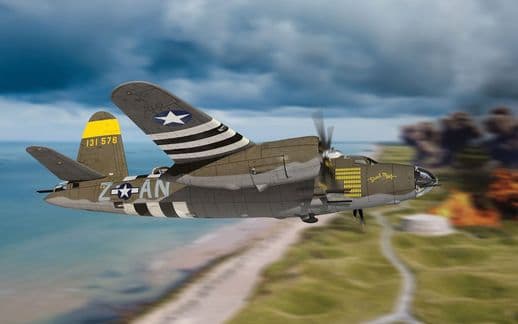
We know this festive edition is a little longer than most, but we simply couldn’t end a year of Corgi blogs without bringing you Wes Craig’s impressive suggestion for Corgi Model of the Year for 2024. We know that many Corgi fans will agree with Wes’ nomination of our first 1/72nd scale Martin B-26 Marauder release, but it’s the creative and imaginative way in which he submitted his suggestion that makes it so special.
By way of a little Corgi Christmas treat to us all, let’s hand over to Wes and his recently received suggestion.
Thank you for this competition!
Please accept my submission,
The challenge placed for '24',
"Which release you most adore?"
Collecting nothing but Corgi,
I knew this was the task for me!
With Christmas spirit and a sense of fun,
I decided on AA29501 .
Scrutinizing 'Dinah Might',
I knew my appraised choice was right.
In olive drab with 4 Blade props,
Corgi'd pulled out all the stops!
This pristine finished B-26,
A centrepiece of the Corgi mix.
Who wouldn’t love a D-Day Martin,
The fit n’ finish makes you grin.
Flown by Major David Dewhurst,
What an impressive Corgi First!
The next schemes pose endless wonder,
For this boy from down under.
So, if you are a diecast Hoarder,
You can't go past the New Marauder!
To finish off this Christmas Banter,
Add this to your list for Santa =)
P.S. Attached is a picture of my 41-31576.
Merry Christmas, keep up the great work Wes Craig.
Thanks Craig, but we think all the good work here has been done by you! Thank you for this little Christmas treat, which the Corgi team feel sure will raise a smile across the Corgi community.
If you would like to suggest your favourite model of the year and be in with a chance of scooping a Corgi prize into the bargain, you still have time and with Christmas on the horizon, you might just be able to find the time to do so.
Please send your suggestion by e-mail to diecastdiaries@corgi.co.uk and maybe you’ll be featuring in a forthcoming edition of Corgi Die-cast Diaries.
As already mentioned, one lucky respondent will be selected at random, and will be presented with a handsome £200.00 web spend to be used on the Corgi website, however, in line with competitions of this nature, please be aware that there’s no cash alternative available under any circumstances. We will also have a couple of new Batmobile models available as runners up prizes and all winners will be notified by email, with their good fortune confirmed by publication in a forthcoming edition of DCD. We will accept submissions up to and including New Year’s Day, after which time this community initiative will end.
All you have to do to be involved and be in with a chance of featuring in a forthcoming edition and scooping one of the prizes on offer is to send your nominated model suggestion to us at diecastdiaries@corgi.co.uk
I’m afraid that's all we have for you this time, and indeed for 2024. As we will be in the midst of the holiday celebrations, we won’t be posting a blog on the December 27th this year, and instead, will be returning on 10th January 2025, with our first blog of the New Year.
Until then and on behalf of the entire Corgi team, may I take this opportunity to sincerely thank you all for your fantastic support throughout the year and to wish all our readers a happy and peaceful Christmas, with a prosperous New Year to come.
Please join us in the New Year for more delights from the wonderful world of Corgi model collecting. As ever, you could always drop us a line if you felt moved to do so, to comment on anything blog, collecting or Corgi model related, or perhaps to suggest a topic you might like to see covered in a future edition. As always, our diecastdiaries@corgi.co.uk address is the one to use.
If you can’t wait for the next blog, you will find plenty of Corgi model collecting discussions taking place on our official social media channels, access to which can be obtained by clicking on the respective links at the foot of the Corgi website homepage.
Link access to Corgi social media sites.
Thank you for continuing to support your Corgi Die-cast Diaries blog. Our next edition is scheduled to be published on Friday 10th January 2025, and we look forward to seeing you all back here then.