
Welcome to the latest edition of Corgi Die-cast Diaries, your regular blog review of all the news, updates and topical stories from the captivating world of Corgi die-cast model collecting.
Returning to our usual review format in this edition, we have quite a mixed bag of update content for you this time, but that's a good thing right? You know what they say - Variety is the spice of Die-cast collectability life, well, something like that anyway.
We begin by looking at something of a classic Aviation Archive tooling and how this current range cycle will see it returning to a Corgi range for the first time in around sixteen years, the impressive and much loved English Electric Canberra in 1/72nd scale. A tooling which has definitely been underused since its introduction back in 2004, this latest release commemorates the aircraft's operation in the hands of the Royal Australian Air Force and specifically, their successful deployment during the Vietnam War.
Following this update, we enter the world of Vanguards to feature a trio of new releases which are already gracing collector display cabinets across the world, three new models which have proved rather stealthy so far this year, managing to avoid our blog attentions until this point. We will be ending with a little fun feature, something we're describing as our Corgi Top of the Pops - basically, we thought you might be interested to discover how our first range launch of 2024 was received and in ascending order, which of the new models announced have proved most popular amongst our collectors. Many of you will probably be able to guess which models made the list, but will you get the order correct? All will be revealed when we unveil our top ten models from the new Corgi January - April model range.
Let's mark this final weekend in January by spending a few moments catching up with all the latest Corgi model developments.
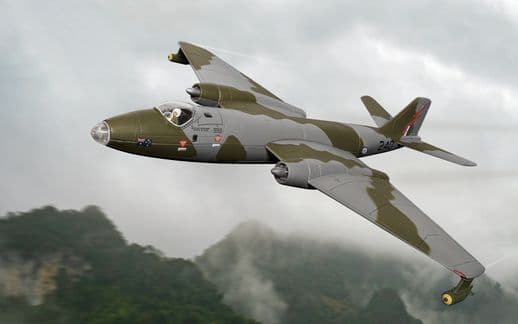
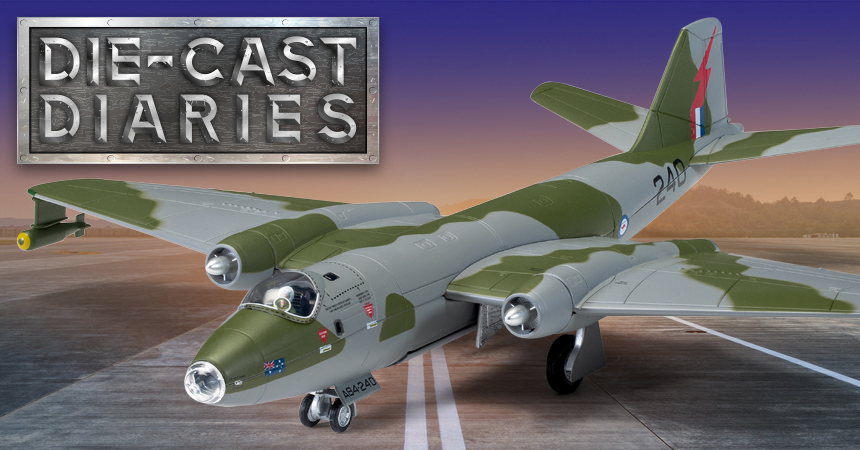
Taking its place in an Aviation Archive range for the first time in sixteen years, this English Electric Canberra is presented as a RAAF machine which served during the Vietnam War. These latest development images feature the last sample model received at Corgi HQ.
Since 1998, the Aviation Archive range has been presenting some of the world's most famous and important aircraft as collectable scale die-cast models, removing the need to build and decorate your favourite aircraft in kit form, and all with the undeniable appeal of that die-cast weight. Over the past 25 years or so, a succession of classic aircraft have been inducted into the Aviation Archive hall of fame, although it does have to be said that some toolings have proved to be rather more elusive than others over that time.
One subject which definitely falls into this category is our 1/72nd scale English Electric Canberra, a beautiful model tooling which for one reason or another, has only appeared eight times over that time, with the previous release being a very long sixteen years ago. Thankfully, that situation is about to change and in some style, as we are about to welcome a beautifully presented Royal Australian Air Force GAF Canberra Mk.20 to the range and if ordering activity is anything to go by, a great many collectors are looking forward to this one - let's see what's getting people so excited.
The English Electric Canberra is regarded as one of the most significant British aircraft of the post war era, a world leading aircraft which was the intended jet powered replacement for one of the most capable aircraft of the Second World War. Unquestionably, the de Havilland Mosquito was always going to be a tough aviation act to follow, but as Britain entered the jet age, the significant task of designing a new Mosquito was handed to acclaimed aircraft designer 'Teddy' Petter and his team at the English Electric Company in the North West of England. Building on the already impressive capabilities of the Mosquito, the new multi-role aircraft would be required to fly higher and faster than its famous wartime predecessor, whilst at the same time possessing the same legendary versatility of Britain’s WWII Wooden Wonder. The team were facing quite a daunting design prospect.
The English Electric company had an established reputation for manufacturing electrical equipment, heavy machinery, transformers, trams and railway locomotives, however in later years, they had also expanded into the growing consumer electronics market, developing computer technology, and also into aviation. With the onset of war, English Electric became much more involved with the production of aircraft, but not initially those of their own design. From their factories at Preston and Samlesbury (near Blackburn), they produced Handley Page bombers for the RAF, starting with the twin engined Hampden and later moving on to the four engined Halifax heavy bomber.
At the peak of production, they were delivering 81 new Halifax bombers to the RAF each month (an impressive figure achieved in February 1944), going on to produce a total of 2,145 aircraft, whilst also constructing 770 of the smaller twin engined Hampden bomber, a figure which represented over half the total production run of this aircraft type.
With all this invaluable production experience behind them, English Electric were determined to start producing their own aircraft and embarked on a significant expansion of its design and development infrastructure. Securing the services of talented former Westland Aircraft designer 'Teddy' Petter, their new recruit was basically given a free rein in establishing a team of young, forward thinking aviation professionals, with their first project being a significant one - designing the intended replacement for the famous de Havilland Mosquito.
This was a hugely ambitious undertaking for a relatively new aviation company and would be asking much of their recently assembled design team. Clearly, their new aircraft would have to fly higher and faster than any British production aircraft had ever done before, making use of all the very latest developments in both aerodynamic and propulsion technologies if they were going to achieve their goal. Adopting many of the design philosophies which made the Mosquito such a success during the war, the new aircraft would have to be a real speedster, lacking any form of defensive armament and therefore relying on speed, altitude and stealth to avoid interception by enemy aircraft. In the world of aviation, something rather special was happening in Lancashire.
Making its first flight in May 1949, the English Electric Company's new medium jet bomber was an aviation thing of beauty, sporting beautifully clean lines and was clearly designed for speed. The aircraft showed great promise right from the start and was already causing plenty of excitement within the Air Ministry. Even as test pilot Roland Beamont was conducting the first flight of prototype VN799, English Electric were already in receipt of an advanced order for 132 aircraft. The Royal Air Force were so confident the new aircraft would give them a significant technological edge, that they didn't want to delay the service introduction of the new aircraft one day longer than necessary.
Given the name Canberra, the new bomber would enter RAF service with No.101 Squadron from January 1951, with the Squadron being fully operational just four months later – their aircraft possessed exceptional performance and the RAF had the ground-breaking new jet bomber they had been hoping for.
The English Electric Canberra quickly proved to be a great source of national pride for Britain, particularly as the new aircraft was coveted by almost every air force in the world. The Canberra possessed incredible performance and started to break aviation records for speed, distance and altitude almost immediately, underlining its status as one of the most advanced and strategically capable aircraft in the world.
As the intended replacement for the de Havilland Mosquito, the RAF's first jet powered bomber matched and in many ways exceeded its design brief, with the Canberra proving to be arguably even more adaptable an aircraft type than the Mosquito, produced in more than 40 different variants during its long service life. Equipping no fewer than 65 RAF Squadrons at one time or another, the Canberra would also prove to be an incredible export success for Britain, purchased by 15 overseas air arms and built under licence in both the US and Australia. Several of the 48 aircraft built in Australia by the Government Aircraft Factory would go on to serve with distinction during the Vietnam War.
Following the end of the Second World War, the Australian government embarked on a radical reorganisation of their armed forces, placing an emphasis on smaller, more agile forces, but equipping them with the latest and most effective equipment available. It was decided that the Air Force would therefore receive the new British Canberra jet bomber and whilst it was not intended that the country would make use of nuclear munitions at that time, the Canberra's ability to deliver them was seen as an advantageous additional deterrent threat option.
Australia would eventually procure forty-eight Canberras, all of which were built under licence in the country by Government Aircraft Factories, with all of the aircraft's Rolls Royce Avon engines also built under licence, this time by the Commonwealth Aircraft Corporation. The Australians were of the opinion that their forty-eight cutting-edge Canberras would be a more effective aerial deterrent than their entire wartime force of some 254 heavy bombers, such was the faith they showed in the Canberra. Australian built Canberras were designated Canberra Mk.20 and the forty-eight aircraft were allocated serial numbers A84-201 through to A84-248.
The first Australian produced Canberra flew in May 1953 and went on to serve with No.82 Wing later that same year. RAAF No.2 Squadron would be the first to be equipped with the Canberra, with No.6 Squadron being the second in 1955, followed by No.1 Squadron as the third and final unit in 1958.
During the Vietnam War, eight Royal Australian Air Force Canberras from No.2 Squadron operated under a memorandum of understanding between the RAAF and the USAF, operating from Phan Rang Air Base in central South Vietnam, attached for the duration to the 35th Tactical Fighter Wing of the United States Air Force. These aircraft would provide crucial additional strike support for US units and were requested because of the aircraft's endurance, bombing accuracy and their ability to operate below the notoriously low cloud bases which often affected this region, if required.
The first RAAF Canberra arrived at Phan Rang on 16th April 1967 having made the two hour transit flight from its base at Butterworth in Malaysia and the eight allocated aircraft would go on to serve with distinction during a four year period operating in support of the Vietnam War. With both RAAF air and ground crews operating at maximum efficiency, the Australian Canberras posted an impressive serviceability rate of 97%, but perhaps even more impressive than this, despite only flying 6% of the USAF 35th TFW's operational sorties during the conflict, they managed to inflict 16% of the damage inflicted.
By the time No.2 Squadron returned to Australia in 1971, they had become the final operational Canberra unit in the RAAF, but returned with a proud record of both serviceability and operational effectiveness throughout their deployment. Marking a glorious chapter in the history of Canberra operations, No.2 Squadron would be awarded two overseas citations for their achievements in Vietnam, the Cross of Gallantry with Palm, from the Republic of Vietnam and an Outstanding Unit Award from the USAF.
GAF Canberra Mk.20 A84-240 was one of the eight RAAF Canberras which served with such distinction during the Vietnam War and was actually to suffer combat damage during her lengthy deployment. On retirement from service, she was traded for a RNZAF Harvard, an aircraft which is now on display in the RAAF Museum. She was actually flown to retirement in New Zealand and escorted in for her final landing by a formation of RNZAF A-4K Skyhawk jets. She can now be found as one of the much-loved exhibits on public display at the RNZAF Museum at Wigram, in Christchurch.
We are delighted to have the Canberra back in the range and to be able to commemorate the aircraft's significant contribution during the Vietnam War. The images used to illustrate this review feature an advanced production sample of this beautiful model, highlighting the fact that our long wait for a new Canberra is almost over.
There is nothing quite like starting a new year of die-cast model collecting than with an exciting new collection of models to peruse, especially if several of them happen to be available immediately. That's what we had with our latest January - April range announcement a couple of weeks ago, however, with all the feverish activity surrounding range launch, the arrival of three beautiful new Vanguards releases passed relatively unheralded. We intend to address that situation now by looking a little more closely at each release, however, as all three have been available for several weeks now, 3/4 of the available stock of each model has already been seen speeding out of our warehouse.
VA14906 Ford Escort Mk2 RS2000 Custom in Black
The Mk2 Escort RS2000 built on the success of the Mk1 and followed the same basic recipe, a powerful 2-litre OHC engine in the small lightweight Escort body with RS suspension. The unique nose cone differentiated it visually from all other Escorts and reduced its drag factor from 0.444 to 0.386, while design details, such as the standard Scheel ‘roll-top’ seats and four-spoke RS alloy wheels, helped to make it the most desirable sports saloon of its era.
The example modelled here was initially purchased from H & J Quicks Ltd, Old Trafford, Manchester by local man Lawrence Ewbank on January 17th, 1978. It cost £3,791.89, including VAT, plus £28.10 for a radio. Mr Ewbank was obviously fond of the car because, in 1991, he spent over £10,000 having it extensively restored by RS Autos, Stockport, and kept it until 2002, by which time it had covered 72,683 miles. The third owner asked D&D Autos, Egham, Surrey, to do some work on the car and this culminated in D&D advertising it for sale in autumn 2014.
It was purchased by the fourth and current owner, Nottinghamshire-based fast-Ford enthusiast Mohammad Butt, who was impressed by the basic soundness of the car despite its lack of service records. Two years later, after doing some painstaking research, he was delighted to obtain the car’s detailed service history folder from the third owner’s family and has now commenced the car’s restoration.
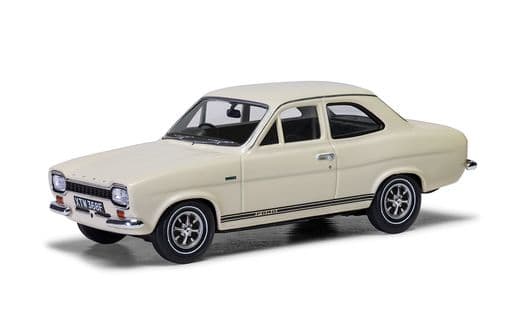
VA09532 Ford Escort Mk.I Twin Cam in Ermine White - (Ford Press Car)
The Twin-Cam modelled here XTW 368F is presented as it was when photographed for the Escort’s launch publicity images wearing a GT40-inspired low-level-stripe and Rostyle wheels, neither of which were featured on production cars. To generate interest in the new car, Ford’s PR supremo, Walter Hayes, shipped a fleet of Escorts to Morocco in early 1968 and invited journalists to drive over a 700-mile route.
This car was the only Twin-Cam and Autosport’s founding editor, Gregor Grant, was so impressed he placed it on the cover of the January 19th 1968 issue. The magazine featured a report of the Moroccan adventure in which Grant said he was, ‘Impressed by the liveliness of this power-packed little projectile’. XTW 368F, one of the most important early Twin-Cams, was built at Boreham in autumn 1967 using a 1300GT (Type 48) bodyshell. It was the fourth Twin-Cam constructed, although it was rolled in testing and then rebuilt around a new bodyshell in December 1967.
After its launch PR duties, it was prepared for the Escort’s competition debut, a rallycross event at Croft on February 3rd, 1968, where Tony Chappell took it to victory. Ford then used it for bodyshell strength testing resulting in some spectacular pictures of it flying over bumps. It was gifted by Ford to the driver who’d done most of the testing, Barry Lee, who campaigned it in Rallycross in 1968/9 and then rebuilt it as his first National Hot Rod.
VA14907 Ford Escort Mk2 RS2000 in Signal Green
The Mk2 Escort RS2000 was introduced in January 1976, a year after the main Mk2 range had been launched. Over 23,000 were produced before production ceased at Saarlouis, Germany in 1980.
This was a large enough quantity for it to be profitable in its own right, but it also sprinkled some motorsport stardust on the humbler Escorts with which it shared showroom space by successfully competing in Group1 motorsport events for mildly modified cars. Ari Vatanen and Peter Bryant’s win on the 1976 Texaco Tour of Britain is one high-profile example.
The Mk2 RS2000 modelled here was first sold by Ford RS dealers Hendy Lennox, Southampton, and first registered on September 20th, 1976. The current owner, Kent-based enthusiast Mickey Stewart, purchased it from fellow enthusiast Alan Sherwood in June 2014. It was complete but had been dismantled into a rolling shell for a restoration that had then stalled.
Mickey worked with Escort specialists Neil Bonds and Kelly Baverstock at Panelcraft Concours Restoration, Kent, who stripped the car, renewed almost all the panels and completed a Concours quality restoration before respraying it in the original colour.
The engine was rebuilt to Ford’s Group 1 specification, including twin Weber 44 IDF carburettors, although most of the rest of the vehicle was built to standard specification. The resulting car received great acclaim in the fast Ford world and took the prestigious RSOC Concours Gold Cup in 2017.
As we embark on another year of Vanguards collecting, let's extend a warm welcome to this bevvy of beauties, as they all vie for a position within our display cabinets and our hearts. We've got a busy year ahead for our Vanguards range, so buckle up for a wild ride!
As the dust has now settled on our latest range launch and collectors have all started to place their pre-orders for the models they want in months ahead, we thought you might like to check in on which models have attracted the most support since range launch, purely in terms of web orders received. This is in no way a scientific dissection of the situation, more a quick collating of available information, just for a bit of light hearted die-cast entertainment.
As we all love to rank our favourites, we will announce the five most popular models in reverse order, even though we are including eight models for reasons which will become apparent. We know most Corgi collectors would probably be able to guess which models have made the list, but will you get them in the correct order?
Let's begin, because the suspense is killing us!
Coming in sixth place ...
We had to complicate matters right from the off, didn't we. In sixth place is this delightfully collectable edition to the range, our tribute to one of the most popular comical scenes from the Wallace & Gromit movie The Wrong Trousers. Indeed, this collection of models actually occupy the 6th, 7th and 8th positions, as each model has been pre-ordered in almost identical numbers, suggesting that many people are going to be displaying their models in their entirety and before things started getting complicated by that pesky penguin changing all the track points.
Occupying fifth spot ...
When talking about icons of the British motoring scene, there are few cars which can claim to enjoy the same affection in which the Ford Capri is held, a car which may not be able to hold its own amongst the world's most prestigious supercars, but was every inch a supercar in the hearts of Britain's motoring public. The Mk.2 version of the Capri has until this point been missing from the Vanguards range, so when it was announced earlier this month, we knew it would be a winner in the hearts of collectors everywhere.
Although this is by far and away the most popular new Vanguard model from a pre-ordering perspective, its position is helped by the fact that we haven't included figures for the three new Ford releases reviewed earlier, as these were technically in stock items following range announcement, but read into that what you will.
Coming in fourth place ...
Our new Panavia Tornado is the latest new tooling addition to our hugely successful 1/48th scale post war jets range, a brute of an aeroplane which was withdrawn from service almost five years ago, after earning a reputation as one of the most effective airborne strike platforms of the jet era. Clearly, this model will be receiving plenty of attention over the coming weeks, so we won't be saying too much here, other than to confirm that Aviation Archive collectors are already on Tornado warning! This new model will also surely appeal to those who have yet to call themselves Aviation Archive converts.
In third place ...
We head back to Aviation Archive as we check in on a new tooling addition to the range which in the eyes of many collectors is long overdue, the distinctive looking Martin B-26B Marauder. UK based Marauder units were used extensively on operations leading up to D-Day, with the aircraft we chose to commemorate actually leading the final bombing strike against German defensive positions in the minutes prior to troops landing on the beaches. In this 80th anniversary year, could there possibly be a more appropriate addition to the Aviation Archive range?
Our runner up is ...
Corgi collectors of some years standing will be only too aware of the proud association the brand has with James Bond 007 and our die-cast tributes some of the iconic vehicles he has either driven, flown or piloted. This association is responsible for creating THE single most successful die-cast model car release of all time and we are proud to continue this with a very special addition to the range. For the first time, our classic Aston Martin DB5 261 model will be produced in the iconic Silver Birch paint finish of the real car, as we all get a little shaken and very much stirred!
Again, we have used a little die-cast licence here, because if we were going on pre-order numbers alone, this model would have been our winner, however, volume may have clouded our judgement here, and you're about to find out way.
And our winner is ...
Unfortunately there are no prizes for getting this one right, but you do get to add one spectacularly successful new model to your collection. Well, you all stood by, and we duly launched Stingray and what a launch it's turned out to be - this model is clearly one that many people have been waiting to get their hands on and get your hands on it you have.
If we were producing this list under strict rules, it could be argued that this model shouldn't really have been up for consideration, because technically, it was a stock item from the second the current range was announced, however, its performance has been so spectacular that it simply demanded to be included. Despite having a huge delivery of models arrive in our warehouse just before Christmas, initial stocks have almost gone and we might find it reverts to only being available for pre-order in the near future.
So there you have it - Stingray takes the crown .... as if that were ever in any doubt. Although it was just a bit of fun, we hope you enjoyed this look at the models which have proved popular since range launch and if it's something you would like to see us include again in the future, please do drop us a quick line and let us know.
We end this latest update by asking if anyone else is looking forward to the Masters of the Air premier this weekend? A much anticipated series produced by the people who brought us the critically acclaimed Band of Brothers and The Pacific, Masters of the Air is based on a successful book which followed the history of the USAAF 100th Bomb Group during their deployment to England with the Eighth Air Force during the Second World War.
Flying the Boeing B-17 Flying Fortress in combat, the series will follow the Group as they embarked on their bombing campaign over enemy occupied Europe, initially without the protection of fighter cover and potentially through to the period where the Allies were able to claim a hard fought superiority of the skies over Europe.
The series promises both a compelling storyline and world class CGI graphics, so for anyone with even a passing interest in aviation and Second World War history, this should be something pretty specular. With the premier being aired tomorrow evening, I suspect many of us will be booking the family TV immediately after reading this latest edition of Die-cast Diaries - Love Island is just going to have to wait!
That's all we have for you this time, however, please join us again in two weeks’ time for another exclusive insight into the wonderful world of Corgi. Between editions, we are always interested to hear your views on all things Corgi, so if you feel like dropping us a line to comment on anything blog, collecting or Corgi model related, or even to suggest a topic you might like to see us cover in a future edition, please do drop us a line at diecastdiaries@corgi.co.uk.
If you can’t wait for the next blog, you will find plenty of Corgi model collecting discussions taking place on our official social media channels, access to which can be obtained by clicking on the respective links at the foot of the Corgi website homepage.
Link access to Corgi social media sites.
Thank you for continuing to support your Die-cast Diaries blog. Our next edition is scheduled for publication on Friday 9th February.