
Welcome to our latest edition of CORGI Die-cast Diaries, your fortnightly blog review bringing collectors all the news, updates and topical stories from the captivating world of CORGI die-cast model collecting.
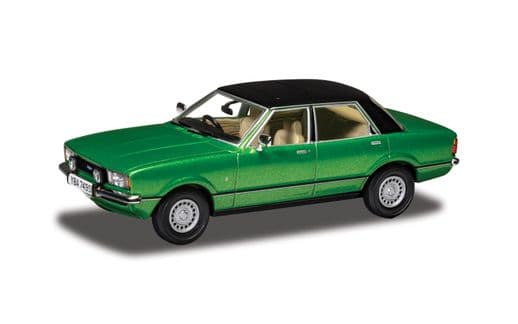
Following a short holiday hiatus, we’re delighted to confirm that this latest edition of DCD will mark the blog introduction of an exciting new tooling project for the Vanguards model range, a classic Ford which was announced as a development project at range launch at the beginning of the year, the Ford Cortina Mk.2. As this new model continues to advance through its development stage, we’re pleased to be in a position to bring you a selection of CAD screenshot and ‘first shot’ metal tooling images in this edition, which are being shown exclusively to blog readers for the very first time.
In addition to this, and coming before our Cortina news in the blog subject pecking order, we have details of a recent visit made to our good friends at the Biggin Hill Heritage Hangar, where we once again had the opportunity to make a model introduction to a real aircraft which inspired its inclusion in the Aviation Archive range. Despite their unrivalled association with Britain’s most famous fighting aeroplane, this particular aircraft wasn’t a Spitfire.
It’s great to be back with all the latest news and model exclusives from the world of CORGI.
Real versus CORGI, North American P-51D Mustang style.
As the 2026 Airshow season is now in full swing, the subject of historic aviation is clearly high on the priority list of many an enthusiast and model collector, and as such, any excuse to get close to aeroplanes is one most of us would except with open arms. For that reason, and despite a 4.30 am start and a very long day behind the wheel of my car (not to mention missing the England match), an appointment to visit our friends at the Biggin Hill Heritage Hangar over the past few days proved to be the perfect way to ease myself back into work after a short holiday break.
The reason for this latest visit was to introduce an impending CORGI model release to a beautifully restored ‘full size’ WWII era aircraft which is currently on the UK Airshow scene, and is under the care of the BHHH team, one which honours the exploits of the same American pilot during his service in the Second World War we have with this new model. Although the highly talented engineers and technicians at BHHH are responsible for preserving aviation heritage in the most spectacular fashion, they’re never averse to being the first to see some impending CORGI model releases, and we absolutely love showing our models to them.
Our latest visit came in the wake of some recent media activity concerning the Heritage Hanger, and the future of this fascinating business. It was recently announced that the company would be making the transition back to its original name of The Spitfire Company (Biggin Hill), as they feel this more accurately reflects the specialist activities they continue to bring to arguably the most exciting sector of aviation. The Spitfire Company will be the home of all aircraft restoration, maintenance, engineering and Warbird support services, whilst FlyaSpitfire.com will continue to provide Spitfire flight experiences, run hangar tours and provide other popular visitor experiences.
The focus of our attentions during our latest visit to Biggin Hill and The Spitfire Company.
Although the company’s hangar premises at Biggin Hill are always an incredible hive of fascinating aviation activities, the BHHH team are always so welcoming and accommodating when we visit, and it really is a treat to be able to spend time with them at this very special place. The reason for this latest visit was to show them two impending Aviation Archive model releases which both have links to an aircraft currently residing in one of their hangars, and hopefully, for us to be allowed to photograph those new models on the wing of this incredibly valuable Warbird.
As always, the team were so helpful and accommodating, and we really can’t thank them enough. The only thing we can say is that if you ever have the chance to experience one of their hangar tours, or enjoy a flight in one of their incredible fleet of historic aircraft, you definitely won’t be disappointed – these are people well versed in making people’s dreams come true, and this is a truly magical place to visit!
Although our work in presenting models of some of the world’s most significant and historic aircraft in scale form is really quite exciting, and something we hold dear, seeing the work these chaps do on the real thing takes things to another level and really does put us in our place. Fortunately, when it comes to unveiling new model releases, the BHHH team are just as interested in our (small) aircraft as we are in their originals, and it’s always a little surreal to see these incredibly talented professionals pouring over our CORGI models with real enthusiasm, when we know what they all do for a day job.
As is always the case, once the formalities and model box openings had been dispensed with, the good people at BHHH couldn’t have been more accommodating to our requests, and they were more than happy to leave us alone with the North American P-51D Mustang which was the subject of our attention this time, and for us to secure some unique images of our latest release resting on the aircraft which inspired its range inclusion.
Two of the combat mounts of celebrated fighter ‘Ace’ William T. Whisner.
As we saw in our previous edition, American pilot William T. Whisner may well be one of the most accomplished pilots that most people have never heard of, a celebrated ace pilot in not just one, but two different wars.
Born and raised in the US city of Shreveport, Louisiana, William T. Whisner Jr was always keen on military related pursuits, and during his formative years, became an active member of the Boy Scouts of America and joined his school’s Junior Reserve Officer’s Training Corps as soon as he was old enough to do so. On graduating from High School, Whisner applied to join the United States Army Air Corps via its cadet program, starting his training in April 1942, and after successfully completing his primary, basic combat and advanced flying training, was commissioned as a Second Lieutenant in the February of 1942.
His first Air Corps assignment was to learn how to fly the mighty Republic P-47 Thunderbolt at Westover Field, before joining the 34th Fighter Squadron at LaGuardia Field in New York. In advance of this unit’s deployment to the European Theatre, his unit was re-designated as the 487th Fighter Squadron, 352nd Fighter Group, with Whisner and his squadron mates sailing for England aboard the RMS Queen Elizabeth in June 1943. Their ultimate destination was USAAF Station 141, the former RAF Bodney airfield in Norfolk, a location with which they would become extremely familiar over the coming months.
Although the unit’s pilots were already experienced in flying their Republic P-47 Thunderbolts, they weren’t used to flying them over the unfamiliar landscape of East Anglia, so embarked on an intense period of training and familiarisation flying, in an attempt to quickly acclimatise to their new surroundings. They would finally be released for combat operations from the 9th September 1943, free to play their part in securing Allied air superiority in the skies above enemy occupied Europe.
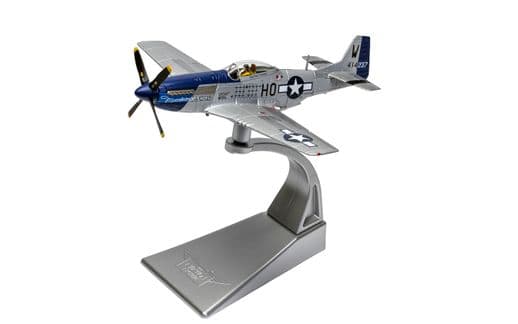
Our version of ‘Moonbeam McSWINE’ presents the aircraft as flown by Bill Whisner in New Year’s Day 1945.
Bill Whisner would score his first victory over a Luftwaffe fighter whilst flying a bomber escort mission over northern Europe, a mission where he was flying as wingman to another future USAAF ‘Ace’ pilot, Captain George E Preddy, who would go on to become the leading Mustang ace in the European Theatre. Preddy’s Republic P-47 Thunderbolt has recently taken its place as part of the Aviation Archive range and is therefore another model release possessing links to Bill Whisner during his celebrated combat flying career.
Only weeks after this incident had taken place, Whisner and the 352nd exchanged their Thunderbolts for P-51B Mustangs, and aircraft type (albeit in upgraded variant form) in which Whisner would score the majority of his aerial victories. Whilst the next model in our review of linked Whisner aircraft releases wasn’t actually made by CORGI, it will be part of many a die-cast aircraft collection, and as such, is still worthy of note here, as it might have to be displayed with the trio of Aviation Archive releases featured in this latest update.
With a British Royal Family visit to the USAAF Station at Bodney imminent, base officials wanted to make a P-51B Mustang nose artwork tribute to the young Princess Elizabeth, the future Queen of Great Britain and her Commonwealth. Unfortunately, most of the aircraft at the airfield had already been adorned with artwork embellishments of one form or another, however, the aircraft assigned to pilot Bill Whisner was still only resplendent in the distinctive blue nose of the 352nd Fighter Group.
Whisner’s crew chief arranged for the fighter to have the name ‘Princess Elizabeth’ painted on the port side cowling of the aircraft, something which might have met with the approval of the Royal party during their visit, but made bill Whisner furious when he clapped eyes on it. Appearing overnight, he was apparently livid when he saw the new ‘unauthorised’ (by him, at least) artwork addition to his fighter, particularly as it now had the nation’s press gathered around it, and would effectively be in the national gaze from that point forward.
As he had little involvement in the naming of his aircraft, he was presumably rather pleased when the 352nd upgraded their fighters for the new P-51D ‘bubbletop’ variant of the Mustang, particularly as Princess Elizabeth would later be destroyed by enemy flak whilst being flown by another pilot on D-Day.
Regarded by many as the finest fighting aeroplane of the Second World War, the ‘D’ variant of the Mustang was the most heavily produced version of this famous fighter, one which addressed most of the perceived shortcomings associated with earlier versions of the aircraft. Despite the fact that razorback B and C model Mustangs were excellent fighting aeroplanes in their own right, they did have issues with compromised visibility from their birdcage canopy, and were equipped with guns which had a tendency to lock-up during combat. Both of these issues hampered the performance of an aeroplane which was already showing itself to be generally superb.
The ‘D’ model addressed both of these issues, altering the rear fuselage to allow the adoption of a large, single piece Plexiglas teardrop canopy which offered excellent all-round visibility, and the introduction of a redesigned wing which housed six .50 calibre machine-guns, which were now mounted in an upright configuration, virtually eliminating the earlier feed jamming issue. The improvements also included the addition of an incredibly effective gunsight, one which would prove to be one of the most effective fitted to any WWII fighter, and part of an upgrade combination which made the already impressive Mustang almost unbeatable.
The ‘D’ variant of the Mustang started to appear on airfields across England from the summer of 1944, allowing the Mustang to continue to build on earlier operational successes, providing pilots with a fighter that was now literally capable of hunting the Luftwaffe to destruction. Mustang pilots interviewed after the war described how they knew the Mustang was a special aeroplane as soon as they sat behind the controls of one – ‘it just felt right’. With its engine now benefitting from a two stage, twin speed supercharger, the Mustang was equally at home defending USAAF bombers at high altitude, as it was down on the deck looking for Luftwaffe targets of opportunity.
Whisner’s two North American produced fighters allowed him to become an ‘Ace’ in two different wars.
An aviation Archive model paying it’s die-cast tribute.
For the great many people who have always been fascinated by the exploits of the most successful fighter aces of the Second World War, it’s often difficult to comprehend the extraordinary feats performed by men who considered themselves to be ordinary, and simply performing their duty. One such man was William T. ‘Bill’ Whisner, a fighter pilot who had previously been the regular wingman of famous fellow US ‘Ace’ pilot George Preddy, but had now become a respected ace in his own right.
His most successful day came on 21st November 1944 when he shot down five Focke Wulf Fw190 fighters on the same mission, whilst protecting bombers sent to attack the synthetic oil refineries at Merseburg. He would also be credited with a further two enemy aircraft probably destroyed, and all in a frantic 20 minutes of combat. He would be awarded the Distinguished Service Cross for this incredible feat of airmanship.
Whisner would be awarded a second DSC on New Year’s Day 1945 when the Allied airfield Y-29 at Asch in Belgium came under attack from 65 Luftwaffe fighters during their famous ‘Operation Bodenplatte’ raid. Whilst in the process of taking off from the airfield in his usual Mustang ‘Moonbeam McSWINE’, Whisner noticed multiple enemy aircraft approaching the airfield at low altitude and at speed, and as soon as his undercarriage had retracted, found himself firing his guns at a Focke Wulf Fw190.
As the enemy fighter hit the ground, Whisner could feel the impact of enemy cannon shells striking his fighter, so immediately took evasive action to avoid taking further hits. Despite suffering damage to his aircraft, he stayed with his Mustang to claim a second Focke Wulf and two Messerschmitt Bf 109’s destroyed, bringing his score to four for the day and total victory tally to 15.5 enemy aircraft.
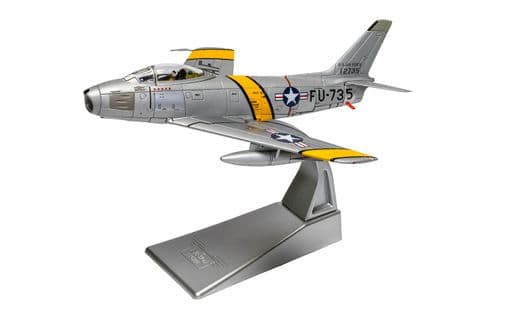
These would be Whisner’s final victories of the Second World War, however, he would go on to be one of just seven USAF airmen to also attain the coveted ‘Ace’ status during the Korean War, this time whilst flying the North American F-86 Sabre jet.
When completing our research in support of this release, we based our Mustang presentation appearance on the aircraft Whisner flew on New Years Day 1945, during the Luftwaffe’s surprise massed ‘Bodenplatte’ attack which was intended to strike a crushing blow to Allied air forces in the west. Fortunately, thanks to the skill and vigilance of men like Bill Whisner, they failed in this objective, only succeeding in further depleting their ability to fight, and hastening an increasingly certain Allied victory.
Obviously, the aircraft currently residing at the Biggin Hill Heritage Hanger isn’t the exact aircraft Bill Whisner flew on that fateful day in 1945, but is a restored aircraft which takes its finish inspiration from the wartime aircraft flown by him. It also sparks plenty of fascinating discussion amongst enthusiasts as to the shade of blue used by the 352nd Fighter Group during the Second World War. Eminent and trusted historians of the 352nd have detailed how two different shades of blue were used at different stages of the war, with a darker shade appearing on their Mustangs during the latter stages of the conflict, the appearance required by our particular model tribute to Whisner’s AAF Station Y-29 Asch New Years Day 1945 Mustang presentation.
This beautiful aircraft is under the care of The Spitfire Company at the moment, and an undoubted star of the UK historic aviation scene.
As you can see from the selection of images included here, we also took the opportunity to include our 1/72nd scale tribute to Whisner’s Korean War jet mount in our model/real aircraft photoshoot, marking the fact that our impending linked Whisner release features the aircraft types he used to become an ‘Ace’ pilot in two wars – the Mustang in WWII and the Sabre during the Korean War, both classic North American aircraft types.
Both models are scheduled for imminent release, and are expected in our warehouse over the next few days – please keep an eye on the CORGI website for availability confirmation.
Once again, we’d like to extend our sincere thanks to everyone at The Spitfire Company (let’s start using the new title) who helped to make this such an enjoyable day, and to implore anyone thinking about paying them a visit to do so at the earliest possible opportunity – it really is a fantastic place.
Anyone in the mood to see a selection of exclusive new Vanguards model CAD imagery?
When it comes to the world of popular motoring, none of us would expect the eye-watering expense associated with introducing any new car line to be allowed to proceed without the support of robust market research, because to do otherwise would surely be full of risk. Back at the beginning of the 1960s, Ford’s executives were confident that they had an impressive range of models to maintain their lofty position within the UK motoring market, but nevertheless commissioned a wide-ranging study into the nation’s current motoring landscape.
The results of this survey were interesting and showed that they had good market penetration in all sectors bar one, that of popular family cars. With years of success behind them, they decided to do something about this, and set themselves a punishingly short deadline in which to develop, design and produce a new family car. Not only was the new car intended to become a favourite with the British public, but it was also intended to provide plenty of profit for its manufacturer, with every component having to conform to strict cost controls, but without compromising on quality. What the public were presented with was the Ford Cortina, and they quickly fell in love with the new car.
Although for most people it isn’t difficult to appreciate the appeal of sports, prestige and luxury car types which have graced our roads over the years, you might think that cars which served as our everyday transportation workhorses might find it much more difficult to receive enthusiast affection, but that simply isn’t the case. Maybe the simple fact that these cars were generally produced in larger numbers and came into contact with much wider sections of society resulted in many more people having their own personal attachments to cars which fell into the ‘affordable family vehicle’ category, even if they didn’t realise it at the time.
This next selection of images feature our project to induct the Ford Cortina Mk.2 into the Vanguards model hall of fame.
By their very nature, the most successful family cars generally had to be hard-working vehicles, getting their owners to and from work, facilitating the family’s lifestyle activities, and do so with the minimum of maintenance and fuss. They essentially supported our everyday lives, always there when we needed them and usually only requiring the odd wash and polish on a fine Sunday morning. These cars were loved at the time, but mainly as the facilitators of our activities and if we’re being honest with ourselves, were probably taken for granted due to the lack of maintenance they required.
In many cases, once these cars had served us faithfully for several years, it was usually off to the showroom for a rather brutal model upgrade. With our old cars taken to the compound at the back of the garage in part exchange, we then only had eyes for the gleaming new replacement which was about to be the envy of the neighbours, once we drove it home.
Because this cycle of acquiring, using, and trading in our cars usually meant that some could be a little the worse for wear by that stage, or were purchased by new owners who didn’t have quite as much affection for their wellbeing, many of these family classics would end their days in a breaker’s yard, with very few surviving in pristine condition. Thankfully, over recent years, many enthusiasts have resolved to return some of these once loved family classics to their former glories. Although not prestige by any stretch of the imagination, it’s incredible to see the passion with which people approach these projects, as if finally realising just how much these cars meant to them first time around.
An exclusive first look at the ‘First Shot’ Cortina Mk.2, which has only just arrived at CORGI HQ.
When the original Cortina was first released, despite the fact that the motoring press at the time castigated the car as being a little simplistic, almost uninspiring, Ford had got their new family offering just right, and the public loved it. The competition were all forced to react, as the Cortina secured hundreds of thousands of sales, a phenomenon which would ultimately create quite a problem for Ford when it came time to upgrade the original. Still bound by strict design and production parameters, the Cortina Mk.2 required them to ‘strengthen its strong points, and reinforce its weaknesses’. Costs were controlled by using as many parts from the original Cortina as possible, even though the new model featured enough upgrades to make this a worthy successor.
As a million seller, replacing the Cortina was always going to be something of a risk for Ford, however, they were clever and sympathetic with their work, essentially creating a car which was a ‘New Cortina which was more Cortina’.
With better road holding and a higher top speed, both the public and the motoring press saw the Mk.2 as a worthy successor, with one journalist describing it as an ‘Old wine in a new bottle – if you liked the previous one, you’d likely be much happier with this new one’.
The Ford Cortina success story continued unabated.
A motoring phenomenon which started in the early sixties, the Ford Cortina would become a significant feature of the British motoring scene for the next twenty years, with the original model benefiting from four future presentation upgrades during that time. As far as the Vanguards model range is concerned, the Mk.2 Cortina has been a significant omission from the range over the years, so the announcement made earlier this year that our development team were working on a new model came as welcome news for collectors, and the many people who owned one of these classics during its two decade production run.
The images being shared here have all been cleared by our development team and feature CAD imagery produced during the very early stages of the project, and pictures of the very latest ‘First Shots’ model which has only just turned up at CORGI HQ. Although cleared for sharing, our Development Manager does want us to stress that these images all feature a model that’s still in development and as such, may well still be subject to further change before being released for production.
Indeed, he pointed out several details of the new model’s design which are already being altered as we write this update, following receipt of the first shot sample, even though he was still happy for us to show them. They all help to illustrate how a new model makes it to production and into our display cabinets, and as such, are of great interest to the collector, enthusiast and Die-cast Diaries reader.
What a pleasant surprise, we found a beautifully restored Ford Cortina Mk.2 during our recent visit to Biggin Hill.
We hope you enjoy this first look at the new Ford Cortina Mk.2 model tooling, and look forward to bringing you further updates as it advances towards production. Incidentally, the actual Cortina Mk.2 image we included above was taken during our visit to Biggin Hill earlier this week. We were surprised to see it there, and to learn that it was owned by one of the technicians at The Spitfire Company – it seems they like classics in the air and on the ground at Biggin Hill.
That’s it for this latest edition of our CORGI update blog, but we will be back as usual in two weeks’ time to bring you a further exclusive selection of updates. As always, if you would like to drop us a line in the meantime to comment on anything CORGI model related, or to suggest a future blog topic you’d like to see covered here in DCD, you’d be more than welcome, and we’re always happy to hear your views.
As ever, our diecastdiaries@corgi.co.uk address is always the one to use.
If you can’t wait for the next blog, you will find plenty of CORGI model collecting discussions taking place on our official social media channels, access to which can be obtained by clicking on the respective links at the foot of the CORGI website homepage.
Link access to CORGI social media sites.
Thank you for continuing to support your CORGI Die-cast Diaries blog, as we head into our eleventh year of production. Our next edition is scheduled for publication on Friday 17th July.
Until next time, once again, thank you for your continued support.