
Welcome to the latest edition of Corgi Die-cast Diaries, your regular blog review of all the news, updates and topical stories from the captivating world of Corgi die-cast model collecting.
Bet you weren’t expecting that mid-range new model announcement we made just after the previous edition of DCD was posted, were you! Something we’ve been planning since well before the start of the new year, we not only wanted to introduce this new selection of models to swell the ranks of the current January to April range, but also to give all our followers confirmation that we reserve the right to add new models to the range at any time, and how we will always be trying hard to bring you the models you want to add to your collections in a timely manner.
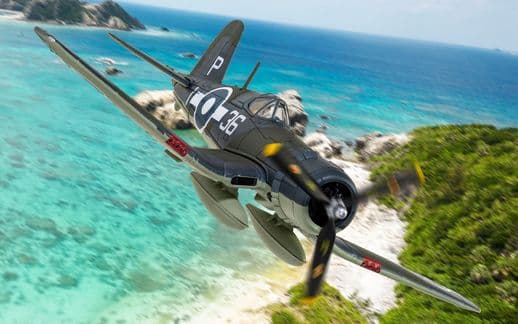
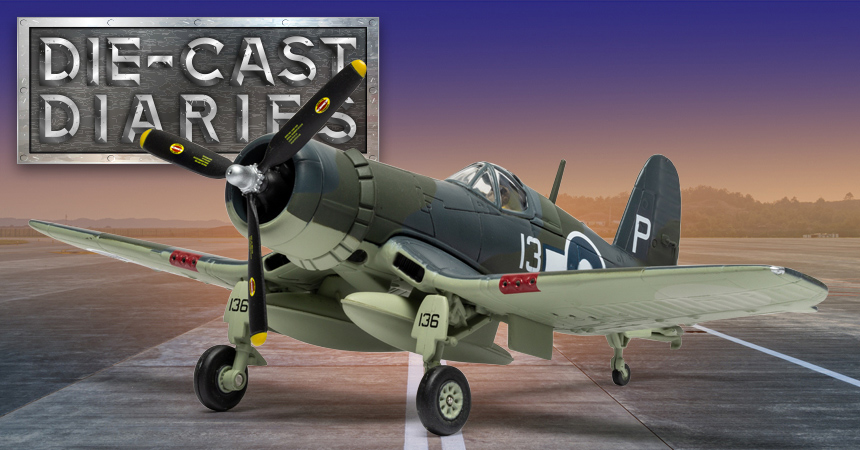
In this latest Corgi blog update, we will be looking at the four new models added to the current range in a little more detail, but also explaining the development rationale behind the announcement, from a timing and subject matter perspective. Before we get on to that, our header image confirms that our lead subject for this edition is our scale die-cast tribute to one of the most potent fighting aeroplanes of the Second World War, one which was dubbed the ‘Ensign Eliminator’ by US Navy personnel, but was greatly received by Britain’s Fleet Air Arm at a time of need, the Vought F-4U Corsair.
Who’s up for trying to land the world’s most powerful piston engined fighter on the deck of an aircraft carrier at sea then?
One of the most powerful single engined fighter aircraft of the Second World War, the Corsair was the only one of the main American fighters to remain in production following the end of the war.
At the start of the Second World War, the Fleet Air Arm of the Royal Navy were equipped with an eclectic collection of aircraft, some of which were bordering on being classified as obsolete, and very few of them actually being specifically designed for the job at hand. What they needed more than anything was a capable fleet defender, an aircraft which whilst capable of operating from the decks of Britain’s smaller aircraft carriers, once in the air, would be able to give an extremely good combat account of itself.
With Spitfires and Hurricanes being needed for Royal Air Force operations, the Lend-Lease Act arrangement with America soon saw the introduction of the Grumman F4F Wildcat (Martlet in British service), aircraft specifically designed for the task and a marked improvement on anything they had operated previously. When they were later offered a newer, even more powerful fighter, they obviously jumped at the chance, even though US Navy pilots who had failed to operate the aircraft successfully from their own carriers had dubbed it the ‘Ensign Eliminator’.
A hugely powerful aircraft which unquestionably has a claim to being considered the ultimate US fighter of the Second World War, the Vought F4U Corsair was originally designed to satisfy a US requirement for a powerful new naval fighter to operate from their fleet of carriers. The US Navy Bureau of Aeronautics issued a requirement for both twin and single engined proposals to be submitted, with the emphasis being placed on range, speed and the ability to be used in an attack capacity. The design proposal submitted by the Vought company utilised the most powerful engine available to them at the time, the massive Pratt & Whitney R-2800 Double Wasp, an 18-cylinder radial engine which was rated at 1,850 hp. Impressed with their design, a contract was signed to build a prototype aircraft and when this subsequently made its first flight in late May 1940, it became the first fighter aircraft to take to the sky powered by the Double Wasp engine. In a flight made on 1st October 1940, the prototype XF4U-1 became the first US fighter to exceed 400 mph and saw the type ordered into production.
The Corsair would become one of the most distinctive aircraft of the Second World War, with its appearance dictated by the use of the Double Wasp engine and its intended use as a carrier-borne US Navy fighter. The engine was so powerful that designers also needed a massive propeller to maximise the performance from the engine. This propeller would be 13 feet 4 inches in diameter, and would have resulted in very long and potentially frail undercarriage legs, had the designers not utilised a clever inverted V arrangement for the aircraft’s folding wings. In addition to providing the fighter with arguably its most distinctive feature, moving the wings lower to the ground allowed the inclusion of incredibly robust main undercarriage legs, something which was essential if these fighters were going to operate successfully at sea.
Although not initially liked by the US Navy, the Fleet Air Arm were grateful to be allowed access to the Corsair and operated it successfully from the decks of Royal Navy aircraft carriers.
Ordered into production in mid 1942, the Corsair embarked on its carrier qualification trials later that same year, however, things didn’t go particularly well. With the aircraft possessing incredible power and the cockpit being mounted quite far back along the fuselage, pilots had great difficulty landing this beast of a machine on the decks of even the rather large US carriers. As the aircraft essentially had to make a three-point landing, the Corsair approached the carrier at an angle where the pilot simply couldn’t see the deck, or indeed the ship for that matter, relying solely on the Bat Man and his technique during the landing phase.
To make matters worse, the hydraulics in the main gear oleos were at such pressure that aircraft tended to bounce on landing, often hopping right over the arrester wires. These difficulties created a real problem for the Corsair and as the aircraft was being trialled alongside the more conventionally configured Grumman Hellcat, the Corsair project was stalled until these issues could be addressed and it was classified at that stage as being ‘Inherently unsafe for carrier operations’.
As the US Navy proceeded with the Grumman Hellcat, the Corsair was allocated to US Marine Corps units, who from the end of 1942, started using the aircraft from land bases across the Pacific. By early 1943, it was clear that the Corsair was a magnificent fighting aeroplane, one which easily lent itself to the fighter bomber role, equally adept at bringing its firepower to bear against ground targets, as it was clearing the skies of enemy fighters. With its success from land bases, the Corsair would also finally overcome its shortcomings when operated at sea, however, it would be the British Fleet Air Arm who perfected a way to unlock the aircraft’s potential when operating it at sea.
With the Lend-Lease Act allowing Britain to take some of the latest US aircraft, the new Corsair was obviously of interest to them, and they would take them in relatively large numbers. Crucially, in the absence of a really potent fleet defence/strike fighter, the British were determined to use the Corsair on their own aircraft carriers, despite the fact that most of them were much smaller than their American counterparts. If the Americans struggled with the Corsair on their large carriers, how on earth would the Fleet Air Arm go on with their smaller vessels?
Naval aviators always regarded themselves as a ‘cut above’ when it came to airmanship, and as far as Fleet Air Arm pilots were concerned, they were determined to crack the Corsair. The force embarked on a series of intense carrier landing trials to see how the fighter behaved in FAA hands. As British carriers had armoured decks, the wings of the Corsair had eight inches clipped from their wing tips, giving them a squared off appearance and allowing them to be stored beneath the decks of British carriers. This necessary modification brought with it the added bonuses of increasing the combat roll rate of the Corsair, and slightly increasing its sink rate during the vital landing phase, something which essentially made landing more manageable.
The distinctive gull wing of the Corsair was a design development to allow the massive 4 metre Hamilton Standard propeller to have deck clearance.
With the Corsair having to make a three point landing on a carrier deck, and with the forward visibility on landing being so poor for Corsair pilots, Fleet Air Arm pilots developed a method of approaching their home carriers using a tight left hand arcing turn, giving them a good view of the carrier and once perfected, only leaving them in the hands of the Bat Man during the final couple of seconds of the landing. This was combined with the adoption of a bleed valve on the main undercarriage oleos to reduce the bouncing which had blighted the US carrier trials and making the landing phase much more manageable. The Fleet Air Arm proved that the mighty Corsair could be used safely at sea, although it does have to be said that carrier operations during the Second World War were still incredibly dangerous for everyone involved.
Despite the Corsair being designed and produced for the US Navy, it would be the Fleet Air Arm of the Royal Navy who gave the Corsair its first carrier action during WWII, as No.1834 Squadron aboard HMS Victorious took part in actions during the attack against the German battleship Tirpitz in early April 1944. Taking Corsairs produced by Chance Vought, Brewster and Goodyear, Britain would eventually take 2,012 Corsairs and they would provide the Fleet Air Arm with an excellent, robust and extremely capable single engined fighting aeroplane.
The Corsair would turn out to be the scourge of the Japanese and would earn a spectacular 11:1 combat success ratio. It was reputed that the Japanese dubbed the Corsair ‘Whistling Death’ because of the noise the aircraft made during an attack, however, Japanese sources seemed to dispute this, claiming they simply referred to it as the ‘Sikorski’. The Corsair would remain in production for an impressive eleven years and remain in service after the end of the Second World War and long after most other former WWII types had been retired and scrapped. Eventually joining the Hellcat in US Navy service, the Vought Corsair was unquestionably one of the most capable fighting aeroplanes of the Second World War.
The youngest of three boys, Canadian Donald John ‘Don’ Sheppard applied to join the British Fleet Air Arm when he was just 18 years old, and subsequently reported to a RCAF centre for assessment. Successful with this first attempt, after initial basic naval training in Canada, he would set sail for England in early 1942 aboard the armed merchant vessel HMS Alcantara, an if he was in any doubt that things were going to be very different compared to his relatively sheltered upbringing in Canada, one of the ships in convoy HX-174 was attacked and sunk by a German U-Boat. On his arrival in Britain and reporting to HMS Daedalus at Lee-on-Solent, he immediately received another sobering experience, as one of his first official duties was to attend a memorial service for the Swordfish crews lost recently during the disastrous attacks against the German Battleships Scharnhorst and Gneisenau.
After negotiating further basic naval training in Britain, it was on to the flying phase of his course, with basic flying training being handled by the RAF and further advanced training taking place in the US, where student pilots would learn on the Lend-Lease fighters they were likely to be using operationally. After accumulating over 20 hours flying the Grumman Martlet, Sheppard would begin his long association with a very different aeroplane, the potent Vought F4U Corsair, an aircraft he would fly throughout the rest of his training and indeed future operational postings. This would include his introduction to deck landings in possibly the most difficult aircraft to attempt such a thing, certainly of the current crop of naval fighters.
Following the successful completion of his training, he joined the rest of his flight, their support and aircraft, in embarking on the escort carrier HMS Atheling and onward travel to Britain. On arrival, aircraft and personnel transferred to the recently refitted HMS Victorious in March 1944 and it wouldn’t be long before Sheppard received his first taste of operational flying. As Britain continued to hunt the German Battleship Tirpitz, intelligence reports suggested the mighty ship had been damaged and had made for the safety of a Norwegian fjord, handing the task of finishing her off to the Royal Navy. Sheppard’s first mission was to fly a combat air patrol as HMS Victorious left Scapa Flow on 30th March 1944, protecting the task force against prying Luftwaffe reconnaissance aircraft.
After a hectic period of operations in the hunt for Tirpitz, HMS Victorious traded the cold and unforgiving waters of the North Sea for a new assignment in the Far East and the promise of clearer skies for its Corsair pilots. This posting to the Indian Ocean would see Sheppard turning from a talented novice pilot into an air ace, one of only two Canadian Navy aces of WWII and the Fleet Air Arm’s only Corsair ace of the Second World War. Once operating in the Indian Ocean, the FAA’s Corsairs were kept extremely busy, with a force of around 42 fighters pitted against regular Japanese aerial opposition. It was during this time that the Vought F4U Corsair would claim its first carrier based aerial victory – it would also prove to be a rather productive time for pilot Donald Sheppard.
A selection of advanced production sample model images proving that the Corsair is about to take its place in the Aviation Archive range once again, after an absence of over 16 years.
During a hectic period of combat flying in the Indian Ocean, Sheppard would be credited with at least four aerial victories, plus a couple more claimed as damaged or probable. One of these victories saw him engaging in a lengthy combat with a Japanese fighter, one which saw him giving chase to the enemy aircraft for over 20 miles at 20,000 feet. Once in shooting range, he saw hits on the enemy aircraft which exploded in a ball of flame, however, Sheppard was flying so fast that he didn’t have time to take evasive action and his Corsair flew through the flaming debris, burning his aircraft’s tail and elevators. Thankfully, he managed to nurse his fighter back to HMS Victorious without further incident.
HMS Victorious and her compliment of Corsairs would later steam further east to join the newly established British Pacific Fleet early in 1945, where they would take part in the Battle of Okinawa in conjunction with American naval forces. These operations would take a heavy toll of Allied aircraft, mainly due to the devastating kamikaze attacks unleased against Allied warships by the Japanese, actions which would once again see a hectic period of combat flying for the Fleet Air Arm’s Corsairs. Sheppard would claim the last of his six aerial victories on 4th May 1945 during the Battle for Okinawa, confirming his ace status and making him the only Fleet Air Arm Corsair ace of the Second World War. He would also use his aircraft in a ground attack capacity, using it to target Japanese barges, military vehicles and troop concentrations, as the bloody battle to take Okinawa raged.
Donald John ‘Don’ Sheppard would go on to enjoy a long career in the Navy, transferring to the Royal Canadian Navy after the war and only retiring in 1974 after what was by any standards, an illustrious period of service. As the Fleet Air Arm’s only Vought F4U Corsair ace of the Second World War, he can most certainly claim to have tamed this beast of an aeroplane when operating it at sea.
Bespoke box presentation for this ‘Ace’ Corsair release.
Over the past couple of years, the Corgi Development team have been engaged in a project to assess some of our classic model toolings for use once again, benefitting from all the latest manufacturing advances, but letting some of these legacy toolings to be used for production once more. The exercise is not without its challenges, however, we are delighted that the project has borne fruit once again, and we can’t wait to be welcoming the Vought F4U Corsair back into an Aviation Archive range once again over the next couple of weeks.
A model which was first introduced to the Aviation Archive range back in 2001, our Corsair tooling is a beauty, however, we don’t think it’s been seen in a main range for over 16 years. This classic model’s long overdue return is almost upon us, and as you will now be aware, this latest release marks a Corsair optimised for use on a British Aircraft carrier, and will only be the second time that the clipped wing variant of the aircraft has been modelled. As the mount of the only Fleet Air Arm Corsair ‘Ace’ of the Second World War, we think many will welcome this handsome model into their collections, following its impending release.
Where the US Navy failed, Fleet Air Arm aviators managed to overcome the challenges of operating this hugely powerful aircraft at sea, unlocking all the devastating potential this magnificent aircraft possessed.
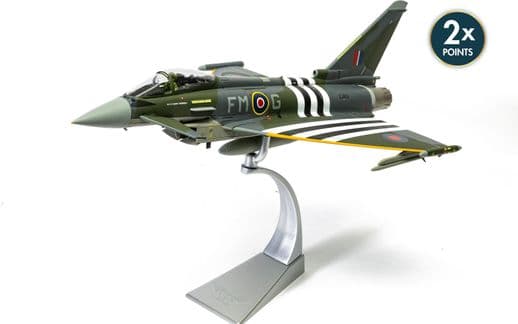
Well, you asked, and we delivered – may we introduce our scale die-cast tribute to Moggy.
Although we had already announced our Blackjack release by the time of our attendance at last year’s Royal International Air Tattoo, and indeed had a pre-production sample model resplendent in our display cabinet, there was only one question we were asked more than any other during our many conversations with collectors over the weekend, ‘Are you going to do Moggy?’
Although the die-cast model wheels had already been put in motion, clearly the project was still under company embargo, and even though we tried to be as supportive as we could at the time, drawing people’s attention to the previous history of the Aviation Archive range, we weren’t actually in a position to confirm, or deny back then. Thankfully, this particular Moggy is well and truly out of the bag now, and we’ve been working hard to ensure she’s everything collectors are hoping she’s going to be.
As you can imagine, these larger 1/48th scale models featuring extremely complicated decoration are notoriously challenging to create, from the plotting of all that fine detail, creating it in artwork form and then asking our manufacturing facility to replicate it exactly. They are, after all, arguably the most high profile individual aircraft in current Royal Air Force inventory, and the ones more people become familiar with than any other. As a consequence, they’re also hugely popular as collector’s items and the centrepiece of many a die-cast model aircraft display.
The one everyone has been hoping for, Moggy will be available in our warehouse during May.
As we all now know, Moggy caught everyone a little off guard really and when she was unveiled at RAF Coningsby last April, particularly as Blackjack had been the RAF Typhoon Display Team jet for two seasons to that point, and had even been used by the new display pilot for much of his display practice flights during early 2024. As well-loved as Blackjack was, enthusiasts were excited to have a new Typhoon livery to admire, and this one was just as spectacular as Blackjack had been, but very different in where it took its inspiration.
A representation of an RAF Hawker Typhoon scheme worn by an aircraft which took part in D-Day support operations, it has to be said that the scheme probably looks better on a Eurofighter Typhoon than it did a Hawker Typhoon, and as far as the UK Airshow scene was concerned, Moggy was about to take it by storm!
We’re so excited to have this magnificent new Typhoon model in the range, and can’t wait to bring you all the latest development details as the project progresses, but for now, can we please just revel in the fact that our scale tribute to Moggy, the 2024 Royal Air Force Typhoon Display Team jet, is on the way and available for pre-order on the Corgi website now, the culmination of our spectacular trio of display Typhoon models in 1/48th scale.
By way of a little treat though, we will share all three of the complex product artwork files created in support of these projects, with this interesting sight being seen for the very first time, and exclusively for Die-cast Diaries readers. No doubt, we will all have our own particular favourite scheme, but as individual aircraft, it’s interesting to note that ZK349 GINA is still in RAF service and has just taken part in Exercise Red Flag in the US, ZJ914 Blackjack has passed through the reduce to produce program and is no more, and Moggy ZJ913 is settling into life as a ground instructional airframe at RAF Lossiemouth.
AA29001 – Eurofighter Typhoon FGR.4, ZK349 GN-A, Flt. Lt. Ben Westoby-Brooks, RAF No.29(R) Squadron, Battle of Britain 75th Anniversary commemorative scheme, Typhoon Display Team, RAF Coningsby, Lincolnshire, Summer 2015.
The remaining model announcements made at the same time as Moggy a few days ago were a trio of releases which continue to tell the story of arguably the most famous aircraft ever produced, an aircraft which celebrated a rather significant anniversary this week.
When the nation’s media headed for Eastleigh Aerodrome, near Southampton on the 5th March 1936, they were expecting to be documenting a spectacular day showcasing the latest developments in Britain’s fighting aeroplanes, including the first flight of a new Supermarine fighter which could trace its origins back to the Schneider Trophy winning seaplanes of the late 1920s, early 1930s. The other aircraft on the airfield that day were impressive enough, however, when the sleek and aesthetically pleasing Supermarine Type 300 came into view, the nation only had eyes for one aeroplane, one which would go on to become an icon of the aviation world.
During a brief eight-minute maiden flight, where the main undercarriage wasn’t even retracted, and under the full gaze of the nation’s media, when test pilot Mutt Summers landed back at Eastleigh and taxied back to his handling team, it was reputed that he barked at them, ‘I don’t want anything touched!’, so pleased was he with the performance of the aircraft, or so history would have us believe. It’s never been definitively ascertained what he actually meant by this now famous statement, but as the Spitfire went on to become such an aviation icon and possessed such stellar performance, should we even allow the truth to get in the way of a great Spitfire story?
What followed over the next few months was an exhaustive period of testing, perfecting and refining of the new aircraft, where the Supermarine team not only attempted to coax every ounce of performance from their new fighter, but also prepare it for mass production and its subsequent acceptance into Royal Air Force service. An order for 310 fighters was placed prior to the first flight of the prototype aircraft, however, even though its future seemed assured as a result, a slow initial rate of production frustrated the Air Ministry to the point where they seriously considered halting the program, but were persuaded otherwise by Supermarine with the promise of new production facilities.
As we all now know, the Supermarine Type 300 was eventually given the name ‘Spitfire’ and with it, embarked on a glittering service career which began with delivery of the first production aircraft to RAF No.19 Squadron at Duxford on 4th August 1938. The fighter went on to earn its legendary reputation during the Battle of Britain, where the common perception was that the Spitfires dealt with the Messerschmitts, whilst the Hurricanes took on the bombers, and whilst the reality was quite different, the Spitfire was already beginning to etch its name in aviation history.
That incredible history continues to this day, as the iconic Spitfire has become a lucrative business opportunity for a handful of specialist companies dedicated to allowing members of the public to have ‘Spitfire time’ in their personal logbooks. Perhaps of even greater significance that this, these operations are also maintaining and even enhancing the legacy of the Spitfire, by ensuring that ever more of these magnificent aircraft are returned to airworthy condition, and allowing more people than ever before to experience this magnificent aircraft.
Although mainly a post war development of the Spitfire, these two seat variants are now becoming a much-loved chapter in the ongoing Spitfire story and in addition to becoming a popular display aircraft in their own right at Airshows up and down the country, represent the only type of Spitfire the majority of the population will ever have the chance to fly in – surely everybody wants to fly in a Spitfire, right?
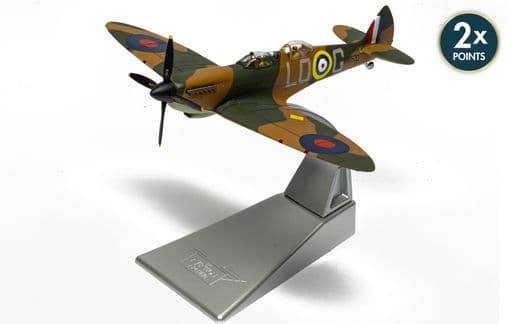
Only added to the current range over the past couple of weeks or so, our original Spitfire T.9 has been joined by three more beautiful 1/72nd scale die-cast examples of this aircraft, another of the Spitfires operated by the team down at Biggin Hill, along with others flying with Spitfires.com and Aerial Collective. Again, we will be covering all of these models in greater detail as we follow their development program, but for now, please consider this our T.9 trio introduction.
Before we wrap things up for this edition, I just wanted to explain why these models were added to the range in this manner. Initially, all four model were intended to be included in the main January to April range launch, however, as we were experiencing some small, but frustrating delays, and all the other models in the range had been fully briefed across the business, rushing to include at the same time them might not have been the most appropriate course of action.
In the end, we decided to use this as a model reconnaissance opportunity to see if a mid-range new model release would be practicable and indeed, if it would be well received by Corgi collectors. It didn’t take long for us to have our answer, as the launch was a resounding success, it gave us a little extra time for some individual project housekeeping and posed absolutely no logistical challenges whatsoever. With the new range launch format now such a popular feature amongst our followers, we’re confident that range additions such as this will only enhance the Corgi world in future, and know exactly how to do it now.
I suppose the only thing to say in signing off for this edition is ‘Watch this space!’
I’m afraid that's all we have for you this time around, however, we’ll be back as usual in two weeks’ time with a further exclusive selection of the latest Corgi model updates. As ever, you could always drop us a line if you felt moved to do so, to comment on anything blog, collecting or Corgi model related, or even perhaps to suggest a topic you might like to see the team cover in a future edition. As always, our diecastdiaries@corgi.co.uk address is the one to use.
If you can’t wait for the next blog, you will find plenty of Corgi model collecting discussions taking place on our official social media channels, access to which can be obtained by clicking on the respective links at the foot of the Corgi website homepage.
Link access to Corgi social media sites.
Thank you for continuing to support your Corgi Die-cast Diaries blog. Our next edition is scheduled to be published on Friday 21st March - we look forward to seeing you all back here then.