The launch of any new Corgi model range is a time of great excitement both for the Corgi team who have been working hard behind the scenes and for thousands of die-cast collectors all over the world, who are eager to see what new models will be released over the coming months. In this latest edition of Die-cast Diaries we celebrate the release of the July – December 2017 model range by looking a little more closely at three of the new models, and describing why they are already proving to be popular additions to the range. We also have the latest instalment in our Vanguards 21 series, where we look at some of the first models to appear in the range and how these fantastic little models brought something a little different for the model collector. We have some exclusive pictures from a recent event where we took our pre-production sample model of the 1/48th scale Lightning F.6 tooling to meet the actual aircraft on which the first release will be based and we end with a very special competition, with a unique Vanguards related prize for the lucky winner. With so much to tell you about this is no time to stand on ceremony, so let’s get cracking straight away.

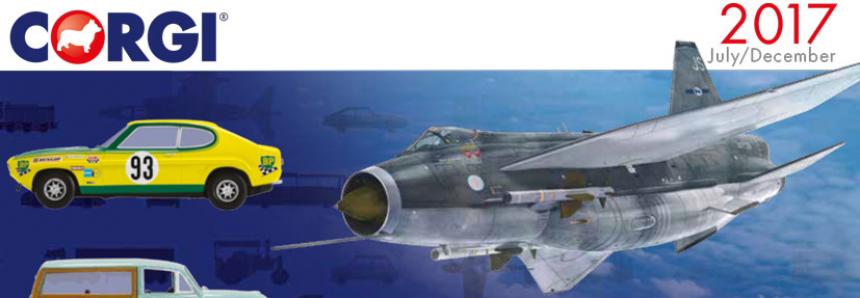
The new July/December Corgi catalogue is now available for inspection
Many Corgi collectors will already be aware that the new July – December 2017 model range was launched on the Corgi website on Thursday 22nd June and judging by the numbers of visitors to our site over the past few days, it appears to have gone down rather well. If you have yet to view the latest model announcements, please head for the Corgi website where you will find all the information you need, including the latest catalogue images. Let’s take a closer look at just a few of the models that take their place in the July – December 2017 range.
As one of the most popular die-cast model ranges in our hobby, the Aviation Archive series again features prominently in the latest range announcement and has already started receiving plenty of pre-order activity. One model tooling making a welcome return to the range is the Boeing B-17G Flying Fortress and the latest release in this series is something of a classic. The 1/72nd scale Corgi B-17 first appeared in the range back in 2002 and was only the second four engined heavy bomber to be produced, following the release of the Lancaster in the previous year. The first model released presented the die-cast collector with a scale representation of the famous Flying Fortress ‘Memphis Belle’ and from this initial release, the B-17 has always been amongst the most popular models in the Aviation Archive range. The latest incarnation of this magnificent tooling is AA33316 ‘Little Miss Mischief’ and has to be considered one of the most interesting US bombers of the Second World War. It also helps to illustrate the dangers faced by USAAF bomber crews engaged on daylight raids over occupied Europe and the skill and ingenuity of grown crews who fought their own battle to keep these mighty aircraft serviceable.
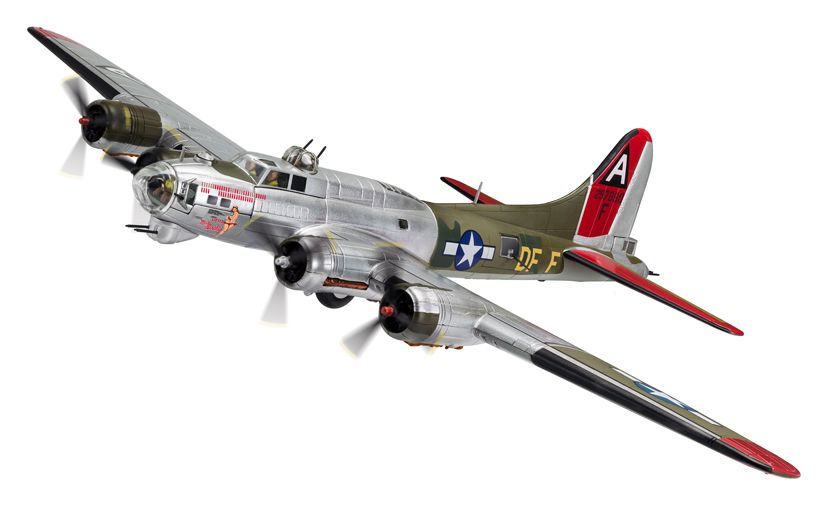
AA33316 Boeing B-17G Flying Fortress ‘Little Miss Mischief’ with plain white backdrop
Perhaps more than any other aircraft of the Second World War, the four engined Boeing B-17 Flying Fortress embodied the awesome might of America’s military and industrial prowess and her determination to fight for total victory. Operating in massed formations over enemy occupied Europe, these distinctive aircraft were designed to conduct daylight precision bombing missions against strategic enemy targets, with the aim of literally pounding them into submission. As its name suggests, the Flying Fortress was bristling with defensive armament and it was intended that tight formations of B-17s would be able to throw so much lead into the air, that any attacking enemy aircraft would either be shot down before they could press home their attack, or see less committed pilots simply fly away from what would surely be their certain demise. Although things didn’t quite turn out this way during the savage aerial combat in the skies above Europe, it did help to earn the B-17 a fearsome reputation amongst Luftwaffe pilots.
When B-17G 42-97880 arrived at Bassingbourn airfield as a replacement aircraft on 15th June 1944, she looked just like any other natural metal Flying Fortress, but this soon changed courtesy of the artistic talents of mechanic Tony Starcer, who was responsible for some of the most striking nose artwork of WWII. Based on an Esquire centrefold pin-up, Starcer gave ‘Little Miss Mischief’ a distinctive feminine touch, which he classed as one of his most accomplished pieces of work. Unfortunately for this aircraft, her distinctive artwork would not be the only thing that would mark ‘Little Miss Mischief’ as being a little different. During a bombing mission to Cologne on 15th October 1944, the aircraft was hit by flak as she approached the target area, tearing a large hole in the lower port side of the fuselage and almost cutting the aircraft in two. The crew carefully nursed the aircraft back to Bassingbourn and landed safely, which is testament to the strength of the design of the B-17. Incredibly, despite the significant damage sustained, the relatively unscathed front end and wings of ‘Mischief’ were mated with the salvaged rear section of another B-17G, thought to be 42-31405 ‘Wallaroo Mark II’ to produce a very strange looking Flying Fortress. With a mix of natural metal and grey/olive drab parts, ‘Little Miss Mischief’ became one of the most distinctive aircraft in the Eighth Air Force, with the repaired aircraft using components from no less that thirteen different aircraft. She went on to fly more than 50 combat missions, before being scrapped at the end of the war.
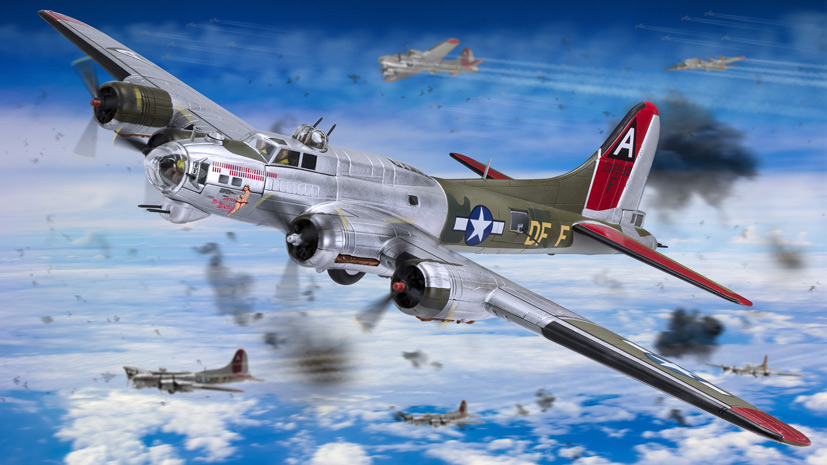
‘Little Miss Mischief’ catalogue image, after the design team have worked their digital magic
This stunning model is already proving to be a catalogue highlight and is receiving plenty of pre-ordering activity – scheduled for an August release, ‘Little Miss Mischief’ can be viewed and reserved on the Corgi website now, or by visiting your usual Corgi model supplier.
Over the previous few editions of Die-cast Diaries, it has been a real pleasure to immerse ourselves in the fascinating world of Vanguards classic motor vehicle models and to see just how important the range is to so many of our collectors. It has also become apparent that both cars manufactured by Ford and motorsport related subjects are amongst the most popular releases in any model range – put these two together and you have a very interesting model indeed.
In one of the most colourful additions to the new Vanguards range, VA13312 presents the collector with a beautiful 2300GT Mk.1 Capri, which took part in the 1969 Tour de France Automobile race. In 1968, Ford of Germany created a motorsport department in Cologne in an attempt to change their previously staid image. Managed by successful racing driver Jochen Neerpasch (who later founded BMW's M Division), and engineers Mike Kranefuss and Martin Braungart, the small team soon concentrated their efforts on the new Capri. Their first entry was an ambitious 3-car team for the Tour de France Auto, which was a ten day event involving races, speed hill-climbs and long-distance rallying. Although two Capris retired, one with fuel injection problems and the other after an accident, the Piot and Behra Capri came a fantastic sixth overall, behind 4 Porsche 911s and a Chevrolet Corvette, winning its class.
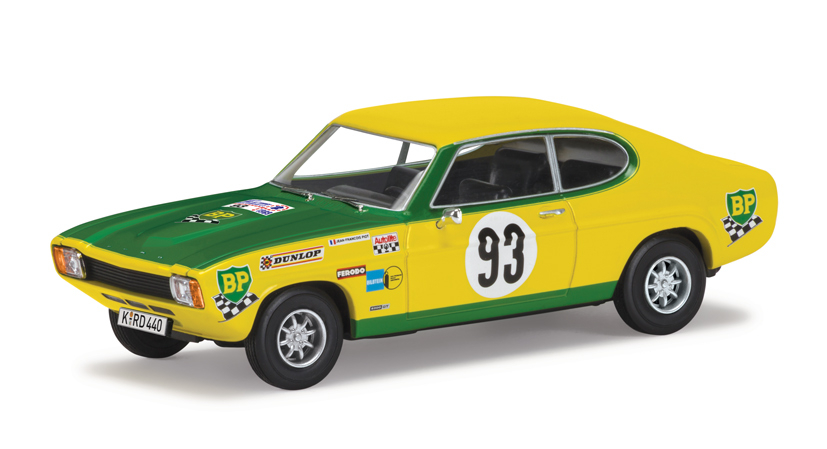
Ford Capri Mk.1 2300GT VA13312 is already proving to be a popular addition to the Vanguards range
The Capri was launched in 1969 and, like its conceptual father the Mustang, was very much an exercise in style over engineering. However, its chassis was an amalgam of Cortina Mk2/Corsair and Escort thinking so engineers were confidant it could be made to handle well, but the Cologne team were working with German made European models so the fastest version then available was the 2300GT as the Essex V6 engined 3000GT was then a UK only model. The Capri's surprisingly poor drag coefficient of 0.44 was an issue and that meant it needed more power, so Westlake Engineering of Rye in England became involved in the programme, which began with the car modelled here, culminating in the fearsome European Touring Car Championship winning RS2600.
This handsome model is currently scheduled for a September 2017 release.
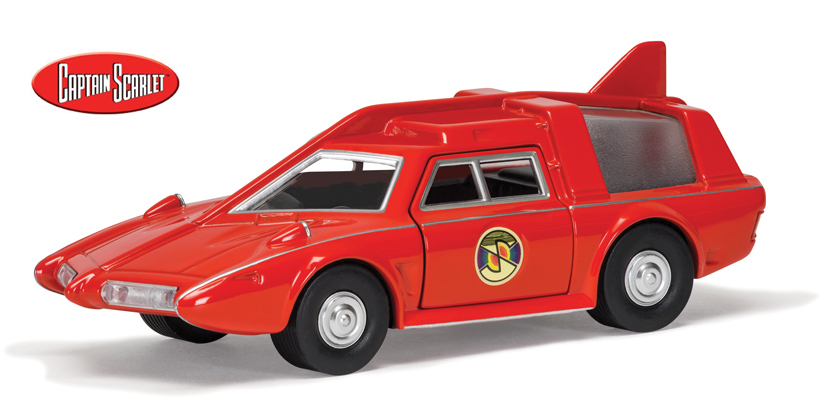
Captain Scarlet’s iconic Spectrum Patrol Car marks the 50th Anniversary of this series
For readers of a certain age, the opening few minutes of any Captain Scarlet and the Mysterons episode were some of the most memorable of our youth. Appearing to be much darker in concept than the earlier Gerry Anderson inspired action series, Captain Scarlet used an enhanced version of their Supermarionation technology to bring us this sometimes frightening and always thought provoking action series.
Set in 2068, the series is based upon hostilities between earth and a race of Martians known as the Mysterons. Following an astronaut attack on a Martian city, the Mysterons vow to bring death and destruction to earth as they seek vengeance. Many youngsters will have been slightly dismayed each time they heard a rather deep voiced Mysteron telling mankind what hideous thing they were going to do to them in the latest episode, as everyone on earth could apparently hear him, clearly preying on our perceived fear of anything extra-terrestrial. Standing as our protectors were Spectrum, a worldwide security organisation dedicated to defeating the latest Mysteron incursion, with Captain Scarlet as their most capable agent. Miraculously inheriting some of the Mysteron’s powers, Captain Scarlet had incredible regenerative powers, which virtually made him indestructible and he could also sense the presence of another Mysteron duplicate – this is quite a complicated story, so please head to YouTube for a crash course in Captain Scarlet and his many qualities.
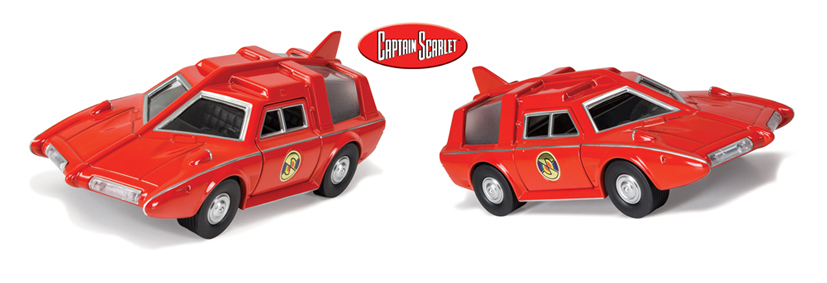
When the Mysterons strike, you need to get there fast!
This distinctive vehicle is a Spectrum patrol car and was one of the most famous vehicles to appear in Anderson inspired action series. Only accessible to Spectrum personnel, the car was capable of reaching speeds in excess of 190mph and was powered by a gas turbine engine, which enabled agents to quickly race to the scene of the latest Mysteron attack.
Fans of the popular ‘Captain Scarlet and the Mysterons’ series will be only too familiar with this futuristic looking car, but may be less aware that this coming September marks the 50th anniversary of the programme’s first airing on British television. To celebrate 50 years of the indestructible Captain, we are pleased to announce the re-introduction of a special edition of Captain Scarlet’s Classic Spectrum Saloon Car in special commemorative packaging. Due for a summer 2017 release, this extremely distinctive car will bring back happy memories for millions of people who were addicted to the many Gerry Anderson inspired Sci-fi series of our youth.
There are many more new model releases to be found in the latest July – December 2017 range, so please head over to the Corgi website for all the latest details. We will feature more of the new range in the next edition of Die-cast Diaries.

In the previous edition of Die-cast Diaries, we continued our journey into the history of the Vanguards range and saw how the former Lledo model factory in Enfield was one of the most important locations in the history of quality die-cast model production. We also saw the first appearance of the Vanguards (Days Gone Vanguards) name in a 1993 catalogue and whilst these cannot be described as the first actual Vanguards releases, they are an important development along the way. In this latest instalment of this fascinating story, we mark the appearance of the very first Vanguards models and how they heralded the beginning of a new era of die-cast model vehicle accuracy.
We have already heard how the Lledo factory in North London was a vibrant centre for model production during the 1980s and early 90s, producing tens of thousands of models for consumers that simply could not get enough of their products. As the company headed towards the middle of the 1990s, they were looking to introduce an exciting new, more accurate range of models, which broke away from their traditional fit the box promotional product lines. Developed as a more accurate sub-collection of the Days Gone range, the new models were produced with more detail than had previously been the norm and were aimed at the discerning die-cast model collector, who was looking for a more accurate scale representation of their favourite vehicles – these were very exciting times.
Influential Vanguards researcher and motoring guru Mark Pinnigar has been mentioned several times throughout the past few editions of Die-cast Diaries and most of the information and imagery has kindly been supplied by him. Mark joined the Lledo design department straight from college in 1990 and described this time as being hectic, but extremely exciting. He was encouraged to combine his love of cars with traditional graphic design training and make suggestions on what models would benefit the Lledo range and as he became more experienced, these ideas became a little more ambitious. Mark describes how discussions regarding the production of a more accurate range of highly detailed models was perhaps the most exciting period of his time at Lledo and he recalls how most ideas and concepts were considered during this time.
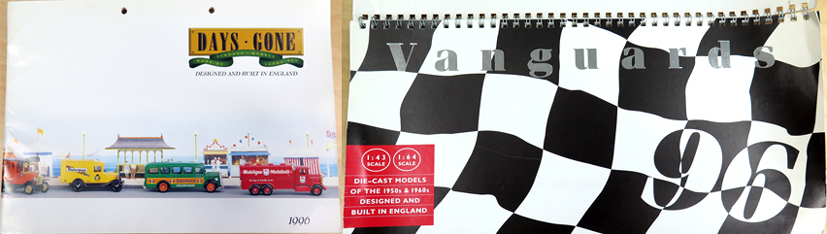
The 1996 catalogue launch saw Vanguards models announced as a stand-alone range
Over a three year period, design engineers had been developing and fine tuning a new range of models that broke away from the traditional product lines at Lledo and although still part of the Days Gone range at this time, they clearly showed the intentions of the company and a significant new development for the die-cast model industry. The most significant year in the history of the Vanguards model range came with the release of the 1996 model range and the publication of the very first standalone Vanguards model catalogue. In a significant development for the industry and helping to turn die-cast models into a collectable hobby, the company released their usual Days Gone model catalogue alongside an exciting new range – Vanguards. Adopting a high quality presentation style which featured a chequered racing flag and striking silver lettering, the catalogue contained a collection of 1/43rd and 1/64th scale models from the 1950s & 1960s, which were all designed and built in England. The catalogue included sections for cars, light commercials, lorries & tankers and limited edition sets and they were extremely appealing.
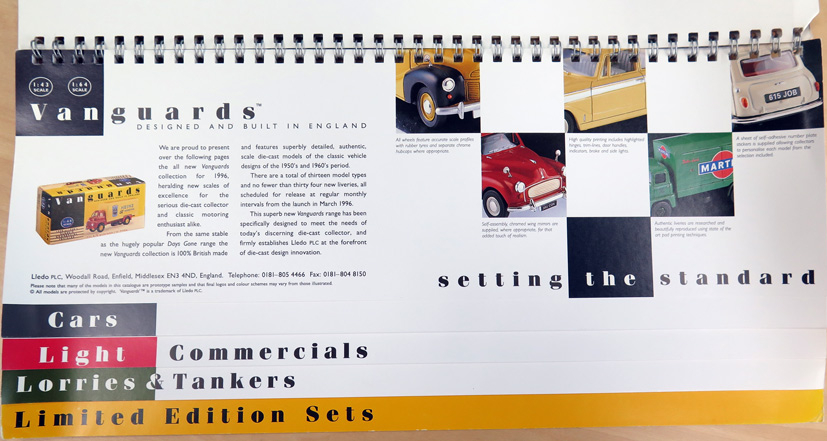
This impressive new range marked a shift towards more detailed collectors' models
The range introduction on the inside of the catalogue stated;
'We are proud to present over the following pages the all new Vanguards collection for 1996, heralding new scales of excellence for the serious die-cast collector and classic motoring enthusiast alike.
From the same stable as the hugely popular Days Gone range the new Vanguards collection is 100% British made and features superbly detailed, authentic, scale die-cast models of the classic vehicle designed of the 1950s and 1960s period.
There are a total of thirteen model types and no fewer than thirty four new liveries, all scheduled for release at regular monthly intervals from the launch in March 1996.
This superb new Vanguards range has been specifically designed to meet the needs of today’s discerning die-cast collector and firmly established Lledo PLC at the forefront of die-cast design innovation.’
The launch of this catalogue must have been an exciting time for the workers at the Enfield factory, but also for the die-cast enthusiast, who now had a spectacular new range of models to consider. They were produced to an extremely high standard and were as accurate as existing manufacturing techniques would allow, providing the collector with such benefits as detailed rubber wheels and chrome hub caps, separate wing mirrors and a selection of self-adhesive number plates to choose from. Significantly, the range had its own identity and was launched with linked and specifically designed high quality packaging, catalogues and promotional material – the Vanguards range was born.
 #
#
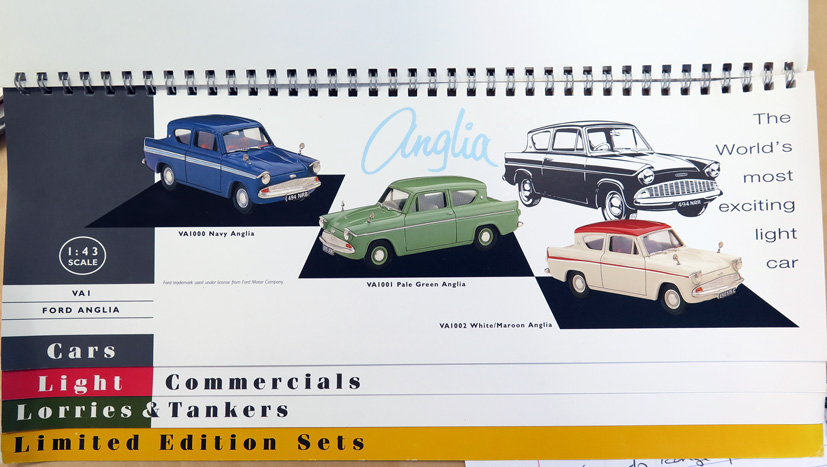
The catalogue images were of hand decorated, resin prototype models
As Mark was working at the Lledo factory during this significant period in their history, he is able to describe the sense of achievement everyone felt with the success of the range launch – he can also give us an insight into how the launch was coordinated and how this was a period of frantic activity. All the models used to illustrate the Vanguards catalogue were resin prototypes. These had been produced by George Turner models and returned to the Lledo factory, where they had been hand finished with graphic rub-down transfers created by the in-house design team and carefully applied to the models. These were then photographed by an experienced product photography company and displayed with an intentionally nostalgic theme as a backdrop. The models were released in a blaze of glory and received instant acclaim.
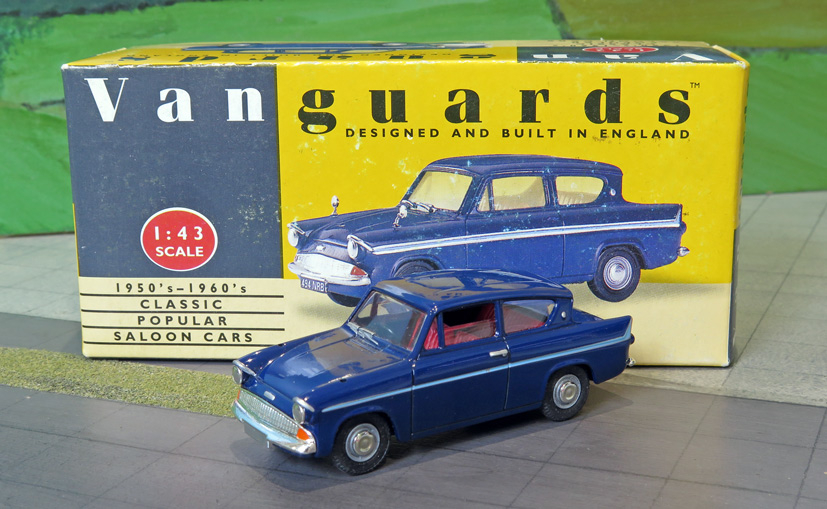
Navy Ford Anglia VA1000 is chronologically the first of the new Vanguards model releases
With thirteen model toolings in the range and no fewer than thirty-four new livery options to choose from, it is difficult to point to an individual model that could claim to be the first Vanguards model, but we have to go with one and chronologically, that model is Ford Anglia VA1000 in Navy Blue. The catalogue describes the Anglia as the World’s most exciting light car and it certainly fits the criteria of a classic 1950s/60s vehicle. The collectors card that accompanies the release describes this model as No.1 in a series of 42 models and includes the following information – The Anglia 105E was introduced in 1959, the first of the new generation of Fords, replacing the old 100E. This new Anglia with its 997cc engine had a radically restyled body with a reverse angled rear window giving more headroom. In 1962, the 1200cc powered Anglia Super 123E arrived, easily distinguished from the standard model by its distinctive two-tone colour schemes and extra chrome trim.
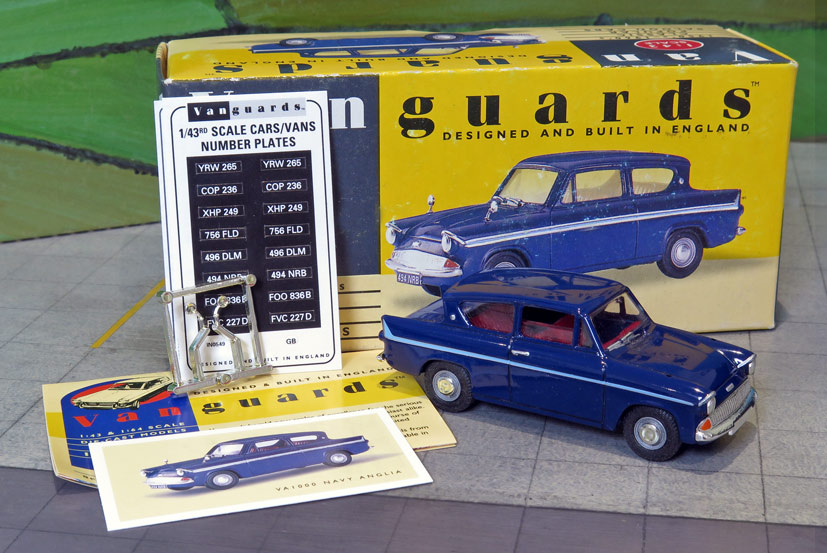
The new Vanguards models included additional features to make them highly collectable
In the next instalment of our Vanguards 21 feature, we will look at how the range quickly became established, look at more of the early classic model releases and see how the range came under the Corgi banner. Until then, don’t forget to take a look at all the latest Vanguards model announcements in the new July – December 2017 range.
To mark the 21st birthday of the Vanguards range, we are pleased to announce a fantastic opportunity for one Corgi collector to have their own car take its place in a future Vanguards model range. This unique opportunity for Vanguards immortality is open to anyone who owns a vehicle that Corgi currently have in their tooling inventory and the model will be a standard limited edition release, available for all collectors to purchase. This really is a fantastic way to commemorate this 21st anniversary year of the Vanguards range and we are all extremely excited about this initiative.
Obviously, there are some very important caveats accompanying this opportunity that we must stress at the outset. The successful vehicle owner will have to submit details of a car that is already part of the Vanguards range and we have the tooling already in place. If your vehicle has any non-standard or bespoke components fitted, it may not be possible to consider it, as the cost of tooling for these extra parts would be prohibitively expensive. We also have to say that our Vanguards experts will know exactly what can and cannot be achieved and their decision will be final with regard to the successful vehicle owner.
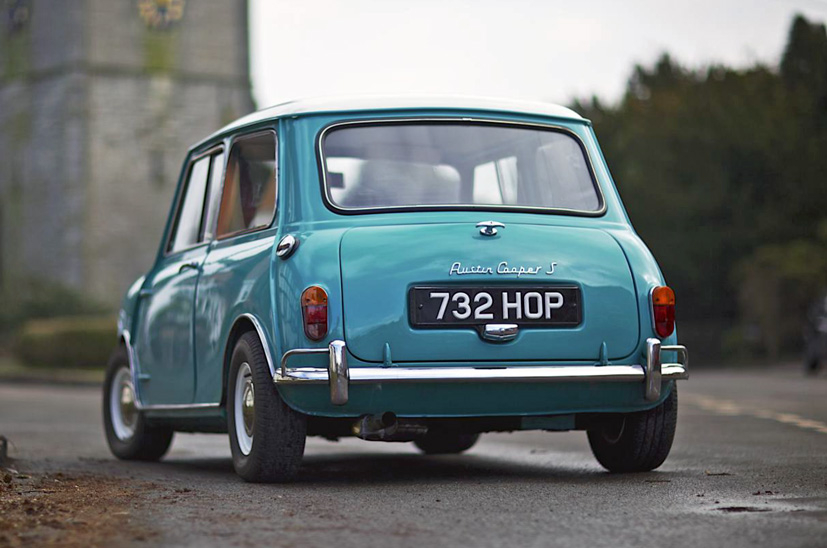
This beautiful Austin Mini Mk.I Cooper S (VA02538) was recently inducted into the Vanguards range
That section sounded a little strict and needed to be included, but this opportunity is anything but negative and is a really exciting new chapter in the Vanguards story. Everyone here at Corgi is really looking forward to hearing from vehicle owners all over the world and hopefully coming across some fascinating motoring and restoration stories along the way. Indeed, many of these may find their way into future editions of Die-cast Diaries.
So how can you get involved? If you have a classic car, much loved former boy racer or restored former Police car that you think would look great in a future Vanguards model range, please send a picture and a brief description of your vehicles history to us at diecastdiaries@corgi.co.uk. We will endeavour to reply to every respondent and will keep a log of all the vehicle suggestions we receive. One vehicle will be selected as a subject for inclusion in a future Vanguards model range and we will announce this in a future edition of Die-cast Diaries. The project will receive full coverage in future blogs, Collector Club magazine articles and social media posts, making your car and its Vanguards equivalent one of the most famous in the UK.
Over to you now – Vanguards immortality awaits. This is an opportunity for one lucky vehicle owner to become part of the continuing Vanguards story and have bragging rights amongst their friends and fellow motoring enthusiasts. You could have a beautiful 1/43rd scale Vanguards model of your beloved car on a display shelf in your home.
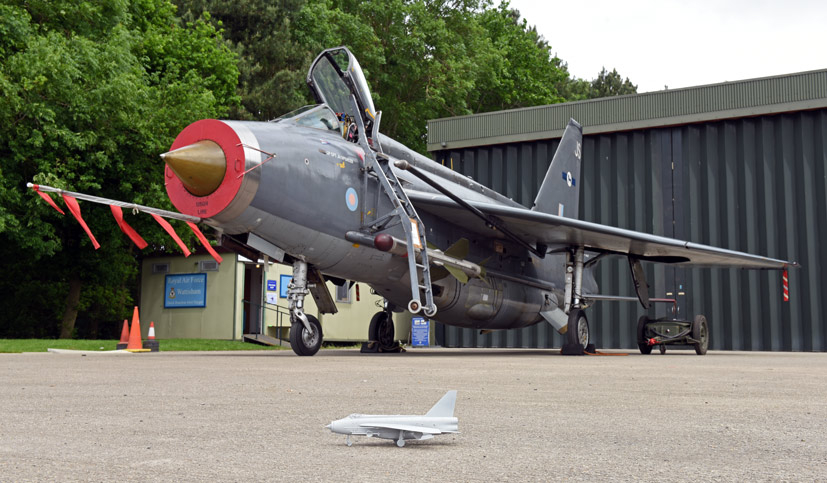
Lightning F.6 XR728 casts an eye over the new 1/48th scale Corgi Lightning tooling
We end this latest edition of Die-cast Diaries with a look at a unique ‘Real Versus Corgi’ meeting that happened at the recent Cold War Jets Open Day held at Bruntingthorpe airfield. We were honoured to be invited to spend the day as guests of the Lightning Preservation Group and spend some time in the company of true Lightning aficionados. The group maintain two examples of the English Electric Lightning F.6 in ground running condition, including XR728, which is the subject aircraft for the first release from the new 1/48th scale Aviation Archive Lightning F.6 tooling. We were very much looking forward to seeing this magnificent aircraft at close quarters, especially as we had brought something a little special with us - the only die-cast pre-production sample model of the new Corgi Lightning AA28401.
This was the first public appearance of our Lightning sample model and it was interesting to see that it attracted almost as much attention as the full-size aircraft in the background. It was also the first opportunity for the new Corgi 1/48th scale Lightning F.6 sample to make the acquaintance of Lightning XR728, the magnificent aircraft on which this first model release is based – the two seemed to bond rather well. More importantly, the LPG team members on duty during the event were very much taken with our sample model and were extremely complimentary about its accuracy. We will bring you more pictures from this meeting of Lightnings in the next edition of Die-cast Diaries, but for now, anyone still to place their pre-order for this stunning new model need to do so now – the new Lightning will be completely allocated before it is even released and to be sure you don’t miss out on what is already looking like being the Aviation Archive release of the year, head to the Lightning AA28401 page on the Corgi website, or check that your usual model supplier still has free allocation available.
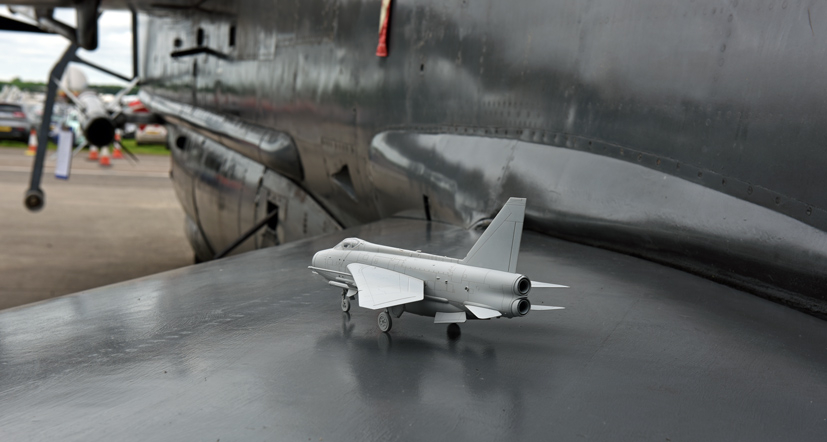
New 1/48th scale Corgi Lightning AA28401 is a faithful representation of this iconic British Cold War fighter
We would like to thank the members of the Lightning Preservation Group for their kind hospitality on the day of our visit and for not running off with our beloved sample model. Please visit the LPG website for details of their magnificent work and future open day events they have planned.
That’s it for another edition of Die-cast Diaries. Although we did not include our ‘What’s on the desk’ feature in this edition, it will return with a vengeance in edition 28. We are extremely excited to offer our Vanguards model opportunity to a lucky car owner and we look forward to receiving plenty of details regarding potential subject vehicles. Please use these diecastdiaries@corgi.co.uk contact details and stake your claim for Vanguards model immortality.
As usual, we are always keen to hear your views on our Die-cast Diaries blog and any ideas you may have for future model related content. There are a number of ways you can get a message to us - as well as our dedicated diecastdiaries@corgi.co.uk e-mail address, we also have our Die-Cast Diaries forum and our social media pages on Facebook and Twitter using #CorgiDiecastDiaries. Please do join in with all the discussions, better still why not start your own Corgi related thread?
Thank you for your continued support and happy collecting.
The Corgi Team
© Hornby Hobbies Ltd. All rights reserved.