
Welcome to the latest edition of Corgi Die-cast Diaries, your regular blog review of all the news, updates and topical stories from the captivating world of Corgi die-cast model collecting.
From a blog publication perspective, there’s nothing quite like having a significant new model exclusive to inform your loyal readership about, a model you know they have been waiting patiently to receive updates on, and one you know people have already been making space for in their display cabinets. The only thing that could better a blog situation such as this is having exclusive updates from TWO new eagerly anticipated new model releases in the same blog, and that’s exactly what we have for you in this latest edition of Die-cast Diaries.
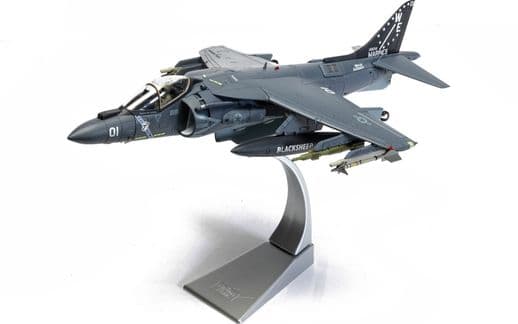
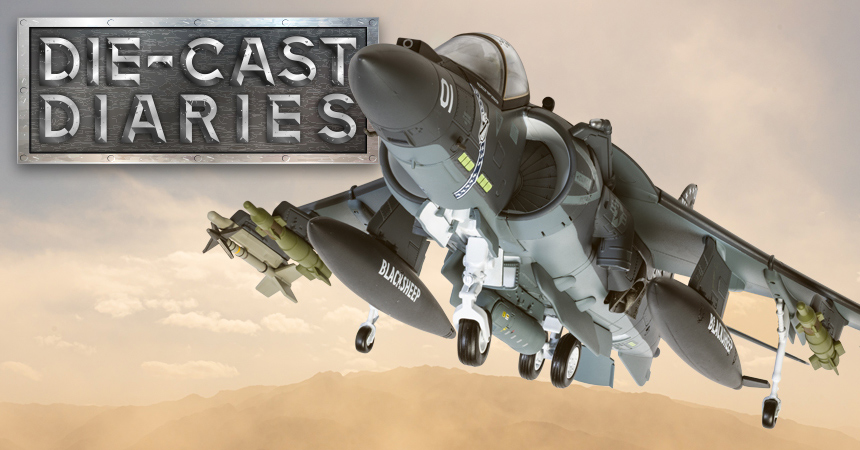
If Shaun the Sheep successfully stamped his hooves all over our previous edition of Die-cast Diaries, a sheep of a very different breed will be taking headline billing in this latest update, one which possesses significant US Marine Corps Attack Squadron credentials. As we prepare to welcome our first 1/48th scale example of a US Marine Corps aircraft to ever grace the Aviation Archive range, we have an impressive selection of exclusive model imagery to share with you this time around, images of a model which is as attractive as it is impressive.
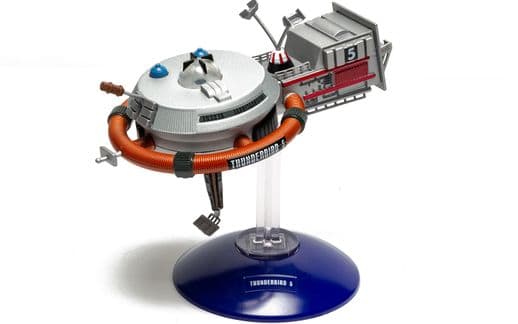
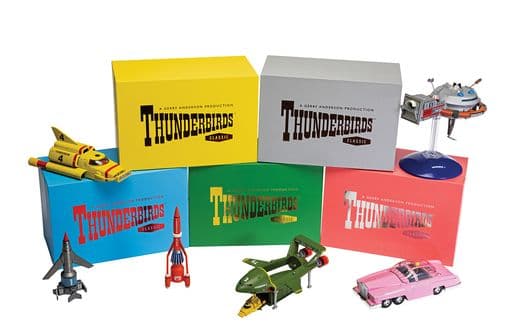
In addition to the Harrier II update, we are delighted to confirm that this 60th Anniversary year of Thunderbirds can finally boast two new tooling additions to the current Corgi model range, with Thunderbird 5 now joining Thunderbird 4 in our collectable armoury. Both of these models have been heavily requested as new tooling projects over the years, so the Corgi team are delighted to have delivered both in this significant anniversary year for Thunderbirds. In support of this development, we have a new selection of imagery to share as we welcome Thunderbird 5 into our range, including a look at the bespoke box presentation which is such an appealing feature of these beautiful models.
Everything is looking F.A.B for this latest edition of the Die-cast Diaries blog.
Although the British public were staunch supporters of their beloved Harriers, the Americans held on to their examples for much longer.
When it comes to significant aircraft if the 20th century, few managed to capture the imagination of both the aviation world and the general public as the Hawker Siddeley/British Aerospace Harrier managed to do. A jet powered aircraft able to do things that other aircraft simply couldn’t do, the Harrier could hang in the air on a column of engine exhaust gasses, presenting the Royal Air Force with an aircraft which appeared to offer endless strategic possibilities, and the ability to hide and operate aircraft from locations that potential enemies had no way of discovering. Known colloquially as the ‘Jump Jet’, the British public loved the Harrier, particularly as it was a proud achievement for Britain’s aviation industry.
Just as the British public were captivated by the incredible abilities of the Harrier Jump jet, so the American military appeared to covet the aircraft’s strategic possibilities, and would subsequently become inextricably linked to the future service legacy of the aircraft. They had a requirement to introduce a close air support fighter for their Marine Attack Squadrons, operating from US Navy carriers, amphibious assault ships and land bases, including roughly prepared locations, with the Harrier appearing to fit the bill perfectly.
As was agreed at the outset of the aircraft’s evaluation program, once the Tripartite Evaluation Squadron had completed its work in Britain, six of the Hawker Siddeley Kestrel jets were shipped to the US for further evaluation trials, as the Americans were keen to see if the aircraft was suitable for their own armed forces, particularly with the US Marine Corps, who were already impressed with the new aircraft. As these trials were progressing, back in the UK, the Kestrel aircraft had already achieved their aim, and the Royal Air Force were about to welcome their new Harrier GR.1 into service.
As we all now know, the aircraft would also prove successful on the other side of the Atlantic, and their AV-8A Harrier entered US service in 1971 at the Navy's Flight Test Centre at NAS Patuxent River, Maryland, the unit charged with preparing it for wider squadron service. The first operational Marine Corps Squadron equipped with the aircraft was VMA-513 the 'Flying Nightmares', a unit which had previously been flying the Phantom, a very different aeroplane altogether. The 'Nightmares' became operational with the AV-8A Harrier in May 1971 at MCAS Beaufort in South Carolina.
British and American Corgi Harriers in 1/48th scale, with the first and impending third release from this exquisite model tooling.
It has to be conceded that despite the British public being fiercely protective of their phenomenal Harrier, its ongoing development and impressive service longevity very much depended on American technological expertise and significant development investment, factors which would eventually result in the introduction of a new variant of the aircraft, something of a ‘Super Harrier’.
Marking a significant development in the history of this magnificent aircraft, the second generation Harrier, or Harrier II, may have shared many visual similarities with its famous VSTOL predecessor, however, this was a very different aeroplane indeed, one which owed much to the American McDonnell Douglas Corporation and the latest technologies the aviation world had to offer. Essentially, this new generation of Harrier was a completely different aircraft, a much more capable aeroplane in every respect, and a space age development of the VSTOL Harrier the world was so familiar with.
It would probably be accurate to say that the original Harrier was always something of a tactical compromise as an aeroplane, one able to achieve aviation unique feats, but having to make sacrifices in order to allow them to happen. Although providing operators with an incredibly flexible attack aircraft, the Harrier's lack of range and relatively low offensive payload were always major operational drawbacks, and what Britain and America really needed was a bigger, more capable Harrier.
The one thing you can say about the Americans is that they certainly know how to apply attractive commemorative schemes to their aircraft.
Once the RAF and US Marine Corps started using the Harrier, or AV-8B in American parlance, they started to evaluate its performance and consider what developments might make it even more operationally effective. In 1973, a joint BAe/McDonnell Douglas program began exploring the possibility of developing a new Harrier which was bigger, faster, had more range and greater load carrying capabilities than its historic predecessor, however, with costs spiralling, British Aerospace subsequently withdrew from the project, leaving the American company to continue alone.
Back in the UK, a separate study was later initiated to explore the possibility of upgrading the existing RAF Harrier force, however, again mainly for financial reasons, this failed to produce a workable solution. Thankfully, by the end of the 1970s, the Americans were back on the Harrier scene, and they had impressive results to share. Now looking for a working partner, they introduced their futuristic new Harrier to their British counterparts and after some negotiation, managed to get them back on board with the project. The extremely capable new Harrier II could now continue towards eventual service introduction on both sides of the Atlantic.
This ambitious program would eventually result in the introduction of the much more capable Harrier, with further successive capability upgrades benefitting the aircraft over the next couple of decades. All this work maintained the Harrier's position as one of the world's foremost strike/attack aircraft, and continued its impressive legacy. Retaining the unique attributes which brought its predecessor to the attention of the aviation world, this new incarnation was described by many at the time as being arguably the most valuable fixed wing aviation asset available to any air arm anywhere in the world, and we all loved the Harrier even more.
A further selection of exclusive model imagery featuring this third impending release from our 1/48th scale Harrier II tooling, the first time the US Marine Corps variant has appeared in the Aviation Archive range.
With increased range, greater power and more effective weapons carrying capability, this new generation of Harrier was intended to strike hard and fast, often at the outset of any military operation, before returning to be refuelled, rearmed, and re-committed in support of infantry units with boots on the ground.
Always on station, and usually in the thick of the action, is it any wonder that military personnel held the Harrier II in the same high affection as the public always did. This significant development upgrade only served to enhance the enduring legacy of the Harrier, with this later generation of aircraft regarded as arguably the most flexible aviation asset available to any air force in times of conflict and the one most likely to be deployed first.
Another look at British and American versions of the Harrier II Corgi Aviation Archive style.
With such impressive aviation heritage as this, this upgraded variant of the Harrier was always going to be of interest to the Corgi team when we were looking to expand our 1/48th scale range of Aviation Archive models, with our new Harrier II model joining the range in 2022 to popular collector acclaim. We now look forward to the impending third release from this impressive tooling, and for the first time in this larger scale series, a US service variant of the Harrier, the McDonnell Douglas AV-8B plus Harrier II. An aircraft which exhibits many differences to those aircraft which saw service here in the UK, this was quite a challenging undertaking for the Corgi developing team, but we’re really pleased with how it’s turned out.
And then there’s its presentation. The one thing you can always say about the American’s is that they really do know how to pay due respect to their military heritage, something which also extends to the presentation of commemorative aircraft. As a consequence, these specially presented aircraft schemes always prove popular with the worlds aviation enthusiast community, becoming some of the most heavily photographed aircraft in the world, and popular subjects with model companies.
In this regard, we think our first Aviation Archive foray into a US aviation subject aircraft in 1/48th is an absolute stunner, one which will look spectacular as the centrepiece of any model collection, a Harrier, but one benefitting from American presentation flamboyance.
Let’s take a closer look now.
Serving members of US Marine Attack Squadron 214 have always been proud to uphold the traditions of a unit which was originally formed at Ewa Field in Hawaii on the 1st July 1942, particularly as they could claim celebrated fighter ‘ace’ pilot Major ‘PAPPY’ Boyington as being amongst their number. Boyington was significant in becoming the first fighter ace to eclipse the victory total of the famous Great War ‘Ace’ Eddie Rickenbacker, in addition to also being the recipient of the Medal of Honor, America’s highest military decoration.
Known as the ‘Black Sheep’ Squadron, this name was adopted because this new unit originally consisted of individual airmen seconded from other units right across the Pacific Theatre, forming a new squadron which had little in the way of support, resources and facilities, leaving members feeling a little like service outcasts, something of a disparate group of men. What they lacked in support, they made up for in fighting prowess, turning their lack of support into a steely determination to succeed, despite the situation they found themselves in.
A final selection of images featuring this unique addition to the Aviation Archive range.
The later heritage of this historic unit would be marked by their long association with the McDonnell Douglas AV-8B plus Harrier II, an aircraft type they would operate for an impressive 33 years, only relinquishing their aircraft when exchanging them for the Fifth Generation Lockheed Martin F-35B Lightning II stealth jet in 2022. Before that conversion took place, the 75th Anniversary of the formation of the ‘Black Sheep” squadron was commemorated in spectacular fashion by current members of the unit.
US Marine Corps VMA-214 presented AV-8B Harrier II Plus 165001 ‘01’ in this stunning special scheme, with the aircraft proudly carrying the name of Major Gregory “PAPPY” Boyington on its starboard cockpit canopy frame detailing. Such an attractive looking aircraft, we couldn’t think of a more appropriate subject for this first 1/48th scale US Marine Corps aircraft model release, and we can’t wait for you to get your hands on one.
We are delighted to confirm that this beautiful new model is now inbound, and whilst it is scheduled to arrive during Christmas week and may not make it to collectors in time for the ‘Big Day’ itself, we can’t think of a better way for Aviation Archive collectors to start the new year. Something a little different for die-cast collectors to consider, our latest Harrier release aims to continue the legacy of this incredible and much missed aircraft.
Things are looking particularly F.A.B for Corgi Thunderbirds fans this Christmas.
As we currently find ourselves at that time of year when we’re all thinking about securing that special collectable gift for the die-cast enthusiast in our lives, or how we can drop enough subtle hints about the models we ourselves would be excited to receive, the Corgi TV and Film range now includes a collection of models that would appeal to many, including a recently released model which will be of huge interest to Thunderbirds fans in this significant anniversary year.
When it comes to the opening credits of a popular TV show, surely none came close to matching the incredible levels of excitement millions of youngsters felt on hearing the first few seconds of each episode of Thunderbirds. Once that exciting music and captivating visual introduction had assaulted our senses, we were Thunderbirds fans for life, and no matter what our age, anytime we see or hear those opening credits at any point throughout our lives, we’re immediately transported back to those times when each episode of Thunderbirds was just about the most important appointment we had to keep.
When it came to the amazing craft presented to us by the fertile imagination of creator Gerry Anderson, there’s no doubting that they were the real stars of the show, and we were desperate to get our hand on model representations of them. Over the years, several model manufacturers tooled up to produce impressive die-cast versions of these models, with some clearly being more popular than others. Unquestionably, Thunderbird 2 was a firm favourite with enthusiasts and manufacturers, but over the years, die-cast manufacturers went on to add more models to their ranges. One of the International Rescue craft which always appeared to be something of a poor relation in model representation terms, Thunderbird 5 has always been a little elusive in die-cast model form, and as a consequence, has always been high on the requests list of Thunderbirds enthusiasts everywhere.
With this year marking the 60th Anniversary of the first Thunderbirds episode airing on UK television screens, the Corgi team was determined to do something about this situation, and since the previous edition of Die-cast Diaries, we’re delighted to confirm that this particular die-cast eagle has landed, or to be more specific, Thunderbird 5 has arrived in our warehouse.
This next selection of images all feature design images all created from files produced during the development stage of this exciting new model, one which we’re delighted became available in this 60th anniversary year for Thunderbirds.
Positioned in Low Earth Orbit high above us, being stationed on Thunderbird 5 would have probably been an assignment suiting someone who was fond of their own company, however, as a position of immense responsibility, it could hardly have come with more International Rescue pressure. Bristling with technology, this craft may not have been the most dynamic of the Thunderbirds machines, but it was perhaps the most important, a high-tech listening station able to detect distress calls from anywhere on earth, and scramble the Thunderbirds to make sure the day could be saved.
Thunderbird 5 was International Rescue’s space station and the heart of the organisation’s communications network. Maintained in a secret geostationary orbit high above the Earth, John Tracy and his younger brother Alan would take turns manning this satellite station, with each staying aboard for a month at a time. Between them, they maintain a constant vigil across the globe. Through the use of sophisticated monitoring equipment, they are able to hear every radio transmission being broadcast with special filters attuned to messages of distress in any language.
Born on 8th October 2040, 25 year old John Tracy was educated at Harvard and followed in his father’s footsteps to become an astronaut prior to his involvement with International Rescue. An electronics expert with a degree in laser communication, John is the quietest and most intellectual of the Tracy brothers. Slighter in build than his siblings, he is tremendously lithe and graceful.
As space monitor for International Rescue, stationed aboard the massive space satellite Thunderbird 5, John has ample time on his hands to indulge his favourite pastime of astronomy. Four astronomy and outer space textbooks have been published bearing his name and his incessant space searching led to the discovery of the Tracy quasar system.
From the design computer to the manufacturing facility, the Corgi range can now boast a beautifully collectable model of the most elusive of the International Rescue craft, Thunderbird 5.
In what is a significant year for Thunderbirds fans, Corgi could hardly have committed more fully to this year’s 60th Anniversary celebrations, as we have modified the tooling of both our Thunderbird 1 and 3 models, and have now released our stunning new tooling tributes to both Thunderbird 4 and the elusive Thunderbird 5. Now, from a scale model collectable perspective at least, our die-cast version of International Rescue are all ready for duty, so if we need any assistance over the coming festive season, the Corgi Thunderbirds are definitely GO!
With the release of these stunning new models, this will be the first Christmas where the entire collection of Corgi Thunderbirds models have been available at the same time, and for Thunderbirds fans young and old, these high quality die-cast models would be a welcome discovery waiting under any tree this festive season.
The selection of images included above either show exclusive development imagery from the Thunderbird 5 model project, or pictures of the finished model itself, but also feature the beautifully designed packaging which is such a striking feature of these anniversary releases. Oh, and did we mention that our Thunderbird 3 model docks into Thunderbird 5!
As we almost find ourselves in the season of good will to all men, and the season for giving, an impending stock development has presented us with an opportunity to give Die-cast Diaries readers exclusive advanced notification of some interesting impending additions to the Corgi website. By the time this latest edition has been published, and you’re all digesting this latest update, the Corgi website will have been updated to include the return of three Aviation Archive models which have not been available for some time, and in the case of two of them, not for twelve months or more.
A recent overseas warehouse rationalisation resulted in a small number of previously sold out model becoming available once more, models which are currently inbound to our main UK warehouse. The only caveat we have to their impending availability is the fact that they’re only available in extremely small quantities, all under 20 units in fact, with two of them only just making it into double figures. All three are extremely desirable releases, and for those who have been desperately looking to add one or all to their collections, this represents a fabulous and completely unexpected opportunity.
Initially, the respective webpages will show the models as being available for pre-order pending their imminent arrival, but once they have been united with new owners, they will once again disappear from the website, this time for good.
Although DCD readers will be made aware of this opportunity before anyone else, once the webpages go live, anyone simply stumbling across them will also have the chance to snap them up, so if any appeal to you, please do head for the Corgi website and check the latest availability situation. Let’s take a look at the three rare models we’ve been given unexpected access to, starting with the one pictured above, seeing as this has turned out to be something of a Harrier edition.
During one of the busy periods of operational flying from RAF Kandahar in support of 'Operation Herrick', a morale boosting visit was arranged for British troops to meet two rather high profile celebrities between hectic flying commitments. Page three pin up girls Michelle Marsh and Lucy Pinder travelled to Afghanistan to show their support for the troops and in preparation for their visit, ground crews made two rather unique artistic additions to two of their Harriers.
Harrier ZD437 had a silhouette of Michelle Marsh applied to her nose at the head of her impressive mission marking scoreboard and was also given the name 'Michelle'. The other aircraft, Harrier ZD404, benefitted from a similar application, but this time sported a representation of Lucy Pinder and appropriately given the name 'Lucy'. The two celebrities appeared to be rather taken with this unique tribute and several photographs of them posing with their respective Harriers were taken and used for publicity purposes.
Unfortunately, RAF officials were less enthusiastic about this development and quickly ordered the artwork to be removed, meaning that these Harriers would only carry their rather notorious artwork for a relatively short period. During Operation Herrick, the vast majority of British aircraft committed to the mission were based and operated from RAF Kandahar.
BAe Harrier GR7 ZD437 was still based at Cottesmore on the occasion of the type's final operational flight on 15th December 2010, although she had long since shed her famous page three nose artwork.
Operation Catechism on 12th November 1944 would see another concerted effort by the Royal Air Force to destroy the mighty warship Tirpitz, with 18 Lancasters from No.617 Squadron and a further 13 aircraft from No.IX Squadron taking off from their temporary bases at Lossiemouth and Milltown in northern Scotland heading for Tromso Fjord. All the aircraft carried more than a maximum fuel load for a Lancaster and were again loaded with Tallboy bombs, but this time, their flightpath would skirt Swedish airspace, attacking Tirpitz from the opposite direction, hoping to catch the German defenders by surprise.
As the Lancasters began their attack run, they could clearly see Tirpitz from as far as 20 miles away and significantly, could see no Luftwaffe fighters. Despite attracting the attentions of heavy defensive fire, the bombers pressed home their attack, with the first Tallboy being released at approximately 08.40. Over the course of the next few minutes, Tirpitz was subjected to an almost constant stream of these devastating bombs, with at least two scoring direct hits, and others detonating close enough to the ship to cause further damage.
Only minutes after the first bomb had been released, Tirpitz was seen to start listing to port, initially appearing to settle at an angle of around 35 degrees as water flooded in, but following a massive explosion ten minutes later, continued her death roll. Her fate was sealed – Tirpitz immediately capsized and the Lancasters turned for home.
Following the successful Allied invasion of Normandy on 6th June 1944, Wing Commander 'Johnnie' Johnson and the three squadrons which made up his No.144 (RCAF) Wing were amongst the first Allied fighter units to be sent to operate from temporary forward bases in France. Equipped with their trusty and battle hardened Spitfires, it seems as if not all of their fighters were used to keep the Luftwaffe in check, particularly the one Johnson flew and referred to as 'Junior'. It appears that Spitfire Mk.IX MK329 was something of a hybrid machine, not the one he flew in combat, but more of a hack airframe.
It was thought that once his unit had been sent to operate in France, Johnson used this Spitfire to fly back to the UK on unofficial 'Beer Runs', returning to their temporary French home with two beer kegs attached under the wings of his aircraft. This practice was frowned upon by the RAF top brass, so some units came up with ingenious ways around restrictions, using washed out standard external fuel tanks as their makeshift beer carriers, but no matter how well they were cleaned, the beer always had an aftertaste of fuel.
As Wing Commander Johnson was highly regarded by both his men and his superiors, a blind eye may have been turned on his unofficial Spitfire sorties and the refreshing cargo they carried.
As all three of these models have been sold out and difficult to obtain for quite some time now, they’re not going to stick around for long, so it’s time to start your engines and head on over to the Corgi website at full speed to see if any are still available. If one of these will fill a gap in your own collection, we hope you’re one of the lucky ones.
Good luck to one and all, and by the way, the availability numbers we provided really are accurate, so time is definitely of the essence.
That’s all we have for you in this latest edition, but we’ll be back as usual in two weeks’ time with a further exclusive selection of the latest Corgi die-cast model updates and features. As ever, you could always drop us a line if you felt moved to do so, to comment on anything blog, collecting or Corgi model related, or even perhaps to suggest a topic you might like to see the team cover in a future edition. As always, our diecastdiaries@corgi.co.uk address is the one to use.
If you can’t wait for the next blog, you will find plenty of Corgi model collecting discussions taking place on our official social media channels, access to which can be obtained by clicking on the respective links at the foot of the Corgi website homepage.
Link access to Corgi social media sites.
Thank you for continuing to support your Corgi Die-cast Diaries blog. Our next edition is scheduled for publication on Friday 12th December, when we look forward to seeing you all back here then.
Thank you so much for your continued support.