
Welcome to the latest edition of Corgi Die-cast Diaries, your regular blog review of all the news, updates and topical stories from the captivating world of Corgi die-cast model collecting.
We begin this latest edition with something of an apology. We’re sorry that we didn’t manage to post a blog last time around, but intend to make up for this by posting bumper content blogs over the next few editions, so will more than make up for it that way. Unfortunately, team holidays and something of a scheduling pinch point regarding model photography scuppered our plans for the previous edition, but that’s all in the past now.
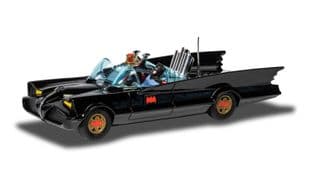
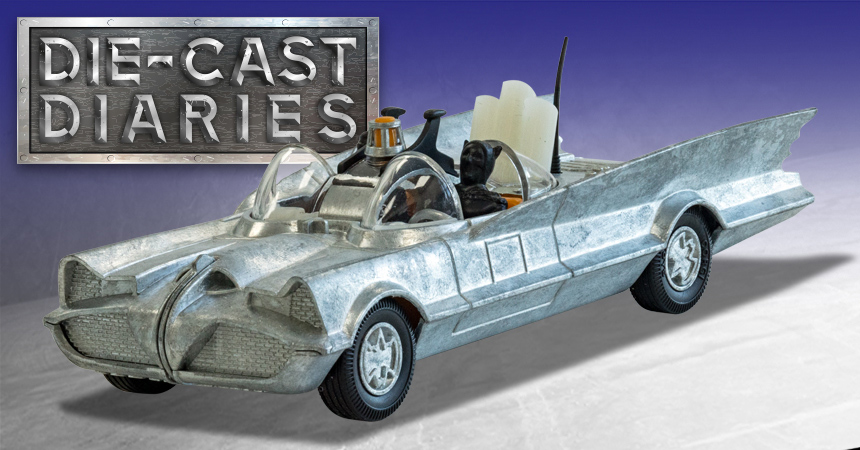
As you can see from our header image this time around, our lead feature is a celebration of Gotham City’s finest, or at least our tribute to their famous mode of transport. With our Batmobile model taking its place in the Corgi range for the first time in many a year, we will be bringing you development details, exclusive imagery and some of the interesting features relating to the creation of this exciting new model, one which can claim association with one of the most popular die-cast models in the history of the hobby.
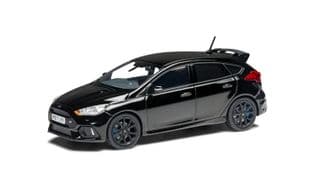
We will be following this up with our scale take on a pair of vehicles which we all stand a chance of seeing on Britain’s roads, or at least as magazine features, even if there isn’t a massive bat light illuminating the night sky. Marking the latest Ford Focus Mk.3 RS models to join the Vanguards range, we will have a selection of final sample images and release details to share relating to both of these models. Finally, and not to leave Aviation Archive collectors feeling left out, we will be looking at another recent model release from this range, a mighty aerial gunship which may well still be available in our warehouse, but has so far not featured within a Die-cast Diaries blog.
We have more exciting exclusives waiting in the wings still to come and can confirm that it’s going to be a wild ride, from a content perspective, over the coming weeks. Please join us for our latest visit to the wonderful world of Corgi models.
One to warm the cockles of any superheroes heart, this picture featuring the engineering sample and pre-production sample models together proves that Batman’s about to get his wheels back.
It can sometimes be difficult when putting these blog update postings together, from a subject feature perspective. We know that there’s an army of Corgi collectors out there, both active and those currently on collecting sabbaticals, and we also know that you are fiercely passionate and supportive of the ranges which mean so much to you. This can mean that a Vanguards-centric edition may delight fans of these popular vehicle models, but may not be of huge interest to those who collect Aviation Archive and vice-versa. That being said, there are probably many collectors out there who have models from both ranges in their collections, but as a general rule, the majority of us have a strong range leaning in one direction, or the other.
Where we do have an opportunity to unite Corgi collectors one and all is through the models released in our TV and Film/Pop Culture ranges, models which are the continuation of die-cast heritage which stretches back to 1956 and have the ability to break down many a collector range preference barrier. We have a new model which falls squarely into that category up next, but going back to those range allegiances again for a moment, we think even the most steadfast of range supporters will still value hearing about the development of the latest models in other ranges, just because it’s interesting and of course, it’s all part of the wider Corgi Story.
As readers will already be aware and are now probably eagerly awaiting its arrival, the launch of our latest September - December model range witnessed the long overdue return of a true classic of a Corgi die-cast model, one which hasn’t featured in a Corgi range for over forty years. It also happens to be a model which comes close to rivalling the 007 Aston Martin DB5 in the annals of die-cast history, our 267 Batmobile. A model which again, many of our readers will no doubt remember with incredible fondness from the days of their youth, this model was called into action whenever we saw the bat silhouette shining in the night sky above Gotham City, or more usually, where we just happened to be playing with it in the house at the time. Totally capturing our imaginations, this fabulous model came complete with Batman and the Boy Wonder figures, and a whole host of exciting working features.
Another view of this dynamic die-cast duo. No Jokers here, this is just 100% classic Corgi.
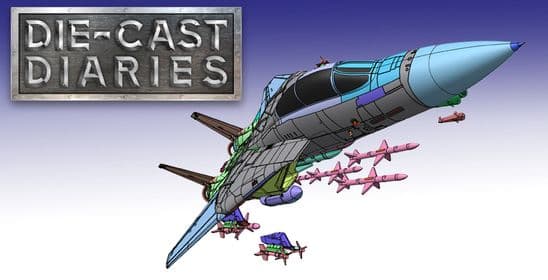
An exclusive blog look at a CAD image created during the design phase of this project.
A model which was first produced in 1966 to align itself with the incredibly successful American TV series starring Adam West and Burt Ward, which was also aired here in the UK, it’s interesting to note that that original series and its famous stars, only lasted for two years, but how this is still regarded by many as the iconic incarnation of the Caped Crusader and his sidekick, standing the test of time to this day. Mirroring the success of that original series, the original 267 Batmobile still vies for the position of the most successful Corgi car model ever produced, again with around 5 million models being produced over the lifetime of this hugely popular model.
A faithful replica of the iconic Batmobile Batman and Robin used in their crusade to fight crime and challenge evil, this eye-catching black model was not only beautiful to look at, but also provided endless hours of fun, something the Corgi designers cleverly ensured when creating the model. It incorporated such appealing features as a flip out chain cutter on its bonnet, a projectile firing rocket launcher and a simulated rocket flame pulsating at the rear of the car when you pushed it along. This was a toy at heart and as such, was intended to be played with for many an hour, however, should your model suffer damage through over-enthusiastic play, or lose some of its paint, there really was only one thing to do, and that was to get a new one – Holy Replacements!
More Batmobile CAD imagery taken straight from Dan’s computer.
Following on from that successful first release, the model subsequently went into production several further times and was subject to some revisions, such as changes to its wheels and the addition of a Batboat tow hook in 1973, a modification which did away with the jet flame feature. All good die-cast things must come to an end, and the model disappeared from the Corgi range in 1983, leaving those models in the hands of collectors and in pristine condition, to change hands for incredible sums of money.
In a year which marks the 85th anniversary of Batman, we are delighted to have the Batmobile back in a Corgi range once more, a newly tooled model which takes its inspiration from that original classic model from back in 1966. Complete with figures of our Dynamic Duo, the new model has the pop-out chain cutter, the rocket launcher with 12 missiles included and the tow hook which may, or may not support the release of another Bat-tastic release to come – check the Gotham City grapevine for news of this in forthcoming range announcements.
A fascinating insight into a historic Corgi project, this image shows the engineering sample of the Batmobile produced to be as faithful to the original model as possible.
For this latest update, we’ve been fortunate enough not only to receive a selection of exclusive development imagery, but also to spend some time with our Development Manager Dan, who gave us a fascinating insight into the work he did in allowing this classic model to ‘ride again’ within a Corgi model range. Looking at the CAD imagery he supplied, the obvious first question was to ask him what challenges he faced when attempting to bring this famous model back into the range – we were rather surprised to hear his answer.
Dan described how this project centred completely around designing and manufacturing a contemporary version of the classic Corgi 267 Batmobile model, making improvements wherever he could, but staying as close to the original model as possible. The team were allowed to take a rare and extremely valuable Batmobile from our archives, and systematically dismantle it, scanning every aspect of its construction to act as a CAD blueprint. In fact, Dan informed us that by far and away the most challenging aspect of this project was its requirement to remain faithful to the original model, one which was designed and produced in the 1960s.
Although there was the scope to refine and perfect certain elements of the new model’s design, retaining the charm and authenticity of the original on which it was being based was paramount and unquestionably created the most pressing design challenges for Dan.
We know we’re overloading you with images here, but they’re exclusives and they all feature our latest die-cast tribute to the iconic Batmobile!
Another issue which Dan described as being a bit of a headache was our interpretation of the original model packaging, something which really does mark this as one of the most important models in Corgi’s history. Thankfully, he had a secret weapon to help him with this, in the form of our incredibly talented Senior Brand Creative, Jules. Able to work graphic design miracles on even the most challenging of tasks, Jules spent a great deal of time maintaining the authenticity of the original model with this new project and we’re all incredibly pleased with what will soon be appearing in the range.
The Corgi team are proud to have produced a model which is a continuation of the Batmobile story in die-cast and whilst it does stay faithful to the original car from which it takes inspiration, there are some subtle differences which make this unique, but we’re going to let you discover those for yourselves.
One of the more noticeable improvements involves a tow hook and the moving flame feature which was one of the best loved innovations on the original model. Back in the late 1960s, a tow hook was added to the original model to allow the Batmobile to tow the Batboat and trailer, an addition which was welcomed, but ultimately didn’t work all that well. As the car was pushed along the floor, the turning wheels moved the mechanism which made the simulated jet engine flame move in and out of the rear of the model, however, this movement soon caused the trailer hook to become separated.
Ready for die-cast action, these next two images show the pre-production sample model used by the Development team to check every aspect of the new model, prior to production authorisation – Holy Release Dates!
A modification to this arrangement was made in 1973, where a permanent tow hook was tooled for the model, however, this also resulted in the removal of the moving jet flame feature, with Corgi playing the Joker with Batman fans everywhere.
We’re delighted to confirm that this new model has been designed to overcome this problem, and even though our new Batmobile does have a fixed tow hook, it also retains the jet flame feature which was so loved by the hundreds of thousands of youngsters who remember playing with this classic model.
We really can’t wait for you to see the new Batmobile and judging by the number of models ordered via the Corgi website and through model stores, we know you are too. That being the case, you will be pleased to know that we’re hoping to have some, if not all of these models in our warehouse at some point during next week, but please keep an eye on the Batmobile product page on the Corgi website for the latest availability information.
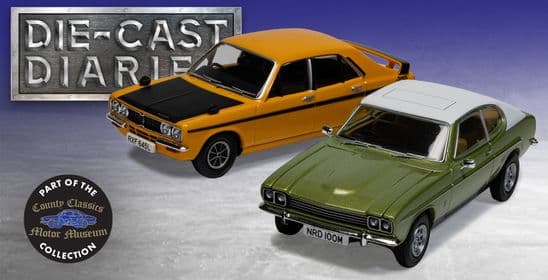
Double release trouble from the world of Vanguards.
Although the Batmobile has proved to be one of the most popular Corgi models of all time, if you want to ensure success in the Vanguards range, you really only need one name to aid you in your quest and that name is Ford. Although we may not all like it, when it comes to introducing scale models of some of the most popular cars to have appeared on Britain’s roads, Vanguards collectors send very clear messages when we present them with Ford related products, because they always find new homes in no time at all. Although we all like variety within our collections, we really do have to concede that collectors just love their Ford models and any business that doesn’t listen to its customers is a business on a very slippery slope.
The latest pair of Ford models to join the Vanguards range fall squarely into the hot hatch category and as such, will be of great interest to our legions of Ford model fans. The Ford Focus is a compact family car which was first released in Europe back in 1998 and was a project which had some pretty significant motoring shoes to fill (or should that be tyres), as it was the intended replacement for the hugely popular Escort model. The third generation of this car which has now become arguably as popular as its predecessor had its coordinated worldwide release in early 2011 and benefitted from a further facelift into this particular configuration in 2014, unveiled at the Geneva Motor Show. Cosmetically, this upgrade featured a redesigned front grille, redesigned slimline headlights and various internal facelifts.
The sporty RS and ST models continued Ford's incredibly popular road car links with success in motorsport, something which continues to ensure the sales success of their popular cars, a continuation of a legacy which stretches back to the early 1970s. The ST might be a car people see regularly on Britain's roads, however, it features technology which has been taken straight from the world of motorsport and all designed to enhance the driving experience of its owner. This cultured vehicle has larger brakes intended to bring the car to a halt more effectively and the steering wheel has the most efficient turn cycle found on any current Ford model.
Let’s take a closer look at the latest models produced from this popular tooling.
VA15304 - Ford Focus Mk3 RS, Police Demonstrator
The Focus RS modelled was first registered on March 24th, 2016, only five days after being built at Ford's Saarlouis Plant in Germany. It was initially part of Ford of Britain's Demonstration Fleet and was one of several Focus RSs used to launch Ford's new high-performance range in early April 2016.
This event, held at Silverstone, allowed selected members of the press, Ford employees and favoured customers the chance to drive one of these potent and capable cars on the circuit where its awesome performance could be safely explored. Shortly afterwards, it was dispatched to the company's dedicated one-stop-shop for Blue Light fleets, Ford Special Vehicle Preparations (SVP), based in Earls Colne, Essex.
Knowing that it would be returned to standard specification, SVP fitted just enough equipment, including grill, tailgate and roof-mounted lights, for it to be an operational police car. ANPR wasn't fitted to avoid drilling the dashboard.
It was then used to recreate the iconic image of an RS200 police car pulling over a Sierra Cosworth, this time with the Focus pulling over an RS200. It was subsequently loaned to ten police forces for evaluation including Northamptonshire Police, who used it over the F1 GP weekend, and the Isle of Man Police who utilized it during the TT.
The car was sold in April 2018 after SVP removed the police fittings and livery. Since May 2022 it's been owned by West Midlands-based enthusiast Darren Sobratee.
VA15305 - Ford Focus Mk3 RS in Shadow Black
The Focus RS modelled was first registered on June 17th, 2017, by dealers Jennings Ford of Middlesbrough, North Yorkshire. Since May 2023 it's been owned by its third keeper, Lynn Dumpleton, the editor of the RS Owners Club's magazine Rallye News, who lives in North Wales. Lynn is a lifelong fast Ford enthusiast and could not resist adding this low-mileage example of Ford's last petrol-powered RS to her collection. The car was ordered with most of the available options including the Luxury Pack, which cost an extra £1000 on top of the retail price of £29,995 and included rear parking sensors, power fold door mirrors, keyless entry, privacy glass, cruise control, and a speed limiter.
The first owner also requested 19” black forged alloy wheels that cost an extra £595, shadow black premium paint, which cost an additional £525, and the Ford SYNC3 Nav System with 10 premium Sony Speakers, a sub-woofer and a rear camera, which was another £465. The blue-painted brake callipers were a mere £100, and door edge protectors, at £85, completed the list. The only option left unticked was the Race Style RS Recaro shell seats, which would have cost an extra £1145 and reduced the car's practicality. Lynn enjoys taking the car to RSOC events and was particularly pleased to use it as the safety car on the club's anniversary parade lap of the Donnington Park race circuit during the 2023 RSOC National Day.
Both of these attractive models are available now, however, the Police Demonstrator is very much on the way out, with just a handful of models still available – a busy weekend of ordering activity will see this one gone! If you would like one in your collection, the time to act is now, but no speeding along the way please.
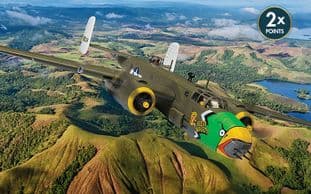
During its time in the Pacific, the North American B-25 Mitchell would become one of the hardest hitting and most effective strike aircraft of the war.
From an Aviation Archive heritage perspective, our 1/72nd scale North American B-25 Mitchell tooling has long been a favourite with collectors, beautifully replicating the lines of this famous medium bomber, and possessing an extremely heavy metal content which makes it so appealing to the collector. The latest release from this tooling marks one of the heavily armed B-25 Mitchell gunships which took such a heavy toll of Japanese shipping, airfields and troop concentrations during the Second World War, aircraft which until adopting the title of the Air Apaches, were previously referred to as the ‘Tree-top Terrors’.
One of the finest fighting aeroplanes of the Second World War, the North American B-25 Mitchell was named in honour of Major General William ‘Billy’ Mitchell who was a great champion of air power and a significant figure in the history of the US Air Force. As an airman serving on the Western Front in WWI, Mitchell had witnessed the rise of aviation first hand and was convinced that the aeroplane would play a significant role in any future conflict. This conviction would bring him into conflict with senior officials in both the US Army and Navy, as he vociferously argued against continued spending on battleships, as the aeroplane had rendered them almost obsolete.
He famously arranged demonstrations where bomber aircraft would attack obsolete warships to prove the vulnerability of these floating leviathans and followed this by proclaiming that all investment which would have been directed towards battleships should instead be diverted to the production of aircraft carrier. He would certainly be vindicated in his vision for the future importance of military air power.
Despite the undoubted potential possessed by the early B-25 Mitchells, it wasn’t until the introduction of the C and D models that the aircraft truly began to come of age. Several significant improvements and alterations transformed the Mitchell into a superlative fighting aeroplane, one which quickly revealed its flair for adaptability and the capability of taking on many different offensive roles. The strength of the basic design allowed a growing number of modifications to support the aircraft being used in many more roles than it was originally intended for.
The difference between the C and D models was basically only the factory that produced the aircraft – C models were manufactured in the existing Inglewood California plant, whilst D model aircraft were produced in a new facility in Kansas City. Almost four thousand examples of this version of the aircraft were built, which went on to see service in The Pacific Theatre, Europe, North Africa, the Middle East and Italy, Russia, China and with home-based US squadrons.
The rugged and reliable Mitchell proved to be extremely popular with the pilots and crews who flew the aircraft in combat, all of whom trusted the B-25 to get them home safely. Able to withstand a significant amount of battle damage, the Mitchell was regarded as something of a warhorse, an aircraft that could be relied upon to get the job done. Equipped with the advanced Norden bombsight, Mitchell squadrons could be relied upon to mount accurate, strategic strike operations in support of ground forces that came across particularly stubborn enemy opposition.
With its strong tricycle undercarriage, the B-25 could also operate from roughly prepared airfields, so it was never stationed too far away from where it was needed. It would see service in most theatres of operation during WWII and proved to be one of the most adaptable aircraft available to the Allied powers – later models of the Mitchell were the most heavily armed aircraft of the Second World War and wreaked havoc with Japanese supply lines across the Pacific, often flying over some of the most inhospitable operating environments of the entire war.
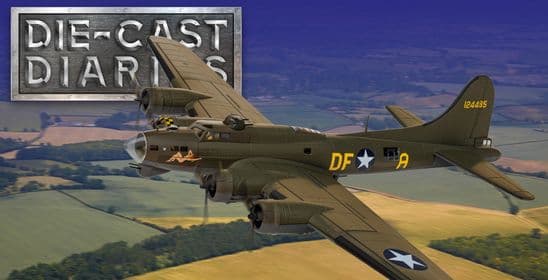
The image selection gracing this section of the blog all feature an advanced production sample of a model which is now in our warehouse and available.
Although conceived as a modern and capable medium bomber for the USAAF, the B-25 Mitchell would prove rugged and adaptable enough to be used in a very different way when it was deployed in the Pacific Theatre. In an attempt to prevent Japanese forces from becoming established in outlying areas of the Pacific and re-supplying those units, B-25 Mitchells were field modified to utilise an additional eight forward firing .50 calibre machine guns on the nose and forward section of the aircraft, becoming low altitude strafers, as opposed to medium altitude bombers.
The four squadrons which made up the 345th Bomb Group ‘Air Apaches’ arrived in Port Moresby, New Guinea during the summer of 1943, routing from Australia, with crews intent on continuing the work started by the 38th BG, the ‘Sunsetters’ in using B-25 Mitchells as low flying, heavy hitting strafing gunships. Fitted with an additional eight forward firing .50 calibre machine guns. The aircraft of the 498th BS ‘The Falcons’ would become some of the most flamboyantly presented aircraft of the Pacific War, with the glazed section of their noses overpainted in a green, yellow and red representation of a falcon’s head and with all those .50 cals firing in unison, must have made for a fearsome sight, if you were unfortunate enough to be on the receiving end of their attentions.
This distinctive aircraft named ‘Red Wrath’, was one of the hard-working strafing Mitchells of the 498th BS and made a name for itself whilst leading a raid against Japanese forces on the Island of Rabul in October 1943, during the very early stages of these operations. Flown by senior pilot Lt. Col. Clinton L True, ‘Red Wrath’ flew at the head of a force of 36 Mitchells leaving their base at Dobodura Airfield, with 200 miles of open ocean between them and their target. Part of an elaborate plan to confuse and target the Japanese airfield at Rabul, poor weather on the outward flight to the target resulted in the mission being aborted, however, whilst the supporting fighters and heavy bombers turned back as instructed, Lt. Col. True and his Mitchell force pressed on alone.
True had a reputation for being a particularly aggressive pilot and wore his ‘Fearless’ nickname with pride, and whilst it was claimed he simply chose to ignore the order, that was never definitively proven. Pressing their attack home with ferocity, once the Mitchells were over the target, they pounded the Japanese airfield complex, claiming at least 22 enemy aircraft destroyed in the air and countless others put out of action on the ground. Only 2 B-25 Mitchells failed to make the return flight home to Dobodura Airfield.
On arrival back at their home airfield, Colonel True was in big trouble. Accused of disobeying a direct order to abort, he was sent to Australia to face the very real threat of court martial, however, in the time it took him to get there, fate thankfully intervened. News of the successful raid had reached the press, and an article was published championing the performance of the strafing B-25 Mitchells as a bold new strategy in the fight against the Japanese and in support of the aggressive new offensive tactics employed by US forces. Rather than face a court martial, Lt. Col. Clinton L True received the Distinguished Flying Cross, whilst the 345th Bomb Group ‘Air Apaches’ also received the first of 4 Distinguished Unit Citations the unit earned during WWII. The tremendous firepower possessed by these strafing Mitchells made these some of the hardest hitting attack aircraft of the entire Second World War.
I’m afraid that's all we have for you this time, however, please join us again in two week’s time for another exclusive insight into the wonderful world of Corgi model collecting. Between editions, we are always interested to hear your views on all things Corgi, so if you feel like dropping us a line to comment on anything blog, collecting or Corgi model related, or perhaps to suggest a topic you might like to see us cover in a future edition, please do get in touch at diecastdiaries@corgi.co.uk.
If you can’t wait for the next blog, you will find plenty of Corgi model collecting discussions taking place on our official social media channels, access to which can be obtained by clicking on the respective links at the foot of the Corgi website homepage.
Link access to Corgi social media sites.
Thank you for continuing to support your Die-cast Diaries blog. Our next edition is scheduled to be published on Friday 15th November, and we look forward to seeing you back here then.