Welcome our latest edition of CORGI Aerodrome, where we take a regular look at the fascinating world of aeroplanes and the historic aviation scene around the UK.
For this Aerodrome post, let's look back into our archives and a fascinating visit to the RAF Museum Midlands Michael Beetham Conservation Centre in 2016, because it’s been quite a while since enthusiasts have been invited to look round this magnificent building and the preservation delights it holds, but also because several of the exhibits on display back then have either advanced, moved out to different locations, or even joined other collections.
In a long overdue re-visit to this usually rather secretive preservation facility, it’s fitting that we place the blog spotlight on the committed group of people who are passionate about the preservation of the nation’s aviation heritage at Cosford. This blog serves as a thank you to the people currently engaged in various projects within the Conservation Centre and to those who have contributed in the past. We can’t wait to be allowed to come and inspect your handiwork once again at a future open house week.
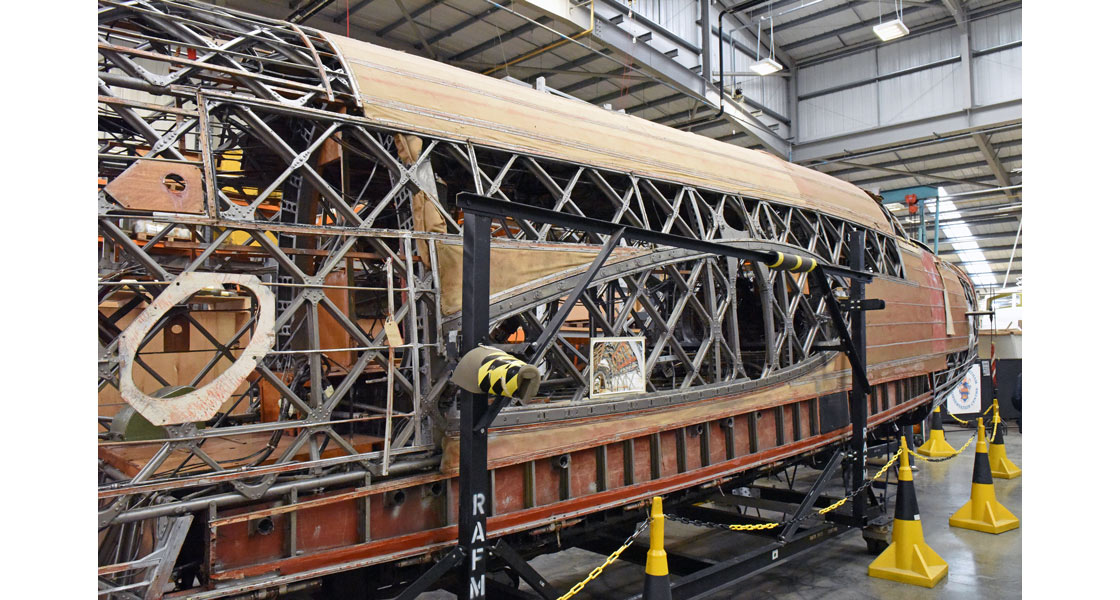
The imposing fuselage of Vickers Wellington Mk.X MF628 is just one of the large projects being tackled by the team at Cosford’s MBCC.
For most of us, the prospect of turning up to work every day and attempting to return a battered and rusting hulk of metal back to its former glory is not a prospect which would hold much appeal, especially when this work shows little discernible progress from one month to the next. Thankfully, this is not something which affects the skilled professionals and experienced former RAF engineers and technicians who are either employed or volunteer their time and expertise at the Michael Beetham Conservation Centre, one of the world’s foremost centres for historic aircraft preservation and restoration. Experts in the preservation of the RAF Museum’s priceless collection of aircraft and aviation artefacts, the MBCC team are also expert in the dismantling, transportation, assembly and display of historic aircraft, with the size of the project not being a limiting factor – whether it is a Tiger Moth or an Avro Vulcan, when an aircraft needs moving, these chaps are generally going to be involved. As well as continuing with the longer-term restoration projects currently in residence at the centre, the team have faced other significant challenges over the past few months. These included the trading of exhibits between the Hendon and Cosford sites, as well as this year’s RAF 100 Cosford Airshow, where a number of their prized museum exhibits were taken from the security of their display hangars, to take part in the impressive static aircraft display which marked the event as one of the most memorable for many a year. It must have been an interesting year for the people at the RAF Museum Cosford.
The now regular Conservation Centre open week events have become extremely popular amongst aviation enthusiasts and allow visitors to experience a behind-the-scenes look at the fascinating work which goes on in this world-renowned centre of aviation excellence. Able to call upon engineering and technical skills which, whilst once commonplace on RAF airfields all over the world, are now becoming increasingly difficult to find, the centre is also an important site for the preservation of these bygone skills and can boast an impressive apprenticeship scheme to preserve this knowledge. Enabling a new breed of highly skilled engineers and technicians to learn and become proficient in these traditional, bygone techniques, it is fascinating to see these young people working on aircraft which are, in the main, over 75 years old and in one case, 100 years old, gaining invaluable skills each day. Perhaps even more significant, these apprentices will gain and pass on these valuable skills in the years to come, ensuring that the RAF Museum is equipped to maintain and renovate their exhibits for the foreseeable future.
With a number of high-profile aircraft acquisitions finding their way to Cosford over the past year or so, visitor numbers at the museum are very much on the up and as a consequence, the always popular Conservation Centre open weeks are now attracting even more people than they did in previous years. Let’s catch up with the progress on some of the project we were lucky enough to see during our last visit.
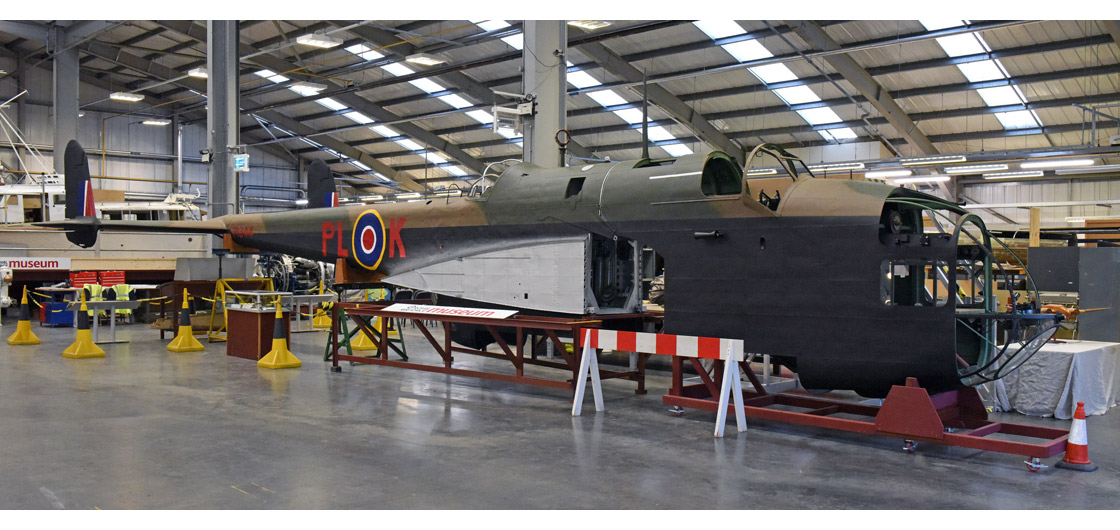
A sight for aviation enthusiast’s eyes. The Hampden has come quite a long way since our visit last year.
Perhaps the most famous resident in the MBCC is Handley Page Hampden TB. Mk.I P1344, arguably the most authentic example of this distinctive British medium bomber in the world. An important aircraft at the beginning of the Second World War, P1344 entered RAF service with No.14 Operational Training Unit at the end of 1939, but was soon back with Handley Page undergoing modification to torpedo bomber standard. Now designated a TB Mk.I variant, the aircraft joined RAF Coastal Command and No.144 Squadron based at Leuchars on the east coast of Scotland, where it operated against enemy shipping in the North Sea. In September 1942, P1344 and the rest of 144 Squadron were transferred to a new overseas operating base on the Kola Peninsula, near Murmansk, charged with the difficult task of protecting the Arctic convoy route from enemy attack. Carrying an increased crew of five on the outward journey, the aircraft was subjected to significant icing whilst on-route, to such an extent that it could not make sufficient height to clear the high ground which lay directly in their flightpath. Unable to climb above these natural obstacles, the crew plotted an alternative route to their new home, however, this brought them perilously close to a Luftwaffe airfield. Through a combination of intense ground fire and the unwanted attentions of two attacking Messerschmitt fighters, the Hampden sustained significant damage and crashed in a remote wooded area of the Kola Peninsula.
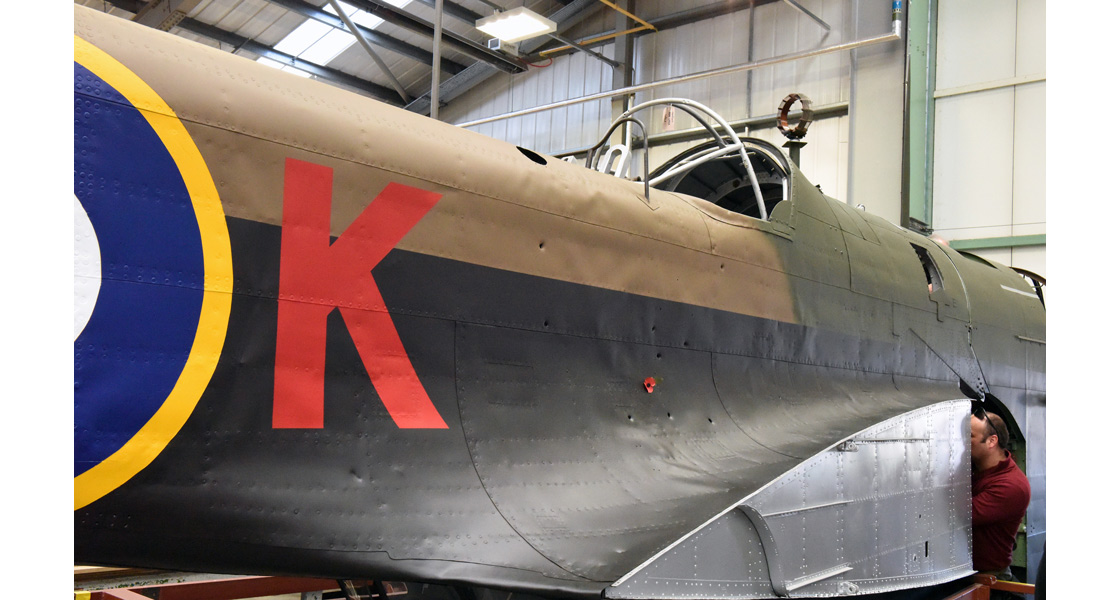
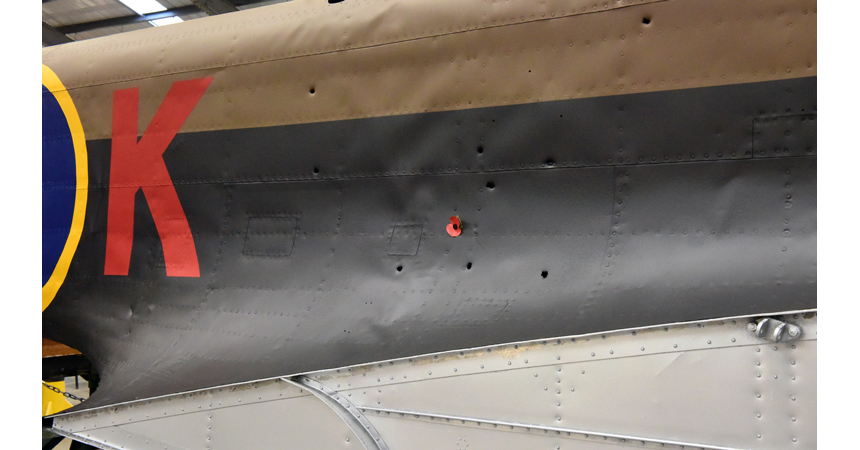
The fascinating history of this aircraft has been sympathetically preserved throughout the impressive restoration of this aircraft. This fuselage section around the rear gunners position still displays the bullet holes from the Messerschmitt attack in September 1942.
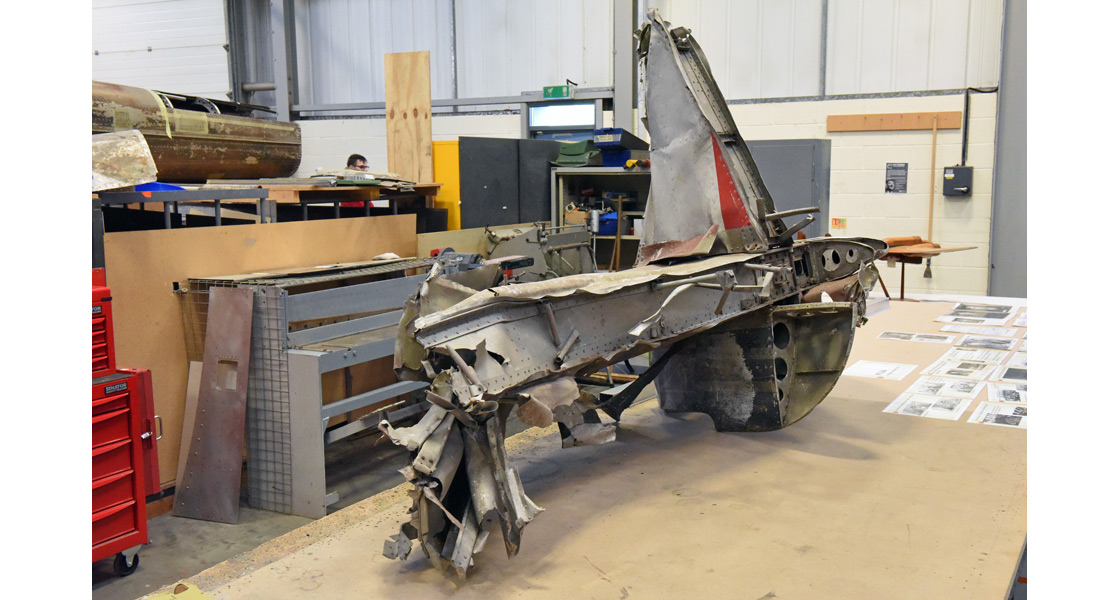
This original tail section was too heavily damaged to be used during the restoration, but is still a vital artefact in Britain’s aviation heritage.
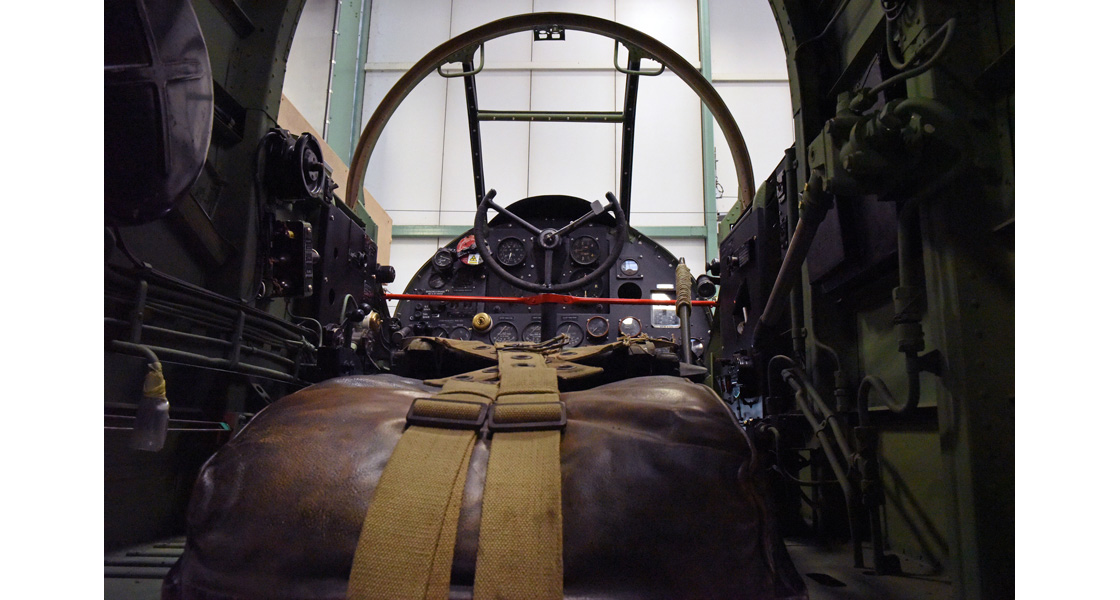
Pilot’s office. With the seat folded back, you can clearly see how narrow the fuselage of the Hampden was, earning it the nickname ‘The Flying Suitcase’.
Tragically, three of the aircraft’s crew were killed during this incident, with the other two suffering capture and imprisonment at the hands of the Germans for the remainder of the war. The aircraft itself lay undisturbed on the boggy ground for many years, until discovered by a Warbird collector in the 1980s and subsequently salvaged as an aircraft of great national significance, it joined the RAF Museum’s collection in 1992. The Hampden wreckage arrived at Cosford in 2003 and after an extensive period of survey and catalogue work, the serious business of restoring this rare aircraft began in earnest. Interestingly, when looking at the original fuselage components, you can clearly see the bullet and shrapnel damage sustained by the aircraft during combat with the Luftwaffe on 4th September 1942. Once complete, this will be a magnificent tribute to the men of Bomber Command and the brave Hampden crews who fought so valiantly during the yearly years of the Second World War – it will also be one of only two complete examples in existence from a total production run of 1,430 aircraft produced. A massive undertaking, when this project eventually comes to fruition, it will be testament to the vision, hard work and determination of a relatively small number of people, but what they will have achieved will be nothing short of miraculous - a huge contribution in the ongoing preservation of Britain’s aviation heritage.
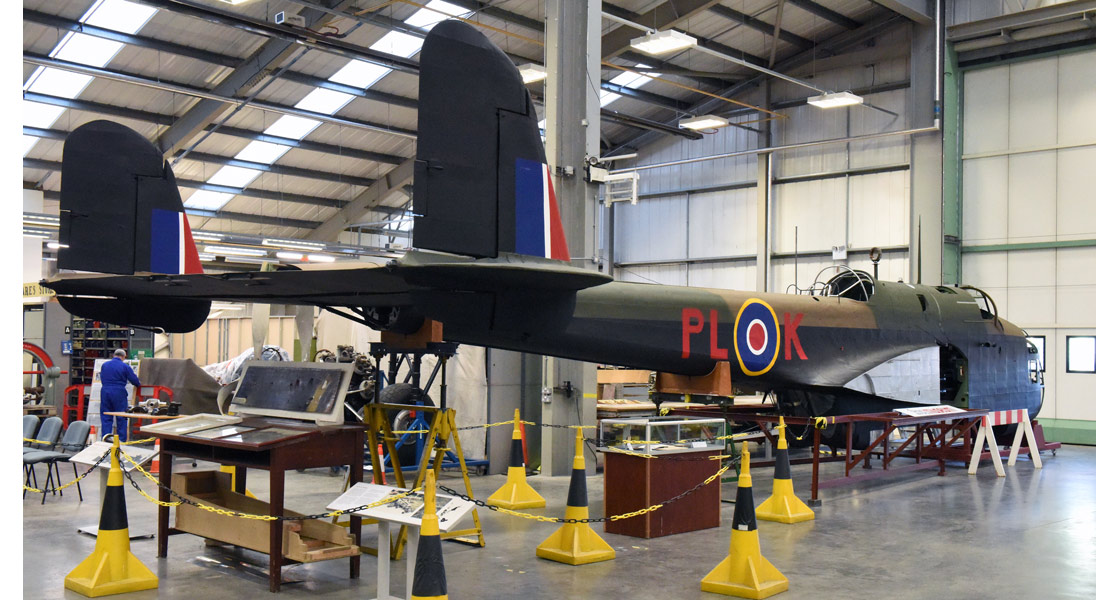
It was fantastic to see the Hampden fuselage in such a complete condition and is testament to the herculean efforts of the small but highly skilled team at the conservation centre.
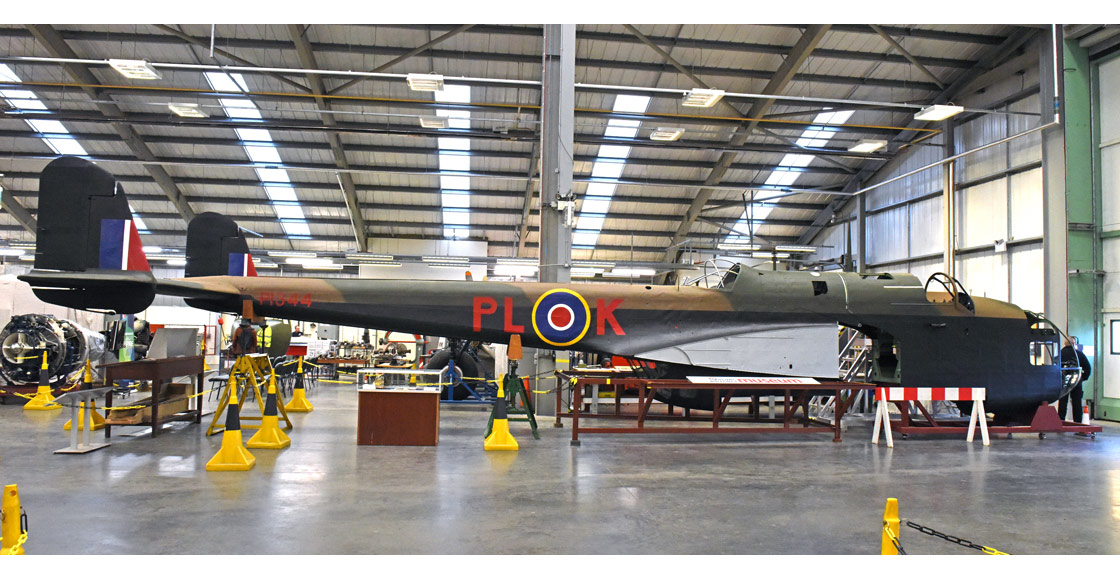
We were fortunate to be able to grab these few shots before the crowds turned up. As you can imagine, the Hampden proved to be a rather popular attraction on the day.
In the weeks leading up to this latest open week event, pictures circulated showing the significant progress which had been made on the Hampden over the past year. The fuselage sections of the bomber had been mated together and, for the first time, it was possible for UK enthusiasts to see the distinctive shape of this aircraft in all its glory, including the fitting tail unit, which really does appear a little fragile to be used on a military aircraft. Interestingly, the tail section of the Hampden has been constructed by the museum using original Handley Page drawings, as these recovered sections of the aircraft had suffered too much damage to be re-used on the project – they have, however, been retained by the RAF Museum and are held as part of their collection. Just below the rear dorsal gunners’ position, the fuselage still retains the bullet holes from the attacking Messerschmitts during the engagement in September 1942 and in view of last weekend’s important remembrance commemorations, they were sporting a rather poignant addition during our visit. Work is continuing apace on the Hampden and the sight of the joined fuselage sections must have proved a huge motivating factor for the small team who have devoted hundreds of man hours to its restoration already. It is hoped that the aircraft will go on display in the very near future, although our guide was unsure as to whether this would be at Cosford or down at Hendon. Work will continue on the aircraft even when it goes on display and it may not be too far in the future that Britain will have a magnificent example of this important medium bomber for us all to admire.
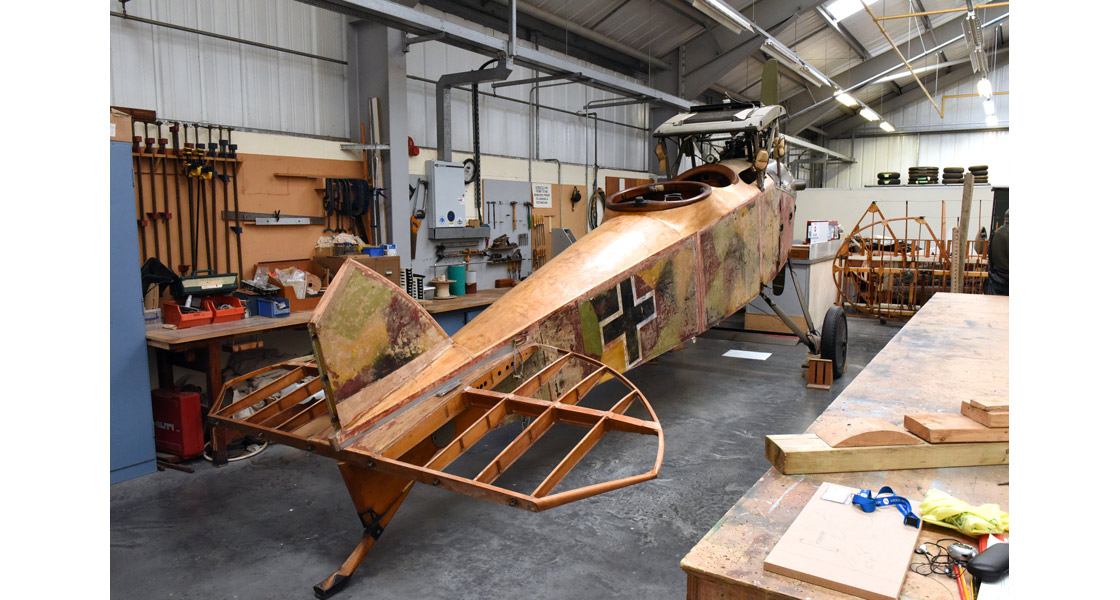
100 years of aviation history. This aircraft was one of the last machines to enter service with the Luftstreitkräfte at the end of the Great War.
Every aviation enthusiast will have their own favourite aircraft at any point in time, though most will also confess that their chosen aircraft tends to change with alarming regularity – I suppose this is what maintains our enduring infatuation with the subject. With a current fascination for all things Great War, the aircraft I was looking forward to seeing more than any other, was the stunning and incredibly historic LVG C.VI First World War reconnaissance aircraft, which entered service in the final year of the conflict. During my last visit, the aircraft was placed in a workshop area at the back of the conservation centre, which was restricted from public access and therefore made obtaining a clear picture of the aircraft incredibly difficult. Undoubtedly qualifying as one of the most historic aircraft in Britain today, the Luft Verkehrs Gesellschaft (LVG) C.VI was a relatively large reconnaissance and artillery spotting aircraft of the Imperial German Air Service during the final year of the First World War, an aircraft which was highly regarded by crews due to its high rate of climb and excellent speed and manoeuvrability. This particular example (7198/18) was acquired by the RAF at the end of the war and, after being used in a series of performance and technology trials, was handed to the Imperial War Museum for storage. Rediscovered in 1936, the aircraft was restored to airworthy condition and took part in the 1937 Hendon Air Pageant, only to spend the next few years once again confined to long term storage at several RAF stations around the country.
In 1959, the LVG was delivered to the Shuttleworth Collection on loan from the RAF Museum and began another lengthy period of restoration to flying condition. This took longer than had been originally anticipated and the aircraft did not make its first post restoration flight until September 1972, but this was the start of a glorious period in the history of this stunning aeroplane. It became the star of many Old Warden Airshows, often engaging in mock dogfights with the Collection’s Bristol Fighter in a recreation of the final combat operations over the trenches of the Western Front. For many years, this was the only original airworthy aircraft in Europe which had previously seen service with the Luftstreitkräfte during the First World War and as such, attracted aviation enthusiasts from all over the world to this tiny grass airfield in Bedfordshire.
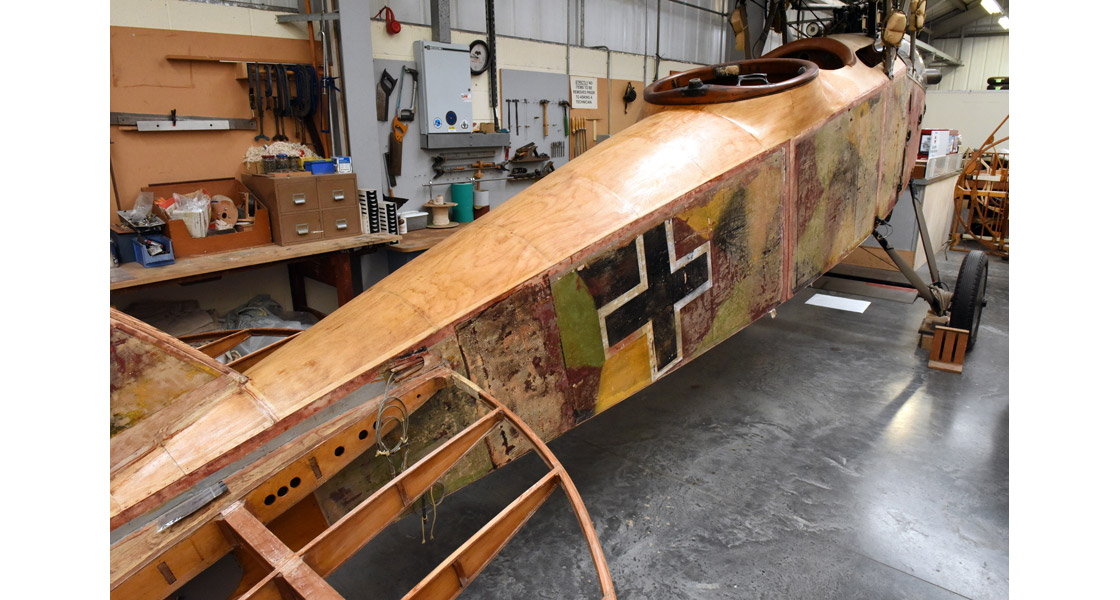
This was the closest I had managed to get to this magnificent aircraft – not only can you see the craftsmanship on the wooden fuselage, but you can also see some of the original camouflage markings, although faded by time.
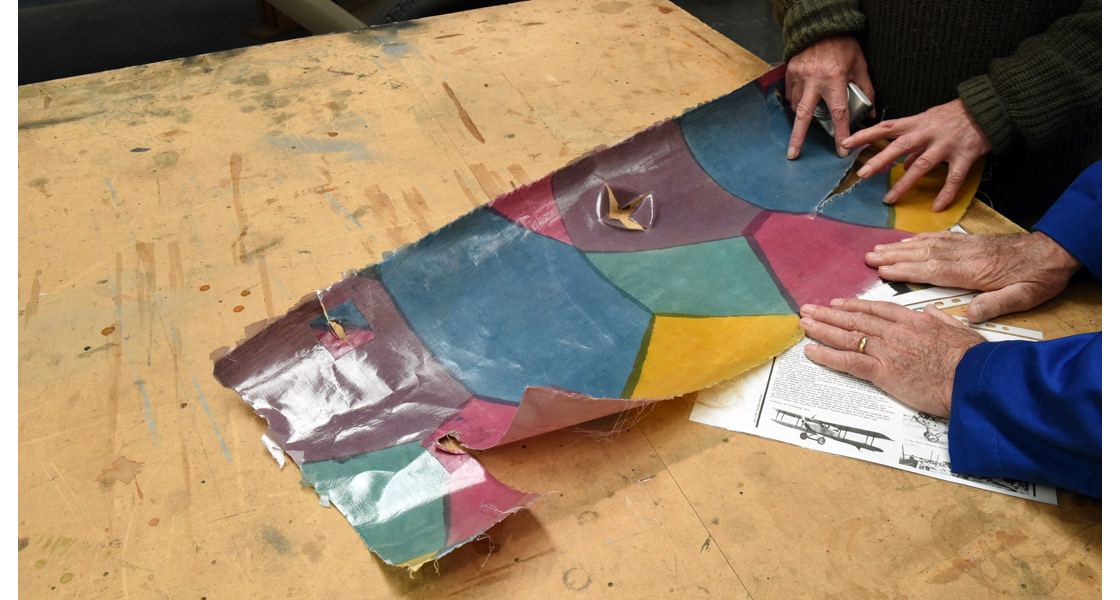
A section of the original lozenge fabric which would have been used to cover the wings of this aircraft.
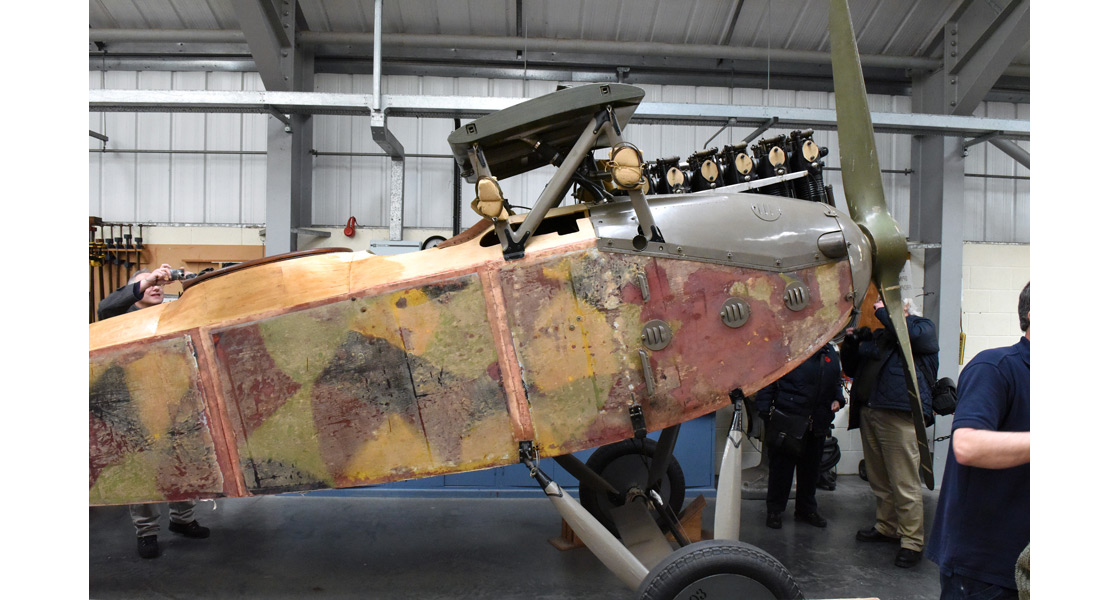
The forward section of the aircraft shows how plywood and metal were used extensively by this stage of the war.
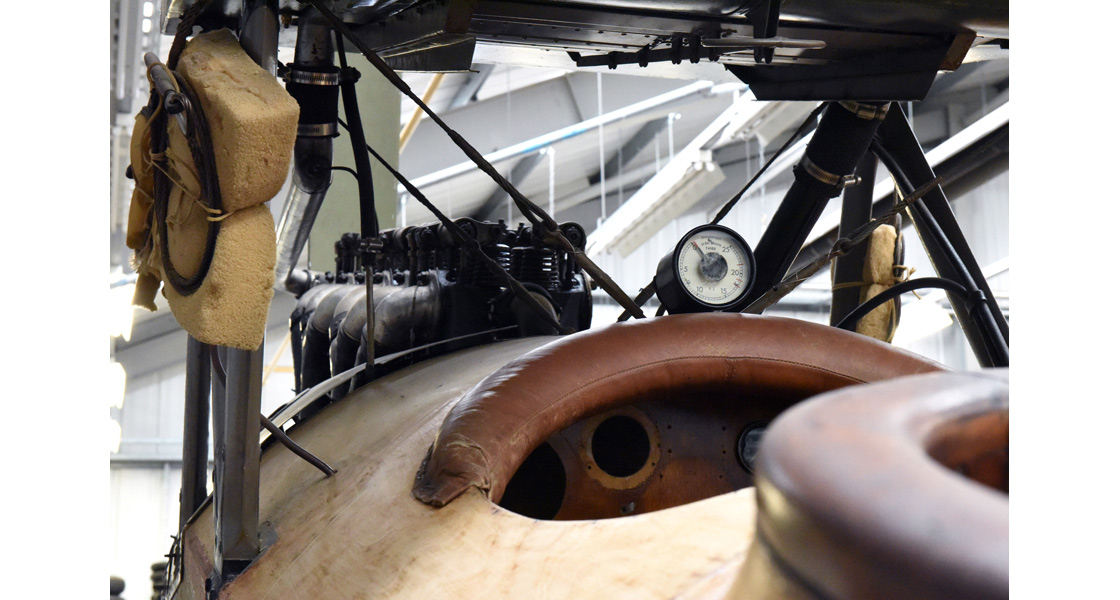
A pilot’s eye view, showing the six-cylinder Benz Bz.IV engine which powered the LVG. These early aviators were exposed to the elements and whatever decided to exit the engine during flight.
Unfortunately, all good aviation things must come to an end and the agreement which saw this genuine Frst World War aircraft gracing Britain’s skies for many years came to an end in 2003 and it was due to be returned to the RAF Museum. The final scheduled display was disappointingly cancelled for insurance reasons and the aircraft was dismantled and transported by road to the Conservation Centre at Cosford, for another a period of restoration. This work will not see the aircraft returned to airworthy condition, primarily as initial investigations revealed components had been used from two or three different machines in the aircraft’s structure, allied to the fact that this rare bird is now deemed too valuable to fly. This second visit was more fruitful regarding access to this magnificent aircraft, although there was a constant stream of fascinated enthusiasts congregating in the confined space of this workshop area, which required real patience when trying to obtain unobstructed pictures. With the wings removed and work ongoing on the fuselage of the LVG, the fascinating stories associated with this aircraft can more readily be pieced together, allowing us all an even greater appreciation of this classic piece of aviation heritage. By the time the LVG had entered service on the Western Front, the war had already begun to turn in favour of the Allied Powers and the commodities of war were becoming scarce in Germany. A shortage of dope and fabric were proving problematic to the aviation industry and as the wings of aircraft had to use this method of construction, their fuselages were having to make use of more readily available, though significantly heavier materials. Much of the front fuselage around the engine made use of metal panels and the remaining fuselage was constructed of plywood, all of which were clearly in evidence during this rather intimate inspection opportunity.
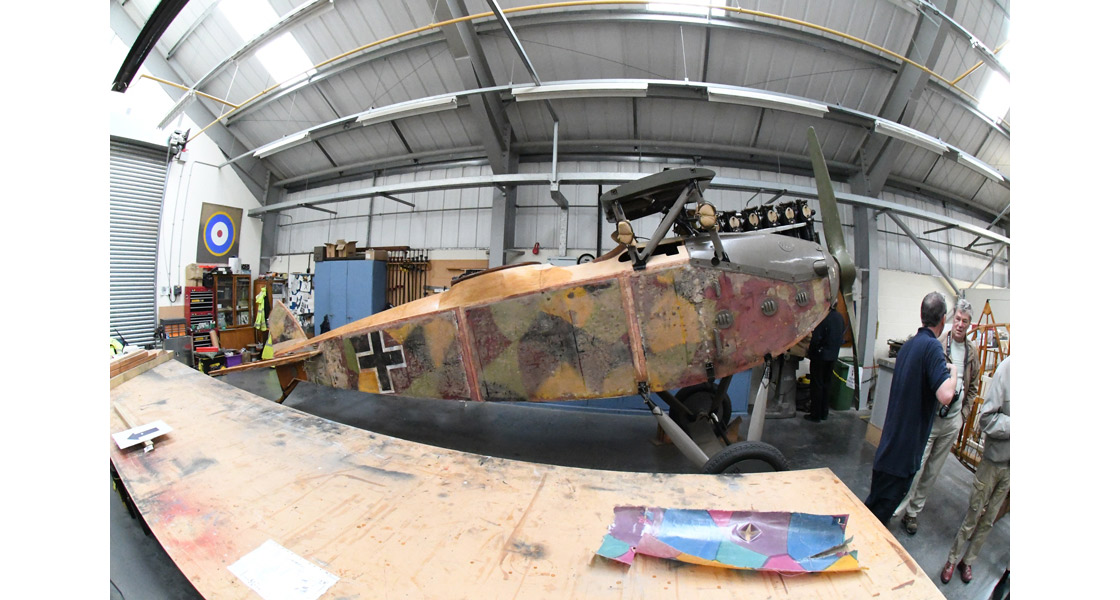
The LVG is situated in a workshop at the back of the conservation centre, which makes photography quite challenging. A fisheye lens came in very useful for this shot.
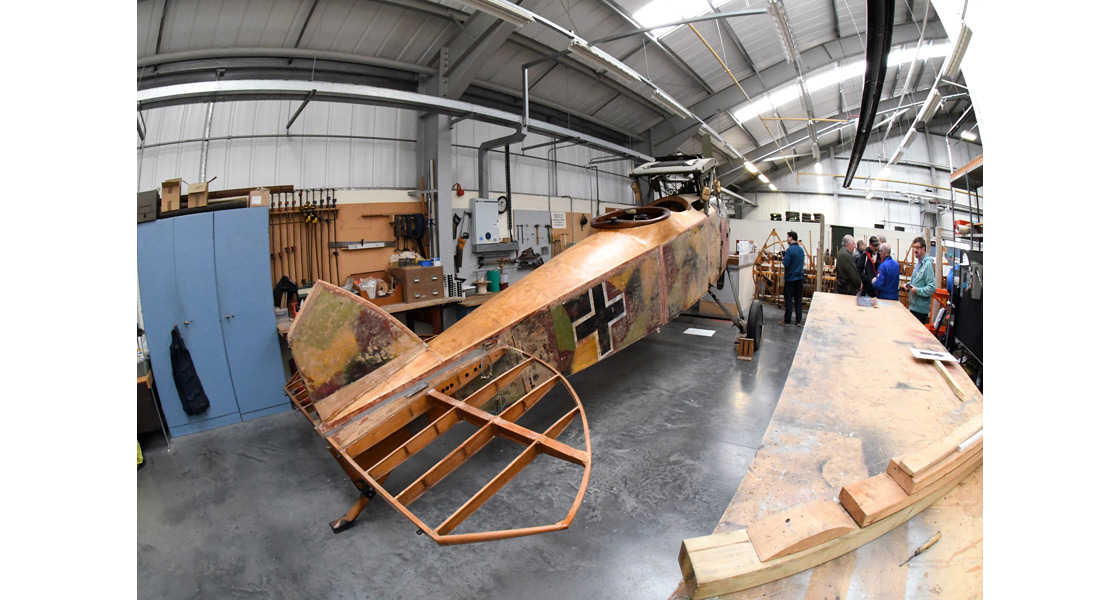
Although this aircraft has been restored on two previous occasions, there are still plenty of original details to be seen during this latest project.
This magnificent aircraft is undoubtedly one of the most historic machines in the UK and in this significant Armistice Centenary year, it came in for plenty of attention during my latest visit to the MBCC. I am looking forward to paying regular future visits to the LVG workshop and hope that it will not be too long before this authentic Great War classic will be back in one piece and displayed in the RAF Museum.
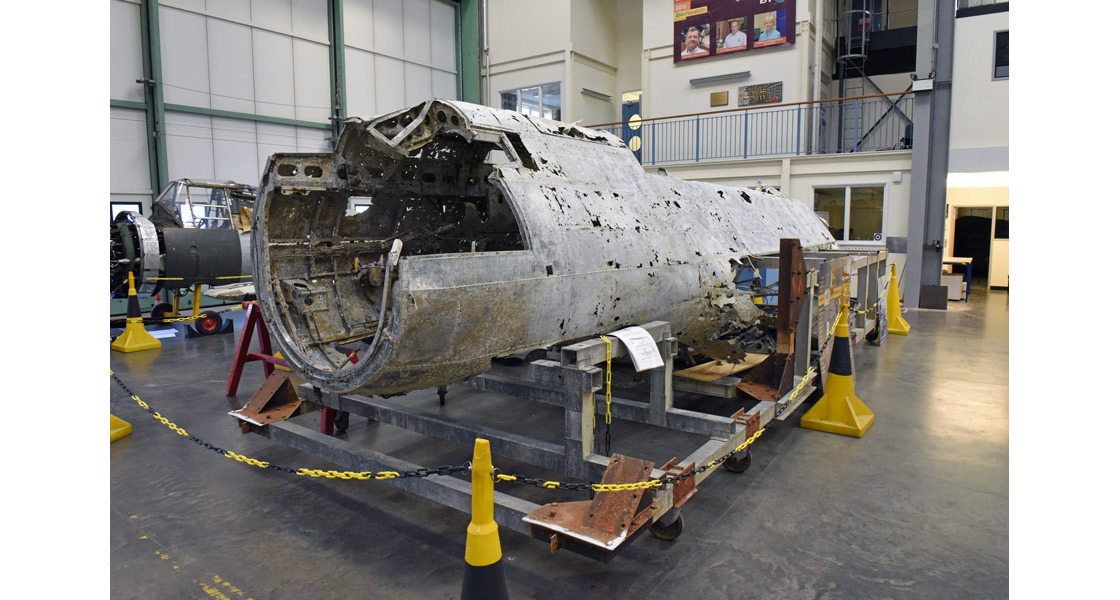
Since our last visit, the famous Goodwin Sands Dornier Do.17 has been moved into the Conservation Centre and is now clearly visible.
One of the most significant Second World War aircraft recovery operations of recent years took place in the waters off the Kent coast during the summer of 2013, as the British media covered the salvage attempt to bring a rare Battle of Britain Dornier Do.17 ‘Flying Pencil’ from its watery resting place. One of the three main bomber types used by the Luftwaffe during the Second World War, it was feared that no example of this important aircraft had survived, despite more than 2000 aircraft being built. For that reason, the discovery of rather distinctive aircraft wreckage lying on the Goodwin Sands in 2008 warranted further investigation and having alerted the relevant authorities, a full sonar scanning expedition was soon planned. The survey took place and revealed that the aircraft was indeed an extremely rare Dornier Do.17 ‘flying pencil’ - an aircraft type which was missing from the RAF collection and one thought lost to the world of preserved aircraft types of the Second World War. The Goodwin Sands Dornier was of such importance that an ambitious project to raise the aircraft was immediately initiated and detailed plans started to take shape.
Under the gaze of the world’s media, the salvage team went about their business, contending with the notoriously shifting sands in the area, the unpredictable tides and unseasonably poor weather during their operation. Having held their wartime secret for so long, it appeared as if the Goodwin Sands were reluctant to part with their aviation prize and seemed determined to ensure it would not be taken in one piece. From the scan data obtained, the aircraft looked to be in remarkably complete condition, considering it had been lying in salt water for over 70 years, having also succumbed to the attentions of RAF Defiant fighters in August 1940 and hitting the water at high speed. The shifting sands had filled every void in the wreckage, which had significantly increased its weight and dramatically reduced the possibility of raising the aircraft in one piece – this was going to be a challenge of some magnitude for the salvage team and was by no means a forgone conclusion.
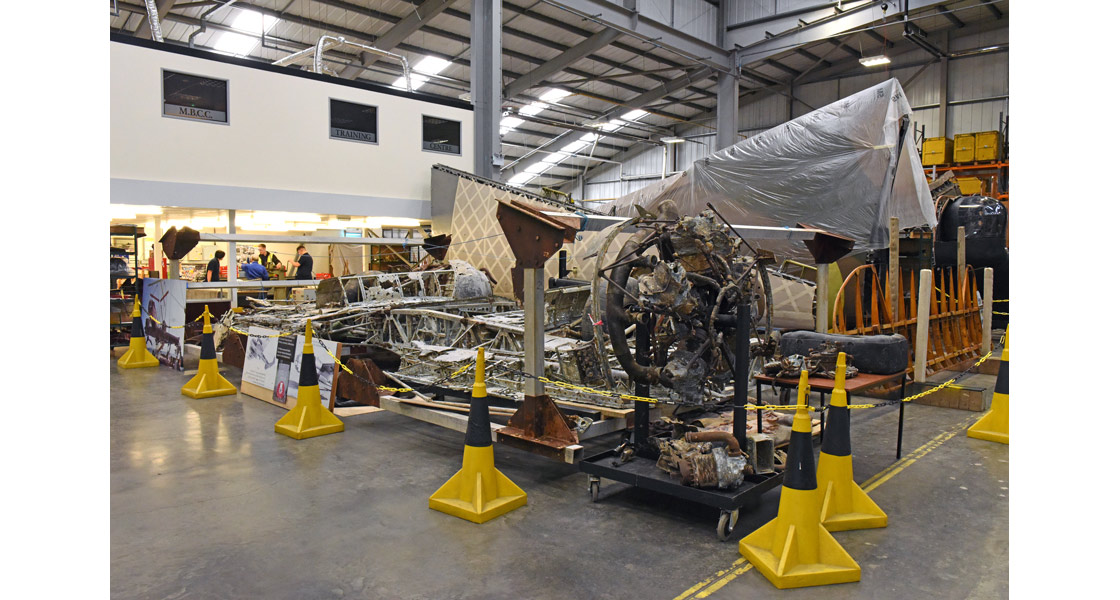
Most of the major sections of the aircraft are now in the MBCC and whilst still in its salvaged state, the aircraft has now stabilised to such a point that it is on open display.
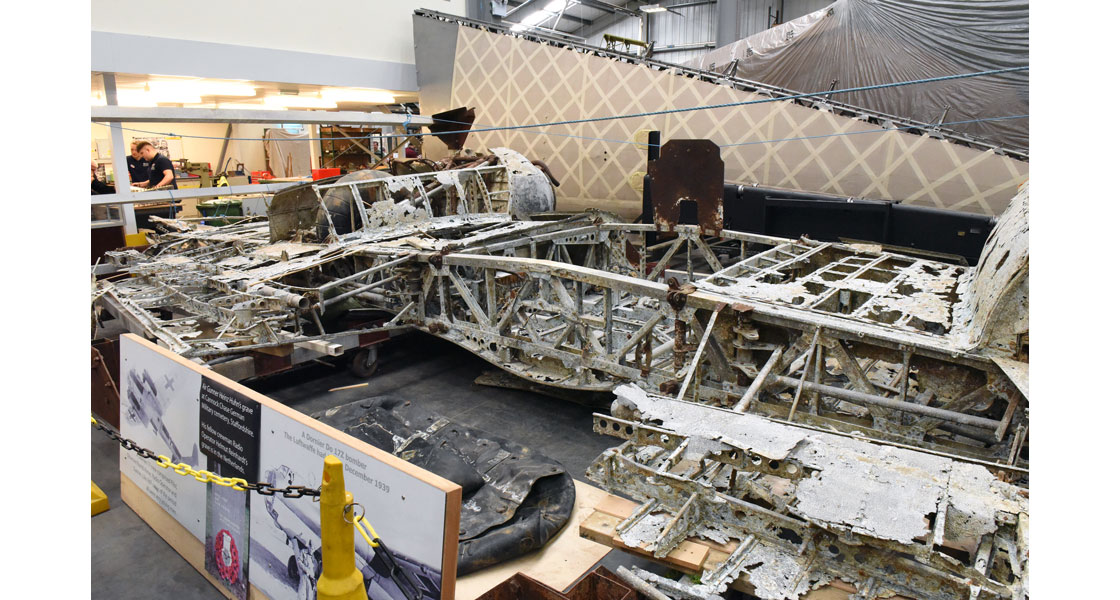
The wing of the Dornier is displayed top down, allowing the still retracted main undercarriage to be seen.
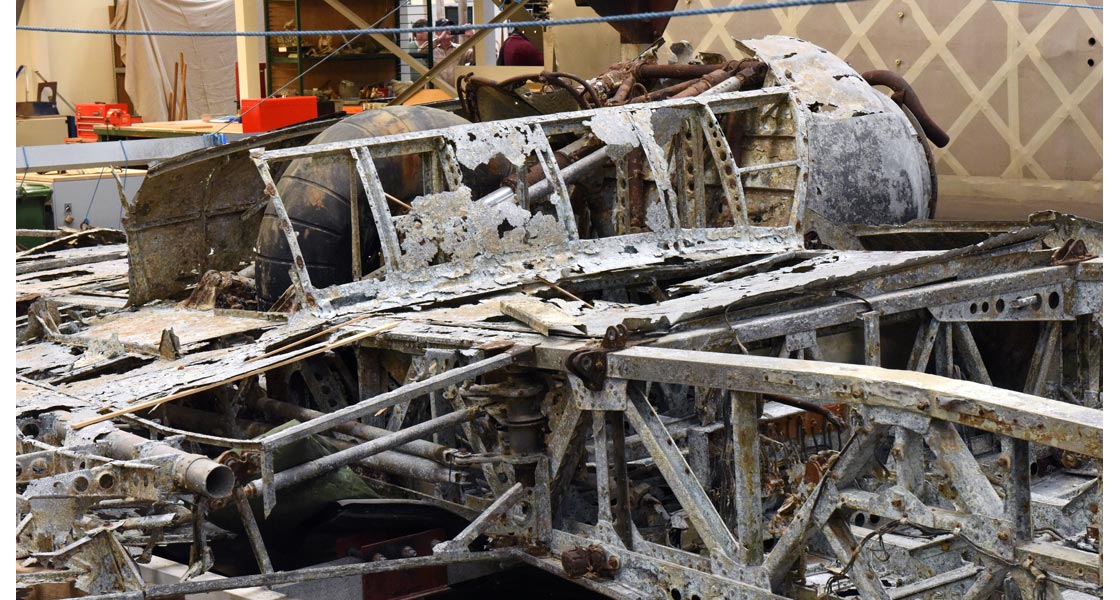
After 70 years under water, the aircraft has suffered from corrosion, however, it is still possible to see large sections of this rare aeroplane.
On 10th June 2013, Dornier Do.17z (Werk Nummer 1160) finally broke the surface of the English Channel for the first time in over 73 years, in a remarkably complete condition. It was a triumph for the salvage team, who had achieved something which had looked highly unlikely just a few days earlier. As soon as the wreck broke the surface, the project took on a new importance, as the rush was now on to preserve the aircraft from the elements and to save this very rare aviation relic of the savage air combat of the Battle of Britain for generations to come. The Dornier was transported to the Royal Air Force Museum at Cosford, where it underwent a concerted period of highly specialised preservation, as the team attempted to stabilise the deteriorating condition of this unique airframe. In the years that followed, this work proved vital in preserving what was salvaged from the sea off the Kent coast and revealed fascinating artefacts from both the history of the Luftwaffe and of the Battle of Britain. The Dornier itself is still in an unrestored, disassembled state, although it has now emerged from its protective treatment tent and is available for open viewing. This was the first time that I had managed to see the Dornier in the open air and the first time I had seen it in the Michael Beetham Conservation Centre - a real aviation treat. It is absolutely fascinating to spend some time inspecting this genuine Luftwaffe bomber and I left feeling that I had been in the presence of aviation history. Although the aircraft is still in a relatively raw salvaged state, it is easy to make out many of the its major components and is testament to the efforts of the conservation team that it is even available for public viewing. It is hoped that this famous aircraft will be on permanent display, even if only during the regular conservation centre open days. As we prepare to mark the 80th anniversary of the Battle of Britain in 2020, this aircraft surely has a significant role to play in these commemorations.
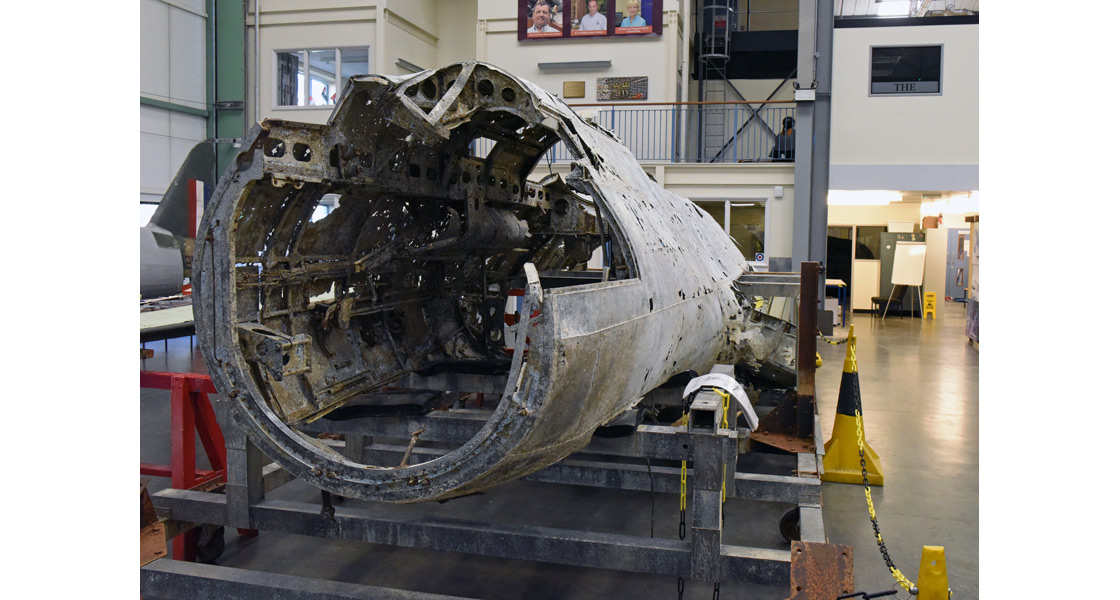
The fuselage section is still displayed in the upside-down position in which it was found resting on the Goodwin Sands.
On the morning of 26th August 1940, the four-man crew of Dornier Do.17z 5K+AR prepared their aircraft for flight and once loaded with just over 2,000Ib of bombs, they took off from their home base at St. Trond aerodrome, near Brussels. Taking their place in a formation of twelve bombers sent to attack the Fighter Command airfield at Manston, their mission had a vital secondary objective in attempting to lure the RAF into combat, where a covering force of around 50 Messerschmitt Bf 109 fighters were waiting to engage them. Although the plan worked well, the Royal Air Force had a significant say on the day’s proceedings. Britain’s effective RADAR warning systems had already detected the approaching raiders and RAF fighters were on their way to intercept the Dorniers, even as they set course for their intended target. Within minutes, a savage air battle was being fought over the English Channel.
As Dornier 5K+AR approached the Kent coast, it was flying just above thick cloud, which caused the pilot to temporarily lose his bearings and resulted in his aircraft falling behind the main formation. Without warning, the bomber was attacked by a flight of RAF Boulton Paul Defiant fighters and caught in a hail of .303 machine gun bullets. The aircraft took multiple strikes to the engines and cockpit area and their mission was now one of survival. With one engine already stopped and the other suffering damaged, pilot Feldwebel Willi Effmert and his observer Hermann Ritzel had both sustained injuries, and they knew their only chance was to get the aircraft down as quickly as possible. The order to jettison the bombs was given and Effmert looked for a suitable place to set his stricken aircraft down. Running out of options, he spotted a stretch of shallow sea, just off the coast of Kent (the Goodwin Sands), which would just have to do – this was now the only option available to him.
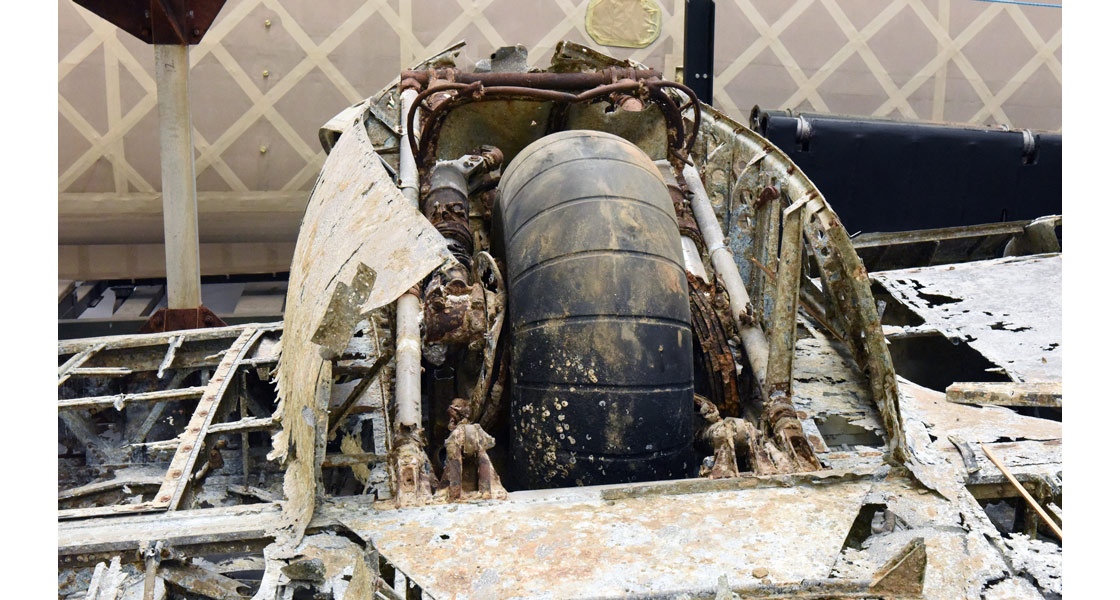
A close up image of the port main undercarriage wheel, showing detail which will be of great interest to modellers.
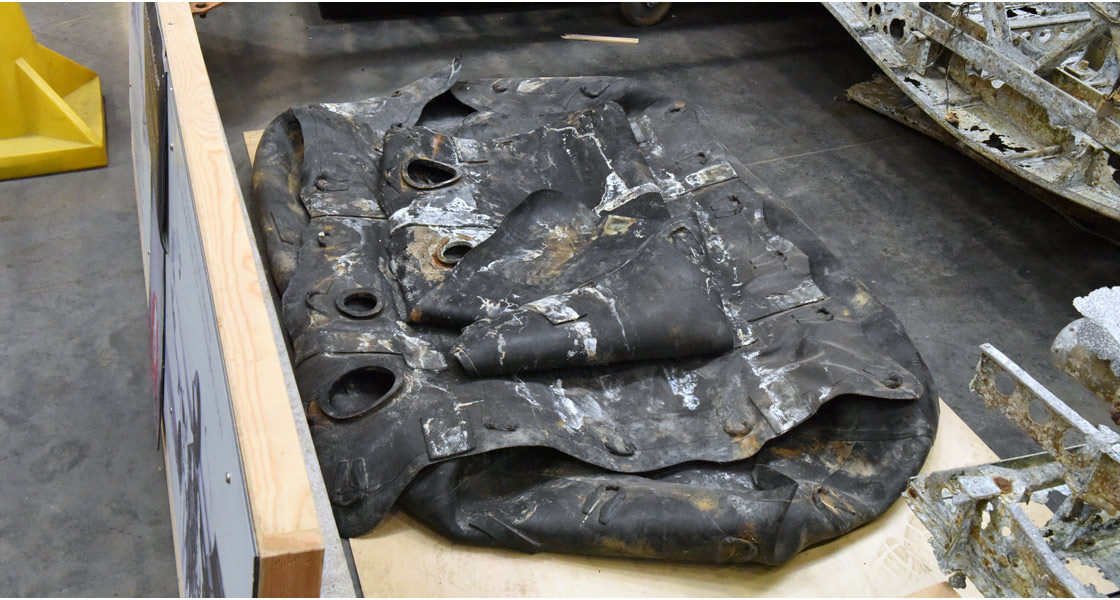
One of the aircraft’s fuel tanks, which appears to be in remarkably good condition.
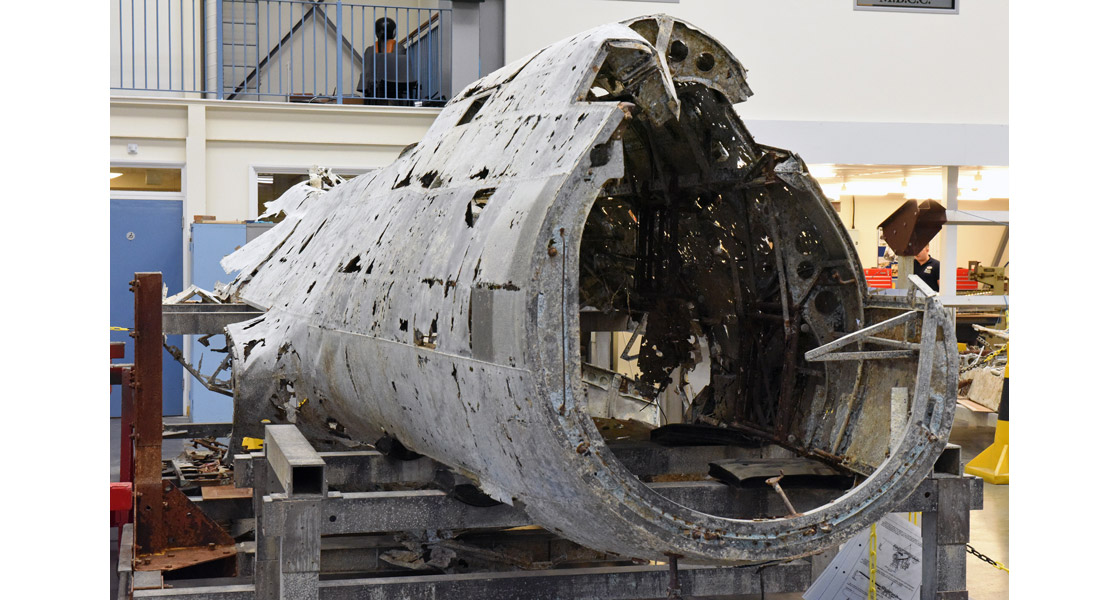
Although classed as a ‘Fast Bomber’ this image shows that conditions for the four-man crew would have been pretty cramped in the confines of this rather narrow fuselage.
The aircraft approached the sea at high speed and, despite his injuries, the pilot managed to configure his Dornier for the emergency landing. Unfortunately, due to the speed at which the aircraft hit the shallow water, it came to rest having dug into the sand just under the surface of the water and flipped over onto its back, coming to rest upside down on the sands. Both Effmert and Ritzel survived the incident to become prisoners of war, but their two comrades Helmut Reinhardt and Heinz Huhn tragically lost their lives. Their bodies were washed up on either side of the English Channel over the next few days. As for their aircraft, the notorious shifting Goodwin Sands would soon swallow up the stricken Luftwaffe bomber and hold on to their aviation secret for the next 70 years.
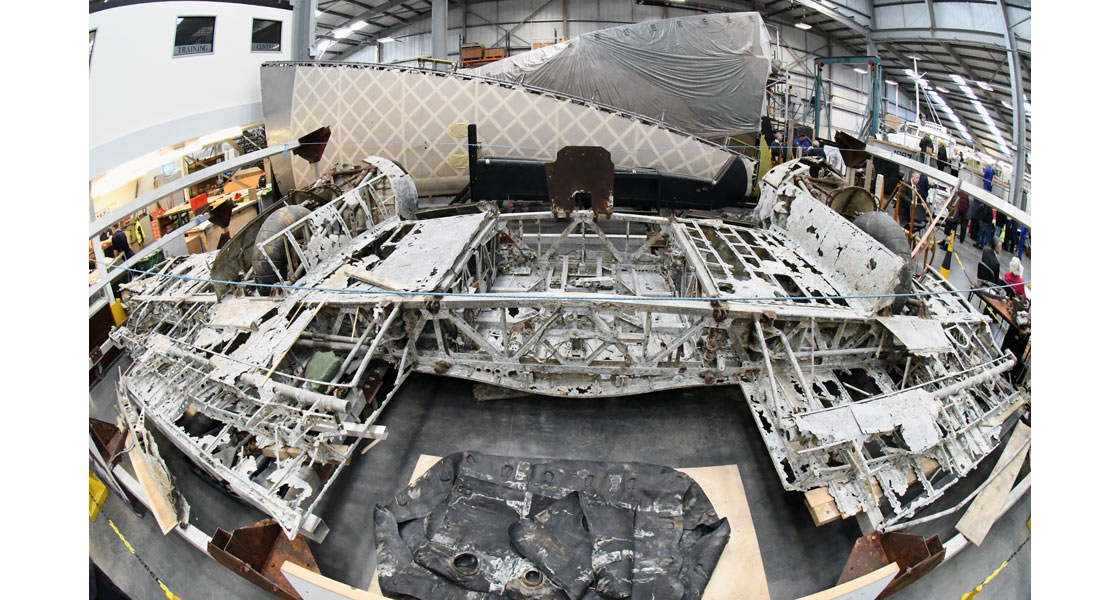
Wide angle view of the main wing section of this famous Luftwaffe bomber.
Any aviation enthusiast will tell you that most aircraft have an interesting story to tell, but there are some which possess such fascinating history that if you have the chance to get close to them, it is an experience which you will hold dear. Although there is still much work to do on the restoration of this magnificent aircraft, its historic provenance surely makes this one of the most important aviation projects anywhere in the world. With it now residing in Cosford’s conservation centre, access is likely to be restricted, but if you have the opportunity to attend one of their future open week events, you will not be disappointed. The Dornier alone is worth the paltry five pounds entrance fee, and I am looking forward to my next visit.
I’m afraid that’s all we have for you this time, but we will be back again in four weeks’ time with more news and pictures from the world of aviation. Thank you for your continued support and as always, if you would like to comment on anything blog related or suggest a subject you would like to see covered in a future edition of Aerodrome, please do drop us a line at aerodrome@airfix.com, where we would be delighted to hear from you.
Should you wish to continue the aviation discussions between editions, you will always find something of interest over on the Airfix Aerodrome Forum and if social media is more your thing, please use the respective official social media icon links at the foot of the main Airfix and Corgi website homepages to access our official sites.
The next edition of Aerodrome is scheduled to be published on Friday 13th September, where we hope to bringyou another feature linked to the fascinating world of historic aviation.
See you all back here then.
Michael