
Welcome to this latest edition of Aerodrome and our regular look at the fascinating world of aeroplanes and the historic aviation scene around the UK.
With over eleven years of Aerodrome blogs now under our belt, it’s always nice to try an edition format that’s just that little bit different, a subject which is still topical and contemporary, but flies off in a slightly different presentation direction, and that’s exactly what we have for you this time around. Our subject and location may well have featured in previous editions over the years, but the reason and photographic presentation most definitely have not.
In this latest edition of Aerodrome, we’re entering the lair of Dragon Zero One, and in advance of this year’s Airshow season, we will be enjoying one of Flt Lt Tom Nation’s low level practice displays in advance of his starring role on this year’s Airshow circuit. Attending RAF Coningsby on a bright but blustery day in April, I got myself in a position from where to watch the only practice display sortie of the day, and I look forward to bringing you the photographic record of my experience.
Hopefully bringing you a little preview of the excitement we can all look forward to over the coming months, we have pictures of a Welsh dragon flying over the hardened aircraft shelters at RAF Coningsby in this latest edition of Aerodrome.
Home for retired RAF Fighters. Coningsby can also boast at least one example of the English Electric lightning on site.
As one of the countries most active military stations, and home of the RAF’s southern Quick Reaction Alert response capability, Royal Air Force Coningsby is a destination familiar to many thousands of people across the country, both confirmed enthusiasts and those with a more relaxed interest in all matters aeroplanes. Usually assured of seeing some aviation action on whichever day you decide to visit, this usually dictates than on any given day, all available car parking spaces are quickly claimed, and there are hundreds of people clinging to the perimeter fence, many with cameras and big lenses in hand.
RAF Coningsby is home to two front line combat ready Squadrons, with both Nos 3 and XI Squadrons flying the extremely capable Eurofighter Typhoon FGR4 in an air defence role, also sharing southern QRA responsibilities for the nation between them. These aircraft occupy the hardened aircraft shelter complex at the southern side of the airfield and when you see aircraft taxiing out from this side of the runway, you know these boys mean business.
Taking up station on the other side of the airfield, the Typhoons of three other units also call Coningsby home, each one responsible for the vital training and conversion of new Typhoon pilots, or engaged in the test and evaluation of new weapons and tactics potentially destined to be used on Typhoon. RAF No.29(R) Squadron is charged with training pilots to fly the multi-role capable Eurofighter Typhoon FGR4, but of greater significance to the enthusiast, are also responsible for providing the aircraft, pilot and support for the RAF Typhoon Display Team, probably the highest profile public facing unit in the entire force.
The RAF’s current display aircraft shares the ramp at Coningsby with No.41(R) Test and Evaluation Squadron, a unit which operates the Typhoon in a truly fascinating role. Part of the RAF’s Air & Space Warfare Centre (which is based at Waddington), this unit works closely with front line squadrons, defence manufacturers and research institutions to develop and evaluate the next generation of aircraft technology, weapons and avionics, flying their aircraft regularly in support of this role.
Since the summer of 2018, this busy airfield has also been home to No.12(B) Squadron and a unique aviation collaboration between the United Kingdom and the Qatar Emiri Air Force. Providing air and ground training for Qatari personnel in the operation of the Typhoon FGR4 multi role aircraft, this initiative is in support of Qatar’s decision to purchase 24 of these awesomely capable jets, helping to establish them as an effective fighting force, in advance of their deployment back to home airspace.
Always a nice catch, the two seat Typhoon T.3 is operated in far fewer numbers than their single seat relatives.
With many of the unit’s aircraft featuring a uniquely modified version of the Squadron’s famous crest, featuring a fox’s head and the flags of both Britain and Qatar, these training aircraft are just one of the many reasons why a visit to RAF Coningsby is at least an annual pilgrimage for many enthusiasts, offering plenty of opportunities for lose looking to document their visit through the medium of photography.
For those who know where to look, although the RAF’s current air policing multi-role jet hot rod and its talented pilots are the main attraction on any visit to Coningsby, there’s also the opportunity to admire a beautiful example of arguably the most famous British jet interceptor of them all during your visit. The English Electric Lightning earned a reputation as a Cold War icon, an aeroplane possessing such stellar performance that it was said to climb skywards like a homesick angel, and there’s one at RAF Coningsby.
Whilst waiting for the action to start, a trip to the end of Old Fen Lane will not only allow visitors to get much closer to the active area of the base, and close to the HAS site, but walking right down to the base gate will reveal something rather unexpected – a preserved English Electric Lightning.
Resplendent in an unusual RAF No.11 Squadron scheme, this aircraft underwent this presentation transformation whilst the squadron was still based at Leeming. She was already serving as a gate guardian back then, however, as the unit were in the process of retiring their Tornado F.3 fighters at the time, it was decided to give their much loved Lightning something of a makeover. Although not exactly authentic from a scheme perspective, the Lightning was something of a looker, and it didn’t take long for her to become a firm favourite with squadron members and aviation enthusiasts alike.
Following No.11 Squadron’s transition to the Eurofighter Typhoon, and the relocation of their operating facilities to Coningsby, squadron members felt it appropriate that their beloved Lightning should be allowed to relocate with them, and so in 2007, she duly arrived at her new home, eventually taking up residence outside the squadron’s new HAS site. She can still be seen there today, and is such a beautiful aeroplane that once seen, she’s definitely never forgotten.
That wasn’t a bad start to the day, was it.
A day spent at RAF Coningsby is always about the Typhoon action.
Always keen to make any visit to Coningsby in view of my normal work commitments, this latest visit was something different, and something I was quite excited at the prospect of experiencing. For years, I had been quite envious of all those enthusiasts who were able to be at the airfield whilst that year’s RAF Typhoon Display pilot was going through his display routine paces. In advance of the coming Airshow season, the current display pilot would embark on a program of display practice flights, usually beginning at higher altitude, then gradually working lower as they became more confident and more proficient with the routine.
Once a series of display height demonstrations had been successfully completed by the pair, the pilot and his display apply to be granted their Public Display Authority, which is essentially their ‘Commands’ seal of approval to represent the Royal Air Force at Airshows and events across the country and often internationally. These practice displays are arguably even more exciting than an Airshow performance, as the pilot is displaying over his home airfield, a location he’s obviously incredibly familiar with, and knowing that many of his peers and colleagues will be watching on with interest.
Due to the work pressures mentioned previously, my latest visit was the first time I had been able to go when it coincided with a scheduled practice display flight for the new Typhoon pilot, and even though I was fully aware that having slots booked didn’t mean they would definitely be used, I headed for Lincolnshire full of optimism and with no little excitement.
Giddy as a kid at Christmas, I left home far too early, just on the off chance that there might still be traffic problems even before the rest of the nation was still in bed, and arrived at Coningsby in good time to assess several different vantage points, before finally selecting the one which appeared right for me. It was now just a matter of settling in until all the action started, with the hope of seeing plenty of base flying activity until the real reason for my visit blasted into the air. With display slots booked for 10.00 and 14.00, I knew it was most likely that only one would be taken, but that was okay, just as long as I got to see it.
If the BBMF Chipmunks could get up in this wind, then surely I was going to see a Typhoon practice display.
As I waited to hear the sound of engines starting to spool up, I did start to notice the first sign of a potential problem. Although it was a bright, blue sky day, the wind was the devil’s own, biting cold and gusting to levels which certainly would have impacted the operation of some of the more historic aircraft based at the airfield, if not the Typhoons. Thankfully, it didn’t take too long before Typhoons started to launch, and even though 10am came and went without a display slot being filled, it appeared as if the conditions weren’t going to deter the days planned activities.
Although I had thought the conditions too gusty for some of the lighter aircraft at Coningsby to be taking to the air, the Battle of Britain Memorial Flight’s two de Havilland Chipmunks entertained everyone around the airfield with some spirited flying around lunch time, performing multiple circuits and bumps, as if they had the airspace entirely to themselves. Reassuringly, if they were up for some practice flying, then surely I was going to see a Typhoon display on that day.
As 2pm approached, it was make or break time. The wind direction wasn’t really helping when it came to listening for the sound of starting engines, but keeping an eye on social media soon provided the advance notification I was hoping for – the display jet was being readied for flight. There was no time to worry now. The position I had selected was the one I was going to have to go with, and even though the wind was buffeting me and my camera lens around like no tomorrow, I could always increase the shutter speed to hopefully allow for some appealing shots of the display.
As the display Typhoon raced down the runway, the entertainment was about to begin, it was showtime!
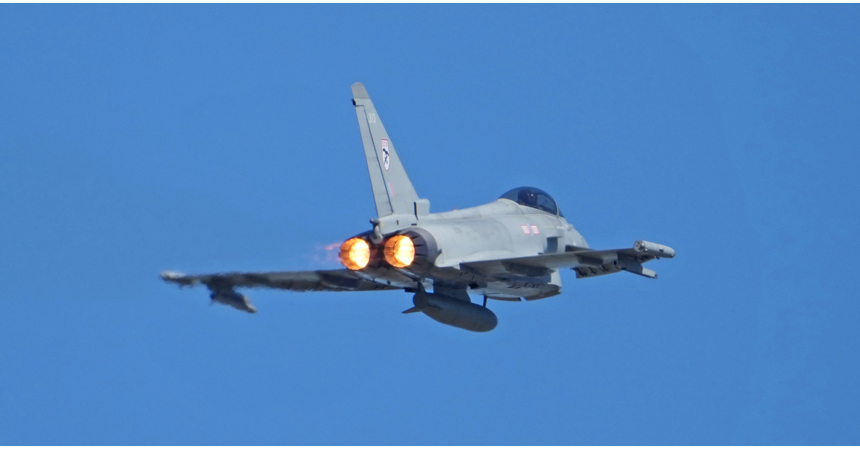
One of the most popular components of any Airshow where it’s scheduled to perform, the RAF Typhoon Display is all noise, high energy manoeuvres and high speed passed, with plenty of afterburner thrown in for good measure. It also makes a celebrity of the display pilot for the year, and when he turns up at the Typhoon Display marquee either before or after one of his performances, he’s always the centre of attention, and must be left with some idea of how a rock star, or top Premier League footballer must feel from a public adoration perspective.
There was some Typhoon action taking place during the morning, but it was a DRAGON I was hoping to see.
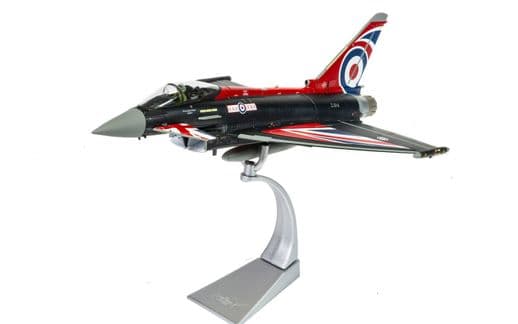
This year’s Royal Air Force Typhoon Display pilot is proud Welshman Flight Lieutenant Tom Nation, a man who has been flying Typhoons since 2021, and already has several significant overseas deployments under his belt, including time spent patrolling the skies over the Falkland Islands. Heralding from South Wales, Tom will be bringing his country’s national symbol with him to an Airshow near you in the very near future, as his callsign for the year is rather fittingly DRAGON 01. When Tom and his Typhoon are in town, you can expect them to be bringing plenty of noise and plenty of fire (well, afterburner)!
As for this first practice display experience, I have to say that it was quite the treat. Positioned on the opposite side of the airfield to where the crowd would usually be watching the display, much of the action was taking place right over my head, so with the speed of the dynamic manoeuvres, and the effects of the wind buffeting my lens, it wasn’t always easy to pan with the action smoothly. Having said that, it was spectacular and I can confirm that we’re all in for a treat over the coming months, and if we like our Airshow performances loud and flamboyant, we’re not going to be disappointed – it’s definitely going to be the year of the Dragon.
With the display introductions now made, and with the anticipation levels at the max, please enjoy this selection of practice display images which were all taken on the day. I just hope that I’ve managed to capture just how exciting this year’s RAF Typhoon Display routine is, because it’s spectacular.
How I love my visits to Coningsby.
DRAGON 01 in the house, or should that be over the house!
I’m afraid that’s all we have for you this time around, however, we’ll be back again in four weeks’ time with more news, updates and pictures from the fascinating world of aviation. Thank you for your continued support and as always, if you would like to comment on anything blog related or suggest a subject you would like to see covered in a future edition of Aerodrome, please do drop us a line at aerodrome@airfix.com, where we would be delighted to hear from you.
Should you wish to continue the aviation discussions between editions, you will always find something of interest over on the Airfix Aerodrome Forum and if social media is more your thing, please use the respective official social media icon links at the bottom of the main Airfix and Corgi website homepages to access our official sites.
The next edition of Aerodrome is scheduled to be published on Friday 12th June, and we look forward to sharing more aviation inspired content with you then.
I hope to see you all back here in four weeks.
Michael