

Welcome to this latest edition of Aerodrome and our regular look at the fascinating world of aeroplanes and the historic aviation scene around the UK.
As we currently find ourselves in the madness of RIAT week, with much still to do prior to the attendance of teams from both Airfix and Corgi at this year’s show, rather than delay or defer this latest edition of Aerodrome, we’ve decided to do something slightly different with this latest instalment. Rather than bringing you a full show or photoshoot review, we will be looking at an individual aircraft from the recent Shuttleworth Festival of Flight weekend, an aircraft which for many people was the undoubted highlight of the show, the feisty little Commonwealth Aircraft Corporation CA-13 Boomerang fighter. In addition to bringing you a selection of images taken at what was a truly magnificent show, we will also look at the interesting story behind the introduction of this indigenous WWII fighter type, and why it’s such an important aircraft for Australian people.
As it’s RIAT week and for many of us, that means the most important week in our social calendar, we will also be celebrating by revisiting our very first Aerodrome post from this aviation extravaganza, looking at some of the highlights of the 2015 event.
Strap yourselves in for a wild aviation ride in this latest edition of Airfix and Corgi Aerodrome.
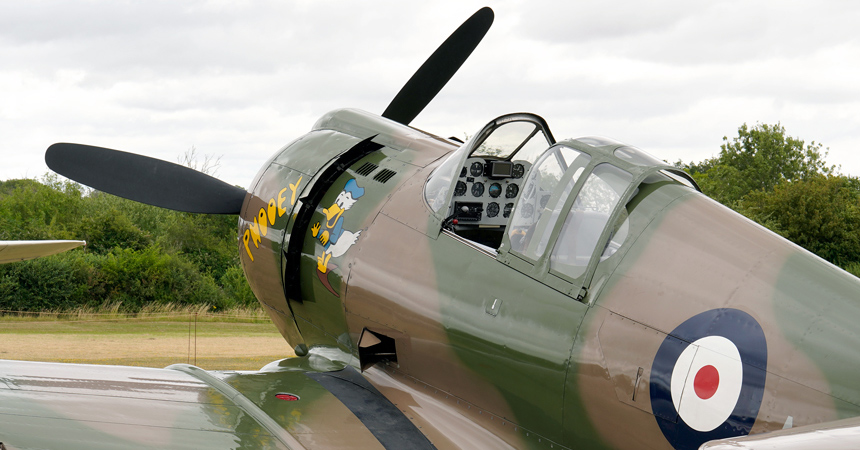
This beautiful Boomerang fighter was making its UK mainland Airshow debut at the recent Shuttleworth Festival of Flight show.
The beautiful grass airfield at Old Warden has long held a special place in the hearts of aviation enthusiasts and photographers across the country, and is considered by many to be one of the finest venues in the world from where to see classic aeroplanes being displayed the way they should be, with style. Despite having this enviable reputation which has been earned over many years, the organising team behind these shows rarely rest on their Airshow laurels, and are always looking for new ways in which to entertain their loyal supporters, and make every event a memorable one for them.
In addition to thinking about showground layout and including attractions to keep every member of a visiting family happy and entertained throughout a long Airshow day, they never neglect the flying programme, and if they’re not arranging imaginative and highly photogenic formation flypasts, they look to invite some of the most appealing guest aircraft acts to take part in their shows. The recently held Festival of Flight weekend was a point in case, with much to get excited about even before the full visiting aircraft lineup was announced, however, they had an ace aircraft addition up their sleeves, one which certainly had me planning another early morning sortie down to rural Bedfordshire.
For a seasoned Airshow veteran, the opportunity to see a new historic aircraft type for the first time, is one which will always have us considering show attendance, no matter where that show might be located in the country, and if that aircraft would be making its UK mainland debut appearance, well, that’s a guaranteed certainty. Despite already promising a stellar line up which included the BBMF Lancaster, the Red Arrows, a Nieuport 23 replica from Switzerland and a Vought F4U-5NL Corsair from Germany, they also secured a rare Commonwealth CA-13 Boomerang fighter. No question about it, I simply had to be there to see that.
Although Europe had already been consumed by the flames of war for over two years by the start of December 1941, the fighting must have seemed another world away for the majority of the Australian population, despite the fact that their servicemen had been fighting overseas since the very beginning. That situation would change significantly during a historic and frightening ten day period at the start of December 1941, as a Japanese nation which had long since posed a potential expansionist military threat throughout the Pacific region, struck two devastating blows which brought the war right to Australian shores.
Part of the overseas aircraft participation secured for what was a thoroughly enjoyable show.
Firstly, their devastating surprise attack against US forces stationed at Pearl Harbor would effectively make this a global conflict, but perhaps of even greater immediate significance, just three days later, the sinking of the British warships Prince of Wales and Repulse off the Malayan coast now left Australia dangerously exposed.
With these mighty ships effectively acting as a last line of defence against Japanese aggression in the region, their destruction was clearly an absolute catastrophe for Britain, but also for a now terrified Australian population. Not only had this development highlighted how the technology of war had moved on significantly and how the once mighty Battleship could no longer defend itself against air power, but also the loss of the British ships also now allowed Japan to expand its influence across the entire Southeast Asia region virtually unopposed, and Australia was now right in their firing line.
Looking back a little further still, with another war looking increasingly likely during the mid 1930s, Australia's heavy manufacturing industries, particularly those involved in the production of aeroplanes, found themselves lagging well behind those of its counterparts in the US, Europe and Japan. With these nations busy producing a new generation of fighting machines to bolster their forces, relying on overseas suppliers for things like modern aircraft might leave Australia incredibly vulnerable and something had to be done about the situation.
To this end, several of the country's largest and most progressive companies joined forces to establish the Commonwealth Aircraft Corporation and signed a licence agreement to produce the US North American NA-16 trainer, in addition to the Pratt & Whitney R-1340 Wasp engine it used. Importantly, the agreement allowed CAC to modify the officially licenced designs in line with Australian requirements, with the first aircraft to emerge from this agreement being the CAC Wirraway trainer/general purpose aircraft.
A debut performance of distinction, this CAC Boomerang was the star aviation attraction for many at the show.
The establishment of the CAC facility and indeed the production of the Wirraway trainer, would be significant in the subsequent decision to produce a new indigenous fighter aircraft for the Royal Australian Air Force, and would even influence its design. In the immediate aftermath of the sinking of Repulse and the Prince of Wales, officials at the CAC factory instructed their design team to start work on the development of a new fighter aircraft as a ‘super priority project’ and as the situation was so pressing, their design must incorporate as many manufacturing components from the Wirraway production line as possible. This would see the new fighter utilising the undercarriage, wing centre sections and fuselage sections of the trainer in its construction, in addition to using the licence built Pratt & Whitney R-1830 Twin Wasp as its powerplant.
It has to be understood that Australia didn’t have a home defence fighter in service at that time, and with the threat of Japanese aerial attack now being a very real one, this situation had to be addressed without delay. The production of an indigenous design offered the potential that hundreds of fighters could be produced for the defence of Australian territory, without having to wait for help from their Allies, even if this new aircraft was only something of a stopgap until more modern, foreign aircraft types could be introduced.
The Boomerang fighter project therefore proceeded at breakneck pace, with the design work proceeding directly to production without a prototype aircraft first being manufactured and evaluated in the usual manner, such was Australia's predicament. It has to be noted that at that time and with the Japanese threatening the entire Pacific region, Australia was without a front-line home defence fighter and as they could be facing the legendary Mitsubishi Zero at any moment, they didn’t have the luxury of time when it came to developing the Boomerang. In what proved to be an incredible feat of engineering and manufacturing prowess, the first Boomerang fighter took to the air on 29th May 1942, only around three months since the order for CAC to proceed was given, and incredibly, just 173 days since the Japanese attack on Pearl Harbour.
With the strict design and production parameters placed on the team working to produce Australia's first indigenously designed and manufactured interceptor fighter, it’s perhaps not surprising to learn that the aircraft wasn’t exactly a world-beater from a performance perspective, and certainly looked very different to other front line fighters of the era. With the aircraft likely to be facing the deadly Japanese Mitsubishi Zero in combat, a rather unkind, but not altogether inaccurate description of the Australian fighter might be that it looked like a less refined, and much more chunky interpretation of the thoroughbred Mitsubishi fighter, and whilst it would not be able to match the nimble Zero in aerial combat, it did have several extremely impressive features to bring to the fight.
It has to be remembered that the Boomerang was designed and built in extremely short order, in addition to having to make use of exiting components and powerplant right from the outset, compromises few other aircraft designs would have imposed on them. The new fighter was armed with two 20mm cannons and four .303 calibre machine guns, all in the wings and representing quite heavy firepower for this little fighter. The cannon also highlighted the incredible ingenuity of the CAC engineers, as the lack of an available supply of suitable guns led them to reverse engineer the single example of a Hispano Suiza HS.404 20mm cannon they did have access to – all rather impressive.
In a strike/attack role, the little fighter could also be fitted with a modest bomb load and unlike the Japanese aircraft it would face in combat, provided good protection for the pilot and other vital components, incorporating the use of armour plating. The licence built Pratt & Whitney engine could pull the Boomerang to speeds of around 310mph and at lower altitudes, the fighter actually possessed impressive manoeuvrability.
From a pilot's perspective, the Boomerang was a delight to fly, with its short, thick wing endowing it with great performance below 15,000 feet, with the general stability of the aircraft providing a sense of security for pilots flying the aircraft operationally. As a combat fighter however, it has to be said that the Boomerang was something of a disappointment, with its poor high altitude performance making the fighter almost useless against high flying enemy bombers.
Nevertheless, Australia now had their first fighter to be designed and produced at home, and as a consequence, now had many more aircraft with which to meet the challenge being posed by Japanese forces. During a production period which lasted from the middle of 1942 until early 1945, a total of 249 of these diminutive fighters would be produced by the Commonwealth Aircraft Corporation, for use in both defensive and offensive operations at home, and across the Pacific Theatre.
An important home produced fighter for the Royal Australian Air Force, the Boomerang allowed the country to bolster their defensive capabilities in anticipation of an attack by Japanese forces.
The first production Boomerang fighters were supplied to No.2 Operational Training Unit, with the intention of training new pilots who were destined to fly the new fighter once posted to operational squadrons. Many of those pilots would have just qualified on the CAC Wirraway trainer and as the two aircraft shared quite a number of common construction components, it was hoped that this conversion between types would be relatively trouble free.
Unfortunately, that proved not to be the case, and students complained about the poor forward visibility from the cockpit of the Boomerang, something which was made worse by the positioning of the fighter's gunsight. The repositioning of this unit proved to be a quick and relatively painless solution, however, there was little that could be done about the location of the engine!
The Boomerang proved to be rather an exhilarating aeroplane to fly, particularly at lower altitudes, where its excellent manoeuvrability and heavy armament gave pilots the feeling that they would be able to hold their own against any enemy aircraft they came up against. That confidence quickly evaporated when combat operations took them to higher altitudes, where the aircraft was simply outclassed. Former Boomerang pilots recounting their combat experiences described how its performance above 20,000 feet was little better than useless, something which quickly called into question its 'interceptor' title.
The Boomerang would struggle to overcome the agile Mitsubishi Zero in combat, particularly if the engagement was at higher altitudes.
Once Japanese bomber pilots worked out the limitations of Australia's new fighters, they simply flew bombing sorties at higher altitudes, where the Boomerang couldn’t operate effectively. Whilst the Australian fighters may have been in the same airspace, their pilots could do little more than watch the enemy bombers proceed towards their assigned targets.
During initial performance trials, the CAC Boomerang was found to be largely comparable with the Brewster Buffalo, an aircraft which had been in widescale service throughout the Pacific Theatre to that point, and one with which it shared many visual similarities. One Buffalo was even stripped down and had its centre of gravity altered, in an attempt to simulate the performance of the Japanese Zero, and during subsequent mock combat trials, the Boomerang was able to just about hold its own below altitudes of 15,000 feet. At altitudes higher than this, it was a very different story, and its performance fell away dramatically - indeed, it was found to be inferior to most modern fighting aeroplanes in combat performance terms at higher altitudes.
The Boomerang would continue to be developed throughout the war and later, more powerful variants were 'officially' rated as comparing favourably with the Spitfire Mk.V and Republic Thunderbolt in performance terms. Thankfully, by this stage of the war, Australia had access to large numbers of Spitfires and had North American Mustangs on order, so this theoretical parity in performance for CAC Boomerangs was never put to the test operationally.
First pass from the Warbird Display Team’s CAC CA-13 Boomerang and Yak 3.
Although few people would describe the CAC Boomerang as one of the Second World War’s premier fighter types, its development history makes it interesting in the extreme, not to mention the fact that as an indigenous Australian type, they have historically been incredibly rare visitors to Europe and the UK.
As you might imagine, the Boomerang is incredibly important to Australia’s aviation heritage and as such, the return of one to world skies has been celebrated as a big deal with enthusiasts down under. The aircraft which proved such a popular addition to the Shuttleworth show is actually a composite rebuild, assembled using parts from several different aircraft, including parts and the assumed identity of Boomerang A46-139/QE-A (c/n962), but also using parts from North American A-6 Texan aircraft.
The restoration work was carried out in the US, with the aircraft’s first flight taking place on 20th July 1991, and whilst the aircraft has been a long time resident in Europe, its owners have elected to retain its US registration. Thought to currently be one of only 3 airworthy examples of this aircraft flying, and the only one in European skies, there are several ongoing projects which may see this number double in the near future, even though these aircraft will all be based in Australia. That makes the opportunity to see this aircraft at a UK Airshow all the more memorable.
Taking the adoration of an appreciative crowd, the Boomerang made quite an impression at the Festival of Flight Airshow this year.
Performing under cloudless blue skies at Old Warden, the Boomerang’s debut at the recent Festival of Flight show was truly spectacular, and whilst this little Australian fighter would never claim to possess the performance of aircraft such as the Spitfire and Mustang, it actually put in quite the display performance. Obviously, an Airshow display takes place at the lower altitudes where the performance of the Boomerang was most effective, and it has to be said that on this evidence, the Boomerang appeared to be at least as manoeuvrable as the other WWII fighters we regularly see displaying at Old Warden and more than capable of looking after itself in a combat situation.
Performing with the Yak 3 which is also owned by the Dutch based Warbird Display Team, as a number of acts had cancelled due to a strong crosswind, we were treated to an extended display by the pair, which meant that this debut performance was a memorable one for sure. For those who made the journey to see this diminutive Australian fighter, they were rewarded with an exceptional display, and an interesting new type successfully crossed off our ‘must see’ list.
A fitting highlight to an extremely memorable show, our congratulations must go out to the organising team behind the Festival of Flight Airshow for a job very well done.
You don’t see sights like this anymore!
For those readers who have been with us on our Aerodrome journey since the very beginning, they will be aware that we’re celebrating our 10th Anniversary this year, something we intend to commemorate in some style a little later in the year. As I’m about to head off to RIAT myself, and there’s still much to do, I’m already on borrowed time, and have to get this blog finished and posted, but before I do, I thought it might be interesting to look at some of the star items from the first Royal International Air Tattoo your roving Aerodrome reporter attended, whilst in position.
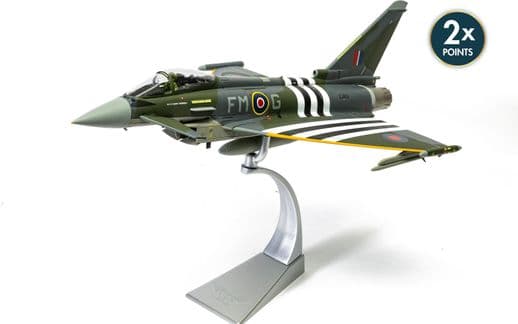
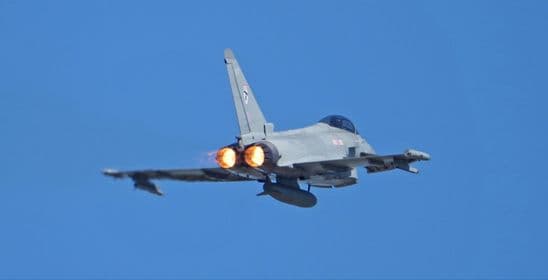
We’ll have further details regarding our anniversary celebrations in the next edition of Aerodrome, but for now, we’re heading back to RIAT weekend ten years ago, in the company of an unusually presented RAF Eurofighter Typhoon, and an aircraft which was the darling of the UK Airshow scene.
The 2015 show was celebrating the 35th anniversary of the Trinational Tornado Training Establishment, with this display featuring Tornado’s from Italy, Britain and Germany.
Another Tornado tribute.
This beautiful Kawasaki P.1 from the Japanese Maritime Self Defence Force was definitely one of the most attractive aircraft at the 2015 show.
Always a popular performer, the Bell/Boeing CV-22B Osprey.
Now for some classic aviation action, and an undoubted highlight of the show which took place ten years ago, the EADS Messerschmitt Bf 109G.
One for the home side, the Seafire XVI is always a welcome addition to any Airshow program.
An unusual sight at a Fairford show, this magnificent Blenheim is the only airworthy example of the type anywhere in the world.
One of the most popular schemes ever applied to an RAF Eurofighter Typhoon, how we miss GINA.
Corgi launched their die-cast tribute to GINA at the 2015 show, and this member of the team was going for a ‘Real versus Corgi’ shot.
Another shot of the 1/72nd scale Corgi GINA Typhoon, this time in the wing of the Historic Aircraft Collection’s Hawker Hurricane XIIa.
If only there could be an A-10C Thunderbolt II at this year’s show.
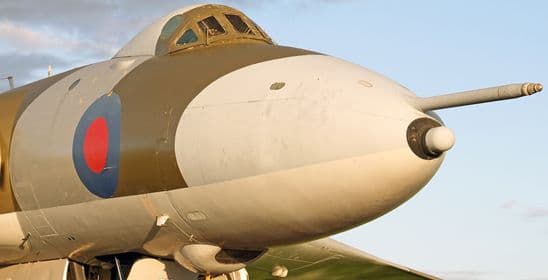
Once seen, never forgotten, Avro Vulcan B.2 XH558 was the undisputed king of the UK Airshow circuit.
Not bad for a tail-end image!
I’m afraid that’s all we have for you in this latest edition of Aerodrome, however, we’ll be back again in four weeks’ time with more news and pictures from the fascinating world of aviation. Thank you for your continued support and as always, if you would like to comment on anything blog related or suggest a subject you would like to see covered in a future edition of Aerodrome, please do drop us a line at aerodrome@airfix.com, where we would be delighted to hear from you.
Should you wish to continue the aviation discussions between editions, you will always find something of interest over on the Airfix Aerodrome Forum and if social media is more your thing, please use the respective official social media icon links at the foot of the main Airfix and Corgi website homepages to access our official sites.
The next edition of Aerodrome is scheduled to be published on Friday 15th August, by which time we will have hopefully recovered from our latest RIAT attendance.
I hope to see you all back here then.
Michael