

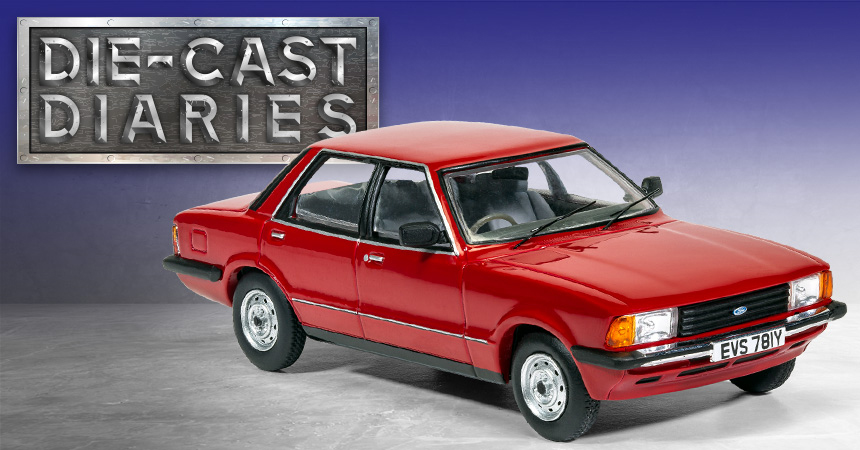
Welcome to the latest edition of Corgi Die-cast Diaries, your regular blog review of all the news, updates and topical stories from the captivating world of Corgi die-cast model collecting.
Although they are created from model tooling designs which are still very much in their early days, it can often be the case (for one reason or another) that the second release from a particular model tooling doesn't attract quite the same blog attention as its predecessor, even though the models turn out to be just as popular. We didn't think that was quite the ticket, so in this latest edition of Die-cast Diaries, we will be seeing how in the case of a pair new/impending model releases, it's most definitely a case of 'Second time's a Charm' when it comes to Corgi.
Starting with our Vanguards range, we will be featuring a selection of exclusive production sample images of the second release from our Ford Cortina Mk V tooling to illustrate how this next model will certainly rival the previous release in the collector popularity stakes, before moving on to focus on a new Aviation Archive release which has an extremely tough act to follow. In addition to this, we will have a further selection of images featuring final production sample models from two other impending releases and a couple of teaser images from a very special launch event day we attended this week, one we will be telling you about in the very near future. We have much to get through, so let's begin with our latest tribute to Dagenham's legacy of producing some particularly noteworthy motoring delights.
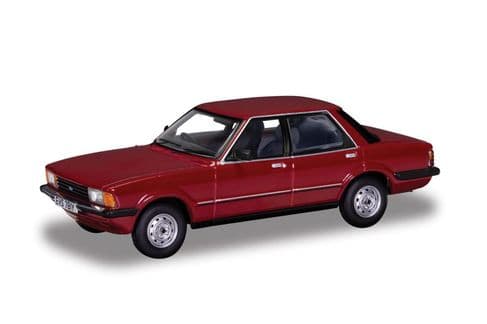
When it comes to the world of Vanguards model collecting, some of the most popular releases are representations of classic family cars, as opposed to prestige or supercars. This is a production sample model of the second release from the new Cortina Mk.5 tooling.
When it comes to the world of motoring, how would you describe the credentials for a model of car to be considered a classic? Would it be a car that many people would aspire to owning, even though in reality, only a wealthy few could, or would a car that has sold more units than any other in a particular country be a more suitable candidate? Whilst this question is clearly open to both interpretation and further debate, surely a car which could boast stylish design, was reliable to operate and intended to support the mobility of families up and down the country must surely be up for consideration, even if it wasn't the worlds most expensive car or the one produced in the greatest numbers.
If that were the criteria, then Ford's Cortina series must surely be in with a shout, a generation of cars which all shared the same model name, but were a strategic attempt by this famous automotive company to produce a popular car which would satisfy the motoring requirements of the average British family. From a strategic perspective, it was also a car intended to challenge the market share of rival companies like BMC and Vauxhall at the time of launch and to become one of the most popular vehicles on Britain's roads. Using existing construction techniques, particular emphasis was placed on keen pricing and mechanical reliability, but most definitely not at the expense of styling - the Cortina was always intended to be a bit of a looker and by adding a little motorsport success into the mix, Ford quickly found that they had a popular motoring winner on their hands.
Regularly updating the original Mk.I design to keep the range fresh and relevant to their customers, the Cortina became so popular with British motorists that the Ford marketing department confidently proclaimed that the only car any new Cortina model release had to beat was the old Cortina it was replacing and as it went on to be the best selling family car in the country on several occasions, it seems as if their boast was not without substance.
Arriving on the British motoring scene from September 1962 onwards, last year marked the 60th anniversary of its introduction and a series of five different versions of the car which would go on to become staple motoring fare for families up and down the country, not to mention the nation’s army of travelling salespeople who chewed up the miles across our motorway network. Incidentally, marking the opposite end of Cortina production in the UK, last year also marked 40 years since the final Cortina rolled off the production line, making it quite an anniversary year for the car.
First launched in 1979, the angular and purposeful styling of the Mk 5 iteration of the Cortina could be seen in the driveways of homes the length and breadth of the country, taking families to work, school and on their holidays, whilst also being the car of choice for companies looking to effectively equip their mobile salesforce. More than 2.8 million Cortinas were sold during the car’s 20 year production run, a figure which clearly underlines its importance in the history of British motoring and how therefore by association, why it is of such interest to Corgi model designers.
With the final Mark 5 variant of the Cortina missing from our Vanguards range until last year, it came as no surprise to find that the first release from this new model tooling proved to be a popular addition to the range for many collectors and we are therefore delighted to confirm the impending release of the second model from this tooling, an example of a true British family motoring classic.
VA15002 - Ford Cortina Mk5 1.6L in Cardinal Red.
The Cortina modelled here was sold new by Ford dealer Jack Bygraves Ltd, Biggleswade, in August 1982. The first owner paid for the car to be rust proofed by ‘Protectol’ and that may have contributed to its remarkable survival. It was taken off the road in 1997 having covered just 61,605 miles and in 2014 was donated to the Thames Valley Air Ambulance who carried out some recommissioning and entered the car for the Classics on the Crick Auction on Sunday June 11th to raise funds for their vital work. It achieved £1800 and the winning bidder was William Le Fevre, the managing director of the North Oxford BMW and MINI dealership in Long Hanborough.
Le Fevre’s plan was to restore it in the firm’s state-of-the-art bodyshop and then auction it to raise funds for another local charity, Sobell House Hospice. The Bodyshop Team donated their spare time and skills (and nicknamed the car ‘Elvis’ because of its number plate), while the company donated the parts and materials needed to totally restore the car to its original specification. They achieved a stunning result, and the finished car was featured in Classic Ford Magazine as an example of first-class restoration. The firm’s buyer, Jonathan Martin, then arranged a sale which raised £3,000 for Sobell House. Since February 2020 it has been owned by Essex-based, long-standing Ford enthusiasts Lesley and Andrew Day, who enjoy using it for classic car events.
The images included above both feature an advanced production sample of a new model which will surely bring back many pleasant motoring memories for thousands of people and we expect this second release from the new Cortina Mk 5 tooling to be available by the end of this month.
A top of the range example of an earlier styling incarnation of the Ford Cortina, this beautiful new model is destined to be a popular impending addition to the Vanguards range.
As if to illustrate the enduring popularity of the Ford Cortina series in Vanguards scale model form, the impending twentieth release from our Mk 3 tooling variant is about to be released at the same time as the second Mk 5 model and interestingly, is already fully allocated on the Corgi website. An extremely smart upmarket version of this perennial motoring favourite, the trim level of the GXL simply exuded luxury and if you were lucky enough to own one of these, you knew that everyone would know you were doing quite well for yourself.
The top of the range 2.0L GXL sported a dual headlight grille arrangement, rub strips which ran the length of the car's body and a smart black vinyl roof. To go along with a high standard of interior trim, there was also brushed aluminium boot detailing, chrome external detailing and sporty wheels, all of which made this an eye-catching car anybody would love to own and the continuation of Ford's legendary sales success.
VA10320 - Ford Cortina Mk3 2.0 GXL in Daytona Yellow
The GXL automatic modelled here was purchased from Ford dealers K.T. (Dartford) Ltd. on May 27th, 1972, by former RAF NCO Arnold Watkins. In civilian life he was a gentleman’s tailor with three shops in the North Kent area. He’d initially looked at ordering a lower specification Cortina but managed to drive a hard bargain with the salesman at K.T. to get this top of the range, unregistered showroom display GXL for only £1391.41, a substantial discount. This included 2 wing mirrors, which cost £4.50, and a M/L Radio for £30. He garaged the car, looked after it fastidiously and used it until the mid-1990s by which time it had covered over 100,000 miles.
London-based James Bradley, Arnold Watkins’ grandson, put it back on the road in 1999 and enjoyed using it but didn’t have a garage and, no longer needing a commuting car due to a change of job, returned it to his grandmother’s garage in Bexleyheath for safekeeping in 2000. In 2016, after her passing, James reluctantly decided to sell the car and it was purchased by Yorkshire-based enthusiast Mark Bodenham who immediately started its restoration. It didn’t need any welding but required some minor damage repair at the rear and a thorough mechanical refresh. It was then treated to a full respray and new chrome components, although the perfect original vinyl roof was retained. The resulting car is one of the UK’s most admired Mk3 Cortinas.
A really beautiful new model, you will notice when visiting the VA10320 product page on the Corgi website that this model is no longer available for pre-order, meaning our allocation has all been reserved, so it really is time to act on this one. If you would like one of these models, you will have to speak to your usual model supplier to see if they have any available stock, otherwise you will have to run the gauntlet of the secondary market and we all know the perils that can bring. Hopefully, if you ask around this weekend, you should be able to reserve your example.
The model is scheduled to be with us by the end of the months, when all orders will then be processed.
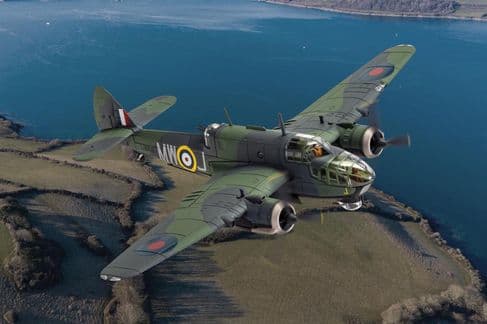
A production sample example of the second release from our 1/72nd scale Bristol Beaufort Mk.I tooling, a model which could hardly look more different from its predecessor in scheme presentation terms.
With 25 years of model production now behind it, our Aviation Archive range can boast an impressive selection of scale aircraft types within its ranks and an army of collectors who are always more than happy to let us know what subjects they would like to see us produce next. Until recently, a British aircraft which always appeared high on any such list was the Bristol Beaufort, a type which was certainly a logical addition to the range, but was an aircraft which could be described as being relatively unknown to most people, unless they had an interest in aviation history.
Fortunately, the first release from this new Beaufort tooling joined the range at around this time last year and allowed us all a first opportunity to display and example of this capable maritime strike aircraft next to the Blenheim and Beaufighter models we already had in our collections. Hopefully, it might also renew interest in an aircraft which whilst performing sterling work during the Second World War, remains largely anonymous to the vast majority of the population. A model which was lucky enough to attract a great many complimentary reviews following its release, we are delighted to confirm that this week saw the release of the second model produced from this tooling and in our opinion, is even better than its highly regarded predecessor. What is most certainly not in question is that from a presentation perspective, the two models could hardly look more different from one another.
Let's take a closer look at this beautiful new model now.
During the 1930s, the Bristol Aeroplane Company were without doubt one of the most proficient aircraft manufacturers not only in the UK, but in the wider aviation world. Responsible for producing the RAF’s most important fighter of the decade, the fast and agile Bulldog, the company would also play a significant role in the modern expansion of the Royal Air Force, as their Blenheim light bomber/heavy fighter would point towards the very future of military aircraft design. A later design which was initially envisaged as an evolutionary development of the existing Blenheim, the Bristol Beaufort had the distinction of being the only monoplane aircraft type produced for the Royal Air Force which was designed from the outset to fulfil the dual roles of torpedo strike bomber and reconnaissance aircraft.
A situation which highlighted the pressing need for an aircraft possessing these maritime capabilities, the Beaufort was one of only a handful of aircraft to be ordered by the British Air Ministry whilst the project was still ‘on the drawing board’, a move which clearly also reflected the faith they had in the Bristol Company. The Beaufort may well have started its development life as something of a Blenheim offshoot, but it quickly became apparent that the new aircraft would look quite different to its predecessor. With a much deeper front fuselage section needed to accommodate its crew of four and the requirement to carry an air-launched torpedo in a semi-recessed position under the fuselage, a gross weight increase of around 25 percent over the Blenheim ensured that whilst the two aircraft may have been related in design terms, they most certainly could not be described as aviation twins.
Historically, the demanding specifications the Beaufort was required to satisfy, in conjunction with Bristol’s existing Blenheim manufacturing commitments, dictated that an aircraft which had production contracts signed initially in August 1936, would not actually see its squadron introduction until almost three and a half years later, when Britain was already very much at war. Once in squadron service, the Beaufort quickly proved to be an extremely rugged and highly manoeuvrable aircraft, one which would be tasked with performing some of the most demanding strike attack missions of the Second World War.
Further views showing a production sample of the new Bristol Beaufort Mk.I model release.
The squadron introduction of the Bristol Beaufort was not without its problems however, and despite having an unusually long development for an aircraft which was so badly needed, initial units had to endure persistent reliability issues with the new Bristol Taurus engines. Intended as a replacement for such aircraft as the huge Vickers Vildebeest torpedo equipped biplane, the early teething problems caused by engine reliability issues saw these totally unsuitable, obsolete aircraft, having to soldier on for a while longer, until a solution to the problems could be found. Once the Beaufort could be operated effectively, it quickly proved itself to be an exceptionally rugged aircraft and one ideally suited to the demanding task at hand. Significantly, it was a significant upgrade over previous aircraft in this role.
The new RAF airfield at St. Eval on the north Cornish coast was an ideal location from where to launch anti-submarine and anti-shipping patrols, as well as offensive strike operations ranging over this vital combat sector of the war, something it would do for the majority of WWII. Interestingly, it actually became operational as a Fighter Command station during the early stages of the Battle of Britain, with the Spitfires of No.234 Squadron being early residents, but as the battle progressed, most of the action was taking place further east and the Spitfires were relocated in that direction by August 1940.
In its maritime strike and patrol role, the residents living in the area around St Eval airfield would soon come to recognise the distinctive sound of the Bristol Taurus engines of the Beaufort torpedo bombers which operated out of the station, with the U-boats and warships of the Kriegsmarine being regular targets for these aircraft. Another of St. Eval’s aircraft tasked with attacking a major German warship moored in the heavily defended Brest harbour, Bristol Beaufort Mk.I L9866/MW-J launched its attack some two months prior to the famous VC winning action by Kenneth Campbell and his crew. Following the completion of damage repairs, the German cruiser Admiral Hipper was due to leave the Brest harbour complex to embark on a further period harassing Allied shipping in the Atlantic. With this crucial battle clearly holding the key to Britain's continued participation in the war, the Royal Air Force were determined to prevent this from happening.
A final look at a model which is now available and very different from the release already in our display cabinets.
Taking off from RAF St. Eval just before 15:00 hrs on 1st February 1941, the crew of Bristol Beaufort L9866 had a short but treacherous flight over open ocean ahead of them, as they headed for Brest harbour and if they did manage to locate the ship, they knew they would be facing withering defensive fire, not just from the German cruiser they were targeting, but also from the many shore batteries of various calibres which protected this heavily defended harbour. The Luftwaffe were also only too aware that the French resistance would have reported the impending movement of Admiral Hipper from the harbour complex and would have been expecting a powerful force of RAF aircraft to attack the ship as a result. In anticipation of this, they assembled a mighty force of Messerschmitt fighters to provide a hostile reception for any RAF aircraft heading for the area.
Admiral Hipper must have been regarded as something of a lucky ship by the Germans, as she often managed to evade detection by strong British forces which had been sent to locate it. As the ship slipped out of Brest harbour once more on 1st February 1941, despite a significant force of RAF bombers sent to destroy it, she was once again virtually unopposed, mainly due to the many patrols mounted by Luftwaffe fighter units on the day. During that afternoon, it was thought that Bristol Beaufort Mk.I L9866 was probably intercepted and shot down by the Messerschmitt Bf 109E-4 flown by Uffz Horst Bochmann of II./JG77, with all four crew members aboard the British bomber tragically losing their lives in the action. Crashing into the sea off the northern coast of Brittany around two hours after they had taken off from RAF St Eval, it is thought that due to the location and timing of the incident, the crew must have already pressed home their attack against the Hipper and were attempting to get back to base, when they were intercepted by Luftwaffe fighters, although this version of events has never been definitively corroborated.
The Luftwaffe airfield at Dinan in Brittany was the home base of II./JG77 and was one of the airfields assigned to the protection of the vital fortified harbour facilities at Brest. With the Kriegsmarine’s large warships posing a significant threat to British shipping in the Atlantic, Luftwaffe units in this sector would be kept extremely busy fighting off incessant raids by the Royal Air Force, but as this was one of the most heavily defended regions in Europe, a great many British aircraft would not make it back home following one of these operations. A sortie mounted against targets in Brest harbour, or indeed this entire region, would have been one which was fraught with many dangers for RAF crews.
This impressive second Bristol Beaufort model release is available now and will hopefully help to bring attention to the achievements of an aircraft type which is relatively unknown to many non-enthusiasts.
We had initially thought this blog update would serve as a final feature prior to the model's release, however, the new Bristol Beaufort arrived slightly earlier than expected and should be available in all good model shops right now. Those who pre-ordered their model via the Corgi website will probably already be admiring their model as they are reading these words and if displayed next to the first release, will make for quite a dramatic visual contrast between two aircraft representations from different squadrons which operated from the same airfield.
This stunning second release from our 1/72nd scale Bristol Beaufort Mk.I tooling is available now.
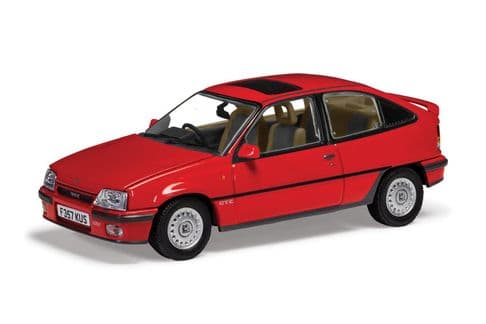
Our final advanced production sample model viewing for this latest blog update, this time featuring the Vauxhall Astra GTE 16V, a car which was described as going like stink when it came to putting your foot down!
When it comes to the world of popular motoring, could there be any sector of this market which is more enthusiastically contested, or of more interest to the general public that the battle of the Hot Hatches? A colloquial reference which came to prominence during the early 1980s, it was used to describe the emerging popularity of attractively styled, high performance hatchback cars produced by several of the major manufacturers at the time, vehicles which held a particular fascination for the younger, sportier and more image conscious driver. These cars were so popular that vast amounts of development money was spent by almost every manufacturer to ensure they had exposure in this lucrative arena and if their stylist and marketeers managed to get it right, their hot hatches sold in huge numbers and had plenty of admirers.
Amongst the very best exponents of this breed of cars, debate still rages about which was the best of the hot hatches, but vehicles such as the Peugeot 205 GTI, Volkswagen Golf GTi and Vauxhall Astra GTE 16V were all very much at the head of this field, with each one scoring points and therefore supporters, over their rivals. We are delighted to confirm that muscling in before the two Ford Cortina models featured earlier, hot hatch fans will be delighted to see our new Vauxhall Astra GTE 16V roaring in to make a particularly striking scale contribution to this enduring debate, a model which gives the non-Ford Vanguards collector something to get their teeth into.
The Astra GTE 16V may not have been everybody's cup of tea when it came to the styling stakes, but it terms of performance, the Vauxhall was always regarded as one of the fastest cars in this enigmatic grouping of vehicles - it just went like stink! This latest release marks what much surely be considered the pinnacle of Vauxhalls Astra GTE range, with the colour and styling being just about as iconic as it is possible for a hot hatch to be.
VA13208 - Vauxhall Astra GTE 16V in Carmine Red
Launched in late 1987, the 16 valve GTE was the ultimate evolution of General Motors’ (GM) ‘teardrop’ Mk2 Astra. It was loud and raw compared to Volkswagen’s rival Golf Mk2 GTI 16V which was polished, sophisticated, and slower. The GTE appealed to buyers who loved this unruly character and its era-defining digital dashboard. It was created by fitting GM’s 2-litre ‘Family 2’ engine with a motor sport inspired 16-valve twin-cam cylinder-head developed by Cosworth to become the ‘KBA’, or ‘red-top’, as it’s often called. This endowed this lightweight hatch with blistering real-world pace, especially above 4000rpm, which eclipsed its on-paper figures making this hottest of the eighties front-wheel drive hot-hatches great fun to drive.
The GTE modelled here was purchased from Vauxhall/Opel Dealers Ferguson of Renfrew, Scotland, on June 3rd, 1989, having been ordered with the optional fuel computer and GM factory-fitted alarm. The first owner kept it for ten years and it was then dry stored before being purchased in 2005 by Glasgow-based enthusiast Graham Walker who did some light restoration before returning it to the road. It was purchased by the current owner, Angus-based Sandy Carnegie, in 2013 as a sound and honest 58,000-mile car which, unusually, had no corrosion issues but many cosmetic blemishes. He has restored and detailed the car to perfect original show winning condition, fitting many new components, and it is now acknowledged as one of the best in the UK.
This third impending new Vanguards model to feature on this latest development blog should be with us next week and with therefore beat our Cortina pair in taking its place in model display cabinets up and down the country.
We would like to end this latest edition of our blog with a little image teaser of something very exciting to come. Earlier this week, a small Corgi team made our way to an iconic location in Kent, so we could play our part in a rather historic event for the brand. We don't want to be giving too much away at this stage, but be sure to keep an eye out for an impending edition of the blog and across our various official social media channels. We can promise you it will be something definitely worth sinking your teeth into.
We are afraid that's all we have for you in this latest edition of Corgi Die-cast Diaries but we will be back as usual in two weeks' time with a further selection of model project updates. Between editions, we are always interested to hear your views on all things Corgi, so if you feel like dropping us a line to comment on anything blog or Corgi model related, or indeed to suggest a topic you would like us to include in a future edition, please feel free to do so at diecastdiaries@corgi.co.uk.
If you can’t wait for the next blog, you will find plenty of Corgi model collecting discussions taking place on our official social media channels, access to which can be obtained by clicking on the respective links at the foot of the Corgi website homepage.
Link access to Corgi social media sites.
Thank you for continuing to support our Die-cast Diaries blog. Our next edition is scheduled for publication on Friday 24th March.

