
Welcome to our latest edition of CORGI Die-cast Diaries, your fortnightly blog review bringing collectors all the news, updates and topical stories from the captivating world of CORGI die-cast model collecting.
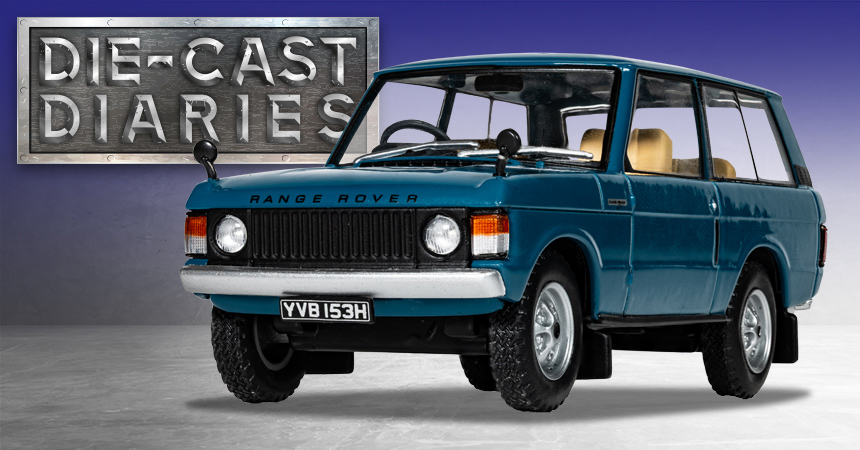
In this latest DCD update blog, we will be taking this opportunity to introduce you to a rather spectacular impending new tooling addition to the Vanguards range, one which many of our most ardent followers will be pleased to learn doesn’t wear the Ford badge. When it comes to vehicles of real stature and pedigree which were equally at home on Britain’s roads, or driving around some rural estate, the Range Rover is quite possibly without equal, a vehicle which demanded it be taken seriously, and one which provided its driver with a seriously lofty driving position. From the collector insights works completed over the past couple of years, we know this will be a welcome addition to the Vanguards range, and are therefore delighted to be in a position to bring you this exclusive project introduction, along with images featuring pre-production sample models from the first two releases.
After indulging ourselves in some classic engineering on four wheels, we will be charting the history of flight through the medium of two Aviation Archive releases, our scale representations of two German aircraft types which stand at the head or their respective eras of combat flying, aircraft which both altered the very direction of aviation, 29 years apart. Both icons of aviation history, but both very different in terms of looks and technological capability.
We will be ending this latest update with a couple of dates for all our die-cast diaries, as we have two occasions of note approaching over the coming few weeks, dates you will definitely not want to miss if CORGI collecting is your thing.
We have another feature packed edition of die-cast delights awaiting your inspection in this latest edition of your CORGI Die-cast Diaries.
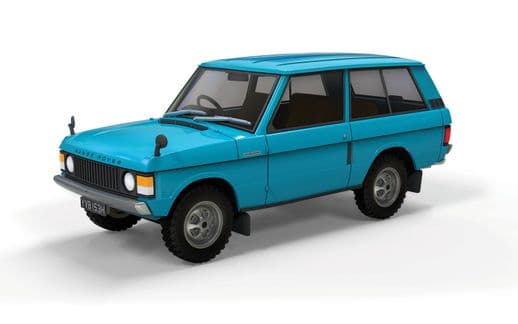
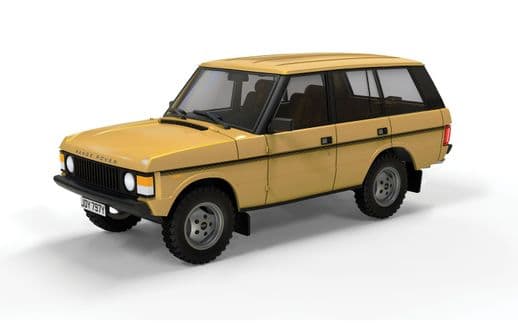
The CAD imagery used to illustrate this section all feature design screen grabs from the new Vanguards Range Rover tooling and whilst still subject to change, show many of the variant options incorporated in this highly anticipated design.
When Britain’s motor industry emerged from the ashes of the Second World War, they didn’t stumble through countless design permutations looking for a commercial olive branch to grasp onto, they unleashed a motoring classic on an unsuspecting world. Angular and purposeful, you probably wouldn't expect a rugged and hard-working utility vehicle to attract the admiration of the motoring world, however, that is exactly what the Land Rover series effectively managed to do. Entering production back in 1948, the Land Rover was an attempt by the Rover Company to re-enter the motoring market during the financial austerity of the post Second World War period, producing an affordable agricultural and light industrial vehicle with a multitude of applications, on similar lines to the Jeep of WWII, but subtly different.
The Land Rover was designed with little in the way of driver comfort in mind, but was intended to operate effectively in the most demanding of situations, quickly earning a reputation for practicality and reliability. The pick-up version featured an enclosed cab and open rear compartment, which could be used to transport anything from farm machinery to livestock and animal feed over all kinds of terrain. If you had a tough motoring job that needed doing, Land Rover had just the vehicle for you.
From those humble beginnings, Land Rover went on to create something of an automotive phenomenon, although it has to be said that the vehicles which proudly wear that name to this day are very different to the Series 1 vehicles which first rolled off the production lines. For those originals, luxuries and the latest levels of driver/passenger comfort were way down the list of priorities, they were all about functionality and reliability. Some have even described the first Land Rovers as possessing the sophistication of a petrol powered lawnmower, but then usually qualify the statement by including how it may have been basic, but was also wonderfully capable.
Our next exclusive selection of Range Rover CAD imagery.
The concept behind the Land Rover was that this was essentially a farmer's friend, a vehicle which would help him go about his business efficiently with an absolute lack of fuss - when he needed it, the Land Rover would always be ready for action. Built around a strong and highly effective ladder type chassis, the aluminium body was light and robust, meaning that the vehicle could be powered by a relatively low power output engine, but one which with the use of a high and low range four wheel drive system, allowed the vehicle to handle almost any terrain.
By any stretch of the imagination, the Land Rover was a resounding motoring success, but by the 1960s, the people behind the Land Rover brand wanted more, and issued a challenge to their design teams. They were looking for a vehicle concept which took shape in the US, but one which drew inspiration from the humble Land Rover. They felt that a rugged vehicle that was a farm heavyweight and was trusted by the military, would be of interest to large sections of the motoring world if it only had a little more refinement, and was a better ride for passengers on roads and motorways.
Back at Land Rover HQ, they took this research on board as they started work on their new vehicle, one which could really be described as an upgraded Land Rover. Their initial intention was for the new vehicle to maintain many of the rugged, go anywhere qualities of the Land Rover, but for it to be equally at home on Britain’s roads, one that could be used on a night out, after completing its day’s work.
Powered by a rugged V8 petrol engine, the vehicle would be the first in the world to feature permanent four wheel drive, and everything about its design would be functional. The floor pan had a rubber finish, and they made extensive use of plastic across the interior fittings, the intention being that after a busy day’s work, the vehicle could be wiped clean, in preparation for an evening of social engagements. The dashboard was also plastic, so much so that Range Rover aficionados will often describe it as the Airfix dashboard, but as a term of endearment.
Initially released in just a two door body configuration, the large doors featured robust interior handles front and back, so a rear seated passenger could also open the door, having previously wrestled the front seat forwards. It truth, the new vehicle was quite spartan from an internal fittings perspective, but was always intended to be part Land Rover, part Transit van, but all carried off with oodles of style.
Land Rover wanted to test their vehicles extensively, but without alerting the motoring world to their exciting new concept. To this end, they created a new company and badged 26 cars as Velar vehicles, a play on an Italian word meaning concealment, something which was rather apt for test vehicles which here essentially hiding in plain sight.
Following the eventual release of the new Range Rover vehicle, one was almost immediately placed on display at the Louvre Palace, as part of the Musée des Arts Décoratifs exhibition of examples of excellence in modern design and manufacture, something which only enhanced the incredible appeal of the new car. Intended for farmers, project managers, surveyors, estate managers and even the police, these professions did look with avaricious eyes at the smart new offering from Land Rover, but they were joined in showrooms up and down the land by ordinary people, perhaps the slightly more affluent, but people who were looking for a vehicle that was just as at home in a ploughed field or dirt track, as it was cruising down Park Lane, but wherever you were driving it, you were definitely going to get noticed.
From the very beginning, demand for these vehicles far outstripped production availability, something which only served to enhance the appeal of the new Range Rover going forwards, and helping to establish a motoring phenomenon which continues to this day. Rugged and functional, refinement and luxury would follow in the years to come, as would royal approval – if the Range Rover was right for our Queen, then it was certainly right for us.
The Range Rover had arrived.
The donor vehicle used as a LIDAR scanning muse at the British Motor Museum.
With a vehicle series possessing such pedigree, it can be a little surprising that the Range Rover hasn’t already taken its place in the Vanguards model range, but that being the case, its introduction this year will surely be all the more welcome.
The image selection included in this review either feature CAD screen grab imagery taken from the Range Rover design files, or first decorated samples produced from the actual tooling itself, however, they are all being shown with the inclusion of a significant caveat. Both the design files and the models themselves are still within the development phase of the project, and whilst this does represent a significant milestone for the new model, both the design and the model’s presentation are still subject to change.
We know that you do like to see our new models as they advance through the various development stages, and know most will understand our reservations at showing images of models that are not the finished article as yet, but we’ve been on a long blog journey together, so we’re probably worrying unnecessarily by this stage.
The first two releases from this much anticipated new tooling addition were announced at the start of the year, so let’s take a closer look at the current state of Range Rover play.
VA15701 – Range Rover (The First Production Range Rover) in Tuscan Blue
It’s appropriate that the first model to be produced using Corgi Vanguards’ new tooling for the original Range Rover is YVB 153H, chassis number 35500003A; effectively chassis number 3. This vehicle was the first Range Rover that came off the production line to the final production specification, and was one of 28 pre-production chassis, but only 27 bodyshells, as one driveable chassis was kept for development work. It was hand-finished, ahead of the two earlier chassis numbers, by 17th of December 1969, because photographer Alan Luckett wanted a blue car for launch photography. It also starred in the brilliantly titled dealership launch film, ‘A Car for All Reasons’.
It was retained by Rover until early 1972 then sold to William Ellis Garages, Oswestry, and by the late 1980s was owned by Norwegian photographer Per Lochen. As the British Motor Industry Heritage Trust’s vehicle collection was growing in the early 1990s, ahead of their 1993 move to what is now the British Motor Museum at Gaydon, it was realised that they lacked an early Range Rover, and 153H was tracked down. In late 1991, a deal was struck with Lochen to acquire this historically important car, which by this time was in a poor state. It was restored to its original ‘launch’ specification in 2006 by the Museum, and has since featured in anniversary displays, as well as TV programmes and magazine articles.
VA15702 – Range Rover ‘In Vogue’ Automatic (Second Edition) in Nevada Gold
Rover built a 4-door prototype Range Rover in 1972, but British Leyland’s finances ensured it was never produced although various specialists offered 4-door conversions. After the success of the first 2-door “In Vogue”, it became obvious that the utilitarian Range Rover could be moved upmarket, and a 4-door model was announced in June 1981. To publicise this, and the newly available automatic transmission, Rover launched the limited edition 4-door automatic ‘In Vogue’ Series 2 in August 1982, which was only available in Sierra Silver or Nevada Gold. Only 250 of each colour were made, and they all featured alloy wheels, distinctive graphics, a branded cool box, wooden door cappings and a Philips stereo.
This example was completed on 21st July 1982 and immediately dispatched to Skinners Motors Ltd, St Leonards-on-Sea, East Sussex. It was displayed in the dealership before first owner, Kent-based farmer Mr Cooper, took ownership until New Year’s Day 1983. He paid Skinners’ subsidiary, Bexhill Motors, £16,000 for his 17th Range Rover! He’d bought his first in 1970, then ordered a new one annually. This was, however, his retirement car, so he rust-proofed it, serviced it on his 4-post ramp, and retained all the accessories and paperwork. It was purchased by ‘The Dunsfold Collection’ of Land Rover related vehicles in November 2010, and remains in excellent original condition, wearing its 80,000 miles lightly. It has appeared in many TV programmes, magazine articles and live events.
We look forward to bringing you more Range Rover update exclusives in forthcoming editions of Die-cast Diaries – this one’s going to be a cracker!
The Aviation Archive range has a proud tradition in creating die-cast models of some of the world’s most significant aircraft, and when it comes to fighter aircraft, we’ve effectively got you covered from first to last (or current, at least). Two recent releases perfectly illustrate this die-cast phenomenon, because even though the models are produced in different scales, they are scale representations of two German aircraft types which had a profound impact on the world of aviation, aircraft which can both claim to have actually changed the course of aviation history.
Possessing a clear understanding of the strategic necessity to gain control of the air and the wider implications this would have on the future of the ‘War to end all Wars’, the German High Command duly instructed their aircraft manufacturing industries to immediately develop a completely new kind of aeroplane, one designed specifically to hunt other aeroplanes and dominate the skies.
The result of their work was the Fokker Eindecker, a monoplane fighter aircraft which represented the very pinnacle of aviation technology at that time, one which made use of all the flight research data designers had available from the front lines, and incorporating all the very latest technological advances the world of aviation had to offer.
With the ability to fire its machine gun/guns through the arc of the propeller, utilising a clever engine driven machine gun synchronisation mechanism known as interrupter gear, all the pilot of an Eindecker had to do was to aim the nose of his aircraft in the direction of his target through his line of sight and fire his gun, something which was a revolutionary concept in aviation at that time, but one which clearly still required much skill to operate effectively.
It has to be remembered that the aeroplane was still in its relative infancy at that time the Eindecker was being developed and even though history regards it as something of a technological marvel, it was still rather primitive an aircraft and relatively underpowered, making the airmen who flew them true pioneers in the art of aerial combat. If they were competent enough to manoeuvre their aircraft into a favourable attack position behind an enemy aircraft, the rudimentary wing warp flight control system still needed a steady hand, and if the situation got the better of them, they could quickly find themselves in a world of trouble.
If they allowed the thrill of combat to overtake their judgement, too tight a turn to stay on the tail of their intended victim could see them entering a dangerous spin, losing valuable combat altitude at best, with their aircraft not stopping until it hit the ground at worst. Early Eindecker pilots were essentially writing the rules of aerial combat engagement with each sortie made, with names like Boelcke, Immelmann and Udet all becoming students of the art, and sharing their expertise with those following in their footsteps.
You can’t talk about the Fokker Eindecker without also mentioning the ‘Fokker Scourge’, a period in the war when all Allied fighter aircraft over the Western Front were nothing more than ‘Fokker Fodder’ for this fearsome new aircraft and its pilots. Although this was indeed a terrible time for Allied airmen operating over the trenches, the impact of the Eindecker could have actually been so much worse, had the aircraft been deployed in hunting units from the start, and had Allied aircraft manufacturers not been so proficient in developing new aircraft to combat the Fokker.
For an aircraft which had such a seismic impact on the history of aviation, it can come as something of a surprise to learn that relatively few aircraft were ever sent to the front lines, and initially at least, they were used sparingly by the Luftstreitkräfte. Desperate to avoid their technological secrets from falling into the hands of the Allies, Eindecker pilots were forbidden from flying over enemy lines, and at first, the aircraft were only used in small numbers to fly as protection for friendly reconnaissance aircraft.
In addition to this, Eindecker pilots were engaging in a completely new type of flying, almost like a man-made Peregrine Falcon attacking a pigeon, however, nobody had ever done this before, so they were very much learning on the job. Each new ‘Hunting Unit’ was only allocated three of four aircraft, and these would have a heavy workload in attempting to protect other German reconnaissance aircraft. When they did encounter the enemy, they usually did so on their own, yet still managed to change the course of aerial warfare.
Once pilots began to master their aircraft and understand the strategic advantage they now held, the tactics they employed altered dramatically, and larger groups of Eindeckers were allowed to go hunting the enemy, the first aerial interceptors in the history of warfare. Things would never be the same again, and despite the Eindecker’s superiority reign only being a relatively short one, it changed the course of history, initiating an arms race which continues to this day.
Fascinated by aircraft from an early age, Josef Jacobs learned to fly in 1912 at the age of eighteen and by the outbreak of the Great War joined the Imperial German Army, initially as a motorcycle dispatch rider, but then as an observer/artillery spotter in a long range reconnaissance aviation unit. With his studious nature and skill in the air, Jacobs was invited to join his more senior friend Erich Hönemanns at the newly formed Fokkerstaffel West, where he would become one of the earliest dedicated hunting (fighter) pilots in the world, flying the Fokker Eindecker series of fighters.
He would continue flying on the Western Front for the remainder of the war, and is thought to have been the German pilot to have spent the longest operational period over the trenches, coming into contact with all of the most successful Allied aces. He would end the war as commander of Jagdstaffel 22 flying the Fokker Dr.1, an aircraft with which he would score 30 victories, and become the most successful ‘ace’ pilot in this famous aircraft. In fact, the first Aviation Archive release of the Fokker Dr.1 featured the distinctive black ‘Dreidecker’ flown by Josef Jacobs, making this latest Eindecker an ideal companion release.
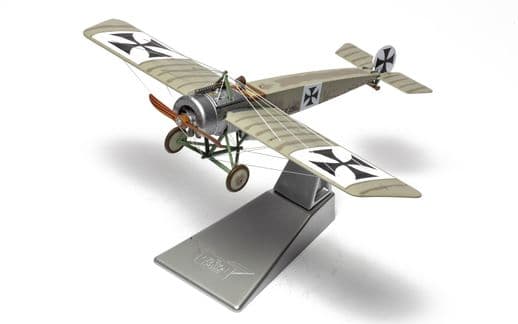
The Fokker Eindecker flown by one of the world’s most accomplished fighting aviators, Josef Jacobs.
A fastidious record keeper, Jacobs allowed his memoirs to be published during the inter-war years, which serve as a first-hand account of the birth of aerial combat and the rise of the fighter ace. He would end the Great War with 48 aerial victories, which placed him as the joint fourth most successful German ace with Werner Voss, and the recipient of the coveted Pour le Mérite, the ‘Blue Max’. Although accepting a reserve commission as Major during the Second World War, his anti-Nazi stance brought him into conflict with the new regime, however, it’s thought that his position as a Great War hero and his ‘Blue Max’ saved him from a fate being suffered by many adopting similar stances, allowing him to be tolerated by the new order in Germany.
Fortunate to outlive most of his Great War aviation contemporaries, prior to his death in 1978, Jacobs had been the last surviving recipient of the Pour le Mérite, and an invaluable link to the aerial combat engagements which took place over the trenches of the Western Front. Incredibly, despite being a national hero, Jacobs joined the Luftstreitkräfte as a reserve officer, so didn’t even qualify for a military pension in later life.
As a model release, some researchers have claimed that this particular aircraft actually sported camouflage, something we more readily associate with aircraft which took part in the Second World War, however, we, and many other people with an interest in Great War aviation feel it much more likely that these marks were caused by heavy oil staining to the linen fabric covering the aircraft’s wings and fuselage, producing significant ‘dark’ mottling over the airframe. These can clearly be seen in black and white pictures taken of this famous aircraft, but whether those markings represented a different, intentionally applied camouflage colour, this is the continued subject of debate, and we feel, highly unlikely.
The Messerschmitt Me 262 was unquestionably the most advanced fighting aeroplane of the Second World War, it was just a case of too little, too late.
Although the word Messerschmitt is historically associated with the heavily produced single engined piston powered fighter which was the wartime nemesis of Britain’s Supermarine Spitfire, that name was also associated with fighter technology which was a quantum leap forward in technological terms, and aircraft which if introduced when intended, and made available in sufficient enough numbers, would at very least been able to extend the war.
When aviation historians retrospectively assess the wartime impact and combat introduction of the Messerschmitt Me262 jet fighter, many claim that the decision made to develop the aircraft as a fighter-bomber was a disastrous error, one which resulted in protracted production delays and reduced the operational effectiveness of the aircraft’s introduction.
In actual fact, the requirement to use the jet as a ‘Schnell or Blitz bomber’ was actually operationally sound, and was taken in the months prior to the Allies undertaking their D-Day landings, and specifically intended to combat such a threat. Hitler and his generals knew that Allied forces were planning an amphibious assault somewhere along the coast of Northern France, but where and when were strategic uncertainties which were keeping huge numbers of men and their equipment spread across a vast area.
With the ability to send large numbers of high speed jet bombers against those landing beaches at speeds which made them almost impervious to Allied air or anti-aircraft interception, the Messerschmitt Me 262 ‘Jabos’ (fighter-bombers) held the potential of wreaking havoc upon the landing beaches, buying ground units the time needed to organise a counterattack and drive the Allies back into the sea. Unfortunately for Hitler, the Allies had already broken out from their landing beachheads whilst Me 262 fighter-bombers were still in development and even though they would ultimately still possess the ability to mount strategic bombing raids at great speed, the main intended offensive objective for their introduction had already taken place, with the battle on the beaches having already been lost.
With the introduction of bombs to the front under-nose section of the Messerschmitt Me 262’s fuselage, both the centre of gravity and the general flying characteristics of the aircraft would be dramatically altered, however, such was the performance of the world’s first operational jet that it was able to cope with these changes without too great a loss of overall performance.
Given the nickname ‘Blitz Bomber’ or ‘Sturmvogel’, the Me 262A-2 variant was fitted with two ETC 503 bomb racks under the nose of the aircraft, just forward, and either side of the rear of the front gear door. Each rack was capable of carrying a 500kg bomb, although in operation, only a single bomb of this size could be carried operationally. The more usual configuration was for two 250kg blast or fragmentation bombs to be carried, depending on the type of attack mission required to be flown.
In order to save weight, the top two MK 108 30mm cannons were usually removed, as was some of the aircraft’s armour plating, allowing the aircraft to maintain its impressive performance and as and when required, have the top guns replaced and the bomb racks removed, with the aircraft reverting back to interceptor configuration. Bombing attacks in such a fast aeroplane were not without their challenges and had to be carried out in either level flight, or at a very shallow dive angle.
If the dive attack was too steep or began too far away from the target, the clean configuration of the aircraft resulted in a rapid build-up of speed and the possibility the pilot might encounter the as yet unknown phenomenon of compressibility, which rendered the control surfaces almost ineffective, and usually resulted in the aircraft crashing. With the aircraft not benefitting from the installation of an effective bomb sight, these horizonal bombing attacks were usually performed at low altitude and could actually be rather effective if carried out by an experienced pilot, especially when using cluster bomb munitions, which had a much wider field of destructive effect.
The first Luftwaffe unit to operate the Messerschmitt Me262A-2 ‘Blitz Bomber’ were Kampfgeschwader 51 ‘Edelweiss’, flying out of Rheine Airfield in northern Germany, tasked with attacking strategic Allied targets in Holland and Belgium during the Autumn of 1944. Approaching the target at speeds of around 420 mph, the attack force would usually consist of four aircraft, flying at an altitude of around 4,000 metres. Once the bombs had been dropped, the aircraft would use their incredible speed to evade interception, always with the option of using their two installed 30mm cannon should the need arise.
Although unlikely to be intercepted by Allied fighters during their actual attack run, returning to their home base would be a different matter altogether, and these light bombing strikes proved to be little more than a token gesture of defiance. The aircraft covered with this release wears the distinctive ‘scribble’ camouflage pattern which was a feature of all Kampfgeschwader 51 Messerschmitt Me 262s - 9K+BH (WK Nr.170096) was also the subject of some fascinating wartime photographs, all of which have provided invaluable to modellers and researchers over the years.
As the most technologically advanced aircraft to see combat during the Second World War, the Messerschmitt Me 262 held the potential to tip the balance of the entire air war in favour of the Luftwaffe. Fortunately for the Allies, difficulties introducing this new technology during wartime and the overwhelming superiority of Allied air forces over Europe meant that the pool of experienced pilots to fly them, coupled with the fact that these aircraft were hunted mercilessly from the moment they ventured out onto the runways at their home airfield seriously reduced their impact.
Hitler was convinced that when used as a ‘Blitz Bomber’, the speed at which this incredible aircraft flew would make it impervious to interception by Allied fighters and ground based anti-aircraft units, despite the fact that the Me 262 wasn’t particularly effective in this role.
The speed at which the aircraft flew might have made it difficult to intercept, but it also made it almost impossible for the pilot to release bombs with any degree of accuracy. In addition to this, the aircraft was unable to carry a meaningful bomb load, meaning that a great many ‘Blitz Bombers’ would have to be used to stand any chance of inflicting strategic damage on any target. It would have made an excellent dive bomber, however, this would have required significant modifications being made to the design of the aircraft, something which was out of the question at this stage of the war – they needed as many aircraft as possible in fighter configuration to combat the incessant Allied bomber streams heading for targets deep int Germany.
Following the successful operations to capture the vital bridges over the river Waal in the Netherlands during September 1944, the Germans tried everything in their power to destroy the Waal Bridge at Nijmegen, using artillery, air power and even explosive equipped frogmen. Realising the strategic importance the loss of these bridges meant to German troops in Holland, Hitler ordered these bridges be destroyed at all costs, and even allocated his new Me 262 ‘Blitz Bomber’ to the task, believing that their incredible speed would make this something of a formality.
Unfortunately for pilots flying these missions, the Allies knew this was coming, and established an anti-aircraft ‘ring of steel’ around the bridge area which proved so effective that almost every aircraft sent to attack the bridges was shot out of the sky. This attractively presented ‘Blitz Bomber’ was one of the aircraft sent to attack the Waal bridge during the Autumn of 1944, but was unable to score a decisive strike due to a combination of defensive fire and the general unsuitability of the Me 262 as an accurate and effective strike bomber.
This latest release of one of the world’s truly great aircraft, is the first time that a bomb laden ‘Sturmvogel’ variant of the Messerschmitt Me 262 has been introduced into the Aviation Archive range, and it’s a real beauty.
Now with just double digit availability in the CORGI warehouse, if this bomber variant of the Luftwaffe’s famous WWII jet is lined up in your sights, now might be the time to press the trigger, because it could be several years before we see the new release from this popular tooling.
We’re Duxford bound
Flushed with our recent event success Coventry Transport Museum, the CORGI team will soon be on the road again, as we head for IWM Duxford’s headline Airshow event of the year, their Battle of Britain Air Show. The sight of massed Spitfires flying in the skies above the first operational home of the Spitfire is an experience no aviation enthusiast ever takes for granted, and with this show usually taking place close to Battle of Britain Day itself, this is always a highlight event in any Airshow calendar.
At this year’s event, our team will be taking up residence in Duxford’s iconic American Air Museum at the south westerly end of the airfield site, the aircraft which features the full glass front – it’s intended that we’ll be sited near the SR-71 Blackbird. Our display will include a selection of the latest Aviation Archive model releases, plus number of exclusive new model project reveals to be made over show weekend.
Although we will just be exhibiting, plenty of retail outlets will have CORGI models for sale over the weekend, however, we look forward to discussing the die-cast issues of the day with as many CORGI collectors as can fit in the American Air Museum, and come rain or shine, we’ll be on station to welcome one and all. Hopefully there will also be an opportunity to document the show for a future Aerodrome blog, but when duty calls, CORGI comes first.
If you are heading down to the show, please do drop by and say hello – you might just find a model exclusive or two!
Synchronise watches, new models are coming!
It’s that time of the year again when we are about to unveil our final collection of new models for 2026, and it’s the day after Duxford. Things are coming thick and fast for us here at CORGI at the moment, and no sooner will we have packed up the display stand at Duxford, that it will be all systems go for the final model range announcement for 2026.
Even though we will still have the sound of Merlin engines ringing in our ears, we will be back at CORGI HQ to press the launch button at 10am on Monday 14th September, as our September – December range announcement is unleashed on an expectant die-cast world, the models which will be vying for display space amongst our collections in the run-up to Christmas and the New Year.
This is always a time of excitement for the CORGI team and collectors alike, and we’re always excited to show you what we’ve been working on over the previous few months. We don’t have to wait too long now, but we do have to warn you that we’ve been in SAS training for months now, and no matter how impressive your interrogation techniques might be at Duxford, it’ll simply be name, rank and number. There’ll certainly be no leaks of new TSR-2 model releases coming from our lips over show weekend ….. oops!
Please join us on Monday 14th September at 10am for some new model announcement fun on the CORGI website. Of course, David will be filming his customary range launch video as well, so he can guide you through the finer points of the new range via the official CORGI YouTube channel, and he would be delighted if you would join him for that.
See you all on the 12th, 13th and 14th.
We’re afraid that’s all we have for you in this latest edition of our CORGI update blog, but we will be back as usual in two weeks’ time to bring you a further exclusive selection of updates. As always, if you would like to drop us a line in the meantime to comment on anything CORGI model related, or to suggest a future blog topic you’d like to see covered here in DCD, you’d be more than welcome, and we’re always happy to hear your views.
As ever, our diecastdiaries@corgi.co.uk address is always the one to use.
If you can’t wait for the next blog, you will find plenty of CORGI model collecting discussions taking place on our official social media channels, access to which can be obtained by clicking on the respective links at the foot of the CORGI website homepage.
Link access to CORGI social media sites.
Thank you for continuing to support your CORGI Die-cast Diaries blog, as we head into our eleventh year of production. Our next edition is scheduled for publication on Friday 11th September.
Until next time, once again, thank you for your continued support.