

Welcome to the latest edition of Corgi Die-cast Diaries, your regular blog review of all the news, updates and topical stories from the captivating world of Corgi die-cast model collecting.
As hinted at in our previous blog posting, we have a major project advancement update to bring you in this first Corgi blog for December, one which will definitely be of interest to the Aviation Archive collectors amongst our number. A significant addition to this popular range, the Martin B-26 Marauder is a subject many collectors have wanted us to cover for some time now and as such, this latest new tooling project represents a major addition to our 1/72nd scale range of models, an aircraft type which could be described as being a subject which is most definitely in Corgi territory. An aircraft which will sit perfectly with our B-25 Mitchells, Flying Fortresses and Liberators, this distinctive aircraft will be a major addition to the Aviation Archive range and the most accurate representation of this famous aircraft ever produced in die-cast metal.
For what will be the first major update posted from this significant new tooling project, we will not only be showing you exclusive images of the one and only metal engineering sample model produced from the new design files and toolset, we will also be attempting to do something we have never done before on our Corgi development blog. Our aim is to show you these images in real time, as the development team are working on them themselves, covering some of the issues they are currently working through, as they advance this exciting new project on to the next stage towards release. By way of a final additional exclusive, we have been cleared to bring you details of the first scheme the Marauder will be released in, one which will be a perfect Aviation Archive way with which to commemorate next year's 80th anniversary of the D-Day landings.
It's new model exclusives all the way, as we go Marauding into another Corgi weekend!
In this 25th anniversary year of the Aviation Archive range, we are proud to announce that we will be adding the Martin B-26 Marauder to this aviation model collection over the coming few months.
As any self-respecting Aviation Archive collector will be able to tell you, this year marked the 25th anniversary of this incredibly popular range of die-cast aeroplane models, a range which aims to immortalise some of the world's most famous and influential aircraft in scale die-cast metal form. With the very first models being 1/144th scale representations of aircraft such as the Avro Lancaster, Douglas C-47 and Lockheed Constellation, things have moved on quite significantly since then, with many of those original toolings now consigned to long-term storage and larger scale models now taking range centre stage.
Even though historically 1/32nd scale model releases are arguably the most impactful aircraft models in our range and 1/48th scale subjects have definitely been finding favour over recent years, the most numerous subject tooling scale for us is certainly 1/72nd scale, the undisputed champion of constant scale modelling in both diecast and plastic, a scale which allows us all to clearly see the relative size difference between something like an Avro Lancaster and a Supermarine Spitfire. For this reason, it's therefore always significant when a major new tooling project is announced in 1/72nd scale, particularly is the subject aircraft in question is one which collectors have been hoping to see added to the range for many years.
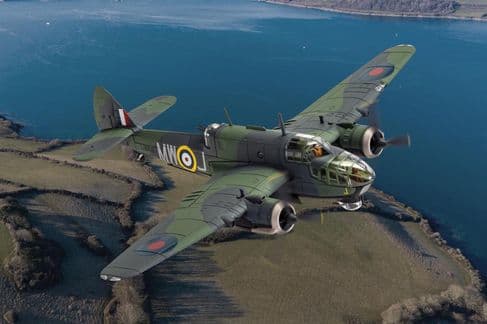
Recently, 1/72nd scale Aviation Archive collectors have benefitted from the addition of our new Bristol Beaufort, our two seat Spitfire T.9 and the completely re-tooled Spitfire Mk.IX, however, this range is about to welcome a real aviation heavyweight, a model which will have thousands of collector's creating a B-26 space within their display cabinets. As a subject, the Martin B-26 Marauder could very much be described as being 100% Corgi and therefore, we are determined to do this aircraft justice, ensuring it meets our collector expectations and is regarded as 'best of breed' when it comes to collector perception.
The Martin B-26 Marauder was arguably amongst the most distinctive aircraft of the Second World War, an advanced medium bomber which was introduced in late 1941 and arriving in the Mediterranean/European theatres from late 1942 onwards. It would be operated extensively in the months leading up to and following 'Operation Overlord' and the Allied amphibious landings in Normandy, proving itself to be one of the most effective strike aircraft available to Allied air forces and one which would earn itself an enviable bombing accuracy and safety record, even though this was achieved after something of a challenging introduction.
Scan day at Utah Beach, the Corgi team were determined to produce the most accurate representation of this famous aircraft produced in diecast metal, which involved the LIDAR scanning of a preserved example of the aircraft.
For a new tooling project of this magnitude, the Corgi team wanted to ensure they had everything they needed right from the very start and were adamant that the LIDAR scanning of a preserved aircraft was the only acceptable starting point for them. That being the case, a small team set off for the Utah Beach D-Day Museum near Sainte-Marie-du-Mont, in Normandy and a date with the magnificent Marauder they had on display.
Although the scan team managed to secure incredibly detailed images of this beautifully preserved bomber, they were fully aware that the aircraft was a 'G' variant of the B-26 masquerading as an earlier 'B' variant, knowledge which would be crucial to the project as it moved forwards. Although the LIDAR scanning of a subject is usually the ideal starting point for any new tooling project, many aircraft found in museums and collections all over the world today are not exactly as they would have been during their service careers and feature non-standard additions which were required in order to allow the aircraft to go on public display.
This isn't actually too much of an issue, because as long as our researcher is fully aware on all these modifications and inaccuracies, he can point them out to the designer and provide the information they will need to ensure their CAD files ignore these and include the relevant details required. All in a day's work for the talented Corgi research, development and design team.
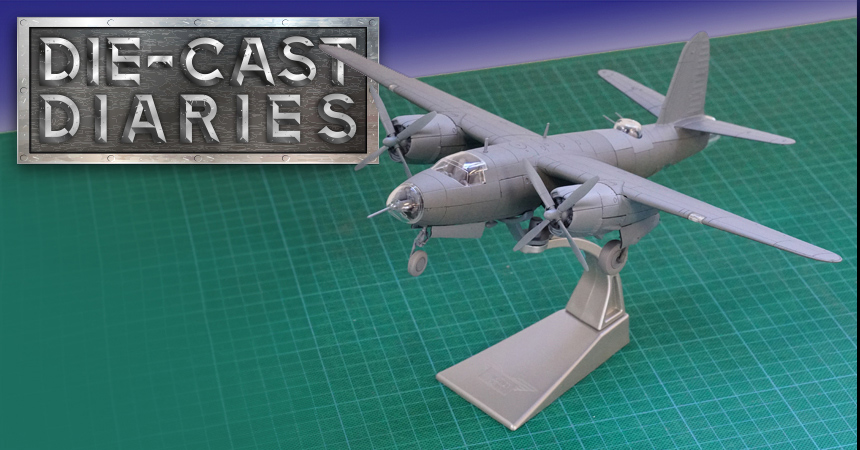
The stage the project is at now is actually quite advanced and represents an important step towards this stunning new model taking its place on display amongst its Aviation Archive predecessors. The majority of the images we are sharing in this update feature the engineering sample model produced from the new B-26 Marauder CAD, the first time the design has been committed to diecast metal. The arrival of this model allows the Corgi team to check, double check and check again every aspect of the new model's design, from shape accuracy and overall dimensions, to surface detailing and component assembly inspection, something which takes quite some time to complete, but something the team are expert in undertaking.
Scanning of the Utah Beach D-Day Museum's beautiful B-26 Marauder allowed our designers to produce accurate CAD files, the starting point for introducing any new tooling project to the Aviation Archive range.
As this is the first time the new model has been produced in metal, its arrival also allows our team the opportunity to assess the general aesthetic appeal of the Marauder, something which will probably be the first and most lasting impression any Aviation Archive collector will eventually have of the new model. First reports are that this is a bit of a beast, with a high metal content and an impressively robust design, a classic piece of Corgi Aviation Archive diecast. The eagle eyed amongst our number will also note a small mistake made whilst assembling the B-26 Marauder model for photography purposes, as the main undercarriage has been attached the wrong way around.
As any Marauder fan knows, the main wheels face outwards on this aircraft, however, the adhesive used to assemble the separate parts on this model proved to be so strong and so fast acting that even though the mistake was noticed almost immediately, there was no going back and we were stuck with it (quite literally). Fear not though, the production model will leave this decision to you, as there will be the usual option to have the aircraft displayed either on its undercarriage, or in flight configuration, however, we just wanted to point out the issue at this stage, just to avoid any concern from those looking forward to the arrival of this model.
From this stage in its development, things will start to move much more quickly. After thorough checking and requests for any alterations or modifications have been issued, the team will authorise the production of a pre-production sample model, essentially the new B-26 Marauder tooling finished in the first scheme to be released (more on that a little later), resulting in a further round of checking and report writing to be undertaken. At the same time, as long as the development team are sure that production will commence within their strict timing parameters, the individual product page for the model will appear on the Corgi website and collectors will be able to pre-order this fantastic model for the first time. As you will be aware, we normally like to keep this period of time within the term of a catalogue/range lifespan, so usually no more than four months.
By that stage, we can all start to look forward to the arrival of a model which is our scale diecast tribute to one of the hardest working strike aircraft of the Second World War and one which was heavily involved in offensive preparations for the Allied Normandy landings and D-Day.
An exclusive first look at the metal engineering model produced from the new 1/72nd scale Martin B-26 Marauder CAD files. Please be aware that all these images feature a development sample model which may be subject to further change before our development team are happy to allow it to proceed to production. You will note that the main undercarriage legs have been incorrectly fitted facing inwards - we would have changed this, however, the glue used proved to be extremely 'super' on this occasion.
Without doubt one of the most distinctive aircraft to engage in combat during the Second World War, the Martin B-26 Marauder was a high speed medium bomber designed for the United States Army Air Force, at a time when the air forces of Europe had already introduced several capable new bomber aircraft types into service. Despite their intention not to be drawn into the conflict on the other side of the Atlantic, America was still under pressure to introduce a modern and capable new strike aircraft, so when a new design from the Martin Company was circulated, one which promised hugely impressive performance, the US Government ordered it straight off the drawing board, and crucially, in advance of any prototype aircraft being flown.
If that were not worrying enough, perhaps the more concerning development came some time later, when due to timing pressures, the first production aircraft were delivered straight to the USAAF prior to the usual completion of testing, evaluation and integration procedures. This decision would have almost disastrous consequences for the new aircraft, tarnishing its reputation and almost consigning it to the aviation history books before it had flown a single combat mission.
A high wing monoplane, the B-26 Marauder was powered by a pair of Pratt & Whitney R-2800 Double Wasp radial engines, the most powerful units available to the designers at that time, engines which would provide the Marauder with great speed, compared with contemporary aircraft of the time. The highly advanced nature of the design saw the introduction of many new technologies, however its relatively small wing and ever increasing operational weight requirements gave the B-26 a high wing loading, something which made handling extremely challenging for novice pilots to master. This would ultimately result in a high number of fatal accidents occurring during the aircraft's introduction and whilst engaged on training flights.
Please be aware that these images have been taken to aid the development team in their work and are raw and unedited - you are essentially looking at these pictures at the same time as the Corgi development team. As stated previously, they feature a sample model which may well be subject to further change.
These handling challenges proved so significant that the B-26 Marauder quickly inherited the unpleasant nicknames of the ‘Widow Maker’ and ‘The Flying Coffin’ and almost brought about its premature withdrawal from service. There were reports that some crews actually handed in their wings after refusing to fly the aircraft, such was its frightening reputation. Thankfully, the adoption of some design modifications and radical alterations to the flight training programme, resulted in a significant change of fortune for the B-26, ultimately transforming the reputation of the Marauder from something of an aviation nightmare, to one of the most celebrated and successful combat aircraft of the entire Second World War.
Under the leadership of famous American aviation celebrity Jimmy Doolittle, he would head something of a high-profile charm offensive for the Marauder, flying it to discover where the potential problems lay and more importantly, how to overcome them. He discovered that the aircraft was extremely capable, however, because it was rushed into service and without establishing a robust pilot conversion program, the damage had already been done and was effectively self-inflicted.
A final selection of images featuring the 1/72nd scale Martin B-26 Marauder engineering sample produced from the new tooling CAD files. We can start to look forward to this beauty arriving in the New Year.
This perfect storm resulted in a situation where pilots were uncertain, if not afraid of flying the Marauder and as a consequence, didn't want to take it into combat. On the advice of Doolittle, an official Air Force instructional film was produced to show pilots and ground crews how to handle the aircraft correctly, something which served to allay many of the fears they may have had and provide some of the basic conversion support the aircraft's rushed service entry had bypassed.
The Marauder would go on to establish an excellent operational reputation, particularly when used in the medium altitude bombing role - it would ultimately go on to post the lowest combat loss ratio of any USAAF bomber used during the Second World War. Martin B-26 Marauder units would go on to fly thousands of strike sorties against a great many targets in preparation for the D-Day landings, attacking anything from rail marshalling yards and airfields, to Axis defensive fortifications and V1/V2 rocket sites, mainly from altitudes between 10,000 and 15,000 ft.
Martin B-26B-15-MA Marauder 41-31576/AN-Z 'Dinah Might', Flown by Major David Dewhurst, 553rd BS/386th BG, USAAF 9th Air Force, Station 164 Easton Lodge, Essex, D-Day 6th June 1944.
In a major exclusive for the Corgi blog, we have been cleared to share details of the first scheme our new 1/72nd scale Martin B-26 Marauder model will be released in, one which commemorates the efforts of Allied bomber crews both prior to and immediately following the D-Day landings. It's the scheme worn by the Marauder on display at the Utah Beach D-Day Museum, however, their aircraft wears these markings in tribute to the aircraft flown on D-Day by Major Dewhurst, even though their aircraft is a later 'G' variant. Our model is actually a representation of B-26B-15-MA Marauder 41-31576/AN-Z 'Dinah Might' as flown by Major Dewhurst and his crew on D-Day itself.
In addition to their D-Day preparation contribution, Marauders also proved particularly effective in support of actions referred to as the Battle of the Bulge, where they prevented the reinforcement of German units by destroying rail marshalling yards and bridges, creating choke points where Allied airpower could concentrate their efforts in destroying the enemy equipment gathering below them. As the Allies continued to make significant gains in Europe, UK based Marauders moved to operate from Advanced Landing Grounds in France and Holland, where their effective bombing support continued to be as effective as it was in demand, continuing to support Allied ground forces in their inexorable march towards Berlin and victory.
With its eventual combat reputation turning out to be one of the most impressive of all Allied bomber types during WWII and with its extremely distinctive circular fuselage cross-section giving it such an attractive appearance, we know many collectors will be looking forward to the release of this impressive new model and to filling a rather significant medium bomber sized space in their display cabinets.
An exclusive first look at the artwork file produced in support of the initial release from this stunning new tooling release.
This particular aircraft was given the critical task of leading an anti-beach fortification raid against Widerstandsnest 5 (Nest of resistance, or strongpoint) overlooking Utah beach only a couple of minutes prior to the troop laden landing craft heading for the landing beaches themselves. Flown by Major David Dewhurst, Commander of the 553rd Bomb Squadron, this was one final opportunity to neutralise these fortifications and give troops a better chance of making it off their assigned landing beach in the frantic minutes to come.
Dewhurst's aircraft, which was named 'Dinah Might' after a Bing Crosby tune of the day, would release its bombs at exactly 06.24.30 on D-Day, with navigation and timing being critical to the success of the mission and the safety of the men waiting to make their historic seaborne assault. Dewhurst would eventually complete 85 combat missions over Europe, prior to the end of the Second World War.
The details behind this final pre-beach landing bombing raid of D-Day clearly illustrate why the Utah Beach D-Day Museum have chosen to present their Marauder in this historic scheme and why it forms such a poignant centrepiece for their impressive museum. With next year marking the 80th Anniversary of D-Day, we are all hoping that our new 1/72nd scale Martin B-26 Marauder model will also make for a fitting scale tribute, in addition to being a cherished addition to many an Aviation Archive model collection.
The next stage of this project will be when the development team receive a fully decorated pre-production sample model in Dinah Might livery. Obviously, we will be bringing you pictures of this model as soon as its available.
We hope this update has shown that this much anticipated new tooling project is advancing nicely towards its initial release and if everything proceeds as planned, our new Marauder should form part of the next range launch in January. That means the new B26 Marauder will have its own product page on the Corgi website and will be available to accept pre-orders at that point.
We look forward to that day with some excitement.
That's all we have for you this time around, however, we will be back as usual in two weeks' time, with a further selection of model project updates to bring you. Between editions, we are always interested to hear your views on all things Corgi, so if you feel like dropping us a line to comment on anything blog, collecting or Corgi model related, or even to suggest a topic you might like to see us cover in a future edition, please do drop us a line at diecastdiaries@corgi.co.uk.
If you can’t wait for the next blog, you will find plenty of Corgi model collecting discussions taking place on our official social media channels, access to which can be obtained by clicking on the respective links at the foot of the Corgi website homepage.
Link access to Corgi social media sites.
Thank you for continuing to support our Die-cast Diaries blog. Our next edition is scheduled for publication on Friday 15th December.

