

Welcome to this first edition of CORGI Die-cast Diaries for 2026, and your regular blog review of all the news, updates and topical stories from the captivating world of CORGI die-cast model collecting.
As this latest festive period has been a strange one from the perspective of blog publication timings, this first edition of DCD for the year is the one which should have been posted last week, but due to the break, is coming a little out of sync. It’s also not going to be a traditional update as such, because we have so much going on during the early part of the year that we simply had to tell you all about it. We’ll be getting back to our normal schedule during January, but until then, it’s over to our Head of Marketing David Mather for some New Year notifications.
Welcome to the first edition of Die-Cast Diaries for 2026, and we’re here to deliver something a little different this time. Since we’re in the fallow period between New Year and the first range launch of the year, we are in truth a little bereft of our usual content of new model samples and development updates. We do however have some teasers for big news that will be revealed throughout the year, as the most important thing to note about 2026 is that it is CORGI’s 70th Anniversary!
One of our first reveals for the anniversary year is a small piece of housekeeping. The CORGI logo in its current form has existed since 2008, so we felt it was time for a very small refresh. As such we’ve removed the 3D shine from the logo, so it operates better as a stamp-style logo across print and digital usage.
But that’s not all, as we couldn’t let this big year pass without a complimentary logo to mark it.
The CORGI 70th Anniversary mark is designed to sit alongside the main CORGI logo, with the ability to feature a range of different colour options from a single colour, foil (it is a platinum anniversary after all!) and multi-colour versions that highlight specific points in the brand heritage. You can see some of these options in the graphic below.
Graphic inspiration from across Corgi’s proud heritage
In 2026 we’re also going to be working with a host of new partners to deliver some really exciting new models to collectors. We’ve been quietly working throughout the past several months to get things into place, and we’ll soon be ready to announce exactly who we’re working with and on what, but besides continuing our work with Richard Hammond and his restoration business ‘The Smallest Cog’, you can expect link ups with relevant organisations to create products across the Aviation Archive and Vanguards ranges.
In addition to this, we will also be seeing exciting new product introductions to celebrate the release of the new James Bond videogame 007 – First Light, the 20th Anniversary of the release of Casino Royale, the 60th Anniversary of Star Trek, and the 50th Anniversary of Aardman – and more besides that that we can’t talk about yet!
To mark a big year from the CORGI we’re investing heavily in new tooling in 2026, spread across the key areas of Aviation Archive, Vanguards and our Popular Culture ranges.
While at this stage, we’re not going to divulge specifics, we can share that throughout 2026 we’ll be updating on three new tool and two heavily modified existing Aviation Archive models, five new tool Vanguards, and six new tool pop culture models, with even more beyond that in early development.
To whet your appetite for the new releases, here is the exclusive first look at a rendered image from the CAD of our previously announced new tool Range Rover Classic, due to be announced for pre-order at the January Range Launch.
We’ll have more to share at the January Range Launch in a couple of weeks.
And to confirm, we’ll be unveiling the first selection of 2026 products for pre-order on Wednesday 14th January 2026 at 10:00 GMT, at the same time as talking about some of our new tooling and the first new partnership reveals mentioned above in much greater detail.
We’ll see you across our social media channels then!
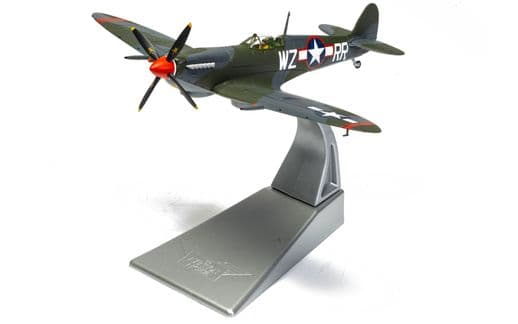
Over the holiday period, our good friends at Suffolk Spitfire sent us a selection of images we’ve been dying to share with our readers. With their magnificent aircraft tucked away for Christmas, they decided to have a Real versus Corgi photoshoot featuring our 1/72nd scale version of the wartime Spitfire their beautifully restored aircraft is presented as – ‘Porky II’.
We think you’ll agree that both look stunning.
As one of the world's premier fighting aeroplanes, the Supermarine Spitfire was of interest to any air arm able to get their hands on them, including the Americans. Some American volunteer pilots travelled to Britain before the US had entered the Second World War, flying with the Royal Air Force and flying both the Hurricane and Spitfire operationally. Once America had entered the war, most of these pilots transferred to US units, exchanging their Spitfires for the mighty Thunderbolt, a massive fighter which wasn’t referred to as the ‘Juggernaut’ for nothing.
RAF pilots joked with their American colleagues that if they were to be attacked by a Messerschmitt, they could unstrap themselves and run around the fuselage dodging the bullets as they went. As we now know, the Thunderbolt would prove to be an excellent fighting aeroplane, however, American pilots who had time on Spitfires never lost their affection for the British fighter.
The USAAF did use the Spitfire operationally, with around 600 examples eventually seeing American service, something which again illustrates the high regard in which the aircraft was held. The 31st Fighter Group arrived in the UK during the summer of 1942, scheduled to fly the Bell P-39 Airacobra, which were following on behind. Having already flown the fighter in the ETO, RAF officials convinced the Americans that the P-39 was unsuitable for combat operations in Europe and furnished their pilots with Spitfires.
This Spitfire looks spectacular in any scale.
The 31st FG used their Spitfires extensively during operations in support of the Allied amphibious landings at Dieppe, however, their time flying from bases in the UK would be short and by October, were sent to Gibraltar to take part in the impending invasion of North Africa.
During this vital, yet little known aspect of the Second World War, it was crucial for Allied forces that the Axis powers were removed from North Africa, so this could be used as a launch platform for further operations across the Mediterranean and into the Italian mainland. The Spitfires of the American 31st FG were heavily involved in these operations, flying fighter sweeps, attacking ground targets and escorting Allied bombers, often flying from recently captured enemy airfields.
Moving on to cover amphibious operations against Sicily and at Salerno, their Spitfires were often required to operate from bases which were less than ideal, having nothing but the most basic of amenities for the comfort of air and ground crews. A move to the airfield at Pomigliano brought about a welcome change in this situation, as it could boast a concrete runway and permanent accommodation blocks for group personnel.
As arguably the most famous fighting aeroplane the world has ever known, the Spitfire didn’t only wear the famous roundel of the Royal Air Force during the Second World War, it would also represent several air arms, including the USAAF. When the 309th Fighter Squadron moved to support Allied operations in North Africa, and subsequently on to Sicily and Italy, they took their Spitfire Mk.V fighters with them, and would find themselves fully committed to the fighting.
Receiving upgraded Mk.IX variants of the Spitfire from April 1943 onwards, these powerful aircraft would be used to provide fighter cover for Allied bombers across the MTO, and even to protect earlier variants of the Spitfire which were still operational.
This beautifully presented Spitfire was the mount of Lt Robert Connor, who playfully embraced the less than flattering nickname his squadron mates had given him, by having distinctive artwork painted on the starboard side of his Spitfire. It featured the stuttering cartoon character Porky Pig and his Loony Tunes catchphrase ‘That’s All Folks’ inside something resembling a large slice of white bread.
The aircraft carried the name ‘Porky II’ as the pilot was thought to have named an earlier assigned Spitfire Mk.V as Porky, and he wanted to distinguish between the two. The 309th would finally exchange their Spitfire Mk.IX aircraft for new North American P-51B Mustangs which possessed greater range in March 1944, but not before they had written a particularly interesting chapter in the annals of USAAF chronicles.
An aircraft wearing these same markings is now one of the star attractions on the UK Airshow circuit, operating as The Suffolk Spitfire, and resplendent in its unusual USAAF markings. Of course, she comes complete with her Porky II artwork and smart red detailing, one of the most distinctive restored Spitfires flying in the world today.
What a spectacular way in which to launch ourselves into a new year of Corgi die-cast model updates and announcements – here’s to 2026!
May we take this opportunity to wish each and every one of you a very happy and prosperous New Year, filled with plenty of die-cast collecting fun. We’ll be back as usual in two weeks’ time, when we’ll have a further exclusive selection of the latest Corgi die-cast model updates and features. As ever, you could always drop us a line if you felt moved to do so, to comment on anything blog, collecting or Corgi model related, or even perhaps to suggest a topic you might like to see the team cover in a future edition. As always, our diecastdiaries@corgi.co.uk address is the one to use.
If you can’t wait for the next blog, you will find plenty of Corgi model collecting discussions taking place on our official social media channels, access to which can be obtained by clicking on the respective links at the foot of the Corgi website homepage.
Link access to Corgi social media sites.
Thank you for continuing to support your Corgi Die-cast Diaries blog. Our next edition is scheduled for publication on Friday 9th January, when we look forward to seeing you all back here then.
Thank you so much for your continued support.