Welcome to the latest edition of Corgi Die-cast Diaries, your regular blog review of all the news, updates and topical stories from the captivating world of Corgi die-cast model collecting.
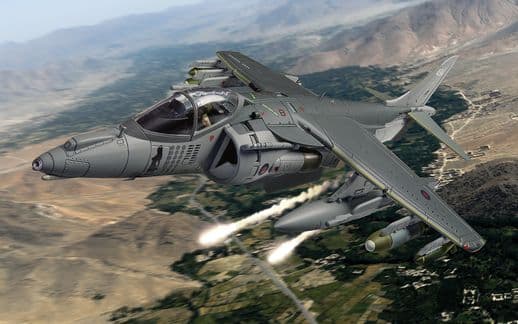
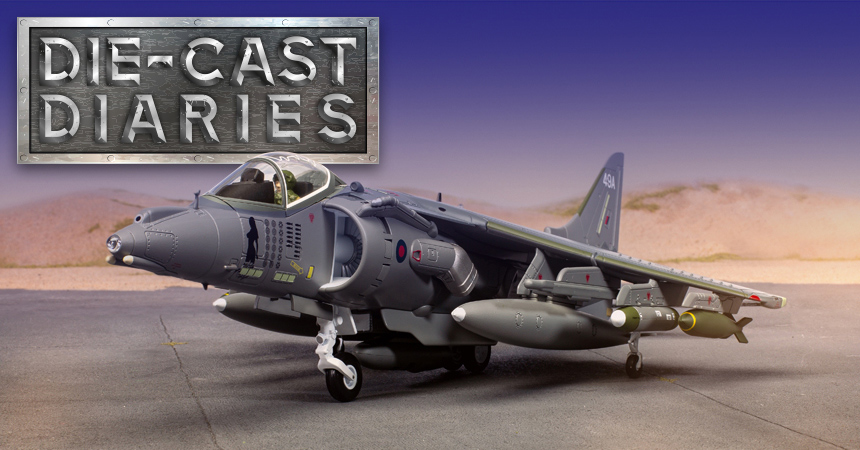
We have something really special for you in this latest Corgi update, as we prepare to welcome the imminent arrival of the latest addition to our 1/48th scale range of classic post war British aircraft types, the new Second Generation Harrier tooling. A range addition we know many Aviation Archive fans have been looking forward to, we are delighted to be in a position to share sample images of the latest advanced production model with you in this update, in addition to looking back at a project which is so eagerly anticipated by so many people. You will also be pleased to hear that our photographer Mike has been at it again, and he has produced the latest in his much-loved series of 'scenic specials', one showing a fully tooled up and mission ready RAF Harrier, or to be completely accurate, our scale die-cast representation of one.
After gorging ourselves on all things new Corgi Harrier, we will end this latest update by taking a little photographic tour of the new Wonder Works exhibition at Hornby HQ here in Margate, an attraction which will surely appeal to millions of people who have enjoyed one of our models over the years. Taking our first look at an attraction billed as Kent's ultimate hobby experience, we will be starting our tour from a Corgi display perspective, with a couple of other highlights thrown in for good measure.
We have a feature packed edition of Die-cast Diaries awaiting your inspection this weekend, so as the weather doesn't look all that great for the next few days, why not take the opportunity to catch up with all the latest model developments from the world of Corgi?
Great news for the Aviation Archive collector, this CAD screenshot illustrated how the new Harrier II project was advancing, even though it wasn't available to be pre-ordered at that time.
Although 1/48th scale aircraft models have been a feature of various Corgi ranges since 2000 with the first US helicopter releases and further enhanced with the 2007 launch of our ever popular Great War fighter range, the announcement or our intention to produce a 1/48th scale English Electric Lightning F.6 in 2017 definitely took this range in an exciting new direction and offered the prospect of some of the most impressive die-cast display aircraft models ever produced. Following the arrival of the first Lightning release, collector conversation quickly moved on to potential subject matter people would like to see added to the range over time, with some real aviation heavyweights topping this list of enigmatic suggestions.
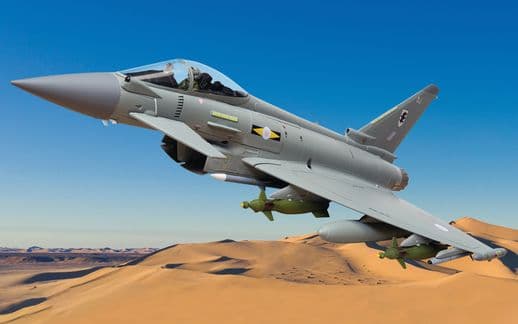
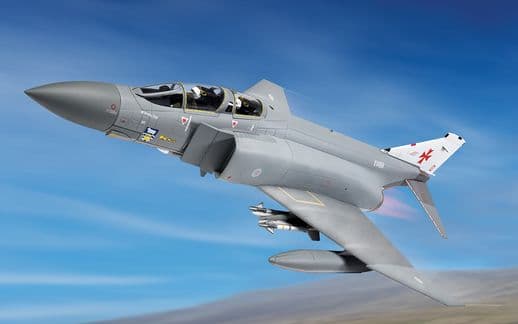
The follow up to the Lightning was the British variant of the mighty McDonnell Douglas Phantom, a fabulous model which has real presence on the display shelf and makes for a stunning model display centrepiece if ever there was one. In order to keep pace with the high standards set with these initial releases, it was clear that new tooling additions three and four would have to be pretty special subjects too, however, we knew we had the right subject aircraft lined up and ready for blast off. Coming in at number three was Britain's current air defence fighter and arguably one of the most effective multi-role combat aircraft in service today, the Eurofighter Typhoon, with a real ace up our sleeve to come in at number four.
As one of the most popular aircraft in the history of flight and certainly of the post war era, the Hawker Siddeley/BAe Harrier was a technological marvel and a product of the British aviation industry which was the envy of the world when it first took to the skies. Loved by the British public by virtue of its unique attributes and display prowess when performing at Airshows, the most pressing issue the Corgi team faced at the start of this new tooling project was which variant of Harrier should we select as our subject? With this year's Falklands anniversary in mind, should we design a Sea Harrier FRS.1, or go for the early RAF Harriers which proved such technological marvels? Do we look in a completely different direction and look towards the end of the Harrier's career, inducting the second generation of Harriers into the Aviation Archive hall of fame?
Our team had great weather on scan day, however, this was going to be a challenging design project for them and as much detail as they could possibly secure was going to be essential if they were going to succeed, whether that be scan data or detailed photographs.
As we all now know, we decided to go with the larger and much more capable Harrier II variant, not just because these were the final Harriers to see British service, but also because it's a type which is still in overseas service to this day. In addition to this, we have to also acknowledge the sheer number of appealing scheme options available for us to access.
Although we have already featured a couple of project updates within DCD over the past few months, things have just become much more serious on the subject of Corgi Harriers and we have news to share. As we have recently received an advanced production sample of this stunning new model, we are delighted to now be in a position to share images of this latest impending addition to our 1/48th scale post war British jets range with our readers.
Harrier II - Britain's Harrier, only better!
Marking a significant development in the history of this magnificent aircraft, the Second Generation Harrier, or Harrier II, may have shared many visual similarities with its famous VSTOL predecessor, however, this was actually a very different aeroplane, one which owed much to the American McDonnell Douglas Corporation and the latest technologies the aviation world had to offer. Essentially, this new generation of Harrier was a completely different aircraft, a much more capable aeroplane in every respect and a space age development of this now familiar VSTOL Harrier theme.
It would probably be true to say that the original Harrier was always something of a tactical compromise and in order to achieve to unique feats it was capable of performing, sacrifices had to be made. Although providing the RAF with a truly flexible attack aircraft, the Harrier's lack of range and relatively low offensive payload were major issues and what the RAF really needed was a bigger Harrier.
A major advancement in the project, this first engineering sample is something of a hybrid model and one which would go through some quite significant revisions.
In 1973, a joint BAe/McDonnell Douglas program began exploring options to produce a Harrier which was bigger, faster, had more range and greater load carrying capabilities than its predecessor, however, with cost beginning to spiral, the British subsequently pulled out, leaving the American company to continue alone. Back in the UK, a separate study was later initiated to explore the possibility of upgrading the existing RAF Harrier force, however, again mainly for financial reasons, this failed to produce a workable solution. Thankfully, by the end of the 1970s, the Americans were back on the scene and they had impressive results to share. Now looking for a working partner, they introduced their futuristic new Harrier to the British and after some negotiation, managed to get them back on board - the capable new Harrier II could now continue towards its service introduction on both sides of the Atlantic.
The program would eventually result in the introduction of the much more capable British Harrier GR.5 in 1987, with further successive capability upgrades over the next couple of decades maintaining the Harrier's position as one of the world's foremost strike/attack aircraft. Retaining the unique attributes which brought its predecessor to the attention of the aviation world, this latest incarnation was described by many at the time as being potentially the most valuable fixed wing aviation asset available to any air arm, anywhere in the world.
With increased range, greater power and more weapons carrying capability, this new generation of Harrier was intended to strike hard and fast, often at the outset of any military operation, before returning again once refuelled and rearmed, to support infantry units in their ongoing endeavours. Always on station and usually in the thick of the action, is it any wonder that military personnel held the Harrier in the same affection as the public always have. This significant development upgrade only served to enhance the enduring legacy of the Harrier, with this later generation of aircraft regarded as arguably the most flexible aviation asset available to any air force in times of conflict and the one most likely to be deployed first.
Another magnificent Michael Collins photographic special. For this image, he attempted to recreate some of the official photographs released at the time of RAF operations in Afghanistan - it really is stunning!
Without doubt, the capability for which the Harrier was most famous and the attribute which cemented its place in the hearts of aviation enthusiasts all over the world was its ability to take off and land vertically. A capability which gave the aircraft incredible versatility and gave rise to its nickname the 'Jump Jet', the Harrier had the operational flexibility of a helicopter, allied with the speed and striking power of a fixed wing jet, attributes which made it both versatile and deadly.
In a service role, performing a vertical take-off in an operational situation was something which rarely happened, as this used far too much fuel, placed increased strain on the hard-working Pegasus engine and would not allow the aircraft to operate with anything like an effective weapons load. A rolling take-off would still see the Harrier taking to the air in a much shorter distance than a traditional strike aircraft, but would also allow it to carry a much more effective weapons and fuel load.
At its heart, the Harrier was a close air support strike aircraft, or 'mud mover' to the initiated, an aircraft troops on the ground could rely on to help them dislodge enemy strongholds or particularly stubborn areas of hostile resistance, undoubtedly saving many of their lives in the process. As the Harrier II continued to be developed, this famous aircraft would become ever more effective, be that whilst operating from a land base, or from the deck of an appropriate ship - the Harrier didn't even need a large aircraft carrier from which to conduct offensive operations.
The following selection of images all feature an advanced production sample of the new 1/48th scale Harrier II, the first release from this exciting new tooling project.
As one of the most capable aviation assets in RAF service, Harriers were never too far from the world's conflict hotspots, such as 'Operation Herrick', Britain's commitment to supporting British and NATO personnel on operations in Afghanistan. Providing air cover, ground close air support and air strikes against enemy insurgents, the first detachment of six RAF Harriers arrived at Kandahar Airfield in 2004, with aircraft remaining in theatre until Harriers were relieved by RAF Tornados in 2009. Flying a punishing schedule of these vital missions in support of ground operations, Harriers from Nos 3, 1 and 4 Squadrons rotated through Kandahar during that period, augmented by No.800 Naval Air Squadron from September 2006 until January 2007.
During one of the busy periods of operational flying from Kandahar, a morale boosting visit was arranged for British troops to meet two rather high profile celebrities, in a rare break from their hectic work commitments. Page three pin up girls Michelle Marsh and Lucy Pinder travelled to Afghanistan to show their personal support for the troops and in preparation for their visit, ground crews made two rather unique artistic additions to two of the Harriers under their charge. Harrier ZD437 had a silhouette of Michelle Marsh applied to her nose at the head of her impressive mission marking scoreboard and was also given the name 'Michelle' to complete tribute. The other aircraft, Harrier ZD404, was to benefit from a similar artwork application, this time carrying a representation of Lucy Pinder herself on its nose and appropriately given the name 'Lucy'.
The two celebrities appeared to be rather taken with this unusual tribute and several photographs of them posing with their respective Harriers were taken and used for publicity purposes. Unfortunately, the RAF top brass were less enthusiastic about these unofficial decoration additions to two of their aircraft and quickly ordered it be removed, meaning that these Harriers would only carry their by now rather notorious artwork for a relatively short period of time. During Operation Herrick, the vast majority of British aircraft committed to the mission would be based and operated from RAF Kandahar.
More new Harrier model images, clearly illustrating just how impressive a fully tooled up RAF Harrier looked.
BAe Harrier GR7 ZD437 made her first flight on 3rd November 1989 and was subsequently delivered to the Royal Air Force later that same month. She was one of the aircraft still based at Cottesmore when the Harrier made its final flight operation in British service on 15th December 2010, although she had long since shed her famous page three nose artwork by then.
As would prove to be the case with most of the airworthy Harriers withdrawn from British service in 2010 and in a move which infuriated a great many people at the time, the remaining UK Harrier fleet of around 74 airframes, plus all available spares and associated equipment, would be sold in their entirety to America in 2011. The Americans needed the aircraft in order to maintain their own active fleet of US Marine Corps Harriers flying, aircraft which they intended to keep in service for many years to come.
With many of the British aircraft only recently having undergone upgrade and re-fit at significant expense to the treasury, the Americans were getting something of an aviation bargain. One aviation commentator in the know at the time described how the US were ruthlessly taking advantage of this unexpected situation, benefiting from all the money the Brits had only recently spent on extending the service life of their Harriers. ‘It’s like they are buying a car with only 15,000 miles on the clock at a knock-down price’. With that cost being a staggeringly modest £110 Million, this was certainly a shrewd piece of international aviation business by the Americans.
A slightly different angle on Mike's beautiful scenic image, we are very much looking forward to welcoming this stunning new model to the Aviation Archive range.
A fantastic new tooling addition to the growing 1/48th scale Aviation Archive post war British jet model range, the first of our second generation Harrier releases is scheduled to be in our warehouse towards the end of the year, ready to take its place at the head of many a collection of Corgi models. As you can see from this pictures shown above, this is one release definitely worth getting a little excited about.
Just part of the impressive Corgi display within the new WonderWorks hobby attraction at our Margate head office site.
Having included details in the previous edition of Die-cast Diaries, we are delighted to confirm that our new Head Office attraction, The Wonder Works, is now LIVE and looking forward to welcoming visitors. A destination which we hope will become something of a hobby pilgrimage for anyone who has ever spent time building, collecting, admiring or just playing with any of the many thousands of products which proudly wear one of our famous hobby brand names, this new attraction will enthral and inspire generations of visitors, from those who have many years already invested in our brands, to those who have yet to sample their delights.
Located in our home town of Margate, The Wonder Works is based in the old factory which became home to Hornby Hobbies back in 1954. The former Hornby Visitor Centre opened here in 2010 and went on to attract hundreds of thousands of visitors from around the world over the years which followed. Featured in the popular TV series ‘Hornby: A Model World’, it has provided viewers with a behind-the-scenes glimpse into Britain’s best loved model-making companies.
A visit to The Wonder Works will include showstopper exhibition pieces, fascinating items of memorabilia which will only be on show for a limited time before being replaced with something equally exciting and probably something which inspired its scale recreation as one of our models or collectables. As everything is now live and awaiting your visit, please keep an eye on our official social media channels for details of the latest exhibit developments.
COLLECTING AND SHARING SOUVENIRS OF LIFE
Hobby history in die-cast. This Ford Consul Saloon was the first Corgi Toys release back in 1956, the start of an enduring hobby story.
Paying particular attention to the Corgi section, in addition to hosting some very special guest displays of iconic vehicles, ones which may well have found their way into the Corgi range recently, our display includes a fascinating trip down die-cast memory lane and features a collection of models which will not only bring back happy memories for many visitors, but will also allow them to see how we introduce new models to the range, from initial research concept, right through to the release of the first model from that new tooling. The Corgi presentation boards on display help to guide us on a journey through the history of CORGI models with some of the most iconic die-cast toys on display for your enjoyment, including such legendary models as the original gold 261 Aston Martin DB5 and 267 Batmobile with Batman and Robin.
We are invited to discover modern CORGI ranges, including Aviation Archive, Vanguards and our entertainment licenced products, see how CORGI models are made today, and learn how we made a 1:12 scale version of the Triumph Scrambler 1200 motorcycle from the latest James Bond film, a machine which is currently on display as part of the exhibition.
Corgi’s famous model vehicles have captured the imagination of millions since the brand was created by the Mettoy Company of Northampton in the 1930s. Today, the majority of Corgi cars, trucks and buses are produced as once-only Limited Editions and are often sold out within weeks of release.
A Corgi model haven. Our WonderWorks display features an impressive selection of Corgi models old and new, including a display charting the 25 year history of the Aviation Archive range.
It all starts with a scan, well it certainly does over recent times. This display features a selection of prototype model designs, a crucial stage in the life of any new model tooling project.
A fascinating subject which rarely receives the attention it deserves, the production of Corgi's distinctive box artwork is an essential component in the release of any model and is the domain of our talented Senior Brand Creative Jules.
The brand has been associated with numerous licenses during its history, from Batman to Thunderbirds, but the most famous of these is James Bond’s Aston Martin DB5 from the film Goldfinger, which was originally issued in October 1965. This model went on to sell over 3.9 million examples, earning it a unique place in British toy history as a result.
As an added bonus for visitors, not only is there an impressively stocked model store on site, but there will always be the possibility that some of the people responsible for bringing some of the latest and greatest new models to the range might be on hand to answer your questions. Once the attraction is established, we may also look forward to the possibility of special collector events and new product launches in house.
A great many people have contributed a significant amount of effort in creating this attraction and we would all be delighted if as many visitors as possible dropped by to experience what The WonderWorks is all about. Please visit the attraction details for all the latest display and visitor information.
We are indebted to our Brand Manager David for supplying us with this selection of display images and whilst most are understandably Corgicentric, he couldn't resist including a couple of display extras - enjoy.
Is that a Ferret Scout Car we see guarding the entrance to the Wonder Works?
A voyage of hobby discovery awaits visitors to the recently opened Wonder Works at our Margate Head Office site.
That's all we have for you this time, however, we will be back as usual in two weeks' time, with a further selection of model project updates to bring you. Between editions, we are always interested to hear your views on all things Corgi, so if you feel like dropping us a line to comment on anything blog, collecting or Corgi model related, or even to suggest a topic you might like to see us cover in a future edition, please do drop us a line at diecastdiaries@corgi.co.uk.
If you can’t wait for the next blog, you will find plenty of Corgi model collecting discussions taking place on our official social media channels, access to which can be obtained by clicking on the respective links at the foot of the Corgi website homepage.
Link access to Corgi social media sites.
Thank you for continuing to support our Die-cast Diaries blog. Our next edition is scheduled for publication on Friday 17th November.