
Welcome to this latest edition of Aerodrome and our regular look at the fascinating world of aeroplanes and the historic aviation scene in the UK.
We begin this latest blog by wishing all our readers a very happy, healthy and prosperous new year and from an aviation enthusiasts perspective, the hope that 2022 will slowly start to resemble something close to a normal Airshow season here in the UK. For me, the start of any new year is a time for ensuring all those image files are backed up and backed up again, before looking through the proposed Airshow schedule and making a few entries in my events diary. As we all know, even though many of us maintained this time honoured tradition through 2020 and 2021, things have been a little different over the past couple of years and even though we look forward with some optimism for a more settled future from an events perspective, we have learnt only too well that we can’t take anything for granted and how things can change with very little notice. That being said, the start of a new year brings the opportunity to be filled with unbridled optimism, so let’s look forward to an enjoyable and productive year.
So how are we going to start the blog in 2022. Despite the recent snow and plunging temperatures, we thought you might like to take a look at one of the Airshow events which did take place last year, one which has a proud association with the BBC’s Children in Need charity, the Little Gransden Air and Car Show 2021. This latest blog is competing with new range launch activity on both the Airfix and Corgi websites, so our notification e-mails will be somewhat delayed this time, even though the blog will be published as usual. Throughout the rest of the year, we will endeavour to bring our readers an interesting mix of historic and contemporary aviation related features, with the possibility of one or two special editions thrown in for good measure and whatever happens with the coming year’s Airshow schedule, we intend to be there to document proceedings. Onwards to Little Gransden.
It isn’t often that an Airshow celebrity is a six foot bear, however, Little Gransden is no ordinary Airshow event.
The grass airfield at Little Gransden is a delightful place from where to enjoy an Airshow, being a much more intimate venue that the ones most of us are used to, allowing everyone in attendance to feel much more a part of the day’s proceedings. Over the years, this show has become famous for its steadfast support of the BBC’s Children in Need fund raising endeavours and the good people behind this event have now managed to raise significant sums of money for this and other worthy charitable causes. Indeed, for the latest instalment of the Little Gransden Airshow, Pudsey Bear was out and about enjoying all the day’s activities, although it has to be said that he was the subject of all the photographic activity and not actually taking pictures himself.
The airfield itself is situated in rolling farmland close to the town of St. Neots in Cambridgeshire and is actually located within the grounds of Fuller’s Hill Farm - as you might well imagine, it is a delightful little spot. It also has neighbours which possess some real aviation heritage, with the former RAF Gransden Lodge now serving as a home base for the Cambridge Gliding Club and for anyone flying out of Little Gransden, they will clearly see the now disused facilities of RAF Tempsford. This wartime airfield is famous for being the rather secretive location from where the RAF conducted clandestine agent shuttles and resistance supply drops into enemy occupied Europe, usually flying at night and often using the Westland Lysander Army co-operation aircraft. With two airworthy Lysanders currently based in Cambridgeshire, I really do need to pay a visit to Tempsford when I am next in this part of the country.
Little Gransden Airshows are always well attended and have built up a reputation for serving up a fun-filled day of entertainment for all, be that on the ground or in the air. The organisers pride themselves on securing a varied selection of display acts for their shows and despite the relaxed, almost pedestrian atmosphere which prevails, they always have plenty of heavy aviation metal and Warbird action for us all to look forward to. In previous years, Maurice Hammond took great delight in beating up the airfield in one of his beautifully restored Mustangs and back in 2007, the Canadian Air Force sent one of their CP-140 Aurora maritime surveillance aircraft to the show, the type’s only appearance at a UK event that year.
Extra EA-300S G-EXIL of the Global Stars was a colourful arrival at Little Gransden.
A classic aerobatic display aircraft from the Soviet Union, this Yakovlev Yak-50 wears an extremely striking colour scheme.
With this year’s show boasting a particularly impressive line-up, which included the first post servicing Airshow appearance of the BBMF Lancaster and a rare outing for the beautiful Vampire Preservation’s T.11 jet trainer, I was determined that I would be making my latest visit to this enjoyable event, especially as Airshows had been a little thin on the ground over the previous eighteen months and this was actually looking like being something of a return to form for the industry. In the end, despite the best efforts of the organisers, neither aircraft displayed at the show for respective serviceability reasons, however, we still had an impressive display to look forward to, if only the weather would be kind to us all.
I am only intending to show a small selection of images from this year’s show for a couple of reasons, not least of which is my intention to produce a follow up blog from the show in a future edition. The other reasons are that despite a positive forecast, the weather was pretty dire and when added to the fact that I was using a completely new camera system for the first time in anger, this didn’t turn out to be my finest photographic hour. The lack of sunshine was a real shame on the day, because not only did the great and the good turn out to enjoy an Airshow in some numbers, but it also seemed as if everyone who owned or had access to an aeroplane on the day also wanted to be at Little Gransden - I have never seen so many aircraft packed onto this small airfield. With the static park full by mid-morning, every inch of available space was required to park visiting aircraft and the marshalls were kept busy all day ….. it was a tremendous sight!
The intrepid wingwalkers of the AeroSuperBatics Team are well used to receiving the adulation of an Airshow crowd.
Fortunate to be afforded a media position along an established hedgerow which runs at right angles to the crowdline, bordering the edge of the static aircraft park, I had a great view of the impressive number of visiting aircraft which continued to arrive all morning. That was until their numbers started to create a problem for the marshalls, a situation which was underlined by the arrival of the two Boeing Stearmans of the AeroSuperBatics Wingwalking Team. Due to a lack of available spots, they had to be parked right where we had taken up position, forcing a quick collection of all our stuff and a move nearer towards the crowdline and the most active area of the airfield. During the course of the coming day, we would have to be moved on quite a number of times for various reasons.
This development had the huge benefit of allowing me to spend a few precious moments with the Wingwalking Team and their beautifully presented aeroplanes. The Boeing Stearman is a rugged two-seat American built military training aircraft from the 1930s and an aircraft which performed a similar role to that of the British de Havilland Tiger Moth. With over 10,000 aircraft produced, these were used extensively in the training of countless thousands of pilots during the Second World War and in the years which followed, would go on to prove popular in numerous aviation applications, due to the rugged and reliable reputation it earned. Used in agriculture and for survey work, many also found their way into the civilian market, with some pilots using the aircraft to entertain crowds with their barnstorming flying routines, as aviation became an affordable pastime for large sections of the population.
The wingwalkers arrive at a display venue in the front cockpit, before jumping out and cleaning their aircraft. The team used two completely differently presented Boeing Stearman’s for this show.
Taking barnstorming performances to another level, the intrepid Wingwalkers of the AeroSuperBatics Team can be seen climbing from the front cockpit of these aircraft to take up a position on the central section of the top wing, before attaching themselves to a specially designed rig and going through what can only be described as an airborne gymnastic performance. What makes this all the more impressive is that all this is being done whilst the two Stearmans are being expertly displayed by their pilots in a series of dynamic formation and opposition manoeuvres.
Performing in all weathers and with a punishing annual display schedule to negotiate, the Wingwalkers show incredible courage in doing what they do, always with a smile on their face and always determined to give their best performance for their latest audience. The Stearman aircraft they stand atop are actually quite different from the military trainers from the 1930s, benefitting from much more powerful engines, additional ailerons for an increased roll rate and the removal of the flight controls in the front cockpit, to better facilitate the work of the wingwalkers. These modifications allow the pilots to perform their breath taking display routines much more effectively, with the aircraft possessing enough power to undertake dynamic manoeuvres without first having to climb to height and build up the required momentum. Throwing these mighty biplanes around the to the delight of the gathered masses, it is sobering to think that the vast majority of these aerobatic manoeuvres are performed with a girl stood on the aircraft’s wing.
The girls didn’t want to show aircraft favouritism, so allowed us to take their pictures in front of both the Stearmans.
Show time for the team, just as the rain clouds rolled in - lucky girls!
A hugely popular display act at every show they attend, we were lucky enough to spend a little time with the team prior to their display slot and Wingwalkers Kirsten and Libby were more than happy to pose for a couple of photographs by each of their differently presented aircraft. Something tells me they are quite used to being stopped and asked for autographs and pictures! Having already cleaned the aircraft on arrival at Little Gransden, I have to admit to feeling a little sorry for them both, because as they climbed on top of the Stearmans wings ready for their latest performance, the weather really began to close in and they would be flying in the worst conditions of the day - they were going to be freezing!
Only a few days after performing at Little Gransden, the team were involved in an emergency situation at the Bournemouth Air Festival, where one of the Stearmans suffered engine failure and was forced to perform an emergency landing in the sea. Thankfully, both pilot and Wingwalker escaped the incident without serious injury and will hopefully be back thrilling Airshow crowds later in the year. With the team’s aircraft wearing the liveries of several different sponsors over the years, the AeroSuperbatics Team are the only aerobatic formation wingwalking team in the world and a much loved act at Airshows across the UK and beyond.
A welcome, if rather unexpected visitor to this year’s show was this rather striking looking Avro Anson C.21 G-VROE based at Sleap Airfield in Shropshire. This aircraft embarked on its RAF career back in 1950 and has been on the UK civilian register since 1977. Previously, this rare aeroplane had been seen wearing both a classic RAF Transport Command scheme and the silver and yellow of RAF Training Command, however, she has recently benefitted for a different look altogether. Now wearing this unusual green livery complete with identification markings, doesn’t she look a picture! She is surely destined to become an enthusiast favourite once Airshows return to something like a normal schedule.
Although not generally regarded as one of the most fashionable British aircraft to see service during the Second World War, the Avro Anson was nevertheless one of the most important aircraft not only of the inter-war years, but also during WWII itself and is deserving of more recognition than it usually receives. An aircraft which began its development in 1933 as a high speed, long range, modern mail carrying charter aircraft, the Avro 652 was still in development when the British Air Ministry issued a requirement for a twin engined, general reconnaissance and multi-role aircraft capable of performing a variety of roles for both the Royal Air force and the Royal Navy. The Avro team felt that their new aircraft would be perfect for the role and later entered it in an official evaluation programme with the competitor de Havilland DH89M, the military version of their biplane Dragon Rapide.
Wearing this smart new livery, this rare aircraft maintains the heritage of both the famous Avro Aircraft Company and one of the most important British aircraft types of the 20th century.
The Avro design was found to possess greater range and endurance and whilst not without a few areas which would require some design modifications, an initial order for 174 militarised aircraft was placed. The Avro 652 would be given the name Anson after an eighteenth century British Admiral of the fleet, a development which did not please everyone at the Air Ministry, but as the aircraft was intended to undertake maritime patrols, the name did seem rather appropriate.
Highlighting the importance of the Avro Anson as a British aircraft type, when it entered service with No.48 Squadron at RAF Manston in March 1936, it became the first monoplane type to achieve squadron service status, but was also the first RAF aircraft to feature a retractable undercarriage. At this time, the advanced Anson quickly began to attract attention from several other countries and in order to capitalise on this interest, some aircraft were diverted from existing RAF orders to fulfil these requirements, with full production forcing Avro to open new manufacturing facilities in the North West of England.
The RAF Anson Mk.I was equipped with a fixed forward firing .303 machine gun operated by the pilot and a single Lewis gun mounted in the manually traversed dorsal turret. It could also be equipped with a modest bomb load, something which was required by submarine hunting aircraft operated by Coastal Command and whilst there were no reports of an Anson sinking a U-Boat, their presence would keep these feared hunters submerged.
There is nothing quite like experiencing the thrill of aviation action at comparatively close quarters, accepting the fact that must be safe for both pilot and spectator to do so at all times and the layout of the Little Gransden airfield allows this more than most venues. This is made all the more memorable if the aircraft you are admiring are classic Warbirds, the piston engined fighters we were all captivated by as youngsters and those which we built as model kits and hung from our bedroom ceilings. We were fortunate at this years show to have two airworthy examples of the magnificent Hawker Hurricane operating from the airfield for the duration of the show, including one which has a claim to being the most significant restored WWII era aircraft flying in Britain today.
Although the Hurricane has historically found itself constantly in the shadow of the more famous Supermarine Spitfire, it possesses real aviation pedigree in its own right and was the nation’s true saviour of the Battle of Britain and the real nemesis of the Luftwaffe. When it entered squadron service at the end of December 1937, the Hurricane heralded a new era of aviation for a Royal Air Force which could now boast the introduction of their first high speed monoplane fighter. From a design perspective, the Hurricane was more evolutionary than revolutionary, taking many of its design characteristic from the successful series of sleek Hawker biplanes which preceded it - in fact, the new fighter was initially referred to as the ‘Fury Monoplane’ project.
This magnificent aircraft has a claim to being the most important restored WWII aircraft in Britain today.
A clever combination of traditional design and manufacturing techniques, whilst at the same time introducing many ‘firsts’ for a British monoplane, such as an enclosed cockpit, retractable undercarriage and the adoption of eight machine gun armament, the Hurricane could be described as the right British aeroplane at the right time. In the days when speed was the main attribute required in securing superiority of the skies, the Hurricane was the first RAF fighter to exceed 300 mph in level flight, which at that time represented an incredible 100 mph increase over existing biplane fighters already in service.
An extremely rugged aeroplane the traditional manufacturing techniques adopted by Hawker designers meant that the Hurricane was less complicated and much cheaper to produce than the revolutionary Spitfire which followed it into service and perhaps of even greater importance, it was easier to repair having sustained combat damage - these aircraft needed to be in the air fighting, not in a hangar being patched up. Despite the Spitfire taking the reputation of being Britain’s saviour during the Battle of Britain, the competent and dependable Hurricane actually accounted for 2/3rds of the RAF’s aerial victories claimed during the Battle of Britain, a fact which arguably makes the Hawker Hurricane the most important aircraft in British aviation history. Having proved instrumental in defeating the Luftwaffe by day during the summer of 1940, the Hurricane was also called upon to challenge them by night as they moved to a nocturnal bombing campaign following their defeat in the Battle of Britain.
Hawker Hurricane Mk.I R4118 is one of the most famous airworthy warbirds in the world today and is the aircraft Peter Vacher famously located, secured and repatriated from India, where it had stood decaying for many years after being used as an instructional airframe. Produced by the Gloster Aircraft Company in early 1940, the aircraft would go on to see service with RAF No.605 Squadron, particularly during the Battle of Britain. During a frenetic period of combat activity flying from RAF Croydon, this aviation warrior was responsible for shooting down five Luftwaffe aircraft, making it an ace in its own right.
Looking absolutely magnificent, for anyone aware of this aircraft’s unique history, the opportunity to see it operating from this grass airfield was a truly moving experience, particularly when realising that she was actually being flown by her new owner - I’m not sure if this was the first time he had displayed at an Airshow, but it was certainly amongst one of the first and an important occasion for him. Describing his love for the aircraft, he said that in his opinion, you never really own a Battle of Britain Hurricane, you are merely the custodian of it. As enthusiasts, we are so fortunate that people like this allow us all to enjoy the aeroplanes which must cost them a small fortune to own and operate.
I can’t actually remember if the Red Arrows have ever displayed at a Little Gransden Airshow, but I am certain that they haven’t at any of the shows I have previously attended. If they ever did, they would clearly be both a significant highlight and a huge crowd draw for the show, just as they at any Airshow they are ever scheduled to attend. Although we were not expecting to see them at this years show, an intriguing listing in the printed Airshow programme confirmed that we would actually be seeing them at this latest event, but with something of a difference - just two display aircraft and in RC scale.
Father and son team Steve and Matt Bishop have earned an enviable reputation for excellence in the field of radio controlled model flying over the years and their Reds Duo Formation Team is not only setting new standards in RC professionalism, but is also becoming a much requested Airshow act in its own right. During the day, our constantly altering position brought us ever closer to where the Reds Duo Team had established their base and we were afforded a fascinating view of how they were preparing to fill their slot in the afternoon’s flying display program. With two beautifully produced large scale Red Arrows liveried Bae Hawk T.1 RC in their possession, it was interesting to watch their relatively large team assemble, then test their models, with the father and son owners taking an active role in these preparations.
This beautifully presented pair of scale radio control Red Arrows Hawks may have arrived at Little Gransden in pieces, but they left having earned the admiration of a sizeable crowd.
Getting started by sitting each fuselage in turn on a set of specially modified trestles, each model in turn started by having its wings, vertical and horizontal stabilizers attached, before each was powered up for a full systems check. I use the word ‘model’, but these things are BIG and hugely impressive representations of the real aircraft - modelling excellence on a grand scale. Once assembled, the models looked stunning and from a photographer’s perspective, it wouldn’t be difficult for us to take a picture which will have its viewer thinking they were actually looking at the real thing.
As display time approached, the aircraft’s engines were fired up once more and both models made their way to the centre of the runway, with their radio controlling pilots in tow. It would be fair to say that the crowd were intrigued at the prospect of witnessing this radio controlled performance and whether it could come anywhere close to matching a real Red Arrows display - all eyes were glued on this scale pair of Hawks. Once in the air, I defy anyone to really be able to tell the difference between these and the real thing - the only giveaway is their smaller size and the distance they need to keep for safety reasons makes it seem as if the display is taking place a little further away than usual, but not by much.
Were we looking at radio controlled models, or the real thing? The Reds Duo put on a spectacular display at this year’s show and were a welcome addition to the display programme.
The Hawk pair were flown beautifully and in particular, rather than having the distinctly twitchy appearance most of us mortals would normally associate with the operation of radio controlled aircraft, these Hawks were rock solid, executing their manoeuvres with style and precision, and with a minimum of corrective control inputs needed. Despite flying at scale speeds which must have matched, or possibly even exceeded those at which the real Red Arrows Hawks display, this performance was impeccable and to all intents and purposes, for those of us watching, we were viewing a Red Arrows Synchro Pair performance.
The pilots of these two radio controlled models deserve huge praise for their display performance. How they managed to fly these models so flawlessly is beyond my comprehension, but was clearly the result of possessing great skill and having many years of practice under their belts. When the two aircraft landed in a final puff of smoke, the father and son team were left in absolutely no doubt as to how their performance had been received, with the crowd immediately erupting into a spontaneous round of rapturous applause. These scale representations of Britain’s most famous aviation ambassadors had certainly matched the full scale aircraft on show for entertainment value and were a definite show highlight for many. I suppose all the team have to do now is add a further seven aircraft models and they might have the real Red Arrows looking nervously over their shoulders.
It was nice to catch up with the de Havilland Chipmunk we scanned at the start of our recent Airfix new tooling model kit project again - WB585 was due to take part in the afternoon’s Red Sparrows formation display.
This year’s Little Gransden Airshow proved to be a long awaited opportunity for people who have endured almost two years of disruption, to get back enjoying a relaxed day in the company of aeroplanes and like minded people. It also turned out to be a popular day with aircraft owners, who were seemingly determined to take this opportunity to do exactly the same thing, much to the delight of the crowd in attendance. With many more aircraft turning up than everyone had been expected and being in addition to the published display programme, it certainly made for an incredibly busy day and despite the weather doing its level best to spoil our fun, a really memorable day was had by all. Hopefully, profits from the show and the generosity of the crowd will ensure that Pudsey is a happy bear once more when the organisers had their latest cheque over later in the year and we can all start to look forward with some optimism to 28th August and the next instalment of aviation fun and excitement at Little Gransden.
Here is a final selection of images taken during the 2021 show.
North American NA.64 Yale 3349 is the only airworthy example of this rare training aircraft in Europe.
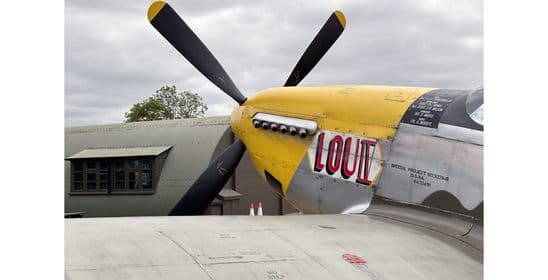
Another North American design, this time the mighty Mustang fighter which made such a telling contribution to the Allied war effort during the final months of WWII.
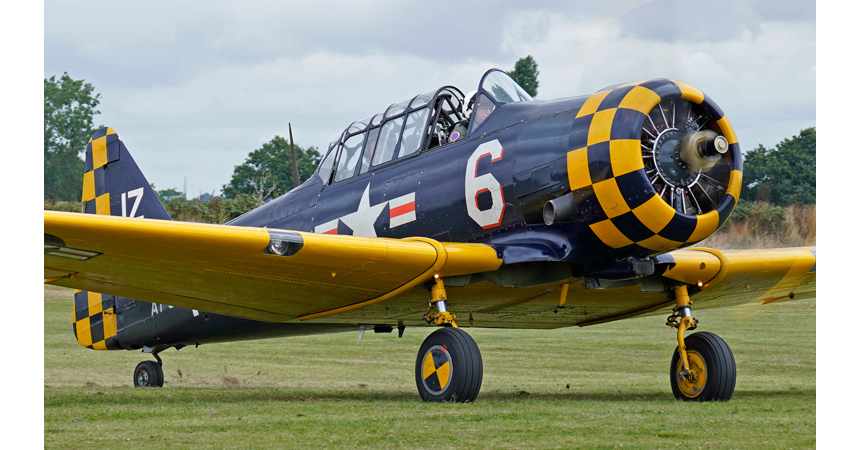
And still they keep coming, this time in the shape of this colourful North American AT-6C Harvard IIA, a truly beautiful looking aircraft.
Chipmunk WB549 was another of the Red Sparrows performers and is another scheme option included with the first release of the 1/48th scale Airfix kit.
Bringing style and a spritely display to the proceedings, Miles Gemini G-AKHP has been rather active on the UK Airshow scene over the past couple of years and is becoming a real show favourite.
One of the more unusual types found at Little Gransden this year, Nord NC-856A Norvigie is a fine example of this distinctive French Army observation aircraft.
I’m afraid that’s all we have for you in this first Aerodrome of 2022, however, we are very much looking forward to bringing you another year of interesting aviation related articles and reviews, both from our extensive archives and from recent events we have attended.
If any of our readers do have an interesting aviation story to tell, or could perhaps share details of a restoration or heritage project taking place close to them, why not consider sending details to us here at Aerodrome, so we can share them with our huge worldwide blog audience, who I am certain would be delighted to hear about them.
To send us details, or to simply open the lines of communication, please use our aerodrome@airfix.com address when getting in touch.
Between editions of our blog, you will always find interesting aviation discussions taking place on the Airfix Aerodrome Forum and if social media is your thing, the bottom of both the Airfix and Corgi home pages have all the access links you will need.
The next edition of Aerodrome is scheduled to be published on Friday 4th February, where we will have another aviation story to bring you.
Thank you, as always, for continuing to support our Aerodrome blog.
Michael