
Welcome to this latest edition of Aerodrome and our regular look at the fascinating world of aeroplanes and the historic aviation scene in the UK.
Although the skies may be decidedly grey and the days very short at the moment, it's the start of a new year and for the aviation enthusiast, it's a time for optimism, excitement and planning, as we look at our currently blank calendars and start to fill them with our intended visits and Airshow attendance. With associated costs spiralling in the wrong direction these days, many of us now have to be rather careful with the number of events we are able to attend this year, but having said that, a love of aviation doesn't have to begin and end with Airshows, as there are plenty of cost effective opportunities available to us, if we just take a little time to do some prior research and get a little creative.
From an Aerodrome blog perspective, I will be using the coming twelve months to get back to what made the blog so popular in the first place, a love of aviation and the opportunity to bring our readership interesting aviation related features from around the country, with renewed enthusiasm and a desire to unearth some new and engaging stories to tell. With a punishing work schedule to negotiate, this is not going to be without its challenges, but as aeroplanes and aviation history is in my blood, this is one particular tough job that just has to be done and in this regard, I am definitely your man. With a long list of museum and airfield visits planned this year, some for the first time, and with another busy year of Airshow events scheduled, it's going to be a busy year for Aerodrome and I am looking forward to sharing all these experiences with our readers.
We begin a new year of blogs by wishing everyone a very happy and prosperous New Year and by featuring one of the undoubted aviation highlights from last year. Having spent an entire lifetime infatuated by aeroplanes, it takes something a little bit special to have me make a short notice addition to my annual Airshow attendance schedule, but that is exactly what happened in September last year. In advance of the Shuttleworth Collection's Steam and Vintage Airshow, they announced the attendance of one of the rarest aircraft in Europe today, a replica build of a famous German Great War fighter, but one which has been finished to exacting standards and one which is in airworthy condition. For this first Aerodrome of 2023, we head back to the early years of airborne warfare and one of the most famous fighting aeroplanes of WWI, the distinctive Albatros D.Va and a rare example which resides right here in the UK.
The introduction of the Fokker Eindecker brought about the birth of the fighter aircraft and period of aerial supremacy for the German Air Service. This image was produced in support of a previous Airfix kit release, but is a perfect illustration of the impact the Eindecker had on the air war over the Western Front.
With massive opposing armies settling into a bloody stalemate at the start of the First World War, the need to secure accurate, real-time reconnaissance information of the battlefield and the enemies positions had never been more essential, but fortunately, both sides had a machine which could provide these details effectively, the aeroplane. Still in its relative infancy, aviation offered military planners something they desperately needed, a bird's eye view of the battlefield and as greater importance was placed on obtaining this information, airmen and aeroplanes became specialist in completing these kind of missions. Unfortunately, both sides needed this reconnaissance information and it didn't take long before those same military planners felt that denying the enemy the ability to obtain reconnaissance information of their own positions was of equal strategic priority. What had started as a rather chivalrous task undertaken by pioneering airmen soon descended into a need to dominate the skies and the birth of aerial warfare, something which would also ensure the aeroplane would embark on an astonishing period of technological development.
Germany's answer to this strategic challenge was to introduce their Fokker Eindecker series of aircraft, machines which were developed specifically to dominate the skies and are historically regarded as the first true fighter aircraft to enter service. A design which incorporated several important technological innovations, the Eindecker saw the introduction of interrupter gear, which allowed the aircraft to fire its machine gun through its propeller and in the line of sight of the pilot, something which very much improved the prospect of securing an aerial victory. For the first time, an aircraft had been designed specifically to hunt and destroy other aircraft, a machine to dominate the skies and to deny the enemy the ability to operate in the same airspace.
The impact of the Eindecker's introduction was truly astonishing and would shape the very future of aviation. So many Allied aircraft fell victim to the new aircraft's guns that it led to a period in the war known as the 'Fokker Scourge', with underperforming Allied aircraft castigated as being nothing more than Fokker fodder. Importantly, it led to a significant period of aerial supremacy for Germany's Fliegertruppen and whilst it could have been so much worse for Allied air units, it would also signify the start of a very specific international aerial arms race. Despite the devastating impact the Fokker Eindecker had on the Great Air War, it has to be remembered that this was still a relatively primitive aeroplane, with these first aerial duels taking place less than fifteen years since the Wright Brothers had made their historic first powered flight. Using relatively low calibre machine guns and with little or no protection for airmen, these early duels in the clouds proved to be a very personal affair, with luck playing a huge part in whether pilots went on to become a celebrated ace, or just another name added to the growing list of casualty statistics.
In addition to this, the Germans didn't capitalise on the advantage the Eindecker presented them with, only using them in relatively small numbers and initially forbidding pilots from combat over enemy lines, for fear one of their aircraft may fall into enemy hands, who would simply reverse engineer their technological secrets. Had they been committed in larger numbers much earlier than they were, they could have cleared the skies of Allied aircraft and taken an even greater toll of enemy airmen. Perhaps even worse than this, they sat back on their strategic advantage and failed to develop aircraft which would take their superiority to a new level - whilst their aces scores increased, the Allies were busy developing a new breed of fighter aircraft to take back control of the skies.
The Albatros D series of fighters were some of the most distinctive and effective aircraft of the Great War and would be produced in large numbers. This new build example is on display at the RAF Museum Hendon.
Having enjoyed a long period of aerial supremacy following the introduction of the Fokker Eindecker, it came as quite a shock when the Allies introduced their new breed of de Havilland and Nieuport fighting scouts, aircraft which had been specifically developed to challenge the dominance of the German fighter. With their strategic advantage now gone, they were in a race against time to introduce a new fighter which was capable of restoring their advantage, but as this was now a race which showed no sign of abating, the search for an air superiority fighter would from this point forward be something of a movable feast, with each side continually attempting to introduce aircraft which would give them a strategic advantage, even if it was only for a short, but important period.
The period following the end of the Fokker Eindecker's dominance would see the introduction of the most important series of German fighter aircraft of the Great War, aircraft which would form the backbone of German fighter squadrons for the final two years of war and the aircraft Allied airmen were most likely to encounter during that period. The Albatros Flugzeugwerke were hugely experienced in producing a stream of effective reconnaissance aircraft types for the German Air Service and were asked to turn their attentions to designing a war winning fighter aircraft - what they came up with was something of a classic series of fighting aeroplanes. Their Albatros D fighter was a significant leap forward in aerodynamic development, incorporating all the lessons the manufacturer had learnt during the early days of military aviation and incorporating the latest technological advances.
Perhaps the most significant feature of the new Albatros D fighter was its powerplant, the reliable 160hp Mercedes D.III which at that time, was the most powerful engine ever fitted to an aeroplane. This extra power gave the new fighter impressive climb performance but more than this, allowed designers to fit two forward firing synchronised 7.92mm Spandau machine guns to the fighter, double the offensive armament usually carried by a fighter. Following its successful introduction in late 1916, the new Albatros D.I proved to be something of a revelation, the most effective all-around fighting aeroplane on the Western Front, however, it wasn't without its flaws and the Allies were now very much in this air superiority race.
With mastery of the skies now being of such strategic importance, both the Allied and Axis powers embarked on a constant search for ever more effective aircraft and the dominance of the Albatros D.I proved to be short-lived. Thankfully, the basic design was so effective that modifying and updating it would result in the introduction of ever more capable variants, with the D.II. D.III and finally the D.V/D.Va following the original D.I fighter into service. With each successive upgrade providing pilots with an aircraft to help them control the skies, the Albatros D.III was introduced after Albatros designers had been given the opportunity to examine a captured example of the latest Allied Nieuport fighter, allowing further modifications to the fighter's wing design to be incorporated. Although not the most heavily produced variant of the fighter, it was arguably the most effective and the one many of the Luftstreitkräfte's leading aces preferred to fly.
Built for aerial combat, the Albatros D series of fighters were built to dominate the skies and would be used by many of the most successful air aces of the Great War.
The final development of the Albatros fighter series and the last one to see operational service was the Albatros D.V/D.Va, an aircraft which was built in greater numbers than any of its predecessors and one which was only withdrawn from production in April 1918. In April the previous year, the Albatros Flugzeugwerke company received an official directive to develop an improved version of their Albatros D.III fighter, one which would continue to provide Luftstreitkräfte pilots with a dominant fighting aeroplane. What they produced was arguably the most distinctive fighter aircraft of the Great War, one which was rugged and workman-like if not quite as cultured as the latest Allied fighter types. In the hands of a capable pilot, it proved to be a fearsome adversary and one which was a match for any Allied fighter sent to challenge it.
Using much of the same technology which featured on earlier fighters in the series, perhaps the most distinctive difference between the D.V and its immediate predecessor the D.III, was its adoption of a fully elliptical fuselage cross section, as opposed to the more slab sided appearance of earlier variants. In fact, this development actually produced a weight saving and when combined with the additional horsepower they managed to drag from the Mercedes D.III engine, the new Albatros D.V proved to be quite the potent performer.
Business end of an Albatros D.Va. It has to be remembered that these aircraft were fighting for supremacy of the skies less that twenty years since the Wright Brothers had made their first historic manned, powered flight.
Despite these advancements, the service introduction of this final Albatros variant was not without its challenges, particularly as several of the first aircraft delivered to front line Jagdstaffeln were involved in fatal accidents, some not as a result of combat engagements. Investigations quickly ascertained that the aircraft possessed some structural deficiencies and all new built aircraft were immediately redesigned to incorporate additional bracing support and changes to the way the aircraft were rigged, modifications which could be applied to existing fighters in the field if required. Nevertheless, the damage was done and many of the most successful fighter aces of the day, including Manfred von Richthofen, initially refused to upgrade to the new fighter, preferring to stay with their existing Albatros D.III variants, which they regarded as being more manoeuvrable in combat.
Nevertheless, they would all eventually upgrade and the Albatros D.V(a) would prove to be an excellent fighting aeroplane, rugged and reliable, whilst at the same time being an exceptionally stable gun platform. It would remain in service until the end of the war and had to hold the line until the introduction of the magnificent Fokker D.VII and aircraft which is generally regarded as the most effective fighter aircraft of the Great War, but one which made its introduction too late to halt an inevitable Allied victory. Even though Manfred von Richthofen has become inextricably linked with the red Fokker Dr.1 in which he was killed, he actually only used Triplanes to gain seventeen of his eighty victories, with the vast majority (55) being scored whilst flying various Albatros series fighters.
Although just a demonstration, the Old Warden appearance of the Albatros and Nieuport gave the crowd an indication of the rather personal nature of the air fighting during the First World War.
Unquestionably one of the most famous fighting aeroplanes of the Great War, the Albatros D series of German biplane fighters was produced in large numbers during the First World War and were used by many of the leading Luftstreitkräfte aces to help them increase their impressive victory tallies. The final D.V series aircraft were arguably the most distinctive fighting aeroplanes of WWI, with its cultured, rounded fuselage being quite a deviation from the more box-like appearance of earlier variants. Despite the fact that more than 4,600 'D Series' Albatros fighters were eventually produced, only two original examples survive to this day, one in America’s National Air and Space Museum, with the other being on display in the Australian War Memorial Museum.
Thankfully for the world's legions of aviation enthusiasts, the two surviving static museum examples do not tell the full story of surviving Albatros fighters, because thanks to the skill and dedication of a team of talented aviation craftsmen and their use of clever reverse engineering techniques, millions of people around the world have had the opportunity to see one of these Great War aviation classics actually in the air at various Airshows and open day events across the world in recent years. Built in New Zealand by Sir Peter Jackson’s ‘The Vintage Aviator Limited’ (TVAL) company, they have managed to produce several stunning replica builds of these iconic aircraft over the past few years, newly built replica examples, but ones built to such exacting standards and incorporating incredible levels of accuracy that they are as close to Great War aircraft as they possibly could be.
The company's sixth build in this impressive series was eventually finished in the distinctive colours of German ace pilot Otto Kissenberth, an Albatros he flew during his time with Jasta 23 and one he used to score at least twelve aerial victories during 1917 and early 1918. In a relatively recent development which delighted British aviation enthusiasts, the aircraft was sold to a new owner, who in turn had the Albatros shipped to the UK. Arriving by container at the famous Old Warden airfield during 2018, the Albatros was reassembled by the hugely experienced engineering team at the Shuttleworth Collection, with the grass strip at Old Warden also later playing host to the aircraft's first post re-assembly test flight.
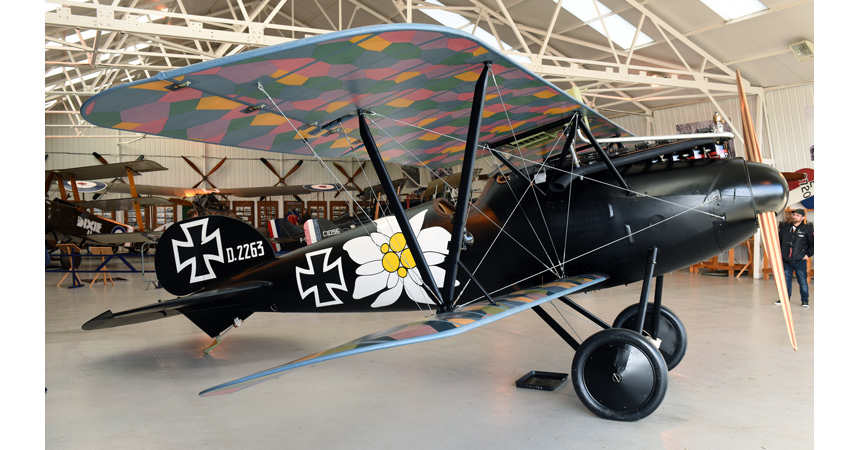
Star of the September Shuttleworth show, this magnificent Albatros replica has been finished in the colours of Luftstreitkräfte fighter ace Otto Kissenberth.
The unmistakable shape of the Albatros D.Va fighter, one of the most distinctive aircraft in the history of flight.
This magnificent aircraft is now kept at the famous Great War aerodrome at Stow Maries in Essex, where she is cared for and operated on behalf of its owner by the dedicated members of the WWI Aviation Heritage Trust. If you are lucky, you might see this magnificent aircraft fly on airfield open days and the odd Airshow event, where she provides a unique link to the early days of aerial combat and the intrepid fighting aviators of the Great War.
A proud Bavarian, Otto Kissenberth trained as a mechanical engineer in the years prior to the outbreak of the First World War, but as the world descended into conflict, would follow his interest in flying and join the German Air Service. Initially serving as a reconnaissance pilot, he would later transfer to a new single seat fighter unit, where he would go on to score his first three combat victories. During an Allied bombing attack against the Mauser rifle factory in southern Germany, Kissenberth flew his fighter aggressively against multiple enemy raiders, blunting the attack with his lone fearless flying and dispatching three enemy aircraft in the process. This early fighter unit would later be used as the nucleus of the new Royal Bavarian Jagdstaffel 16, a unit where Kissenberth would continue to increase his personal victory tally.
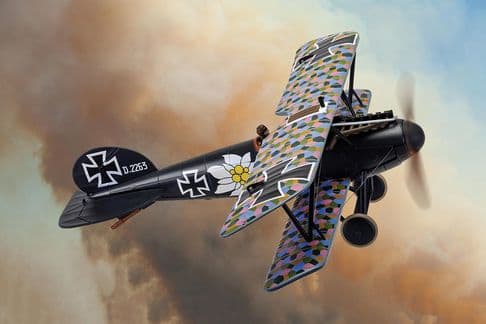
Otto Kissenberth has been described as being something of a character, brave and tenacious in the air, but a fighter pilot with a rather unusual physical trait for his profession - he flew combat missions wearing spectacles, something only two other Luftstreitkräfte fighter aces were known to have done. Given command of Royal Bavarian Jasta 23 at the beginning of August 1917, Kissenberth would continue his association with the Albatros D series of fighters and in particular, aircraft serial number D2263/17, a machine in which it is thought he would go on to score the majority of his 20 aerial victories. As his personal aircraft, it was distinctive by virtue of its smart black fuselage and the large yellow and white Edelweiss flower emblem it sported on either side of the fuselage, just behind the cockpit.
The Edelweiss flower possessed a particular significance for servicemen of Continental European origin at that time, as it came to symbolise a man's courage and bravery. The flower only grows on exposed high Alpine peaks and if you came back with one following a climbing expedition, everyone knew you had put yourself in quite some personal danger to do so and were therefore worthy of their respect.
The Albatros looked right at home amongst Shuttleworth's collection of Great War era aircraft.
Absolutely stunning, the Albatros was one of the definite highlights of the 2022 Airshow season for me.
A stunning replica, this magnificent Albatros is a rare performer at UK Airshows, so it was a real treat to see it flying at Old Warden.
Further adding to the fascinating story of this Great War Albatros ace, Kissenberth was also notorious in that he claimed a downed British RNAS Sopwith Camel aircraft as his own, one which had been forced down intact by another pilot in his unit. Overpainting the Camel’s British insignia with new German markings (for obvious reasons), he apparently flew the aircraft on many occasions and incredibly, even used this captured aircraft to score the last of his 20 aerial victories on 16th May 1918, when he used it to bring down a British SE5a fighter near the town of Tilly-Neuville.
The famous airfield at Old Warden has long been a popular destination for aviation enthusiasts, whether it be to marvel at their unique collection of historic aeroplanes, or to attend one of their regular Airshow events. The world famous Shuttleworth Collection includes an impressive number of Great War era aeroplanes and as most are maintained in airworthy condition, any visit to the aircraft may be rewarded with the sight of one, or several WWI types being flown for your enjoyment, a unique opportunity to experience what it must have been like during those early days of aerial combat. Most of the aircraft which take to the skies are representations of Allied aircraft types, but rarely do we have the opportunity to marvel at the sight of an airworthy German Albatros fighter, so you can imagine the excitement of enthusiasts when organisers included one on the display programme of their Steam and Vintage Airshow last September, a development which saw hundreds of us making last minute arrangements to attend the show.
Although this Albatros had been seen at pervious Shuttleworth shows, this was only as a static exhibit in one of the hangars following its reassembly and not as part of a flying display. The aircraft's usual home is at the Great War aerodrome at Stow Maries in Essex and in recent years, unless you live in that particular part of the world or have attended one of their open day events, you are unlikely to have seen this beautiful aeroplane in the air. With Shuttleworth's Steam and Vintage Airshow listing the Albatros as one of their display aircraft, this was the only excuse I and many of my fellow enthusiasts needed to fill up our cars and head to Old Warden for a little extra visit treat for the year. In truth, this aircraft has such appeal for me that I would have made the trip even if it was just on static display, however, as it was scheduled to take its place in the flying programme, wild horses couldn't have kept me away.
A stable gun platform, if you allowed an Albatros to get on your tail, you were probably about to become the latest victim of the pilot who had you in his sights.
The finish on this magnificent aircraft is quite breath-taking and it is such a treat to be able to see it in the air, preserving the legacy of the world's first fighter pilots.
A highlight performer at any Airshow at which it performs, hopefully we will see much more of the WWI Aviation Heritage Trust Albatros during 2023.
Given the opportunity to photograph the Albatros prior to its display performance and speak with the members of the WWI Aviation Heritage Trust who lovingly care for the aircraft, I was really looking forward to seeing this stunning aeroplane in the air and as it transpired, I wasn't to be disappointed. Not only did pilot Jonathan Marten-Hale give us a masterful demonstration of this famous fighting aeroplane's capabilities, he also tried to get on the tail of a Nieuport 17 fighter being flown with it, providing a fascinating recreation of a combat scenario from over a century ago. With the throaty sound of the reverse engineered Mercedes D.III engine demanding the crowds attention and Jonathan's expert handling of his charge captivating everyone on the airfield, he really did give us all an appreciation of why the Albatros was such a successful fighting aeroplane. I could definitely get used to seeing more displays like this if you please Mr Shuttleworth.
As it was, the attendance of the WWI Aviation Heritage Trust Albatros at Old Warden was definitely amongst my aviation highlights of 2022 and what finer venue could there possibly be to see such a magnificent aeroplane than the hallowed turf of this famous old airfield. Let's hope that Shuttleworth can attract the Albatros back again in 2023 and dare I say even invite the new Fokker D.VII the WWI Aviation Heritage Trust's website describes as coming soon. It's looking like 2023 could be a good year for fans of Great War era aeroplanes.
I’m afraid that’s all we have for you in this latest edition of Aerodrome, but we will be back in four weeks' time with more aviation delights for your delectation. Until then, if you would like to comment on anything aviation related or indeed to suggest a subject for a future edition of our blog, then please do drop us a line at aerodrome@airfix.com, where we would be only too pleased to hear from you.
Should you wish to continue the aviation discussions between editions, you will always find something of interest over on the Airfix Aerodrome Forum and if social media is more your thing, please use the respective official social media icon links at the foot of the main Airfix and Corgi website homepages to access our official sites.
The next edition of Aerodrome is scheduled to be published on Friday 3rd February, when we will have more aviation features to bring you.
Thank you so much for your continued support of our Aerodrome blog.
Michael

