We would like to wish our readers a very warm welcome to the latest edition of Aerodrome, your fortnightly indulgence into all things aviation. As we currently find ourselves speeding headlong towards Father’s Day and the Summer Solstice, the UK Airshow season will soon be in full swing and even though we have already seen the first of the major shows of 2016 taking place, some of the most anticipated events will be held throughout June and July. With huge Airshows planned at Cosford, Yeovilton, Duxford and the Royal International Air Tattoo at Fairford over the next few weeks, the UK aviation enthusiast will be preparing for an extremely busy time and plenty of miles done in support of their beloved hobby.
For this latest edition of Aerodrome, we are going to look back at the American Airshow held at the Imperial War Museum, Duxford over the weekend of 28th and 29th May – this event was a celebration of the reopening of the fantastic American Air Museum at Duxford and of the close ties between Britain and the US. Many of the attractions over the weekend had a distinctly American theme and although we will certainly be looking at some of the weekend’s highlights, we are going to take a slightly different viewpoint than that of a traditional Airshow review. Rather than simply look at the aircraft taking part in the Air Display itself, we are going to look at some of the essential work that goes on behind the scenes and helps to make every Airshow an enjoyable day out for the entire family.
In a feature packed edition, we also have a fantastic reader supplied article from a recent trip to the Malta Air Museum and a fascinating forum contribution in support of the Harrier Disbandment edition we ran in our previous blog – as you can see, we have a lot to get through, so we had better make a start.

The magnificent Fighter Collection Curtiss P-40C is a major Airshow attraction at Duxford
There can be no doubting that Airshows are amongst some of the best attended outdoor events all over the world and throughout the summer months, millions of aviation enthusiasts and families looking for an exciting day out flock to airfields and seaside locations in their respective countries. In the UK, Airshows have been incredibly popular events since the first Hendon Air Pageants of the early 1920s, which were originally held to try and secure strong public support for the then quite new Royal Air Force. Held annually, these events would attract many tens of thousands of spectators to witness the spectacular flying displays, including royalty and celebrities of the day – the Hendon Air Pageant was most definitely the place to be seen.
Over recent years, Airshow visitor numbers continue to remain strong in the UK, but as the impact of successive military spending reviews begin to bite, combined with base closures and aircraft service withdrawals, the number of events have steadily been diminishing year on year. With costs spiralling and important health and safety issues all impacting on the running of a successful Airshow, these hugely popular events are enduring challenging times at the moment, with many aviation commentators predicting something of a bleak future for the traditional Airshow format. I suspect that many Aerodrome readers will have fond memories of paying just £2.00 to gain access to the massive two day Mildenhall Air Fetes of years past, when the British public was able to sample a little taste of America on this Suffolk airbase and watch a spectacular display of aviation acts that would put every current Airshow to shame. Unfortunately, those memorable days have gone for good, but UK enthusiasts still have a large number of events to choose from, ranging from the garden party atmosphere of an airfield fly-in, to the adrenalin rush and modern military spectacular of the Royal International Air Tattoo.
Taking the recent Duxford American Airshow as an example, as aviation enthusiasts are taking in the sights and sounds of their latest Airshow and searching the skies for the next display act, do we ever take the time to consider what has been going on behind the scenes to ensure that we have an enjoyable day? I suspect not, so this latest edition of Aerodrome will focus on the countless individuals who work tirelessly to bring us the Airshows we love to attend and the many different aspects that come together to create the unique atmosphere of a Duxford Airshow.
I am really chancing my arm with this extremely loose title and using it to encompass a multitude of essential tasks that have to be completed in the staging of a successful Airshow event. Many of these tasks would not really interest the average Airshow attendee, but they are essential nonetheless – I am also sure that the people behind any event will be looking towards the heavens at this point and saying ‘They have no idea’. In truth, we don’t really know how much effort must go into staging a successful Airshow, but it will usually involve a considerable number of people and a great deal of time and patience to make it all happen.

Early morning set-up for the living history groups – get the kettle on!
Without having the opportunity to speak to someone directly involved in running a successful Airshow, I would imagine that tasks such as ticketing arrangements, car park marshalling, adequate toilet provision and securing the services of an army of volunteers will all need to be finalised well before the day of the show. Whilst this work is going on, other staff will be liaising with the local authority regarding a multitude of issues that could impact on the surrounding area and policing and medical cover will also have to be arranged. From an attendance perspective, booking the display acts themselves will have to be one of the earliest tasks to be completed, as this information will be used to attract potential visitors to your event, although the advent of effective social media marketing these days provides some leeway in allowing participation updates to be posted right up until the day prior to the show. There will be so many tasks that I will have missed in this section, but if nothing else it does illustrate how much work must be involved in staging an Airshow and how the average Airshow attendee takes much of this for granted. It is, perhaps only when things go wrong that we notice the size of the task a relatively small number of people must face in organising a show.
This is a really interesting aspect of any Airshow and could almost be described as one of the show attractions for many visitors. The flying display programme at many events does not begin until the early afternoon and as many people like to arrive early in the morning to avoid traffic congestion, they leave themselves plenty of time to browse the stalls and exhibitions that are on site. For modellers and collectors, these events are a valuable opportunity for them to physically inspect the items they are interested in, rather than simply looking at the products on various websites and have often been responsible for recruiting new collectors. In years past, there would be large numbers of traders displaying all the latest model releases, with crowds actually waiting outside their marquee until they opened, desperate to see the latest models. The convenience of the internet has certainly had an impact on the number of modelling stalls usually found at UK Airshows, but you can still spend many happy hours looking at what is available.

This replica Spitfire will be the centre of attention when the crowds arrive
As well as the usual model traders in evidence at Airshows across the country, attendees can also expect to see book stalls, beautifully appointed military galleries, military memorabilia stands and any number of traders selling outdoor products, such as chairs, sunglasses and umbrellas – well, we are at a UK show and absolutely anything can happen as far as the weather is concerned. A quick stroll down the trade area will also reveal a number of aviation related societies, hoping to raise funds for their latest project and tempt you into buying a raffle ticket or two. With food stalls, display team stands and a host of other interesting displays, a well laid out trade area can really help to make the Airshow experience complete for many visitors and can bring a welcome income boost to all involved.
Unfortunately for the show organisers, the management of these trade pitches is far from straight forward and over the years, this has become a sizeable source of income for the event. The available trade area is divided into pitch sections and traders are invited to apply for a space, having filled in all the necessary paperwork, including public liability insurance confirmation and a health and safety risk assessment. Many traders will also attempt to secure favoured pitches and to ensure they are sited well away from other traders who might be selling similar products to them. Importantly, as many of these traders will have gone to some considerable time and expense in setting up at their latest Airshow, they can be rather vociferous in explaining their point of view, should the weekend's trading not turn out as they had anticipated.

The Sally B trade stand prepares for a busy day at Duxford
If you would describe yourself as an Airshow regular, you will probably bump into many familiar faces throughout the summer months, who have a similar aviation passion to your own. Although the committed aviation enthusiast is extremely important to the future of British Air Displays, they are not necessarily the most coveted visitors by Airshow organisers. The general public and families looking for an exciting day out are critical to the success of any event and if they turn up in enough numbers, all the preparation work done over the previous months has all been worthwhile and the show will be judged to have been a success. This is the reason why many Airshows will try to include a varied flying programme to try and have something for everyone, but attempt to obtain support from the Royal Air Force and some of their latest aircraft. Very few shows can count on the support of large numbers of committed aviation enthusiasts to make their event a success, although the annual Duxford Flying Legends Airshow is very much an exception to this rule. With thousands of Warbird enthusiasts travelling from all over the world to attend this extravaganza of historic aviation, Flying Legends is unique in the European Airshow calendar.
With so many people interested in aviation gathered in the same place, Airshows are a fantastic opportunity for supporters clubs and organisations to meet their followers, raise some much needed cash and to try and recruit new members to the cause. The restoration and operation of historic aircraft can be an extremely costly exercise and UK aviation enthusiasts are fortunate to have a much coveted variety of airworthy aircraft for them to admire. To help with the financial operation of these aircraft, a number of well-run societies and supporters clubs have been established over the years and use Airshows as an essential tool in expanding their organisation, informing the public about what they do and ensuring their beloved aircraft remain in the UK for us all to enjoy.

Historical Society re-enactors allow for some unique photographic opportunities
A growing attraction at many shows over the past few years has been the inclusion of living history groups and airfield re-enactors, who definitely help to enhance the feeling of nostalgia at these events. Particularly in the historic surroundings of Duxford airfield, these groups help to transport us back in time, using this unique setting and some of the world’s most valuable historic aircraft as their backdrop. Wearing uniform and equipment from the Second World War, much of which has been sourced by themselves and secured at great personal expense, these groups actually bring history to life and it is fascinating to see. What could be more evocative than seeing a group of historically attired young men chatting informally under the nose of a Boeing B-17G Flying Fortress? With a little careful photographic composition, it is possible to take some pictures that could almost have come straight from the cover of Life magazine.

TFC Mustang ‘Miss Velma’ receives some early morning attention
Without doubt, the most important people behind any successful Airshow are the pilots and ground crews who prepare and display these priceless aircraft for our enjoyment. Before any historic aeroplane can even be considered for a display slot at your latest Air Display, it will have spent many hours in the hangar being inspected, tested and inspected once more, to ensure that these magnificent aircraft are arguably in better condition than when they were flying operationally. With many of the required engineering skills now very much a thing of the past, you often find that the highly proficient technicians working on these aircraft have an absolute passion for this type of work and are now very much the custodians of this specialist knowledge. I would also imagine that their skills are very much in demand these days, as there can’t be too many people in the UK who possess the required experience necessary to work in historic aviation. For most of us, one look at the complexities of a Merlin engine has us scratching our heads, with its intricate network of pipes and hoses and untold number of component parts used in its construction – these really must be incredibly talented people.

Rare Hawker Nimrod Mk.1 outside the Fighter Collection trade marquee
For the ground crews themselves, they have perhaps a slightly less technical, but no less essential role to play. The Warbirds that are placed in their care are worth incredible sums of money and in many cases are priceless pieces of aviation history – they only fly if everything is absolutely serviceable and great care must be taken with the aircraft at all time. Simply moving the aircraft from the hangar and taking it to the airfield is a procedure fraught with potential hazards and must be carried out with a high degree of professionalism – a ground handling team will have spent many hours perfecting the safe positioning of aircraft, with members stationed on the tip of each wing to ensure safe tolerances and the avoidance of collision. It is unusual for anyone other than the pilot or his ground crew to be allowed near the cockpit of an aircraft, as this is a critical working environment and the possibility of foreign objects inadvertently corrupting the controls has to be avoided at all costs.
The ground crew will also be responsible for such tasks as cleaning the cockpit canopy, fuelling the aircraft, checking tyre pressures, helping to start the engine, removing the wheel chocks and receiving the aircraft back following the completion of its display and helping the pilot out of the cockpit. At this stage, you will also often see both members of the ground crew and the pilot himself taking a rag and cleaning the aircraft from top to bottom, which has an important dual purpose – it obviously keeps the aircraft looking in pristine condition, but also allows crew members the opportunity to spot any damage, or to see any unusual leaks that may be the cause of some concern.

Pre-flight checks. Historic Aircraft Collection pilot Dave Harvey checks his Hurricane Mk.XIIa
Pilots will work closely with their ground crews, as the safe operation of any aircraft is something of a team effort - all members of the team need to know what is required not only of them, but of every other member of the group. Just like it must have been during the war, an effective ground crew work as one to ensure that their aircraft and their pilot are fully prepared for the coming sortie. The pilot has to be confident that his team are all working effectively, as he will have to place a lot of trust in their abilities – he has enough to think about without worrying if a member of his ground crew are not up to the task.
The only way enthusiasts can marvel at these classic aeroplanes being flown for our enjoyment at Airshow events across the country is thanks to the professionalism of the pilots who spend many hours training to fly them. Many of today’s display pilots are former, or currently serving civil, or military pilots and have gone through hours of additional training to allow them to fly vintage aeroplanes. Just as the wartime training programme would slowly introduce the student pilot to more capable aircraft in the hope that they would one day be at the controls of an RAF Spitfire, so the current Warbird pilot has to undergo a similar period of training. Working their way up from the Tiger Moth, to the North American Harvard, prospective Warbird pilots have to become experienced in flying tail-dragger aircraft in the same way that their wartime predecessors did and as these classic training aircraft are still available in some numbers, it is fitting that they can use the same aircraft that Spitfire and Hurricane pilots would have been trained on during the 1940s.

Flt. Lt. Charlie Brown is one of the most experienced Warbird pilots in the world
Many of the current display pilots are flying celebrities in their own right and are instantly recognisable to the adoring crowds who come to see them fly. Although appearing to be genuinely humbled by the rapturous applause they receive following the completion of their latest display, these are extremely talented people and Airshows would simply not be the same without them. One of the most most famous and instantly recognisable flying personalities in the world is Flt. Lt. Charlie Brown, chief pilot of the Historic Aircraft Collection and regular display pilot at Duxford shows. Making his first solo flight in a Spitfire in July 1991, he has since gone on to become synonymous with this iconic British fighter aircraft and is now one of the most experienced Spitfire pilots in the world. As Charlie brought HAC Spitfire Mk.Vb (BM597) back in for a landing at Duxford on 15th June last year, he had just clocked up his 1,000th hour on Spitfires and a significant landmark for him and the entire historic aviation community. Although his Warbird flying is certainly not limited to piloting Spitfires, this impressive figure looks set to increase steadily over the coming few years, as Charlie continues to be extremely active within the Warbird flying community. It you manage to catch one of Charlie’s impressive displays this year, give him an extra loud cheer when he walks back from his aircraft, because he certainly deserves it.

The end of the show - there is still work to be done, with aircraft needing to be returned safely to their hangar
The final group of people I would like to feature are the owners of the aircraft we all love to see in the skies - we really do owe these people a huge thank you for allowing us to enjoy the fantastic experience of seeing their aircraft fly. The sums of money involved in buying, restoring and operating vintage aeroplanes is simply mind blowing and the money they receive from Airshow appearances does not even scratch the surface of this aviation money pit. It is only their love and continued support for historic aviation in this country that the UK enthusiast has been so fortunate to be able to see these magnificent Warbirds regularly over the past forty years or so. Magnificent people like Stephen Grey and his Fighter Collection have thrilled UK Airshow audiences for many years and brought them some of the rarest and most historic aircraft in the world – as far as Warbird displays are concerned, the British aviation enthusiast has been spoilt rotten. On behalf of each and every one of us, I would like to sincerely thank the aircraft operators for allowing us to share your passion for vintage aeroplanes.

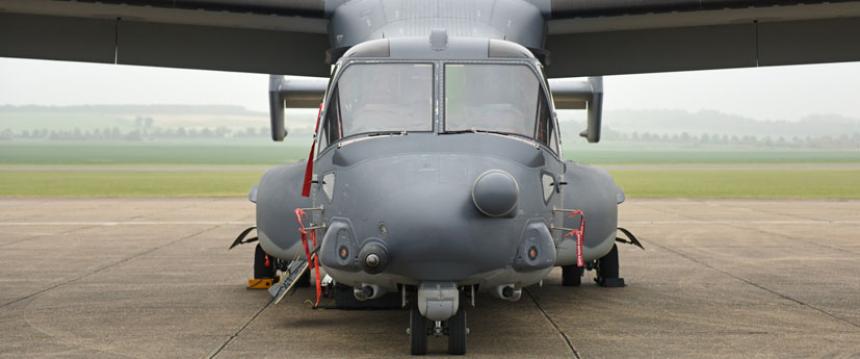
Highlight of the static display was this CV-22 Osprey from RAF Mildenhall
Although we have been taking something of a behind the scenes look at Duxford’s latest Airshow in this week’s edition of Aerodrome, it would be slightly remiss if I did not include some pictures from what turned out to be an extremely enjoyable event. With the dual themes of marking the reopening of the recently transformed American Air Museum and celebrating the close ties between Britain and the US, particularly during times of war, many of the display acts had a distinctly American flavour. Duxford regulars will have been expecting to see a few Airshow favourites taking part in the show, but one very special addition to the static line up came as a pleasant surprise for many.

Don’t rush home - stragglers were rewarded with this magnificent sight
Showcasing some modern USAF hardware and clearly illustrating the ongoing partnership between British and US military forces, the 352nd Special Operations Wing at RAF Mildenhall sent one of their spectacular Bell Boeing CV-22 Osprey tilt rotor aircraft and for many at the show, this was the undoubted highlight. With a support team selling Squadron memorabilia, there was a healthy crowd around this spectacular aircraft on both days of the show and for those of us who decided not to join the Sunday night exodus and wait for the traffic to clear, we were rewarded by seeing this unusual looking aircraft taking off from the Duxford runway – a very welcome aviation bonus.

Boeing KC-135R Stratotanker of the USAF 100th Air Refuelling Wing
Staying with a modern US air power theme, the Saturday show saw a single fly through by another Mildenhall based machine, this time in the shape of Boeing KC-135R Stratotanker 80100/D. Representing the 351st Air Refuelling Squadron of the 100th Air Refuelling Wing, this handsome aircraft appeared in the grey skies above Duxford with its refuelling probe extended and whilst we hoped for at least a second pass, we were left disappointed as the tanker disappeared into the murky skies.
One of the best loved historic aircraft still flying in the UK is Boeing B-17G Flying Fortress ‘Sally B’, which is now the only airworthy B-17 in Europe. Although she permanently resides at the Imperial War Museum Duxford, she is not part of their collection and has been operated since 1982 by her owner, Elly Sallingboe. An extremely expensive aeroplane to operate, the Sally B Supporters Club has been established to try and raise some of these required funds and with an ever expanding membership, this is one of the most successful groups of its kind in the world.

A rare sight in Europe - ‘Sally B’ is the only airworthy B-17 flying in Europe
Sally B serves as a poignant flying tribute to the sacrifices of USAAF bomber crews who operated from bases all over the UK during the Second World War, flying dangerous daylight raids deep into occupied Europe. When you consider that thousands of these mighty bombers and their brave crews flew missions from British bases in WWII, it is sad to think that only one aircraft still flies in our skies, in commemoration of the many men who were not able to return to their homeland. When she is serviceable (which she usually is) Sally B will will fly at numerous Airshows, flypasts and commemorative events throughout the year, as she pays her own unique tribute to the men of the USAAF.

A poignant tribute - Boeing B-17G Flying Fortress ‘Sally B’ and her little friends
The North American Mustang is regarded as one of the finest piston engined fighters of all time and visitors to Duxford can usually see a number of airworthy examples of this magnificent aircraft. Amongst this group is the Fighter Collection’s TF-51D ‘Two Seat’ Mustang Miss Velma, which has been blasting around the skies of Cambridgeshire since she arrived in 2007. This aircraft was one of the last Mustangs to be produced at the famous North American Aviation’s Dallas plant and was too late to see action during WWII. She did go on to serve with the USAF during the Korean War, but was soon back in the US with the Air National Guard.
As with many historic aircraft, not much is known about the post war history of this particular Mustang, but she reappeared once more in North Dakota in early 1999 and was later purchased by the Fighter Collection. A lengthy period of restoration followed, where it was decided to modify the aircraft to its current two seat configuration and finish her in the colours of a 55th Fighter Group Mustang, which was based at Wormingford airfield, in Essex. P-51D 44-14561 was the personal aircraft of Captain Frank Birtciel and was named ‘Miss Velma’ after his fiancée.

The Fighter Collection TF-51D Mustang ‘Miss Velma’ prepares for her display
Following the successful completion of her post restoration flight testing, Miss Velma was fitted with external drop tanks and flown across the Atlantic to her new home at Duxford Airfield, where she has since become a popular addition to the TFC fleet and a regular performer at Airshows across the country. As one of the finest fighter aircraft of the Second World War, it was only fitting that the American Air Show should have a number of Mustangs on display at the show, particularly as they operated from this very airfield during WWII.
I hope that you have enjoyed this alternative look at the recent Duxford American Airshow and how a great many people have to work incredibly hard to ensure that we all have an enjoyable day out. I am sure that I will have missed many aspects of Airshow planning and the people involved and for this I apologise, but I hope this will go some way to giving a slightly better understanding of the organisational nightmare facing anyone intending to stage an Airshow event. After all this work has been done and despite even the most meticulous planning, everyone will still have their fingers crossed on the eve of the show, as all this good work can still be undone by one completely random factor – the good old British weather. Thank you for all your hard work and the fantastic shows you arrange.

The view inside the Air Battle of Malta Memorial Hangar at Ta’ Qali
Some weeks ago, Aerodrome reader and previous contributor Mr John Bagot contacted me and asked if I would like him to provide some images from a trip he was hoping to make in the near future. As he assured me that it would have a distinct aviation theme, I obviously jumped at the chance and I am pleased to be including John’s images in this week’s Aerodrome. John was making third visit to the Island of Malta in recent years and as he has done on each of his previous trips, was planning to visit the impressive Malta Aviation Museum.
The Island of Malta was of critical strategic importance during WWII and allowed British aircraft to attack German and Italian targets in the Mediterranean. Seriously disrupting Axis operations in the Mediterranean and North Africa, Axis forces were determined to crush Malta, either by bombing the Island into oblivion, or by starving its population. Suffering almost constant bombing attacks during 1941 and 1942, Malta was at one time the most heavily bombed place on earth and the resilience of its inhabitants is the stuff of legend.
Air power was vitally important to Malta during the war years as Allied aircraft flew constant missions against German and Italian units, usually heavily outnumbered by their Axis opponents. Perhaps the most famous chapter in Malta’s rich wartime history is the gallant struggle of a handful of Gloster Sea Gladiators in the defence of the Island – known as Faith, Hope and Charity, these famous aircraft fought valiantly, until they could be relieved by more modern fighter aircraft.

The restoration of Spitfire Mk.IX EN199 saw the creation of the Malta Air Museum
The Malta Aviation Museum is located on the former Royal Air Force airfield at Ta’ Qali, which saw significant action during the Second World War. It is popular with local people and tourists alike, hoping to sample a little piece of Malta’s rich wartime heritage. The museum is easily accessible by Malta’s excellent public transport network, but you need to look out for the ‘Stadium Stop’ which is where you will need to get off – the museum is located next to the National Football Stadium.
The museum consists of three large hangars and a collection of airfield outbuildings. John told me that the old airfield itself has now mostly disappeared, but does still retain a large number of wartime Nissen huts which now form a craft village – indeed, this is now one of the largest collections of Nissen huts in the world. For this first review, John will be showing us the contents of the Air Battle of Malta Memorial Hangar and we will bring you a further review of the remaining exhibits in a future edition of Aerodrome.
The Air Battle of Malta hangar is home to three aircraft, all of which have strong ties to both Malta and the Royal Air Force. Central to the collection is Supermarine Spitfire Mk.IX EN199, which is resplendent in its Mediterranean camouflage scheme. The wreckage of this airframe, along with parts obtained from other crash sites on Malta was to form the basis of a major restoration project, returning the fighter to static museum condition. The work was completed in 1995, just in time for the aircraft to take part in the 50th Anniversary of V.E. day commemorations on Malta. Significantly, this magnificent aircraft was to form the basis of the new Malta Aviation Museum.

Tiger Moth DE730 has to be wheeled past the football stadium before it can take to the air
No RAF pilot would be flying a Spitfire, or Hurricane without first serving his time on the venerable old Tiger Moth and the museum has a fine airworthy example of this classic training aircraft. Purchased by the museum in 2000, Tiger Moth DE730 underwent a painstaking four-year restoration programme, but emerged as an airworthy example of this magnificent training aircraft. Finished in a yellow and camouflage scheme typical of a wartime trainer, John told me a rather interesting fact about this aircraft. As an airworthy aircraft, DE730 is periodically removed from the hangar and readied for flight – this is where things get a little different. As the majority of the old airfield has now disappeared, the Tiger Moth is pushed down the street, past the football stadium and round a couple of tricky bends, before it arrives at a 450m stretch of the original runway and just enough for the aircraft to get airborne. Although this really does make for an entertaining tale, it must be absolutely fantastic to see this aircraft taking off from the remains of the historic airfield at Ta’ Qali and an incredibly proud moment for the museum volunteers.

Hawker Hurricane IIA Z3055 with its distinctive nose artwork
Perhaps the most interesting aircraft on display at the Malta Air Museum is Hawker Hurricane IIA Z3055. This aircraft had arrived on Malta in the summer of 1941 and was one of 42 Hurricanes carried on board HMS Ark Royal, as part of Operation Rocket. Operating with No.46 Squadron from the satellite airfield at Safi, the aircraft took off before daybreak on 4th July 1941 – For reasons that never became clear, although it is thought the most likely cause was an engine fire, the Hurricane crashed into the sea, instantly killing pilot Sergeant Thomas Hackston. The wreck was located by a local diver in 1993 and plans were made to recover the aircraft – two years later, Hurricane Z3055 was raised from the sea bed and became a long term restoration project for the museum. John has kindly sent pictures of the Hurricane from a previous visit, when the port wing was missing from the aircraft.

The Malta Air Museum Hurricane with port wing missing on a previous visit
I am sure that this look at the Malta Aviation Museum will have many readers planning a future trip to the Island and will bring back happy memories for those who have already been. I would like to sincerely thank John for his kind offer to send us these fantastic pictures from Malta and I am sure that I am not alone in looking forward to the next instalment of this review.
I am afraid that is all we have for you in this latest edition of Aerodrome. I had also hoped to include some images of a very special Harrier restoration project in this edition, but I have simply run out of time and will have to include this in a future edition.
If you would like to share any aviation related pictures or stories with other Aerodrome readers, please use our main aerodrome@airfix.com or aerodrome@corgi.co.uk contact addresses – we will always let you know when we intend to use your pictures and will be sure to include your photo credit details when they appear in Aerodrome.
As usual, if you would like to discuss our latest blog, you can head for either the Airfix Aerodrome Forum or our Corgi Aerodrome Forum and join the chat. If you have any specific comments, questions or suggestions for future editions of Aerodrome, please do feel free to let us know by using either the Airfix Facebook or Corgi Facebook pages, our Airfix Twitter or Corgi Twitter accounts, using #aerodrome.
Please spread the Aerodrome word! If you have any friends or acquaintances who you feel would enjoy reading our aviation related blog, please pass on our contact details, so they know where to find us - http://www.airfix.com/uk-en/news/aerodrome or http://www.corgi.co.uk/news/aerodrome. You can also pick up Aerodrome on both the Corgi and Airfix Facebook pages.
Thank you very much for reading our latest blog and I look forward to posting the next edition of Aerodrome in two weeks’ time.
Michael
© Hornby Hobbies Ltd. All rights reserved

