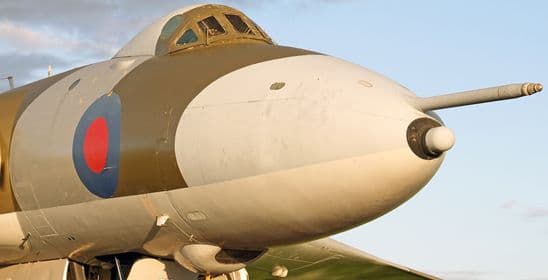
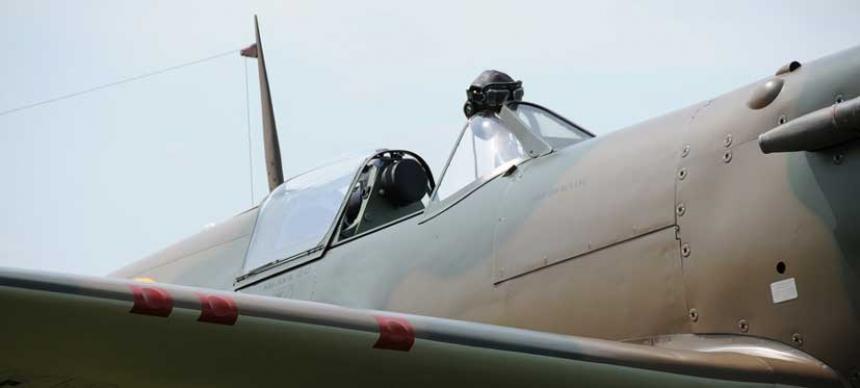
This week saw Britain commemorate the annual ‘Battle of Britain Day’, marking the 75th anniversary of the battle itself. Commemorated each year on 15th September, it also marks the day in 1940 when the Luftwaffe launched two huge raids against Britain, the dual aims of wreaking devastation on her capital city and to lure the remnants of the beleaguered Royal Air Force to its final destruction. Luftwaffe planners were convinced that the RAF were in disarray and would not be able to withstand this massive onslaught, but their formations were met by a significant and determined force of British fighters, who fought so valiantly that the tide of the battle turned in their favour.
Despite the heroics and combat achievements of the Spitfire and Hurricane pilots of Fighter Command, the Battle of Britain was so much more than the glorious endeavours of the men who Churchill described as ‘The Few’. It could be argued that the real heroes of the Battle of Britain were the ‘Many’ people who supported the ‘Few’ during Britain’s darkest hour. In the latest edition of Aerodrome, we will commemorate this significant anniversary in British history by looking at some of the other people who fought throughout the Battle of Britain.
During the summer of 1940, Britain found herself not only fighting for her own survival, but also attempting to stem the tide of Nazi aggression and buy the world some much needed time in order to allow an effective international response to be mounted. The miracle of Dunkirk had brought some small comfort to a nation who had suffered nothing but defeat and setback for the past few months and the population in general were living under the very real threat of invasion and the horrors of war coming to their own doorsteps. Despite this, and in the certain knowledge that the coming months could be some of the darkest days in Britain’s history, the population went about their business as usual, and in the main there was a feeling that they were looking forward to giving Hitler something of a bloody nose. What Britain was lacking in raw materials and the weapons of war, she made up for in spirit and optimism. Importantly, there was something else – Britain was well organised and they were in no mood to go down without a fight! The battle lines were drawn and the duel was about to begin.
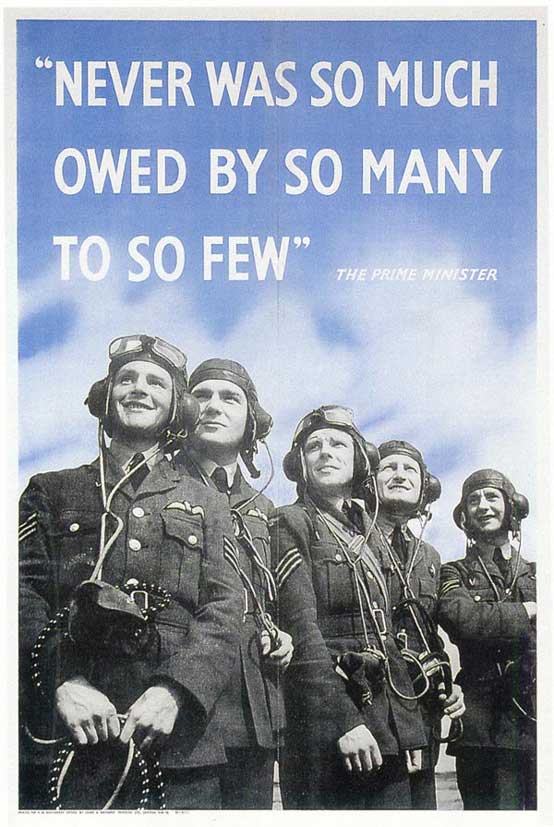
Fighter pilots of the Battle of Britain
One of the significant factors that Britain could count on, as she prepared to face a German onslaught in 1940, was the support of her Commonwealth Nations. Not only would this prove critical in providing pilots to bolster the ranks of Fighter Command during the Battle of Britain, but also in the years to come it would allow large numbers of student pilots to receive their training, out of the line of fire. This would prove to be crucial as the war progressed and was something that the Luftwaffe would not benefit from.
At the beginning of WWII, significant numbers of Commonwealth airmen were already in the ranks of the Royal Air Force, many of whom would go on to fight during the Battle of Britain. Leading the way were 127 New Zealand pilots, followed by 112 from Canada, and out of the 450 Australian pilots in RAF service at the beginning of the war, 32 went on to fight during the Battle of Britain. With pilots also coming from South Africa, Northern and Southern Rhodesia, Newfoundland, Barbados and Jamaica, their contribution was essential and must be recognised.
As German forces rolled across continental Europe, a great many brave European pilots made their way to Britain, determined to continue their fight against the hated enemy. The proud and extremely capable pilots from Poland and Czechoslovakia were to prove decisive during the battle and displayed great valour and tenacity in the face of the Luftwaffe onslaught. Pilots from Belgium and France also bolstered the ranks of Fighter Command, along with the neutral pilots of Ireland and the USA – slightly fewer than 3,000 Fighter Command airmen took part in the Battle of Britain, coming from no less than 16 British, Commonwealth and Allied countries. A significant 20% of these brave pilots were non-British.
If Britain was going to survive the coming German onslaught, it would require many factors to work in conjunction with one another, to allow available resources to be used to their maximum effectiveness – the battle would not be won by muscle and valour alone. Central to this plan was the ground controlled interception network, which would allow RAF planners to have advanced notification of incoming raids and give them time to react appropriately to what they were about to face. In order for this to work effectively, there would have to be an extremely organised reporting system, with the right people making the key decisions quickly and effectively. This is where Commander of RAF Fighter Command Air Chief Marshal Hugh Dowding possibly played his trump card, as he helped to create the world’s first integrated air defence early warning system - it could be argued that this made the difference between success and failure.
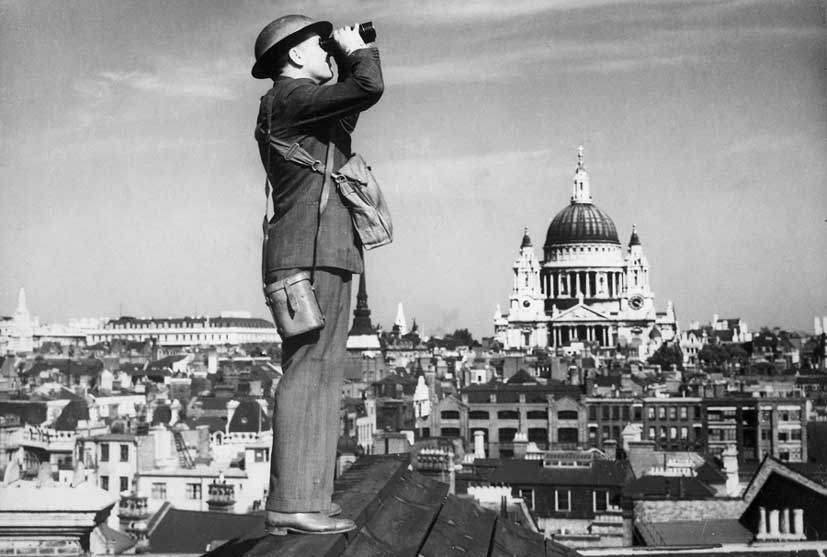
The Observer Corps - iconic image from the Battle of Britain
The Chain Home network of coastal radar early warning stations were exhaustively tested before the war and actually worked. As operators became more accomplished in using this new technology, they were actually able to detect Luftwaffe raids forming up over France, which allowed RAF commanders even more time to organise their defences. This radar network was backed up by a highly professional and extremely reliable Royal Observer Corps, which were a uniformed volunteer civil defence force, charged with identifying and plotting enemy (and friendly) aircraft over mainland Britain. Once raiding enemy aircraft had crossed the coast, it was the job of the Observer Corps to identify and track formations, or individual aircraft, providing type, raid strength, height and direction information, relaying this information back in real time. Although the Germans knew about the existence of British radar stations and their rather conspicuous and impressive looking transmitter masts, they could have had no idea of the effective reporting system behind them, which helped to secure their defeat in the Battle to come.
Impressive as the individual elements of Britain’s air defence system undoubtedly were, it was the speed at which this information was received and acted upon that proved to be its most critical attribute. A complex network of buried telephone communications linked all the radar stations and Observer Corps observation posts with a central reporting facility at Fighter Command Headquarters at Bentley Priory. Specially trained operatives would quickly take this information and transfer details of the approaching raid on to a large table mounted map, or plotter table, which would allow commanders to see a visual representation of the incoming attack and their defensive response. This information was then relayed directly to individual Group and Sector command posts, where they would re-create this battle picture on their own plotter table, but only including the details required by their own particular sector. This would allow commanders to effectively deploy their forces with minimum delay and maximum efficiency – they were then able to relay the latest raid information (height, direction and type and strength of aircraft) to pilots who were actually in their aircraft, or to anti-aircraft batteries sited within their defensive sector.
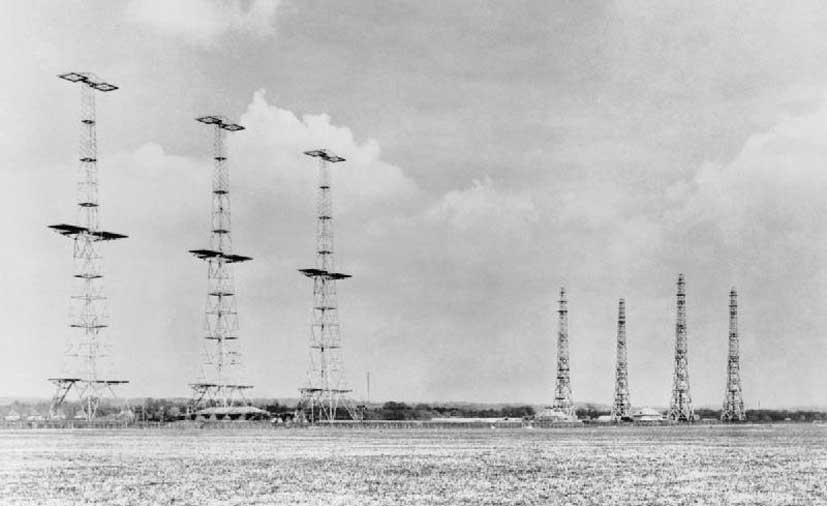
Radar masts were highly visible, but formed only part of the system
The ‘Dowding System’ of obtaining and collating effective raid information, dramatically improved the effectiveness of Fighter Command's ability to challenge the Luftwaffe and to use their available forces most efficiently. Pre-war fighter interception rates of between 30% and 50% were considered to be excellent, but this would have been a disaster during the Battle of Britain, meaning that half of the ‘Scrambles’ would not have resulted in contact with the enemy. Thanks to the effective Command and Control system established by Dowding, the RAF were seeing interception rates of over 80%, with a number of raids actually met with a 100% interception success rate. By contrast, the Luftwaffe had no such system and had very little real-time information on the whereabouts of their RAF adversaries. Indeed, a great many sorties were completed without even seeing an RAF fighter and when they did, the Spitfires and Hurricanes of Fighter Command were often in a more advantageous combat position.
Although the skill, judgement and bravery of individual RAF pilots would now come into play as they dived into battle, the Dowding System had helped to place them in the right position, with a minimum amount of fuss. As the battle continued to rage, this possibly allowed tired pilots to continue fighting much longer than they would have managed to, had they been forced to fly endless and exhausting standing patrols.
Behind every Spitfire, Hurricane and Defiant that took off during the Battle of Britain, was a huge team of highly trained and professional men and women, who made everything on the airfield work like clockwork. Without their effort and commitment, the battle would have quickly been lost and if the fighter pilots are forever to be known as the ‘Few’, the airfield ground staff were certainly their able support ‘Many’. Working in extremely difficult conditions, often as their airfield was under attack from Luftwaffe bombers, they had to ensure that as many aircraft as possible were serviceable for the coming days operations, or quickly and effectively check, re-fuel and re-arm returning fighters in preparation for their next sortie. They were under extreme pressure, with a huge weight of responsibility on their shoulders, but their efforts were just as important as the magnificent pilots of Fighter Command, in ensuring that the Luftwaffe were challenged every day during the Battle of Britain.
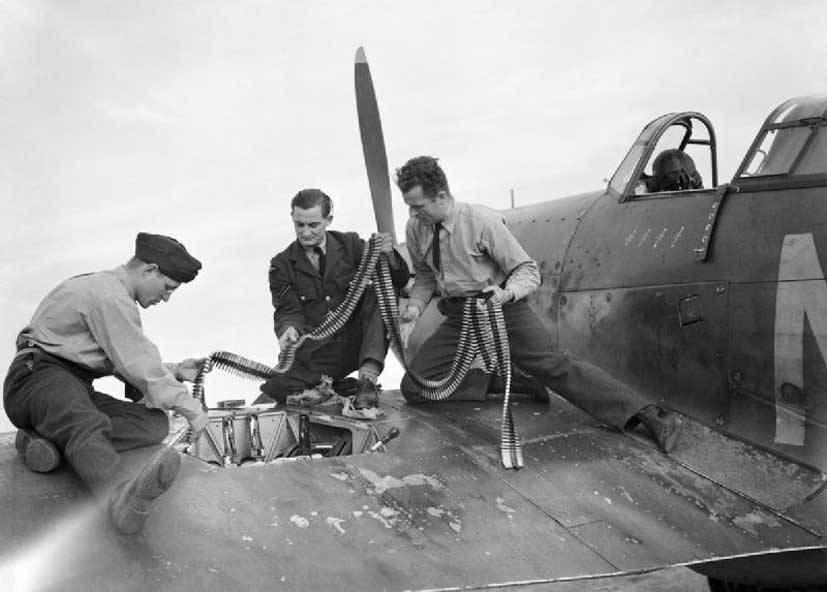
Armourers at work during the Battle of Britain
The effectiveness of this ground support was a result of a far-sighted, pre-war recruitment process, which attracted the most capable, technically minded young men and gave them access to the most extensive training programme available. It also provided exceptional individuals with the opportunity to apply for flying training and resulted in a number of former mechanics actually serving as fighter pilots during the Battle of Britain. There were close bonds formed between ground crews and their pilots, with neither wanting to let the other down – without doubt, the sheer determination of the mechanics, armourers and ground crews of the Royal Air Force, was absolutely critical in supporting ‘the Few’.
At the beginning of each day, all the available aircraft had to be inspected, passed ready for action and prepared for the days operations. In some cases, many of these aircraft would have arrived back late the previous evening, with some suffering various degrees of battle damage. If possible, this damage was repaired on site, with engineers either fabricating new replacement parts, or using components from aircraft that were damaged beyond economical repair. It was a case of ‘all hands to the pump’ and whatever was available in the hangar was used to keep as many aircraft as possible serviceable.
All this activity was taking place in the rather rudimentary conditions of an RAF airfield. Often working late into the night, ground crew would often grab sleep whenever they could and would regularly wear the same uniform for days at a time. If they were lucky, local people, or officers' wives would operate a canteen, which would give the men the opportunity of having a hot meal as late as midnight, but often, they could go days without having a proper meal – it most cases it would be a sandwich and a cup of tea on the wing of a Spitfire, or Hurricane.
Once the Squadron took off on their latest operation, there was no let up in the pressure placed on airfield personnel. If the airfield was not under attack at the time, it had probably endured an attack in the recent past and debris had to be cleared and any damage made good. They would also be preparing for the return of their Squadron, who may be required to quickly return to the action – this is where the pressure really kicked in. Once an aircraft returned from combat, the pilot put it in the hands of his ground crew and he could be expecting to take off in a re-fuelled and re-armed aircraft in approximately ten minutes. Mechanics, armourers and other trades would swarm all over the aircraft, in an exercise that became second nature, by the end of September 1940 – up to four armourers would open the gun hatches, check that the guns were clear and loaded the ammunition trays. To prevent moisture from entering the un-fired guns, other members of the crew would tape the gun ports. A separate team would fill the aircraft with fuel, whilst the engine was being checked, which included topping up the oil and glycol coolant tanks. Oxygen tanks were changed, radio transmitters were tested and anything mentioned by the pilot were all acted on. Importantly, the Perspex canopy was thoroughly cleaned, taking great care to wipe off any oil, or grease, before the pilot was helped back into the cockpit, strapped in and sent off to face the Luftwaffe again.
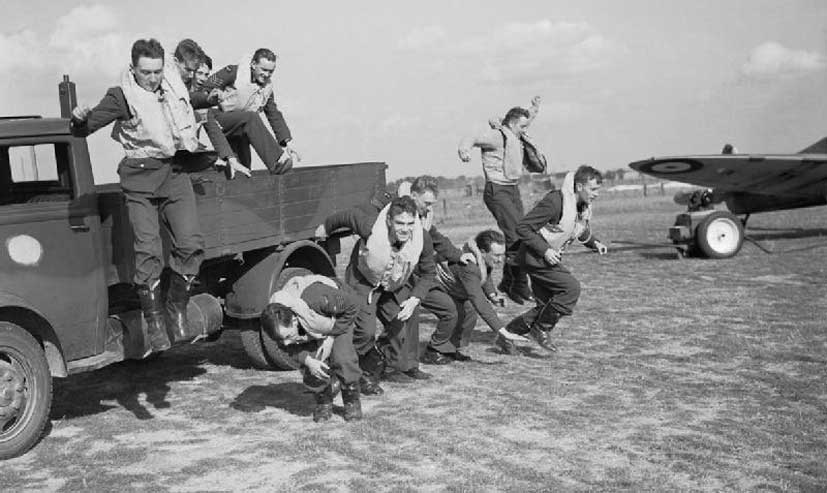
Squadron Scramble!
When you consider how intense this Battle of Britain aircraft turnaround exercise must have been, there must have been absolutely no time to worry about what to do next, you simply had to get on with your bit of the job. If you got it right, your pilot and his machine were back fighting the Luftwaffe in minutes, in an aircraft that was a finely tuned aerial killing machine. If you got it wrong, it could be your pilot who was taking to his parachute, or possibly worse. With a smooth running Merlin engine, eight active Browning machine guns and a clean canopy, your pilot had the chance to increase his victory score, but was certainly flying an aircraft, which stood a fair chance of bringing him back alive.
Obviously, ground support tasks would be slightly different if you were working on a Spitfire, or a Hurricane fighter. From an armourer’s perspective, the gun bays on a Hurricane only had one main panel, with two additional panels to access the ammunition trays on each wing – 32 turn screws secured these panels in position. A Spitfire, on the other hand, had no less than 22 gun panels to be accessed, which required 150 turn screws to be undone and re-secured correctly.
Throughout the Battle of Britain and beyond, women were performing essential tasks at front-line RAF stations and control centres across the UK and at the peak of its strength, WAAF numbers exceeded 180,000 women, with around 2,000 women enlisting each week. Although not serving as aircrew, women were fully involved in the day-to-day running of RAF airfields and were certainly not simply making tea and serving sandwiches, although many RAF aircrew will gladly describe the ladies that kept them fed as the most important people on the entire airfield, as without their endeavours, the whole place would simply grind to a halt.
The RAF were quick to recognise that women would be an extremely valuable addition to their numbers and they encouraged the early establishment of a women’s auxiliary. Although women were not allowed to take part in active combat, they were stationed at active, front line airfields and as such, were subjected to some significant dangers. Performing such essential tasks as packing parachutes, aircraft maintenance, transport and medical support, they would also be asked to do such diverse jobs as crewing barrage balloons and providing catering support.
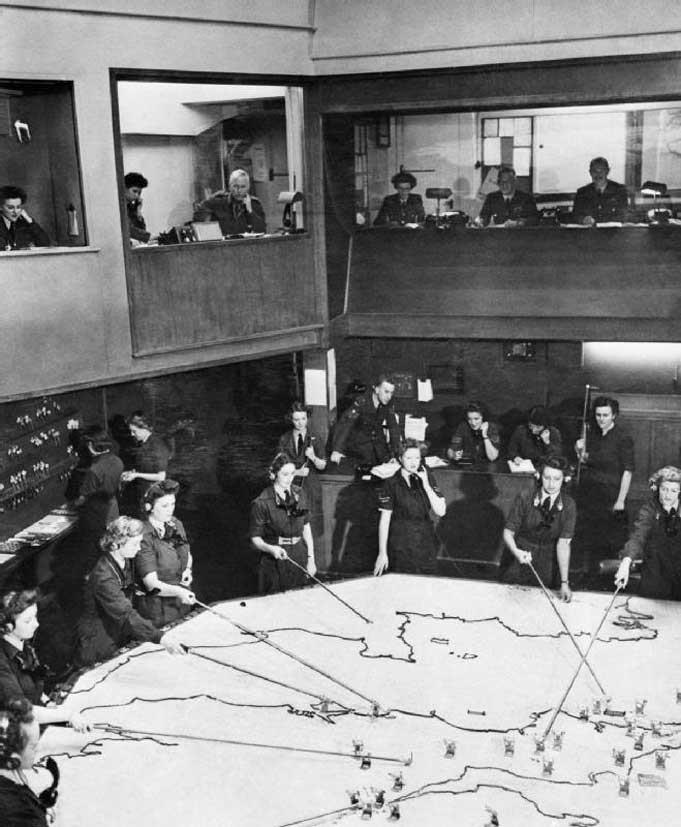
Raid information was collated and plotted at Command Centres
During the Battle of Britain, WAAF operators became famous for their work as operations room plotters, radar operators and communications officers and enjoyed many commendations for the steady, professional manner in which they completed these duties. Indeed, ACM Dowding insisted that the talented women who excelled in these roles be given supervisory positions and commissioned accordingly. Unfortunately, during the Battle of Britain, a number of WAAFs were killed, or injured, with six airwomen being awarded the Military Medal.
Unfortunately, during the course of the battle, airfields came under concerted Luftwaffe attack, with many forced to endure numerous attacks throughout the summer of 1940. In some cases, these raids managed to inflict significant damage and in order to keep the airfield serviceable, a veritable army of trades and services swung into action. Fire-fighters and medical services would deal with the immediate aftermath of a bombing attack, before engineers, carpenters, plumbers and airfield sappers would fill holes, fix leaks and repair hangar doors – any unexploded bombs would also have to be made safe. Airfield medical staff would administer immediate treatment to injured personnel, in the aftermath of the raid, before transporting more serious cases to nearby hospitals. As soon as the raid was over, the airfield would have to get ready to either launch their fighters, or recover aircraft that were already in the air.
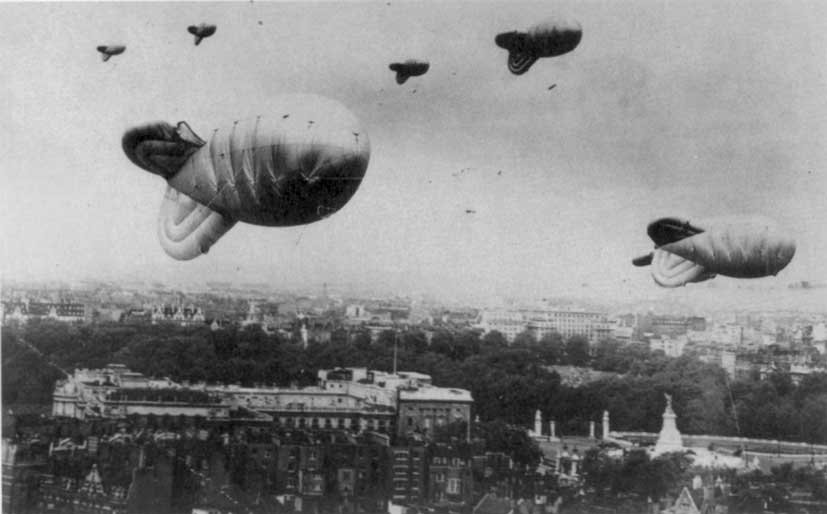
Barrage Balloon defences positioned around London
As Fighter Command airfields would clearly be high value targets for any potential German attacks, they were protected by a network of pillboxes and anti-aircraft defences – indeed, as the threat of invasion loomed, Britain had sited hundreds of light and medium anti-aircraft batteries all over the country, supported by thousands of searchlights and barrage balloon stations. Although seemingly from a previous era, barrage balloons were to play quite a significant role during the battle in preventing attacking Luftwaffe aircraft from following their preferred flight plan. This forced the bombers to fly hastily modified routes, usually at higher altitudes and within the firing arc of the ground defences. Although the British army were forced to leave hundreds of artillery pieces on the beaches of Dunkirk, the anti-aircraft defences managed to shoot down approximately 300 Luftwaffe aircraft during the Battle of Britain.
The role of both searchlight and anti-aircraft batteries during the Battle of Britain was to have a much more significant impact than just the number of enemy aircraft they managed to shoot down. As the war was now affecting the population at large, the sight and sound of these guns in operation served to boost public morale, at a time when they were enduring some significant hardships. Every gun that fired helped the general population to think that Britain was fighting back and giving the Luftwaffe a taste of their own medicine. It would also have a significant impact on the bomber crews of the Luftwaffe – as the massed formations of Heinkels and Dorniers headed for their targets, the fearsome barrage of anti-aircraft fire they faced would have tested the resolve of even the most experienced of crews.
As Britain was thrust into her second world war in just twenty-one years, there was a danger that the general population would not have the resolve for the struggles ahead. With the real threat of invasion, a secondary home defence force would be needed, utilising men whose day jobs were deemed too necessary to the normal everyday running of the British Isles – teachers, farmers, bakers and railway workers were all included amongst these trades. The Secretary of State for War made a radio request for volunteers to man this new force, as military planners worried about the numbers who would come forward – they worried unnecessarily, as tens of thousands of men volunteered to help defend their nation. So many men came forward, that it was not possible to arm them all, but it clearly illustrated the resolve of the nation.
Given the colloquial title of ‘Dad’s Army’, the LDV force would defend coastal areas, which could be potential landing grounds for an invasion force and numerous strategic sites around the country, such as airfields, factories and weapons stores. They also defended roads and bridges, which would be used by enemy forces, should the country be invaded and guarded crashed aircraft and captured airmen. They would prove to be an invaluable force for the remainder of the war - in Britain’s hour of need, ordinary men and women stepped forward to risk their lives for what they held dear.
As the Luftwaffe onslaught moved from the airfields of Fighter Command to the streets of London and the surrounding area, a great many more people were forced to take part in the Battle of Britain. As the general public were now beginning to suffer significant casualties, it could be argued that they too were involved in fighting the Battle of Britain, as they showed their absolute disdain for the Luftwaffe and the commanders behind them and displayed incredible resolve in the face of this onslaught.
On a wider level, the entire country was now focused on repelling the Luftwaffe and preventing an invasion of Britain. Civil defence forces, fire fighters, air raid wardens, medical and rescue services, aircraft and munitions workers, naval and merchant navy personnel were all fully engaged in dealing with the results of Luftwaffe attacks and ensuring that the country continued to fight. Everyone was determined to do their bit, as the thought of defeat was simply inconceivable.
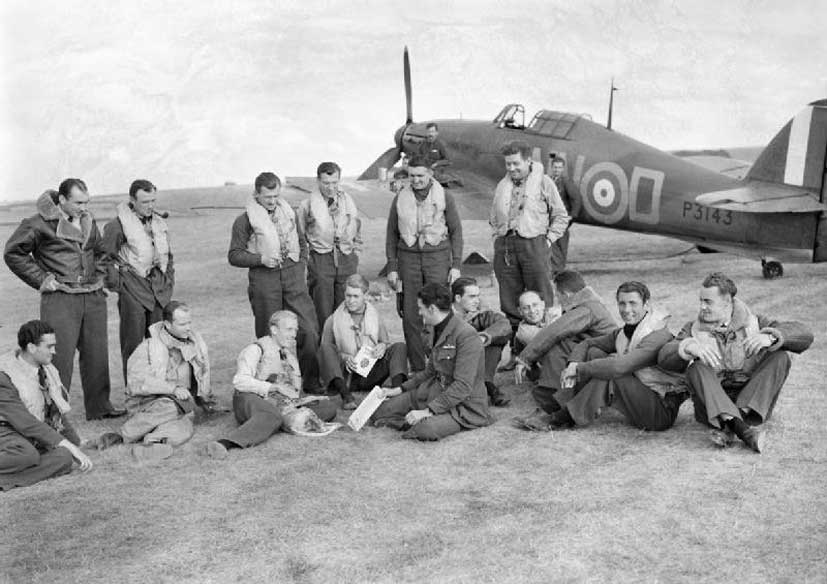
Pilots of the Battle of Britain
It is difficult to imagine what the pilots of the Battle of Britain were forced to endure. At times, it must have been exhilarating, terrifying, exhausting and distressing, but day after day, the young men of Fighter Command would climb into the cockpit of their aircraft and speed towards the massed formations of Luftwaffe aircraft, sometimes several times a day. Each one of these men had a story of their own and if they were lucky, they had the opportunity to tell this story to family and friends, who were truly in awe of the part they played in the history of Britain. They earned the respect, admiration and gratitude of a grateful nation. Let us take a look at two of these heroes:
In the mid 1930’s, Arthur Banham successfully applied for a short service commission with the Royal Air Force and following completion of his flying training, was posted to No.19 Squadron at Duxford. He was to become one of the first RAF pilots to fly the new Supermarine Spitfire, which entered service with 19 Squadron, towards the end of 1938.
At the start of the Battle of Britain, Banham was flying the Boulton Paul Defiant turret fighter with No.264 Squadron and despite some initial successes, the Luftwaffe quickly learned how to overcome this unusual and rather heavy aircraft. In eight days of operations from Hornchurch, the Squadron had lost over half of their aircraft and several of their comrades.
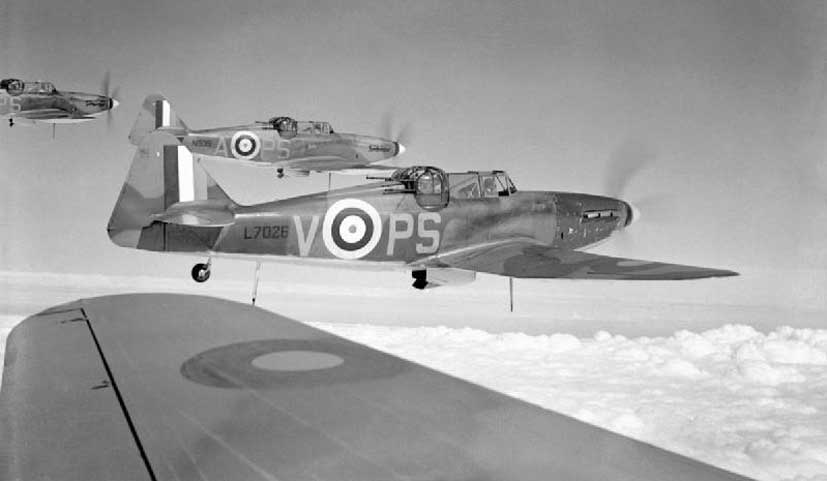
RAF Boulton Paul Defiant day fighters
On 26th August 1940, Banham and his gunner Sgt. B Baker took off from Hornchurch in Defiant L6985 to intercept a large force of Luftwaffe aircraft. Over Thanet, they engaged and destroyed a Dornier Do.17, before themselves being bounced by a number of Messerschmitt Bf 109 fighters. Badly damaged and on fire, Banham gave the order to abandon the aircraft, before turning the Defiant on its back, allowing him to fall from the smoke filled cockpit. He landed in the sea, eight miles from the shore, but was luckily picked up by a fisherman, who had used his last remaining fuel to go out and look for downed airmen – sadly his gunner, Sergeant Baker was never found.
In early September, Banham was promoted to Flight Commander of No.229 Squadron, flying Hurricanes at Wittering. He only had one flight in his Hurricane, before the Squadron was ordered to RAF Northolt, where he would rejoin the air battles over Southern England.
On 15th October, Banham was shot down in Hawker Hurricane P3124. The aircraft was engulfed in flames and despite suffering horrific burns, Banham managed to bale out of the aircraft, landing in a large apple tree in Kent. He was taken to Queen Victoria Cottage Hospital, East Grinstead, where he underwent pioneering plastic surgery, in the hands of Dr Archibald McIndoe and was inducted into the famous ‘Guinea Pig Club’.
Arthur Banham eventually returned to active duty and surviving the war, he died in 1987.
Born on 4th June 1911, William M L Fiske III was the son of a wealthy American banker. His privileged upbringing allowed him to finish his education at Cambridge University, were he not only excelled in his studies, but also in sports of all kinds. He famously won a gold medal at the 1928 Winter Olympics, as a member of the winning US bobsleigh crew – he would go on to lead the team at Lake Placid, four years later, but gave up his place in the 1936 games, as he refused to compete in the German games.
An accomplished golfer, Fiske would travel to tournaments in his British Racing Green Bentley 8-litre sports car and enjoyed something of a celebrity status. Working for the family business in London, Fiske learned to fly in his spare time and obtained his licence in 1938, but was called back to New York the following year, as the clouds of war gathered in Europe. One of his English friends in New York, William Clyde, was already a qualified pilot and member of the RAF reserve and on seeing the developments in Europe and expecting to be called up, had arranged a passage back to England – Billy Fiske joined his friend and enlisted in the RAF on his arrival. This move carried the possibility of severe penalty, as he could have been charged with fighting for a foreign power, by US authorities and arrested. Despite this unselfish act, he still struggled to join the RAF, as they were not interested in recruiting non-Commonwealth citizens at this time and was forced to try and convince them that he was Canadian. He was eventually accepted and completed his flying training at Yatesbury and Brize Norton.
On 12th July 1940, Billy Fiske was posted to No 601 (County of London) Squadron at Tangmere, where he met up with his good friend Billy Clyde once more. He arrived with something of a playboy reputation, but his charm and excellent flying skills quickly endeared him to his Squadron mates. There was a problem though – 601 Squadron were operating Hawker Hurricane fighters and Fiske had never flown one! His first flight took place on 14th July, with his first operational sortie taking place only six days later, having accumulated just eleven hours on Hurricanes.
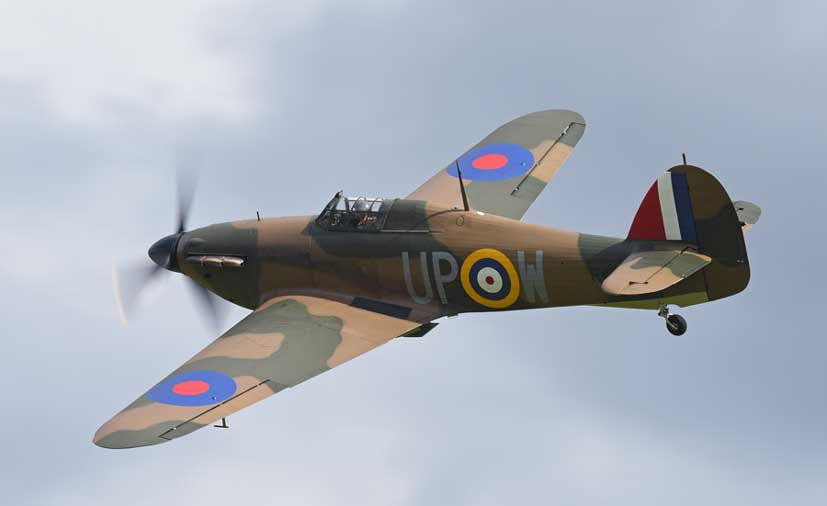
An early Hawker Hurricane Mk.I
This was to be a busy time for Fiske and 601 Squadron, with numerous patrols being flown over the coming few days. On 13th August, Fiske claimed a Junkers Ju-88 destroyed – his first combat claim.
On 16th August, 601 Squadron were scrambled to intercept a formation of Ju87 Stukas, which unbeknown to them, were heading to attack their home base at Tangmere. The Luftwaffe bombers attacked the airfield, whilst themselves under attack from the home based Hurricanes. Fiske, flying Hurricane P3358 was engaging a Stuka, when his aircraft was hit by return fire from the bomber. His engine had seized, but he skilfully managed to glide his stricken fighter over the airfield boundary and make an emergency landing. As soon as his Hurricane hit the ground, it burst into flames and despite the heroic efforts of two of the stations ground crew, who unstrapped the unconscious airman and pulled him from the burning aircraft, Billy Fiske was severely injured. To make matters worse, the station medical centre had taken a direct hit in the attack and the medical officer was himself injured – he managed to administer morphine and instructed the men to take Fiske directly to Chichester Hospital. Pilot Officer William Fiske died the following day - he was 29 years old.
On 4th July 1941, a tablet in his honour was unveiled in the crypt of St. Paul’s Cathedral, by the Secretary of State for Air, Sir Archibald Sinclair. It reads, “Here was a young man for whom life held much. Under no kind of compulsion, he came to fight for Britain. He came and he fought and he died”.
As the Luftwaffe attempted to pound Britain into submission, during the summer of 1940, an entire nation came together, determined to resist this fearsome onslaught. At a time when the world was looking towards Britain with compassion, expecting her to become the next casualty of the German war machine, the British people managed to achieve something extraordinary - they provided a platform for three thousand young men to defy all the odds, take on the most powerful air force in the world and defeat them.
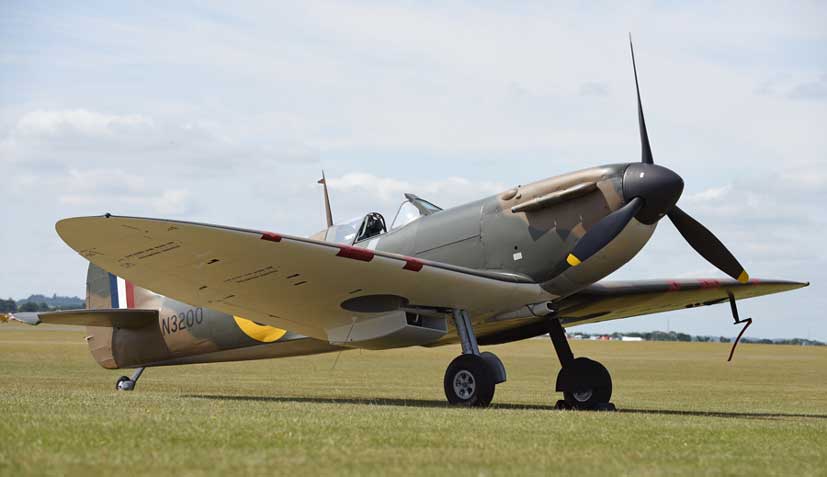
The classic Battle of Britain era Supermarine Spitfire
At the spearhead of Britain’s defiance were the pilots of Fighter Command. Young men with an average age of just 21, some not even old enough to vote, would climb into their aircraft and take off time after time, knowing that they would be facing overwhelming odds and the constant threat of death. They were courageous beyond the comprehension of most people and paid a heavy price for their devotion to duty, but they also earned the admiration of Britain and the free world. Winston Churchill perfectly described the pilots of the Battle of Britain when he said, "The gratitude of every home in our island, in our Empire and indeed throughout the world, except in the abodes of the guilty, goes out to the British airmen, who, undaunted by odds, unwearied in their constant challenge and mortal danger, are turning the tide of the world war by their prowess and devotion. Never in the field of human conflict was so much owed by so many to so few."
More than any previous edition of Aerodrome, I really hope that I have managed to produce something that is appropriate to this week’s commemoration of the Battle of Britain. I wanted to highlight some of the people behind the pilots of Fighter Command, whilst not detracting from their courage and sacrifice – I really hope that I managed to achieve that.
You can discuss this week's blog on the Airfix Aerodrome Forum or Corgi Aerodrome Forum, and if you have any comments, questions or suggestions for future editions, please feel free to let us know on Airfix Facebook or Corgi Facebook, or on Airfix Twitter or Corgi Twitter using #aerodrome.
Thank you for reading and I look forward to posting here again next week.
Michael
© Hornby Hobbies Ltd. All rights reserved.

