
Welcome to this latest edition of Aerodrome and our regular look at the fascinating world of aeroplanes and the historic aviation scene in the UK.
Although the national situation appears to be easing with each passing week and that spectator events are slowly allowing greater numbers of people to attend, it is now clear that the 2021 Airshow season will still end up being very different to what we have become accustomed to, with most events once again being cancelled and those which do take place being of the ‘socially distanced’ variety. In the hope that 2022 will be as close to a normal Airshow season as possible, this latest edition of Aerodrome is a celebration of aviation entertainment and a venue which has become synonymous not only with aircraft, but also with allowing the public to get close to them, IWM Duxford. This latest blog review reports from a sun drenched September Airshow back in 2004 and whilst we will only be bringing you a selection of the action from this memorable show, many of the pictures were taken from a rather unusual vantage point. Prepare for the sight of some old aviation favourites, several aircraft which are no longer in the UK and some rather colourful performers, as we once again head for this wonderfully historic aviation venue.
With a huge crowdline, pilots performing at Duxford can be sure of many appreciative waves at the end of their display
For millions of people right across the world, the former Royal Air Force station at Duxford in Cambridgeshire is regarded as one of the premier locations for historic aviation, both preserved in their extensive museum and airworthy, with many of the operators which call the airfield home. Conveniently located just off junction 10 of the M11 motorway, the annual series of Airshows which take place at Duxford attract hundreds of thousands of visitors each year, all eager to obtain their latest fix of thrilling aviation action, be this one of the more mainstream shows organised by the museum themselves, or the Warbird extravaganza known the world over as Flying Legends. In addition to all the exhilarating flying entertainment, visitors also have the benefit of discovering all the fascinating exhibits within Duxford’s various hangars, something which is made all the more poignant in the knowledge that this airfield welcomed the Supermarine Spitfire into RAF service back in 1938 and that it also played a significant role in the European air war during WWII.
There has actually been a military airfield at the Duxford site since before the end of the Great War, with the official airfield opening taking place in September 1918, just two months before the cessation of hostilities. Despite the war ending and an understandable reduction in military aviation requirements, Duxford airfield was retained as a permanent RAF station and even underwent a further period of development and expansion in the early post war years. Since those first tentative beginnings, there have been plenty of interesting developments throughout the history of the airfield, but perhaps none so significant as the arrival of the RAF’s first Supermarine Spitfire fighter on 4th August 1938. Duxford based No.19 Squadron had the honour of introducing Britain’s iconic fighter into Royal Air Force service and with it, marking the start of an enduring link between the airfield and arguably the world’s most famous fighting aeroplane.
There is always something special about seeing a Spitfire displaying at Duxford, as this was the first operational airfield to receive the aircraft in the summer of 1938
During WWII, the airfield would play a prominent role during the Battle of Britain and towards the end of the battle, over sixty Spitfires and Hurricanes would be dispersed around Duxford and the nearby satellite airfield at Fowlmere. In the months which followed the end of the Battle of Britain, Duxford continued to be at the forefront of Fighter Command’s defensive capabilities, but also proving significant as the RAF moved on to offensive operations. In this regard, the airfield would be the home of a rather interesting unit, the Air Fighting Development Unit. The AFDU were engaged in the assessment of aircraft and equipment prior to their potential service introduction and fascinatingly, also included the return to airworthy condition and evaluation of captured enemy aircraft within their operational remit. This work would probably have seen Messerschmitts sharing Duxford’s facilities with RAF Spitfires which were engaged in destroying as many Luftwaffe examples of the aircraft as they possibly could. AFDU were also influential in the development and introduction of the Hawker Typhoon, which proved to be such a devastatingly effective aircraft during the final months of the Second World War.
In April 1943, Duxford was handed over to the USAAF and became known to them as Station 357 (DX), home to the famous 78th Fighter Group, amongst others – their distinctive black and white chequerboard Thunderbolts and Mustangs would go on to become some of the most distinctive aircraft of the entire war and an enduring source of fascination for aviation enthusiasts all over the world. This Anglo-US aviation link has endured to this day, with Duxford now being home to the impressive American Air Museum, an architecturally significant building which has just been awarded Grade II listed status and the poignant ‘Counting the Cost’ engraved glass memorial wall, which includes the planforms of the 7,031 US aircraft which were lost whilst operating from British bases during WWII.
The end of the Second World War brought about a significant period of contraction for the Royal Air Force, but despite the many inevitable base closures which took place at that time, Duxford was one of the stations selected to remain operational. As the RAF was now very much in the jet age, Duxford would be home to such aircraft types as Meteors, Javelins and Hunters during this period, with other front-line aircraft such as RAF Germany Canadair Sabres using it as a temporary base whilst on exercise. In August 1961, a Gloster Meteor blasted off from Duxford’s runway to mark the end of the station’s service career and the beginning of a period of great uncertainty for the site. With the airfield now abandoned, it quickly started falling into disrepair, but was to be transported back to its wartime glory once more during 1968, as it was used as a major location in the production of the now famous Guy Hamilton directed movie ‘The Battle of Britain’ and became temporary home to one of the most impressive collections of airworthy former WWII aircraft ever assembled since the end of the Second World War.
The final, extremely significant chapter in the history of the former RAF Duxford site occurred when the airfield was selected as a temporary home for the aircraft collection of the Imperial War Museum and the fact that the new custodians were also allowed to stage their first Airshow event in the Autumn of 1973. Possibly serving to prove the future viability of a museum at the Duxford site, the Imperial War Museum was given full use of the airfield and all its existing facilities in 1975 - the local council were also given a licence to administer its ongoing operation, with the airfield finally opening to the public on a daily basis the following summer. This former RFC and Battle of Britain station would enjoy a new lease of life, helping to preserve the nations aviation heritage and allowing millions of people the opportunity to experience aeroplanes at close quarters and in authentic surroundings. With a history such as this, is it any wonder that Duxford continues to be a popular destination for a great many people, with some making several visits annually, with Airshow dates being a definite highlight.
A varied display programme and good weather are recipes for a memorable show and hopefully a few decent photographs
With any show at Duxford able to call upon the significant support of the many aircraft operators based at the airfield, not to mention other interesting acts from further afield who are desperate to have a Duxford display in their log books, public support for these events is always healthy, although a move to advanced ticketing arrangements does appear to have had a slight impact on crowd numbers of late. With a weather forecast which was set fair, crowd numbers were certainly not a concern for organisers at Duxford’s 2004 September Airshow, as the full display programme they had worked hard to secure looked certain to be enjoyed by huge crowd numbers, all hoping to enjoy a spectacular afternoon of flying entertainment.
Taking my place in the crowd for both days of this weekend show, on inspecting my pictures, it appears that I took up positions at opposite ends of the airfield on Saturday and Sunday, however, I also remember being afforded a very special opportunity for a few hours on one of the days. If I am being totally honest, I can’t actually remember just how this came about now, but for a time during the display (I think it was on the Saturday, although I’m not entirely certain), I and my trusty camera were allowed to take up a position on top of Duxford’s iconic control tower, a unique vantage point from which to view the proceedings. These days, I doubt if such an opportunity would be granted to a photographer and for very good reason, but on that glorious day, I was given special dispensation to be there, but only on the proviso that it was for a limited period and that I stayed low and did not get in anybody’s way. Either kneeling on the flat roof of the building, or sitting down with my legs dangling through the railings, I was told in no uncertain terms that I was not to stand up whilst taking pictures, an instruction I was more than happy to comply with.
My plan was that if I sat quietly enough and didn’t get in anyone’s eyeline, they might eventually forget that I was there and I might actually get to enjoy watching more of the show from this lofty perch than either party had initially anticipated. In the end, my plan worked to a point and I seem to remember spending a couple of very happy hours on the control tower, more than enough time for me to come away with some unusual photographs of the display aircraft preparing for their slots and some great memories of a special day. The image selection used throughout this feature were all taken during the two days of the show, with several being as a result of my extremely memorable excursion to the top of the control tower. It was fascinating to be allowed to take up this vantage point, not only to have a very different perspective for my pictures, but also to more clearly see the interaction between the crowd and those airside, not to mention gauging the popularity of the individual aircraft from the crowd’s reactions. Somehow, I get the feeling that this might have been a one-off opportunity, but it was definitely good whilst it lasted.
Clawing their way into the air, the Fighter Collection’s Hellcat and Wildcat were the only examples of these classic WWII fighters in Europe
As the long-time home of The Fighter Collection, Duxford and her visitors have had the good fortune to be able to enjoy some of the world’s rarest and most sought after Warbirds over the years, not only seeing them in one of the operators hangars, but also where they belong, in the sky. In addition to the Spitfires, Hurricanes and Mustangs British enthusiasts are probably most familiar with, passionate Warbird collector and operator Stephen Grey has also brought many more exotic types the skies of Cambridgeshire, such as a Curtiss P-40B Warhawk, a Republic P-47 Thunderbolt and a beautiful Gloster Gladiator. Perhaps of even greater significance than this, he and his team graciously allowed the public to share in the thrill of experiencing these priceless classic aeroplanes, something many of us will never forget.
Of all the aircraft types operated by The Fighter Collection, they have always been admirers of large American radial engined aircraft from the wartime era and still boast a Bearcat, Wildcat and Corsair amongst their current collection, however, their fleet of Grumman ‘Big Cats’ was once even larger than it is today. As the aircraft which ruled imperious in the Pacific following its combat introduction in September 1943, the Grumman F6F Hellcat was one of the finest fighting aeroplanes ever produced and despite the fact that it was introduced relatively late in the war, was responsible for claiming 75% of all US Navy combat claims during the Second World War. Despite the fact that over 12,000 of these impressive fighters were produced, very few remain in airworthy condition and when one arrived outside the TFC hanger towards the end of 1990, UK aviation enthusiasts were obviously delighted at this development.
The aircraft they had acquired was an extremely rare F6F-3 variant of this famous US Navy fighter, the first major mark of this fighter to enter service and during its restoration, the team managed to piece together the fascinating history of this unique fighter. Previously assigned to US Navy VF-6 ‘Felix’ squadron on board USS Intrepid during WWII, this Hellcat was found to possess real combat provenance and was once the mount of Lieutenant Alex Vraciu, one of the most successful fighter pilots in the US Navy. Managing to earn the coveted title of ‘Ace’ relatively early in his combat career, Alex Vraciu would go on to end the war as the fourth most successful US Navy fighter pilot and was credited with 19 aerial and 21 ground victories. Significantly for the Fighter Collection team, he used their new Hellcat to claim nine of those combat victories, instantly making this one of the most historically important airworthy WWII aircraft in the world.
King of the Pacific, despite its relatively late entry into the Second World War, the F6F Hellcat scored more aerial victories than any other aircraft
Although the F4 Wildcat was an excellent aircraft in its own right, every aspect of its design was improved during development of the Hellcat, whilst retaining the aircraft’s legendary rugged construction
Possessing range and firepower, the Hellcat proved to be the ultimate naval fighter and made an ace of many a US Navy pilot
Another rugged Grumman design, the Tigercat was too late to see service during WWII, but would have no doubt equipped itself extremely well against its Japanese adversaries
Whilst operated in the UK by The Fighter Collection, their magnificent Grumman F7F Tigercat was the only airworthy example of the aircraft in Europe
Having discovered the fascinating wartime history of their new Hellcat, The Fighter Collection contacted Mr Vraciu with details of what they had found. Delighted by the news, the aircraft’s former pilot would prove instrumental in providing service records, accurate marking and colour scheme information which proved vital during the restoration of the fighter. As the date of the first post restoration flight approached, Alex Vraciu was invited to Duxford so he could be present for the occasion and in what turned out to be an extremely emotional occasion, presented Stephen Gray with his original wartime flying gloves for this historic flight, which added a really authentic touch to this historic first UK flight. The Hellcat would go on to be the star of many a Flying Legends Airshow and with its incredible combat history, became a much loved aircraft on the UK Warbird scene – unfortunately, in the Warbird world, all good things must come to an eventual end and for Europe’s only Grumman Hellcat, that date occurred in February 2015. Sold to new owners in the US, the Hellcat underlines the fact that we can never take anything in historic aviation for granted and since the end of the 2014 Airshow season, Europe has been without a flying example of this magnificent aircraft – thankfully, we all still have our pictures to remind us just how lucky we have been.
Another former TFC operated aircraft which emanated from Grumman’s famous ‘Iron Works’ was the hugely impressive F7F Tigercat, a beast of an aeroplane which had the distinction of being the first twin engined fighter to be deployed by the US Navy. This large aeroplane was intended to be operated from the decks of Midway-class aircraft carriers and despite the fact that it had the folding wings associated with aircraft operated at sea, it was much too large to be flown from the decks of smaller US carriers. Arriving in service just too late to see action during the Second World War, the end of hostilities meant that only 364 of these elegant fighters would be produced, even though they did go on to serve during the Korean War. Usually flown by The Fighter Collection’s Chief Pilot, the Tigercat would regularly lead the iconic ‘Balbo’ aircraft formation as the finale to many a Flying Legends Airshow and was a particularly potent performer when displaying by itself. The Tigercat was sold to a US collector in 2006 and just like the loss of the Hellcat, left us without a flying example of the F7F in European skies.
The pictures included here will no doubt bring back happy memories for those Aerodrome readers who remember seeing TFC’s Hellcat and Tigercat displaying at one of Duxford’s displays some years ago, but for those who weren’t that fortunate, they will clearly feel as if they have missed out somewhat. Nevertheless, it is always nice to chart the history of the British Airshow scene and some of the classic aeroplanes which played their part in that story.
Prepare for classic jet action at Duxford, as the North American F-86A Sabre and Lockheed T-33A run up prior to their display
As far as Duxford shows are concerned, not all the classic aeroplanes we enjoyed watching display were powered by piston engines, some extremely examples emanated from the early days of jet propulsion. With the North American P-51D Mustang being regarded as one of the finest fighter aircraft of the Second World War, one which helped to turn the balance of war in favour of the Allies, it is no wonder that this manufacturer was approached when it came to adopting the new jet technologies. North American’s initial design incorporated a straight wing configuration similar to previous US jet aircraft, however, having later been given access to captured German research data, changed their design to feature a wing which was swept back by 35%. Determined that their new aircraft would be capable of attaining great speeds, the North American design also incorporated a beautifully streamlined fuselage and retained the exceptional pilot visibility first introduced on the ‘D’ variant of the successful Mustang.
With three nose mounted .50 calibre machine guns positioned on either side of the aircraft’s front fuselage, the new North American F-86 Sabre shared much of the design philosophies incorporated in its famous piston engined predecessor - beautiful to look at, but a deadly fighting aeroplane at heart.
The first flight of the XP-86 prototype aircraft took place on 1st October 1947 and on what must have been a big day for everyone at North American, they were fortunate that they could rely on the skills of one of America’s greatest aviators on this auspicious occasion. North American’s chief test pilot at that time was none other than George Welsh, WWII fighter ace and national hero, a man who had famously piloted his Curtiss P-40 fighter against the attacking Japanese aircraft during the Pearl Harbor raid, becoming one of the first US aviators to score aerial victories in WWII (even though war against Japan was not officially declared until the following day).
Later in the aircraft’s development programme, an F-86A Sabre would go on to set a new world airspeed record of 670.84 mph, underlining the credentials of this important new fighter and bringing it to the attention of the aviation world. On entering service with the U.S Air Force in 1949, the North American F-86 Sabre would have the distinction of not only being America’s first swept wing fighter, but also the fastest fighter aircraft in the world. It would go on to be regarded as one of the most important aircraft in the post war jet era and arguably the most capable of the world’s early jet designs.
A stunning aeroplane, the Sabre is often described as the jet powered Mustang and the two aircraft certainly share some similarities, which can be seen in this take-off view
Classic jet action, these beautifully presented aircraft used the blue skies to give us an impressive display of speed and agility
The Sabre didn’t need a separate smoke system, as its General Electric J-47 engine did a rather good job by itself
The Sabre which displayed at Duxford back in 2004 really was one of the jewels in the UK Airshow scene’s crown, a rare ‘A’ model of this classic jet fighter and one which its owners claimed was the oldest airworthy jet in the world. The 50th production F-86A Sabre, G-SABR was a regular performer at UK shows back then, bringing a little American style to proceedings wherever she performed. Based at Duxford for many years, the Sabre looked magnificent in her Korean War markings and when she displayed in the same programme as a Mustang, it wasn’t difficult to see the link between the two aircraft.
There are two things which are always associated with a Sabre display, which were the aircraft’s gleaming natural metal finish and the ‘smoky’ nature of her General Electric J-47 engine. Despite the beautifully clean lines of the fighter, you could always chart her progress across the sky by following the plume of smoke she left in her wake, particularly on a blue sky day. Indeed, during the Korean War, US servicemen had a saying that ‘If it smoked, it was one of ours’, when attempting to assess the intentions of aircraft in their vicinity. When operated against relatively inexperienced Chinese and North Korean pilots, Sabre pilots enjoyed excellent success rates in combat, however, when engaged with the more experienced Soviet pilots in their MiGs, things were much more evenly matched. The final Sabre v MiG kill ratio of 10:1 was thought to be somewhat exaggerated, but with 792 MiGs downed and only 78 Sabres recorded as lost, official figures seem to confirm the superiority of the Sabre in Korea and of the 41 American pilots to achieve the coveted ‘Ace’ status during the conflict, all but one flew the F-86 Sabre.
A truly stunning aeroplane, the Sabre is one of these aircraft we miss so much at Airshows today, but for those of us lucky enough to have seen her display, we count ourselves extremely fortunate indeed.
A real Airshow favourite, The Fighter Collection’s B-25D Mitchell wore the markings of an RAF version of the bomber which ser an impressive record of completing 125 missions
Another aircraft which had a reputation as being a firm favourite with the UK Airshow enthusiast, The Fighter Collection’s North American B-25D Mitchell ‘Grumpy’ was a surprisingly spritely performer for such a big aeroplane and perfectly highlighted why this important WWII aircraft was referred to as the ‘Magnificent Medium’. A bomber which had many ‘firsts’ to its name, the Mitchell was the first Army aircraft to see action in every theatre of war during WWII, the first to sink a submarine and significantly, the first medium bomber to be operated from the deck of an aircraft carrier - the Doolittle Raid.
The role of the medium bomber was to prove essential during the Second World War, with aircraft often required to operate at lower altitudes and in support of ground operations. The effectiveness of the B-25 design had not escaped the attentions of the Royal Air Force, who became an early customer for the bomber, securing significant numbers of aircraft via the critically important Lend-Lease agreement. The first RAF B-25B Mitchells were delivered in August 1941 and were given the British service name Mitchell I and served with No.111 Operational Training Unit, based in the Bahamas. These first aircraft were used exclusively for flight training and crew familiarisation and never actually achieved operational status, but the RAF were keen to secure as many B-25s as possible, to replace their ageing Wellingtons and less effective Douglas Bostons. In total, The RAF would receive almost 900 Mitchells in total, the vast majority of which saw service during the last two years of the war, particularly in the period around the D-Day landings.
This particular aircraft was built at the North American Kansas City plant in 1943 and assigned to a USAAF training unit. The following year, she was completely overhauled in preparation for being part of a 70 aircraft lend-lease consignment for the Royal Air Force, where she would go on to see operational service with both the RAF and the RCAF during WWII. At the end of the war, she was flown back to Canada, where she spent the next 17 years in military service, before being disposed of by the CADC. She was acquired by The Fighter Collection in 1987, who sent the aircraft to Chino for restoration, after spending more than ten years in storage. Following the completion of these works, the aircraft was flown back to the UK and her new home at Duxford airfield, where she would become one of the best loved aircraft in the TFC fleet and a firm favourite on the UK Airshow scene.
The year prior to the 2004 Duxford show, the aircraft was sold once more, making the short trip to a new home at North Weald airfield, but she would remain in the UK for the next few years, even though her future was always the subject of some speculation. By 2009, the aircraft was in the care of the Aircraft Restoration Company, who were preparing her for a trans-Atlantic ferry flight to new owners in the US.
The markings applied to this much loved aircraft were in recognition of RAF Mitchell III HD372 ‘VO-B’ Grumpy, which served with No,98 Squadron during WWII and ran up an impressive mission tally of 125 bombing and 3 ASR sorties during a relatively short service career. Looking at these pictures, how I would love to see this beautiful aeroplane displaying at a Duxford show in the near future!
DHL’s Boeing 757 freighter G-BIKM was a spritely performer at the show and was determined that the Warbirds on the programme did not steal all the display glory
One of the most visually impactful performers at the 2004 Duxford September show was this Boeing 757 freighter in DHL livery, an aircraft which had already been in service for 20 years by the time she took her place on the display programme. The sleek and attractive Boeing 757 was the intended replacement for the venerable 727 tri-jet and was quite different in both appearance and performance. A beautifully sleek aeroplane, the 757 incorporated all the latest technological innovations and was much more fuel efficient than its predecessor and when powered by the Rolls Royce RB211 turbofans, was also quite the performer. Overpowered when utilising the Rolls Royce engines, the 757 was loved by pilots, even though its relatively narrow passenger cabin was rather uncomfortable when used for longer haul services.
This particular aircraft G-BIKM was originally built as a 757-200 passenger jet and delivered to British Airways in March 1984, with Britain’s national carrier being one of the early customers for the type. After more than 17 years of successful passenger service, she was sold to DHL and converted to cargo configuration, one of five such aircraft DHL Air UK had in their fleet. Unfortunately, this aircraft has now been scrapped, but back in 2004 she was very much alive and determined that she would make her mark at a display which was dominated by modern military and classic warbird aircraft. Using the power from her two RB 211 turbofans to full effect, the DHL 757 put on a spectacular display of speed and agility, demanding that she be considered for ‘Display of the Day’ and making for an unusual sight above this historic airfield.
Now quite a historic aircraft in its own right, the first Boeing 757 jetliners entered service back in 1983 and with over 1,000 aircraft produced, hundreds are still in service around the world today - indeed, some of these aircraft are amongst the oldest airliners still in service, underlining the effectiveness of this impressive performer.
On her arrival in the UK, Plane Sailing’s Catalina looked very different to how she does today, displaying for just a few short months in her distinctive fire bomber markings
Now a firm favourite on the UK Airshow scene, Plane Sailing’s beautiful Consolidated Catalina ‘Miss Pick Up’ can always be relied upon to keep an Airshow crowd entertained, especially when she shows the flying agility that an aircraft of this size really shouldn’t have. In the 160th edition of Aerodrome, we included a feature which looked at how the Catalina had recently been the unexpected star of a historic aviation rescue mission, when she landed on Loch Ness and was unable to take off again due to an issue with one of her engines. In real danger of being lost to a watery grave, the team behind the aircraft worked tirelessly for 44 days to ensure their beloved aircraft did not remain in the Loch for good and on 2nd December 2020, she finally broke free from the water’s icy grip and set course for home, to the relief of everyone involved.
The aircraft now wears the livery of Consolidated OA-10A Catalina 44-33915 ‘Miss Pick Up’, an aircraft which operated out of Halesworth in Suffolk during WWII, with the USAAF 5th Emergency Rescue Squadron, searching for and rescuing downed airmen in the North Sea and English channel, however, that was not always the case.
Originally ordered for the Royal Canadian Air Force as a Canso A, Catalina 11005 was constructed at the Canadian Vickers Cartierville factory in Quebec, to a configuration which was basically equivalent to the US Navy’s PBY-5A. Delivered to the Air Force in October 1943, she would fly long patrols along the western approaches, looking for signs of Japanese submarine activity, sorties which were usually long and without incident. Following the end of her military service, she was sold to a private company and converted to freight carrying configuration, before being sold once more and converted for use as a water bomber. During her time fighting fires, the aircraft was given a striking yellow and green scheme with red detailing, a scheme which was intended to make her highly visible whilst engaged in fighting fires.
The Catalina was acquired by Plane Sailing during the early 2000s and underwent a lengthy period of maintenance and modification in preparation for her long ferry flight to the UK. She eventually arrived at Duxford on 30th March 2004, an airfield the Catalina would be calling home for the next 17 years. Still wearing her striking fire-bomber livery and retaining her Canadian registration C-FNJF, she would display at several Airshow events during 2004, including Duxford’s September show, where these pictures were taken, but by May the following year, she had been given her UK registration G-PBYA and emerged from the paint shop wearing a smart new USAAF scheme, the same one she wears today.
The sight of these colourful images are a fantastic record of the post war history of a true Airshow heavyweight and one which I am pleased to say continues to delight audiences all over Europe.
One of the most famous Spitfires in the world, ML407 possesses genuine combat provenance and was one of the first two seat Spitfires to take its place on the UK Airshow circuit
As we have already discussed, Duxford and the Spitfire have a unique bond which goes all the way back to the arrival of K9789 at the airfield on 4th August 1938, the first Spitfire delivered to a Royal Air Force squadron. In post war years, Duxford also played a major role in the restoration of many Spitfires to airworthy condition and has been home to many a restoration project and airworthy example during that time. As a consequence, there is something really special about seeing a Spitfire displaying in these historic surroundings, whether that be a single seat fighter, or a Spitfire modified for two.
Referred to colloquially as the ‘Grace Spitfire’, ML407 was originally built as a Mk.IX fighter at the famous Castle Bromwich factory in early 1944 and would go on to serve with six front line squadrons during the final months of conflict. Flying a total of 176 operational sorties, in the hands of Flying Officer Johnnie Houlton, ML407 was actually credited with shooting down the first enemy aircraft over the Normandy beachhead on D-Day, making this a truly historic aircraft if for no other reason than this. Following the end of WWII, the aircraft was held at a Maintenance Unit until earmarked for conversion to T.9 trainer configuration by Vickers Armstrong in 1950, intended for future service with the Irish Air Corps. Trading her famous wartime serial for the number 162, this Spitfire would again serve with distinction, before eventually being put up for sale in 1968, where she was purchased by Sir William Roberts to form part of his Strathallan Collection.
The aircraft was bought by engineer Nick Grace some ten years later, who intended to return the aircraft back to airworthy condition, embarking on an ambitious restoration project as soon as he got the aircraft components back to his workshop. An incredible feat of workmanship and dogged determination, the project approached completion at the beginning of 1985 and their wouldn’t have been a dry eye on St Merryn Airfield in Cornwall on 16th April that same year, when Nick took his Spitfire for its first post restoration flight, with his wife Carolyn in the rear seat. Nick and his team would go on to display his aircraft at Airshows all over the country for the next couple of years, until he was tragically killed in a car accident, leaving his wife with two small children and an airworthy Spitfire.
Determined to continue her husband’s legacy and displaying powers of resolve and tenacity which even put her husband to shame, Carolyn Grace not only learned to fly her Spitfire, but also worked hard to achieve her display authorisation, so she could fly the aircraft at Airshows and events across the country, just as her husband had intended to do. The ‘Grace Spitfire’ and Carolyn herself went on to become aviation celebrities on the UK Airshow circuit and it is interesting to note that the foresight shown by Nick Grace back in the 1970s and 80s has been emulated by several Warbird owners and operators in recent years, as there are now quite a number of two seat Spitfires flying in British skies, with no shortage of people queueing to take a rather expensive seat in the back of one of Britain’s most famous aircraft.
This stunning aircraft was flown by Carolyn Grace at the 2004 September Duxford show and as I recall, I think she flew a routine in formation with an RAF No.100 Squadron Hawk as well. Obviously, on landing, she was greeted with rapturous applause from a crowd who were desperate to show their appreciation of het professionalism and steadfast dedication.
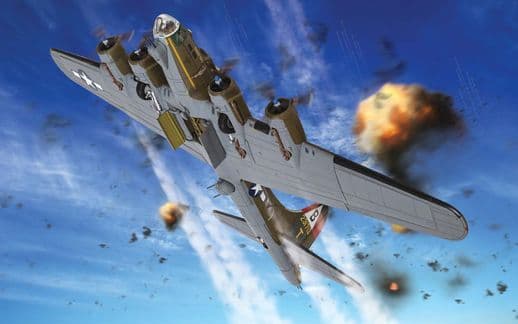
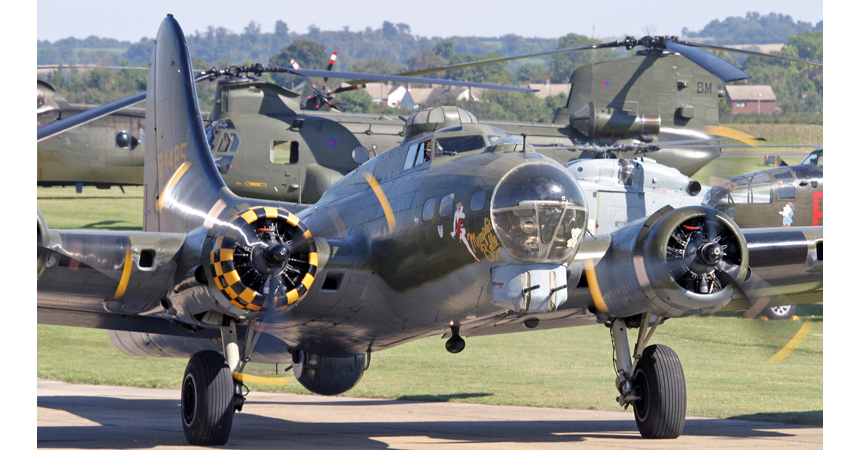
Another aircraft which will forever be linked with Duxford, Boeing B-17G Flying Fortress ‘Sally B’ has an army of fans dedicated to ensuring this magnificent aircraft remains in the UK, a flying tribute to the men of the Eighth Air Force
Over the years, Duxford Airshows have earned a reputation for serving up aviation action of the highest quality and whilst organisers are keen to cater for every taste, from the hardcore enthusiasts to those looking for an enjoyable day out, they usually manage to come up with the goods. Clearly, despite the most meticulous of planning and hours of preparation, Airshows are very much at the mercy of the weather and if historic aeroplane form part of your programme, serviceability and aircrew availability issues could also have organisers unexpectedly scratching their heads fight up to the last minute. With almost two years of event disruption now behind us, what we wouldn’t give for a full list of events to choose from fight now, but we have to remain positive that things will be much better in the years to come. As it is, we hope that this look back to a successful Duxford show from years past will help to ease that transition somewhat and may even tempt some readers to emerge from their enforced social restrictions and join those keen to see some aviation action at one of Duxford’s current programme of events, which include Airshows and flying days. Although perhaps not able to boast crowd numbers approaching those of the 2004 event quite yet, they will allow us to see some of Duxford’s current aviation stars and to hear the captivating sound of piston engines once again.
Please enjoy this final selection of images taken at Duxford’s 2004 September Airshow.
It seems quite some time since a Westland Sea King took part in a UK Airshow - interestingly, that situation may just be about to change though!
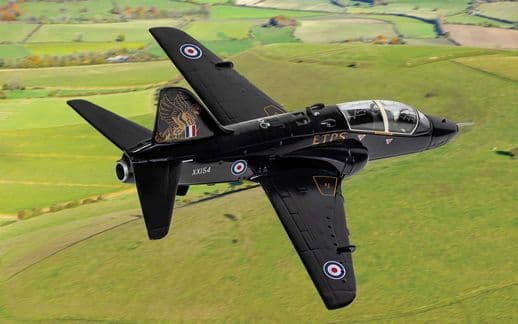
A British aircraft which has now been in service for 45 years, the BAe Hawk has to be considered a classic in its own right
Back in 2004, a Duxford Airshow could count on plenty of RAF participation in their shows, which included such long retired types as this Nimrod MR.2
Another display item sorely missed by UK enthusiasts, RAF Jaguars could always be relied upon to give a thrilling performance at Duxford, providing spectators with a mix of current and classic aircraft on the display programme
A smoky start for The Fighter Collection’s Grumman Tigercat, this is just one of many Warbirds which used to grace Cambridgeshire skies, but have now moved on to new owners in the US
I am afraid that is all we have for you in this latest edition of Aerodrome, but we will be back with more aviation related content for your enjoyment in four weeks’ time. If you would like to send us a selection of your own pictures, or suggest an aviation related subject you would like to see covered in a future edition of the blog, please use our aerodrome@airfix.com address to drop us a line - we will be delighted to hear from you.
Between editions of our blog, the aviation related conversation is always continuing over on the Airfix Aerodrome Forum and if social media is your thing, there is always interesting content and discussion taking place on our Official Airfix Facebook, Twitter and Instagram pages, not forgetting our Official Corgi Facebook, Twitter and Instagram sites too. We would be delighted if you took part in all the aviation related discussions going on there and please don’t forget to let us know what you think about Aerodrome and any suggestions you may have.
The next edition of Aerodrome is scheduled to be published on Friday 30th July, where we will have more interesting aviation content to bring you.
Thank you for continuing to support our Airfix and Corgi Aerodrome blog.
Michael
Return to the Aerodrome home page
Model link section
Airfix
Grumman F4F-4 Wildcat, Grumman F6F-5 Hellcat, North American Sabre, North American B-25 Mitchell, Westland Sea King, British Aerospace Hawk T.1
Corgi
BAe Hawk T.1A, Boeing B-17G Flying Fortress, Lockheed P-38 Lightning, Battle of Britain Collection

